Improving Health Policy, Systems, Services l Public health doctor l Faculty @UCL @UCL_GBSH l International Consultant l India, UK l MBBS MPH PHD Policy Fellow
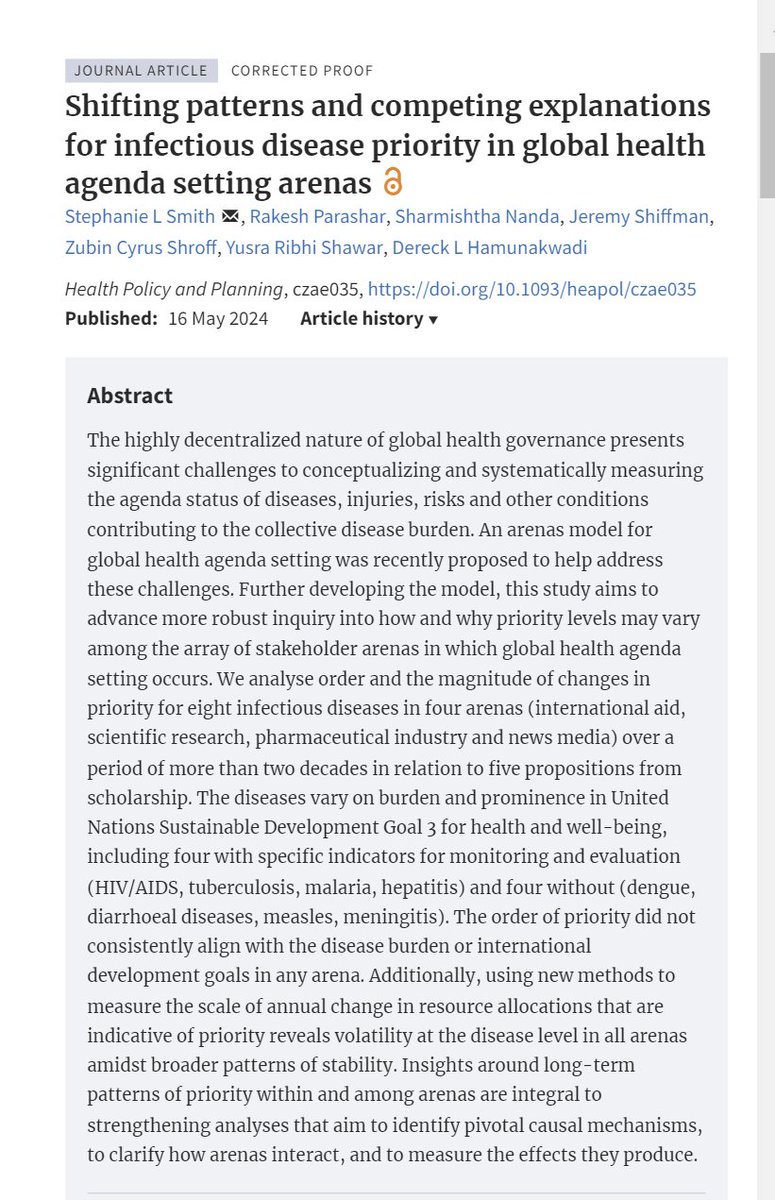
Sharing two fresh papers on #actor influences on #healthpolicy. Here, we present a novel approach for analysing health agendas.
Making it a🧵 of my 4 published works on 'actors' in health policy.
#hpsr#actors#policy#healthsystems
Coming to #HSR2024 Nagasaki? Join us for our satellite session on Urban #PHC systems on 19 Nov, 10.15-12-15, in 101C.
Also check out several other sessions featuring / organized by @UCL@ucl_GBSH colleagues
https://t.co/pR8RimS3T8
Please (wake up early enough on Monday morning to) join the #HPASuperFellows for juicy debate on epistemic justice and the underuse of theory in LMIC health policy analysis at #HSR2024 🧐🌍🎓📚
Congratulations to @Lucy_Gilson and @jrockstrom on receiving the @virchowprize today! Both have been dedicated advocates for systems approaches, and Lucy has been a key champion for #HPSR. Glad to see these vital issues recognized in #globalHealth!
We truly saw some exemplary clinical quality and leadership in Kol med colleges. Yet, the falling system and culture beyond a select few devoted clinicians was visible in the early 2000s. I can say this for RG Kar.
The scene there today is painful beyond words.
This had always been the culture of medical colleges in Kolkata. Unlike the scallywag who presided over the RG Kar murder, I’ve grown up modeling myself on senior physicians who walked the talk. The culture of medical education is changing in Kolkata - and for the worse. Thank you sir, for being a small beacon of hope amidst these dark dark times.
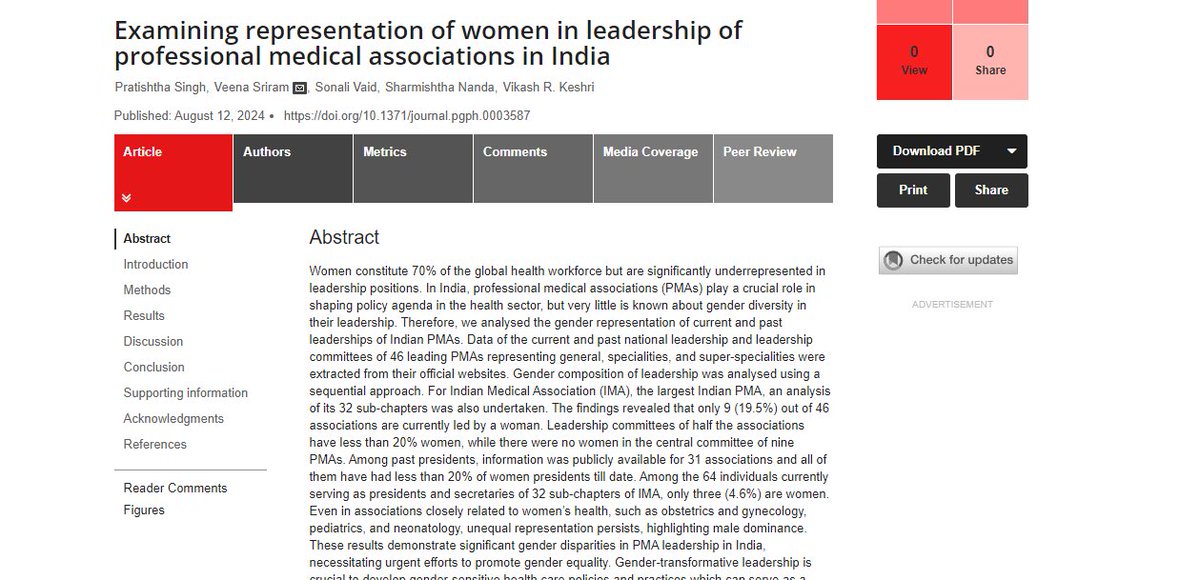
'Only 3/64 are women in current leadership roles in 32 subchapters of IMA. Fabulous research on gender inequality in medical associations.
Also an example of many strong hierarchies of biomedical profession- gender, caste, coloniality, elitism, capitalism and so on..
Thrilled to share our paper on women representation in leadership boards of professional medical associations (PMA) in India, recently published in @PLOSGPH at https://t.co/xYzCu95xEP
@veena_sriram @SonaliVaid@sharmi_shtha@docVRK
"The good news is hell is just the product of a morbid human imagination. The bad news is whatever humans can imagine, they can usually create."
- Severance.
@schneider_helen Truly so! One among many challenges is linkages of academic career progression with number of publications. It's inefficient, negatively affects quality and promotes waste of individual- collective time. Kills action. Measures of contributing to research need to change.
@justinparkhurst Very fascinating! Perhaps this moral flexibility is also linked with individual necessities (felt or real) and personal, collective experiences.
Pleased to share a commentary on advancing planetary health and mental health research. It provides 7 recommendations for researchers, students, policy planners especially those from environment and mental health fields. @PushpamK @pimcuijpers
https://t.co/mTef7THPF3
Sharing two fresh papers on #actor influences on #healthpolicy. Here, we present a novel approach for analysing health agendas.
Making it a🧵 of my 4 published works on 'actors' in health policy.
#hpsr#actors#policy#healthsystems
@drsitu@doctorsaheba & Ravi Duggal join me in an edit for @bmj_latest in which we set out health agenda for India's new govt. Our people have signalled that day to day issues matter. We must not fail them, they deserve better.
https://t.co/NFYMqsDgKW
4. How do actor relationships and power influence health policy? An empirical example from India, applying actor interface analysis.
https://t.co/JMnpGcnEdH
@HPP_LSHTM