Seven y/o girl was playing with his brother (10) in the afternoon outside her building when an 18 y/o man lured them away with the promise of buying snacks.
He gave the brother 50 rs and told him to buy a bottle of water, dragged the girl to his rented flat nearby. He tied her up, gagged her and sexually assaulted her.
The girl managed to return home in the evening and told the parents, police were called.
An Amritkaal where the daily brutal crime cases are being registered and the crime isn't stopping as there's no fear for criminals.
He RAPED that girl and killed her .
He RAPED his friend’s wife in Alwar .
He is a RAPIST .
Not a teen , not a killer .
A RAPIST .
He called her didi and then raped her and killed her .
Your headlines are pretty misogynistic NDTV .
Why are you trying to portray a rapist as teen ?
Think of the worst way to die, and India will still manage to shock you with something even more horrific.
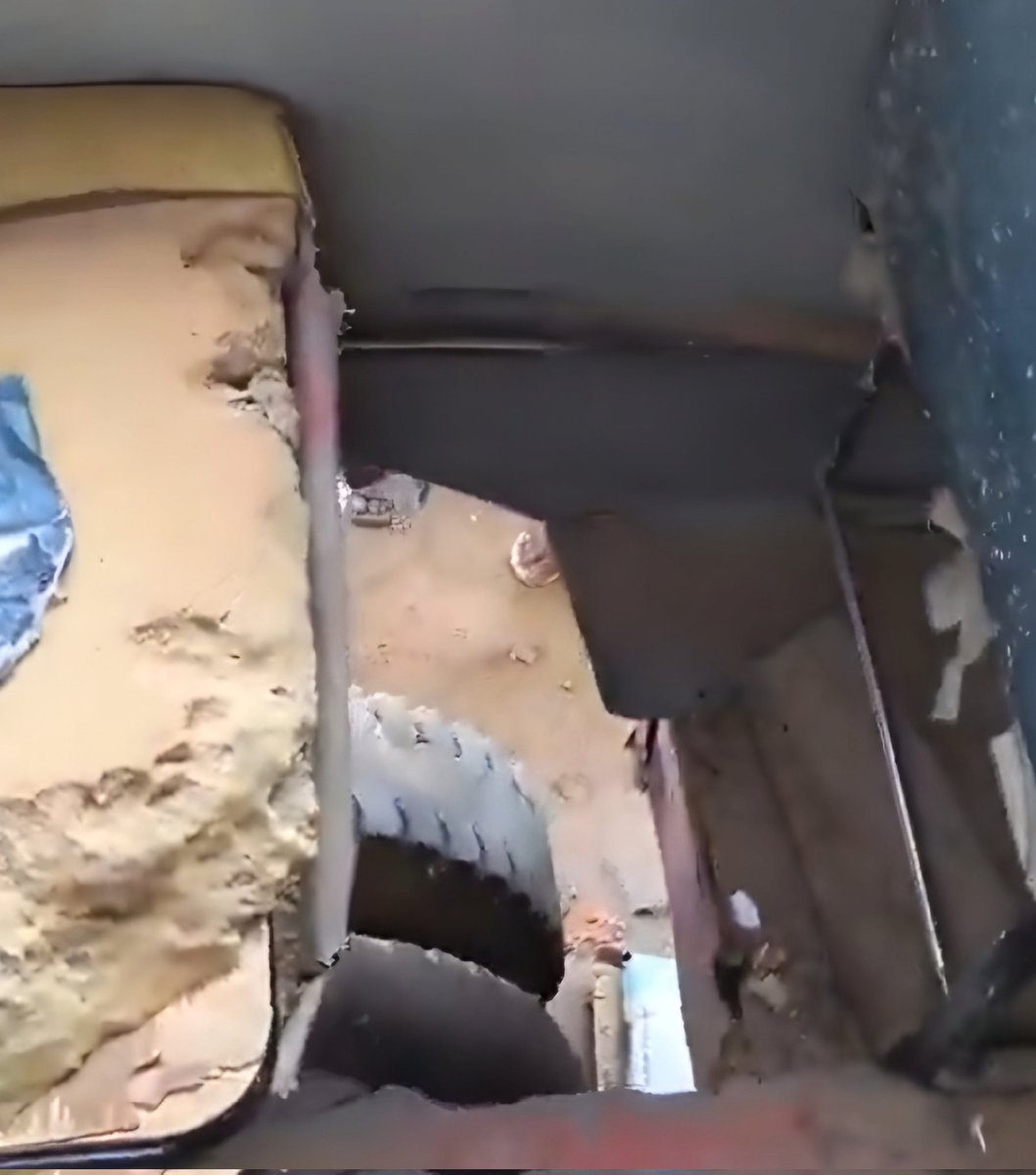
An LKG girl was travelling in a dilapidated school bus. The bus jolted. A section of the already rotten floor collapsed. The child, Ananya, slipped through the gap, fell straight under the rear wheel, and was crushed to death on the spot.
This was not some remote village van. This bus belonged to some Mount International School, Aligarh, supposedly a “reputed” private school. A school that allowed children to travel in a death trap.
Look at the condition of the seats and the floor in the images. This very bus was issued a fitness certificate just 11 months ago.
Students go abroad purely by personal choice and for personal gain, not as part of any national duty or service to India.
If they are capable of leaving the country on their own terms, they are equally capable of returning on their own. Emergency evacuation is justified only when a conflict erupts suddenly and all exit routes are cut off. But when war clouds are gathering, transport is available, and the embassy repeatedly issues clear advisories to leave, and those advisories are ignored in the hope of a free, state-funded return, the responsibility lies squarely with the individuals, not the GoI.
The GoI should therefore stop rescuing those who wilfully ignore official advisories, because doing otherwise only entrenches entitlement and guarantees the same recklessness in future crises.
If India "has to" play Pakistan in a multinational tournament because the format leaves no alternative, then why not treat it like any other fixture, against any other team?
But that’s not what happens. They are routinely placed in the same group, ensuring at least one guaranteed clash. The match is almost always scheduled in weekend prime time, wrapped in weeks of manufactured hype, pre-match shows, ads, dramatic commentary, fake fights, music, performances, spectacle, everything calibrated to extract maximum viewership and revenue.
That's not how majboori me khelna pad raha hai looks like. The pattern is structural and deliberate. The rivalry is monetised, emotions are packaged, and nationalism is subtly turned into a broadcast product. That's why "not shaking hands with them" means nothing. It's just a lollypop given to those cricket fans who keep country over cricket and question why there is a need to play against such a hostile country.
Pakistan has refused to play India in the T20 CWC match scheduled in Sri Lanka, despite knowing that it will reduce their chances of qualification and significantly affect their revenue share.
The Indian board, on the other hand, never took such a stand because money is all they want, something they conveniently covered up by claiming that refusing to play would mean sacrificing the Asia Cup, a trophy that holds no value in the larger scheme of things.
It’s sad that a terror factory disguised as a country, bankrupt both morally and financially, surviving on loans and hypocrisy, is still showing more self-respect than us.
‘He looks better than her, so she can’t reject him’
Jeets proving the damage raja beta parenting has done to Indian society. The sheer audacity of jeets to feel entitled enough to comment on a woman’s autonomy and its because they are raised with the idea that they own women.
That man is her own brother. Men engage in this kind of posting for engagement farming,predictable. But you, a woman, posting such disgusting content against women, don't you have any shame?Sometimes Indian pigma males seem right, beaches like u deserve that kind of filthy trolling.
Bangladesh has refused to travel to India to play the T20 World Cup, despite a final ultimatum from the ICC. This effectively means they are out of the tournament.
Whatever your opinion of them, one must acknowledge the Bangladesh Cricket Board’s sense of self-respect. We didn’t really do much to them, just removed one of their players from the IPL, and they took it to heart enough to refuse to tour India.
On the other hand, there was the BCCI, which couldn’t stop itself from playing an enemy country that had orchestrated one of the worst terrorist attacks against us just months earlier.
Saw attempts to dehumanise Yuvraj Mehta by claiming that he was drunk and overspeeding. Why? To dilute institutional liability?
Idk whether he was drunk or overspeeding, but even if that’s true, it changes nothing. He had the same right to be rescued.
Even if a person is negligent, reckless, or at fault, the state does not get the right to abandon him. Law functions on two separate principles: responsibility for the act, which is decided later through due process, and the right to life and rescue, which is unconditional and immediate.
A drunk driver is still entitled to emergency response, rescue services, and medical aid. If negligence cancelled those rights, accident victims would be denied treatment, suicide attempts would not be saved, and helmetless riders would be left to die.
Civilised systems do not function this way. Even if Yuvraj Mehta made a mistake, the authorities’ duty began the moment his life was in danger, not after judging his character. Punishment comes after survival, not instead of it. A society that debates a dead man’s morality instead of questioning institutional failure has already lost its moral compass.
Bro @arrahman, why did you work in Chhaava if you knew the film was, as per your statement to the BBC, “divisive”? Is money more important than principles? Trashing a film after profiting from it, how is that fair?
Same goes for Saif Ali Khan. He worked in Tanhaji, earned money, and later called the making of movies like Tanhaji a dangerous idea on Anupama Chopra’s show. Why?
You can disagree with a film, but doing it after cashing the cheque is just greed disguised as morality.
A war film that asks "us" to consider the cost of war. What an idiotic take!
The aggressor bears the cost of war; the non-aggressor bears the cost of ending atrocity. Blurring this difference in the name of vague humanism erases who acted, who is guilty, and who is responsible. If considering “the cost of war” means the victim must hesitate to defend itself just because violence feels uncomfortable to kitty party intellectuals, then that idea ultimately asks victims to accept massacre and submit to genocide.
In 1971, the Pakistan Army committed a documented genocide: nearly 3 million civilians killed, 200,000–400,000 women raped, 10 million refugees, and the systematic execution of intellectuals. To pause and “weigh the cost of war” if such crimes erupt in our neighbourhood again is, in effect, to argue for inaction, to watch, rationalise, and thereby enable mass murder. That position is not moral caution or enlightened pacifism; it is the logic of surrender, advanced only by those who are either morally indifferent or too cowardly to accept the responsibility of stopping evil.
A 12-year-old Hindu girl was raped and murdered in Bangladesh today. Yesterday, a Hindu widow was gang-raped, and publicly humiliated. The same day, three more Hindu men were killed.
Seems like , India’s extremely tough move of sacking Mustafizur Rahman from the IPL hasn’t quite terrified the Bangladeshi govt into cracking down on radicals or protecting minorities. Perhaps we need to escalate further, summon their ambassador and make him wait an entire hour. That should surely do it.
Stop dragging Sushant Singh Rajput into every Kartik Aaryan discourse. It’s honestly insulting.
People didn’t love Sushant because he was an outsider or because “Bollywood ganged up on him.” That’s lazy revisionism. They loved him because he earned it. Kai Po Che wasn’t a sympathy watch, it was a statement. His Dhoni wasn’t cosplay, it became the reference point. The man brought curiosity, intelligence, and preparation into every role. An engineering ranker, an Olympiad guy, someone who actually thought his way into characters. That depth showed on screen, whether people liked him personally or not.
Comparing that to Kartik Aaryan is wild. Kartik’s entire career still leans on one loud monologue, second-hand Akshay Kumar mannerisms, and proximity to the right camp. Strip away Pyaar Ka Punchnama and the PR machinery and there’s very little left to defend creatively. This isn’t the industry repeating the same cruelty, this is fans confusing noise, victimhood, and box-office survival with actual craft.
Sushant wasn’t respected just because he was an outsider. He was respected because he could act circles around most of the room. Kartik isn’t being “targeted” he’s being Evaluated.
And that’s a big difference. Not every outside actor under criticism is the next Sushant. Some are just average with loud PR
Bollywood already has enough manufactured narratives. It doesn’t need another forced comparison that collapses the moment you talk about performances instead of personalities.
Idiotic logic, but it works perfectly on immature Instagram youth and perpetual victim groups.
“He’s an IITian, so he must be innocent.”
Meanwhile, people with MBBS and MD degrees are making bombs and blowing themselves up to kill others, but this guy is an IITian, so obviously he must be innocent.
So what if there are videos of him openly talking about cutting off the Northeast from India? He’s an IITian, so he must be innocent.
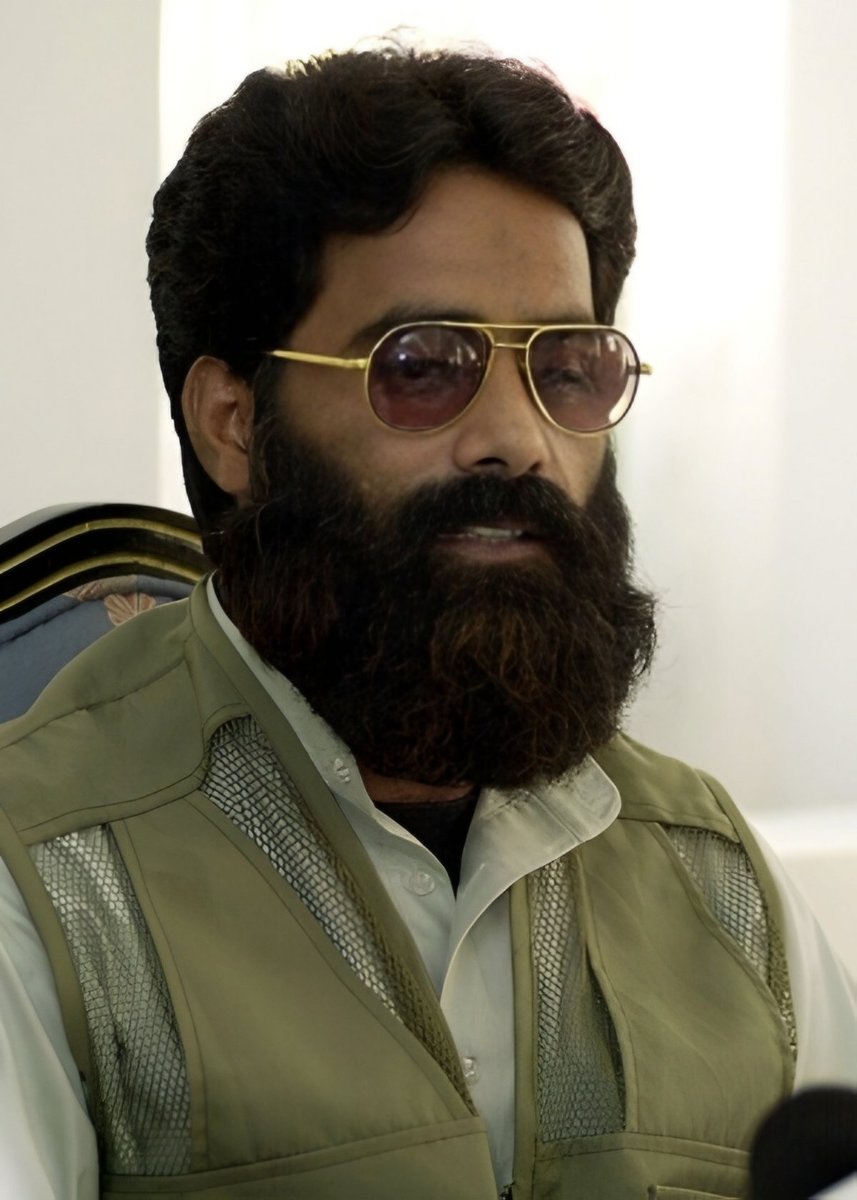
He was Ilyas Kashmiri, a Pakistan Army SSG operative turned terrorist.
In the early hours of 27 Feb 2000, he led a 25-member team of Pakistani soldiers and terrorists in a cowardly assault on an Indian Army post of 17 Maratha LI in the Nowshera sector. The post was tactically indefensible, surrounded on three sides by Pakistani positions. The CO had flagged this fatal flaw and sought permission to pull the post back but was denied by his superiors.
Seven Indian soldiers paid with their lives. After killing them, Kashmiri beheaded Sepoy Bhausaheb Maruti Talekar. The severed head was carried across the LoC, paraded as a trophy before a cheering crowd, and then kicked around like a football.
For this act of medieval barbarism, Pakistan’s then president, Pervez Musharraf, publicly honoured Kashmiri and rewarded him with ₹1 lakh Pakistani for bringing back the head of an Indian soldier.
Sepoy Talekar was cremated in his village without his head. His sister begged to see her brother’s body last time. The Army obviously refused.
This is who we are dealing with: a religiously radicalised army-state that celebrates sadism, institutionalises hatred, and teaches its men that the more brutally they butcher their enemies, the greater their reward, on earth and in heaven.
And yet, sitting comfortably on this side of the border, protected from every real consequence of war, are elite idiots who romanticise this force as “professional soldiers just following orders.”
“Kaun dushman?” My foot.
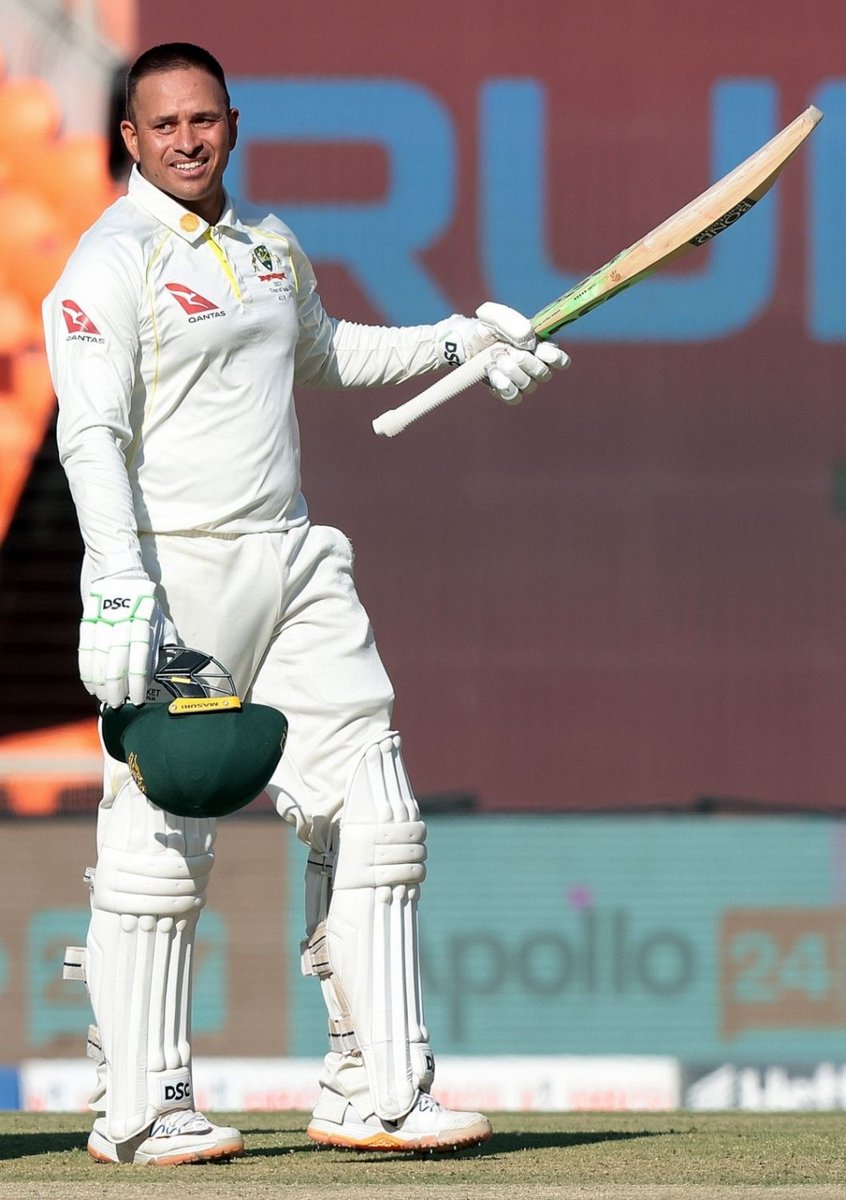
If Usman Khawaja's family hadn't migrated to Australia, he probably would be a Mudarris in Masood Azhar's madrasa in Muridke and would have seen a BrahMos coming towards him on 07 May 2025 as his last visual.
Lucky for him, his family migrated. Australia gave him education, security, rule of law, equal citizenship, and a global platform. His career, wealth, and public standing are entirely products of a Western liberal democracy.
And yet, from that position of safety, Khawaja lectures Australia on inclusivity, minority rights, and moral conduct, while maintaining a studied silence on his country of origin Pakistan, a country where minorities are not debating “representation” but fighting for basic survival: lynchings under blasphemy laws, forced conversions, sexual violence, and institutionalised religious apartheid.
And Khawaja is not an exception. Malala Yousafzai, boxer Amir Khan, Mayor Sadiq Khan, minister Shabana Mahmood, and all Pakistani follow the same script: build lives and influence in the West, enjoy freedoms created precisely by strong minority protections, then deploy that platform to scold Western societies, while carefully avoiding the rot at home.
If your moral voice goes silent exactly where speaking up carries consequences, then your values aren’t universal but transactional. And once morality becomes transactional, no lecture on inclusivity deserves to be taken seriously.
Avyaan was six months old.
He was born this year after ten years of waiting, prayers, hope, and countless visits to infertility clinics by his parents. For the family, his arrival was pure joy.
Avyaan was healthy, but his mother could not produce breast milk due to a medical reason. She was advised to give diluted cow’s milk. Ideally, infant formula is the substitute for breast milk, but because of cost, some families choose cow’s milk. In such cases, doctors may advise diluting it with boiled and cooled water.
I don't know who advised the family or what exact instructions were given, but it is entirely possible that, out of ignorance, cow’s milk was mixed with tap water, instead of boiled-cooled water. People tend to trust municipal water supplies, often the only thing they believe the govt will provide honestly.
Five days ago, Avyaan developed fever and diarrhoea. The family took him to a doctor and medicines were prescribed. They believed it would pass. Instead, his condition worsened steadily, and he died on Monday.
Only later did the truth emerge. The water supply in Bhagirathpura, Indore, was contaminated with sewage. Several others died as well. The family realised, too late, what may have poisoned their child. They are numb, trapped between disbelief and unbearable guilt, replaying every small decision and wondering what they missed.
Could boiled and cooled water have saved him? Maybe. Maybe not. Many bacterial toxins are heat-stable, and sewage can also contain heavy metals, nitrates, and other contaminants that are not removed by boiling.
Will anyone in authority be held accountable for this institutional, negligent killing? Will this tragedy lead to any real improvement? Will even one person step down, accepting moral responsibility?
Kailash Vijayvargiya’s response to NDTV already answers all of that:
“Ghanta.”
Every day, mainstream media reports 2–3 sarkari karmcharis being caught red-handed in corruption. Yet such is the junoon for desh seva that the rest refuse to learn any lesson and are willing to risk it all.
Today, the CBI caught Ankit Aggarwal, a Central GST Superintendent, red-handed while accepting a bribe of ₹5 lakh. Ankit ji had conducted an audit of the complainant’s company. The complainant alleged that Ankit ji threatened to fabricate a tax demand of ₹98 lakh against his firm and demanded a bribe of ₹20 lakh to “settle” the matter. After negotiations, Ankit ji was gracious to reduce it to ₹17 lakh, but the complainant was greedy enough not to accept the offer and instead approached the CBI. A trap was laid, and the accused was caught red-handed.
A very heavy price has been paid by Ankit ji for desh seva, but I’m sure he won’t lose heart. In a few days, he’ll be out on bail and will once again devote himself wholeheartedly to the noble cause of serving the nation.
A 22-year-old woman residing alone in a gated apartment complex in Bengaluru hosted a small, quiet get-together with a few friends at her own flat. There was no loud music or disturbance.
But the gathering drew the attention of “society uncles,” who were probably keeping a watch on her daily routine, and who confronted her late at night, questioning her conduct and her right to have guests. They told her that bachelors aren’t allowed in the society and asked her to call the owner of the house. When she calmly told them that she herself was the owner of the flat and was not violating any rule, the situation escalated further, with several committee members entering her home without consent, accusing her of drinking and smoking.
Parts of this confrontation were captured on CCTV cameras installed inside her flat for safety, footage that later became central to her case. The society members eventually called the police, but after verifying that no nuisance was being created and that the woman owned the flat, the cops took no action.
Rather than letting the episode pass, she chose to pursue legal remedies, sending notices for harassment, trespass, and intimidation. An urgent society meeting was called the same evening, where video footage from her living-room camera was screened before residents. Following this, the accused members were removed from their positions on the society board and fined Rs 20,000 each for violating bylaws. A written apology was issued to her.
She was not letting it pass this easy though. Next, she filed a ₹62-lakh civil suit, seeking compensation for mental trauma and reputational harm, along with a permanent injunction to prevent further interference.
I hope she wins. This case will be landmark in India because it legally challenges the unchecked authority of RWAs, clearly establishing that society committees have no right to police personal behaviour inside a privately owned home. By treating moral policing as actionable civil harassment with financial consequences, it will set a deterrent precedent and strengthen individual residential autonomy.