Very pleased to share that our recent work on the relationship between combat trauma and ultra-short term Heart Rate Variability (HRV) in collaboration with the @AdvanceStudy is finally out now in @MilitaryH_BMJ
Read it #OpenAccess here:
https://t.co/E36Y2uYvzu
#Veterans#HRV
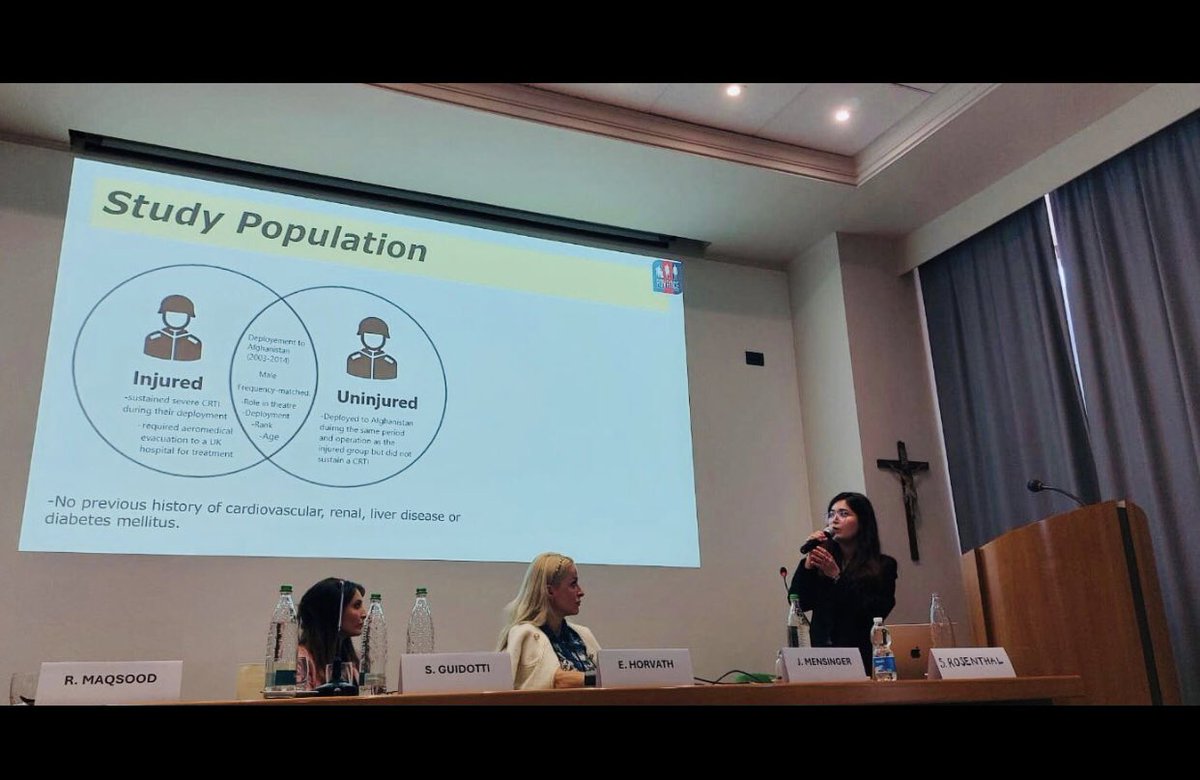
Very pleased to have presented my research exploring the link between combat injury and HRV using the first follow-up data from the @AdvanceStudy at the 23rd Annual Meeting of @BFE_Biofeedback in Italy.
Excellent workshops and brilliant talks.
#HRV#Trauma
🔬 Today marks 10 years of the International Day of Women & Girls in Science, a day dedicated to breaking barriers & inspiring future generations! Here's to the women in our ADVANCE team already leading the way. #IDWGS#WomenInScience
1/ Interested in performing heart rate variability research? Then check out the new guidelines paper in the #2024SPR Meeting Virtual Issue of Psychophysiology: Dr. Quigley and others share best practices for heart rate, heart rate variability studies. https://t.co/HMfD8q5PtW
Excited to share my new publication looking at the reliability of linear and non-linear measures of short-term HRV in a military sample from the
@AdvanceStudy. Read it open access in @ANEC_1996, link below:
https://t.co/71BhtG2XS5…
#HRV#Military#CombatTrauma
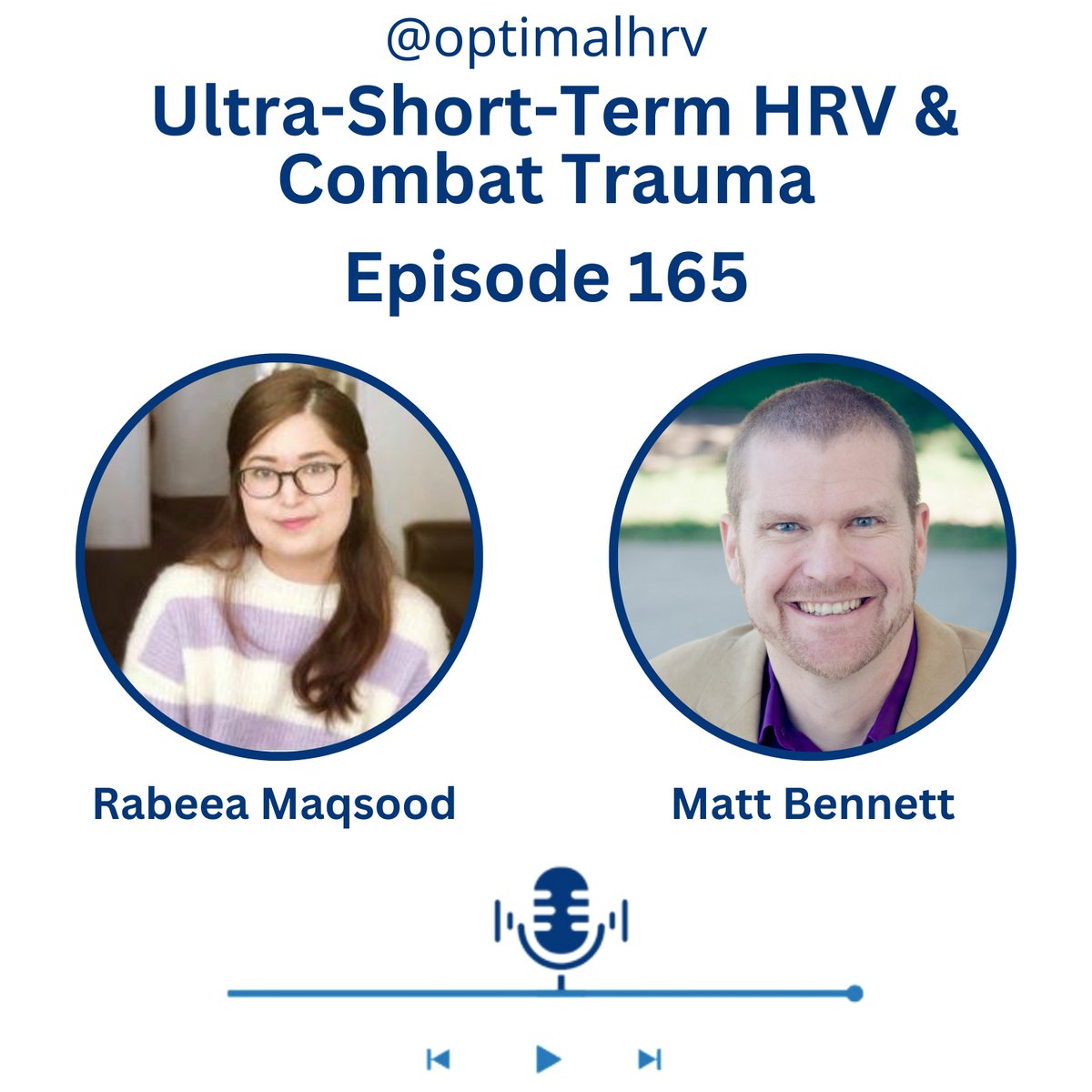
🎧 New Podcast Episode 165 is Live! 🎉
Join Matt as he sits down with Rabeea Maqsood to explore her groundbreaking research on ultra-short-term heart rate variability and its connection to combat-related traumatic injury. 🧠🩺
Link:https://t.co/Q6GJFZsViJ
A fantastic day at @FEPSAC_MC presenting the results of one of my PhD projects on the validity of ultra-short-term HRV in collaboration with @AdvanceStudy & @bournemouthuni
Glad to have insightful discussion on HRV- thanks for stopping by the poster! #FEPSAC24
Link to the paper👇🏻
#PublicationAlert: Validity of Ultra-Short-Term Heart Rate Variability Derived from Femoral Arterial Pulse Waveform in a British Military Cohort
Read it open access here https://t.co/6Fvihumgrv
@AdvanceStudy @BUDocCollege
#PublicationAlert: Validity of Ultra-Short-Term Heart Rate Variability Derived from Femoral Arterial Pulse Waveform in a British Military Cohort
Read it open access here https://t.co/6Fvihumgrv
@AdvanceStudy @BUDocCollege
With exactly one month to the Olympic Games I am happy to share our article on how Olympic athletes can use HRV to boost their performance. Written in collaboration with the fantastic team led by @SylvainLaborde_ 🥇#Paris2024@Olympics
https://t.co/CSzWv0LE5J
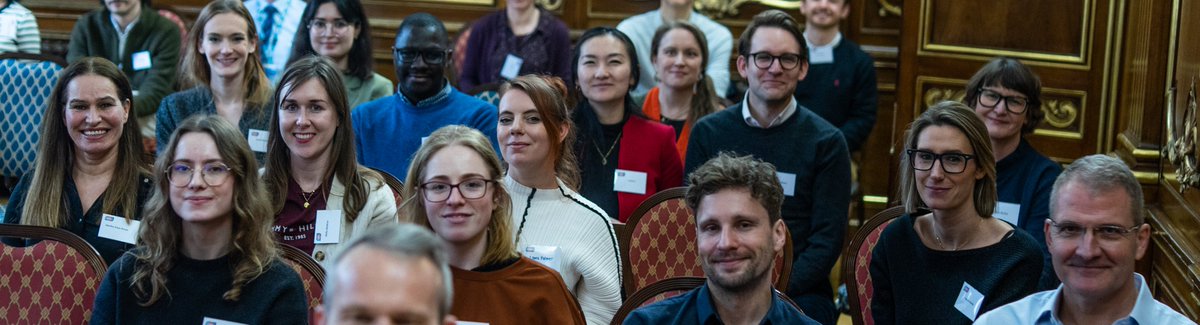
Big thanks to organisers @frajewatson & @dan_is_lost for this STEAM event where ADVANCE PhD, RA, and Postdoc researchers met up to discuss their projects & plan collaborations. Lots of diverse projects incl. #pain, #proteomics, #HRV, & #TBI discussed - exciting work to come! 🙌
@MNJarczok That’s really helpful. Thanks for sharing. I wonder if there’s some work around minimal clinically important difference reported for short-term RMSSD and SDNN in healthy adults or other populations.
#PublicationAlert New research published in @PMRJournal explores the effect of spontaneous and paced breathing protocols on HRV in British servicemen with combat injury using the @AdvanceStudy data.
Read it open access here: https://t.co/mnAanMKxuy
#MilitaryResearch#HRV
I was proud to author a study analyzing the impact of traumatic brain injuries on veterans of the Afghanistan and Iraq Wars.
Very little is known about the association between exposures and the subsequent risk of brain cancer, with the exception of ionizing radiation...
Huge thanks to everyone who attended yesterday's ADVANCE Seminar! What a great day, with lots of exciting research shared and interesting conversations.
Pleased to have presented the key findings originating from my PhD on the link between Combat Injury and HRV using the baseline data of the ADVANCE study at the @AdvanceStudy seminar.
What an exciting day having a conversation on Climate Change with the https://t.co/i7AYdnuUFJ Public Health students. Exploring the themes of social determinants of health and healthcare inequalities- need of the hour.
#PublicHealth#ClimateChange
A friend of the show, Dr. Fred Shaffer, returns to discuss HRV time-domain measures. Fred and Matt take a deep dive into the nature of these metrics and what they tell us about nervous system functioning. https://t.co/zJerH40E4b
Why not just use HR instead of HRV?
Because they’re different.
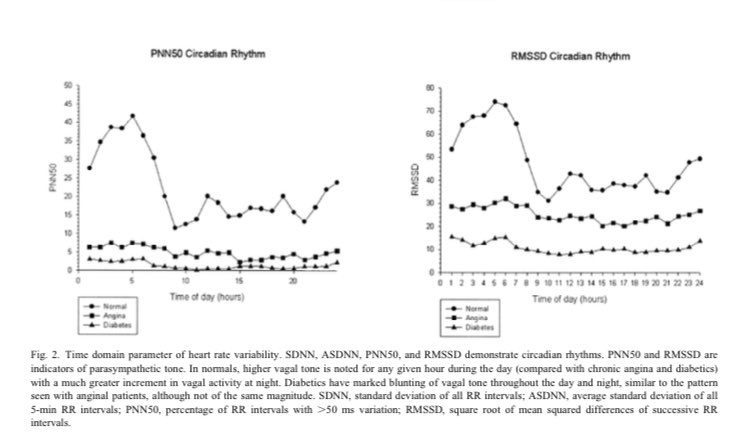
In this example, look how much better parasympathetic HRV markers discriminate healthy vs clinical circadian profiles of cardiac-autonomic activity.
https://t.co/AuLVTLc7R3