Why does the order matter? Because the NFT is the starting point: it's the ownership reference. The agent comes second, acting within owner-set limits. Fees and ecosystem come third. Skip the order and the idea gets blurry. @meetmotes $MOTES
What if a collectible could be more than something you hold? In the @meetmotes design, one NFT maps to one agent identity and one smart account, with owner-set limits. That shift, from static to programmable, is what feels new here. $MOTES
Every Mote looks like a small, friendly character. But the artwork is just the public face of something bigger: one NFT, one agent identity, one smart account. Cute on the outside, structured underneath. @meetmotes $MOTES
What do you actually own with a Mote? The NFT is an ownership reference. A separate smart account holds the assets, and the agent acts within the owner's limits. Three pieces, not one. @meetmotes $MOTES
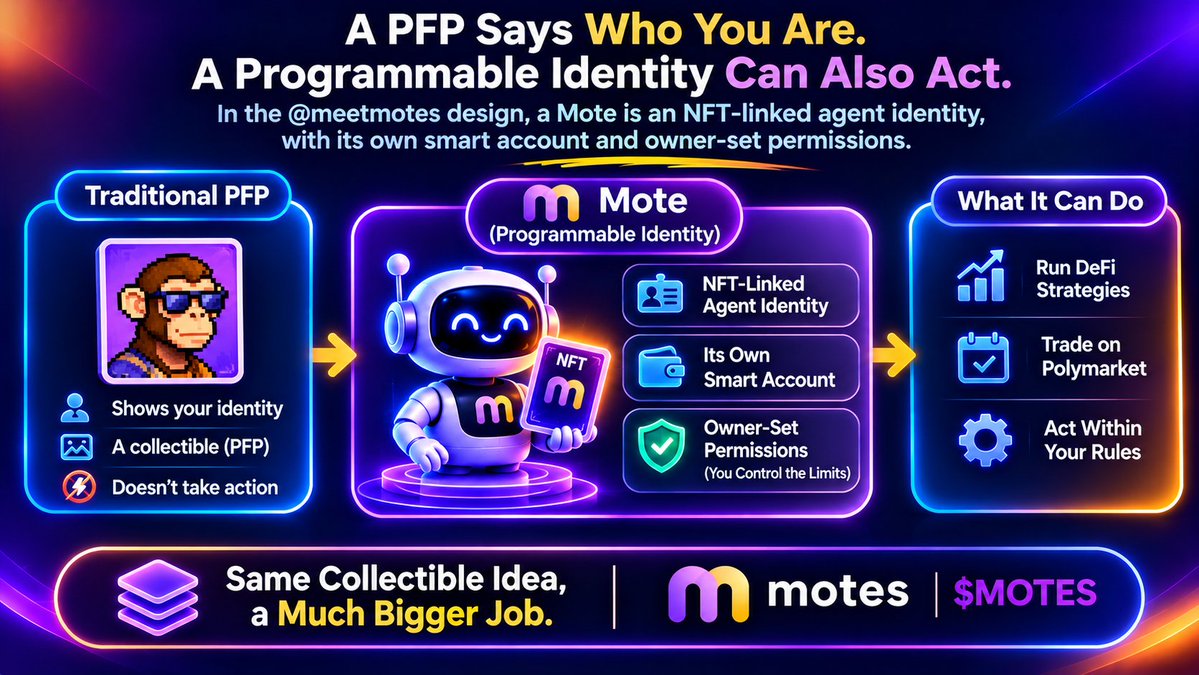
A PFP says who you are. A programmable identity can also act. In the @meetmotes design, a Mote is an NFT-linked agent identity, with its own smart account and owner-set permissions. Same collectible idea, a much bigger job. $MOTES
A collection of 20,000 sounds small until you remember each Mote is an NFT-linked agent identity with its own smart account. The count tells you how many agents, not how much value. Worth thinking about what a Mote represents. @meetmotes $MOTES
What separates a Mote from a regular trading bot? One NFT maps to one agent identity and one smart account, and the owner sets the limits. The agent acts inside them. Would you want that control? @meetmotes $MOTES
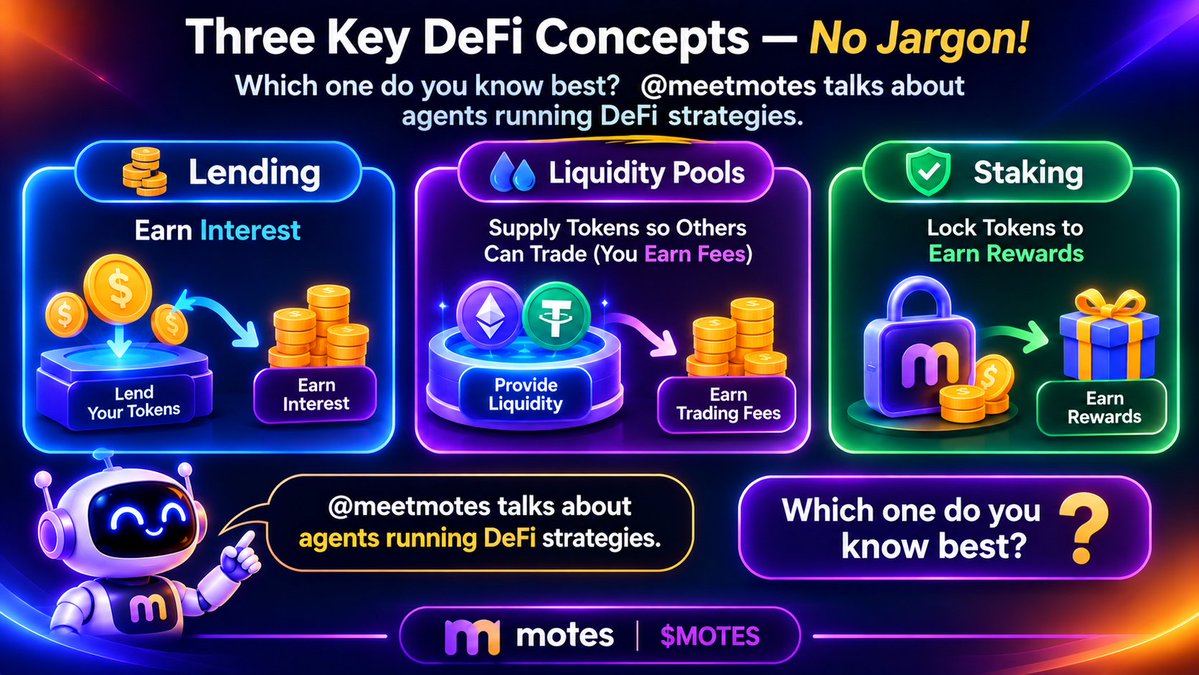
Three DeFi terms, no jargon: lending = earn interest, liquidity pools = supply tokens so others can trade (you earn fees), staking = lock tokens to earn rewards. @meetmotes talks about agents running DeFi strategies. Which one do you know best? $MOTES
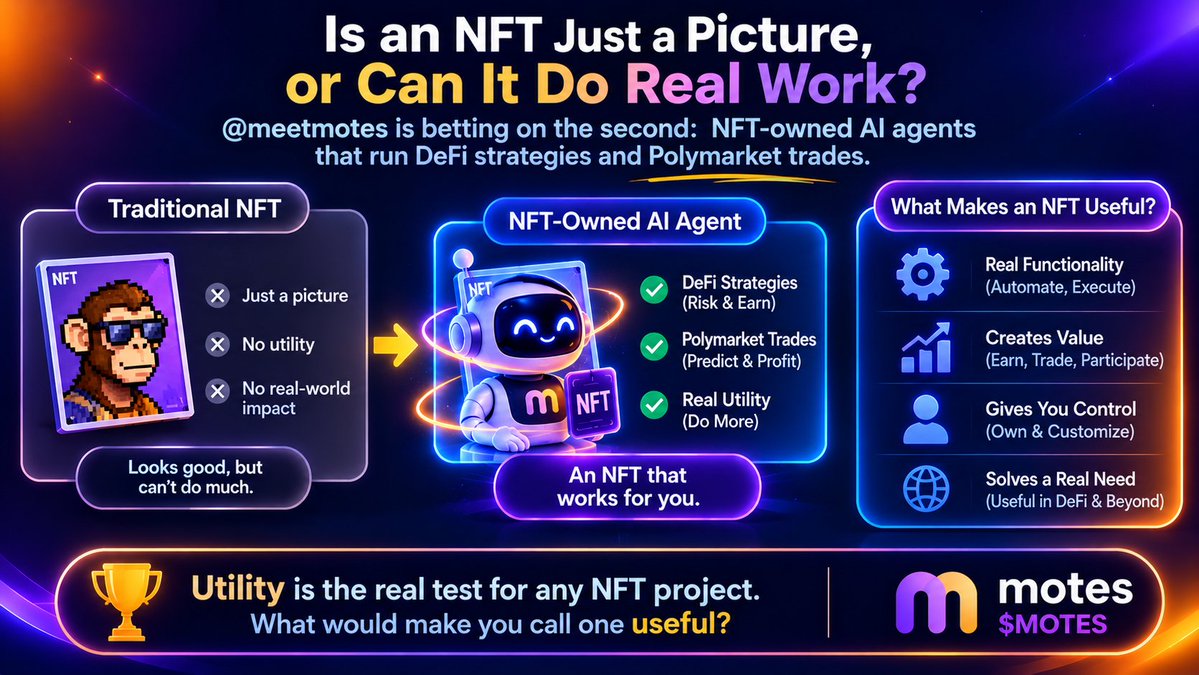
Is an NFT just a picture, or can it do real work? @meetmotes is betting on the second: NFT-owned AI agents that run DeFi strategies and Polymarket trades. Utility is the real test for any NFT project. What would make you call one useful? $MOTES
Encrypted doesn't mean invisible. On public chains, many things stay visible unless designed otherwise. @meetmotes says it's building encrypted financial infrastructure, so the key question is what it protects and what it doesn't. Do you check that first? $MOTES
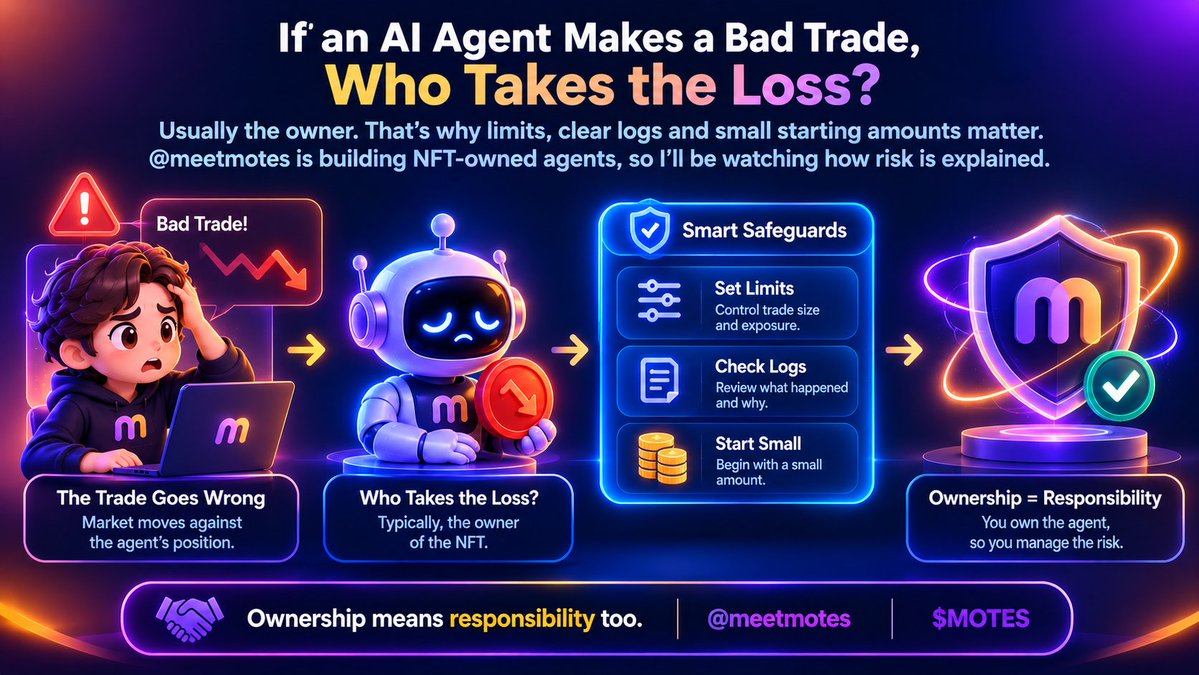
If an AI agent makes a bad trade, who takes the loss? Usually the owner. That's why limits, clear logs and small starting amounts matter. @meetmotes is building NFT-owned agents, so I'll be watching how risk is explained. Ownership means responsibility too. $MOTES
@binance@BinanceHelpDesk A flat reward pool or tiered equal distribution for everyone who meets the base requirement would be much fairer and more motivating for everyday users.
Thank you!
@binance@BinanceHelpDesk
@binance@BinanceHelpDesk Many users have smaller capitals and cannot generate massive trading volumes like top whales do. When rewards are distributed strictly proportional to volume, smaller traders put in effort and fees but receive almost nothing, which discourages community participation. @binance
Full autopilot or tight leash? With AI agents handling money, I'd want limits on size, a kill switch, and clear logs. @meetmotes is building NFT-owned agents, so control design matters a lot. Which safeguard would you want first? $MOTES
Manual trading means you watch charts, react, and sleep when markets don't. Agent trading flips that: rules you set, a system that keeps working. @meetmotes is building NFT-owned agents around that idea. The trade-off is trust. Would you hand over the controls? $MOTES
A token's role should be explainable in one line. @meetmotes says it's powered by $MOTES, but I'm reading the docs to see what the token actually does inside the ecosystem. Utility first, price talk later. What should a project explain clearly?