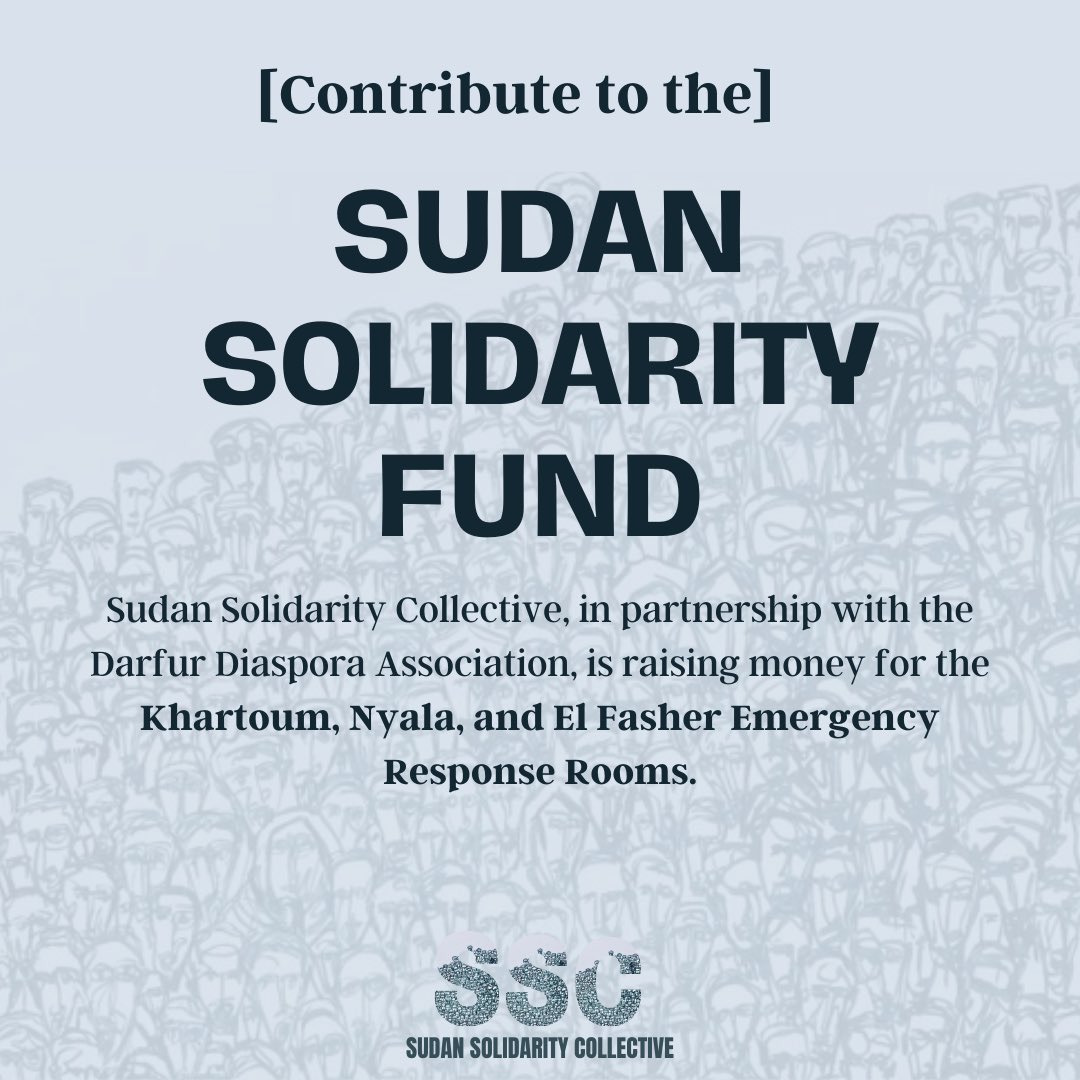
Contribute to the Sudan Solidarity Fund!
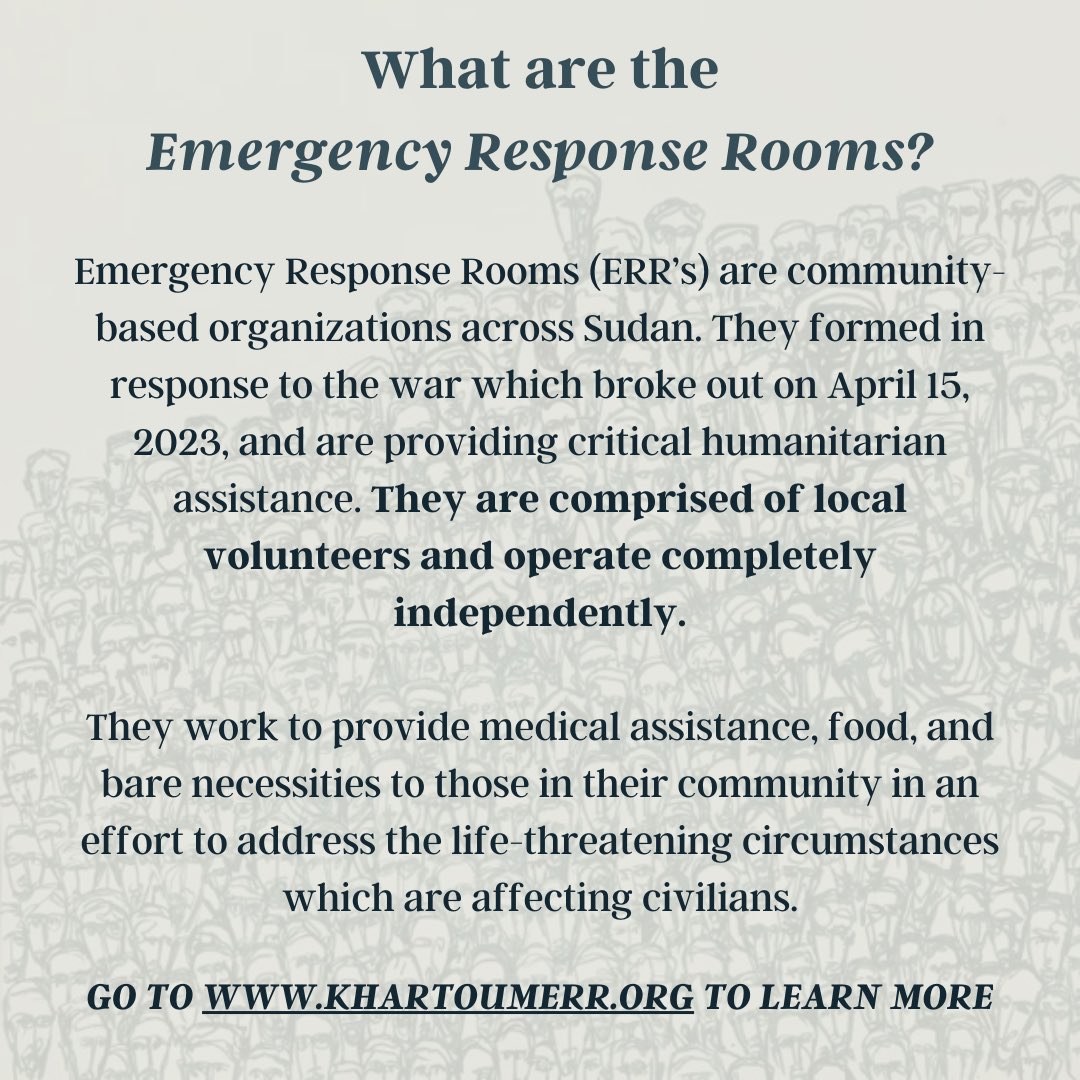
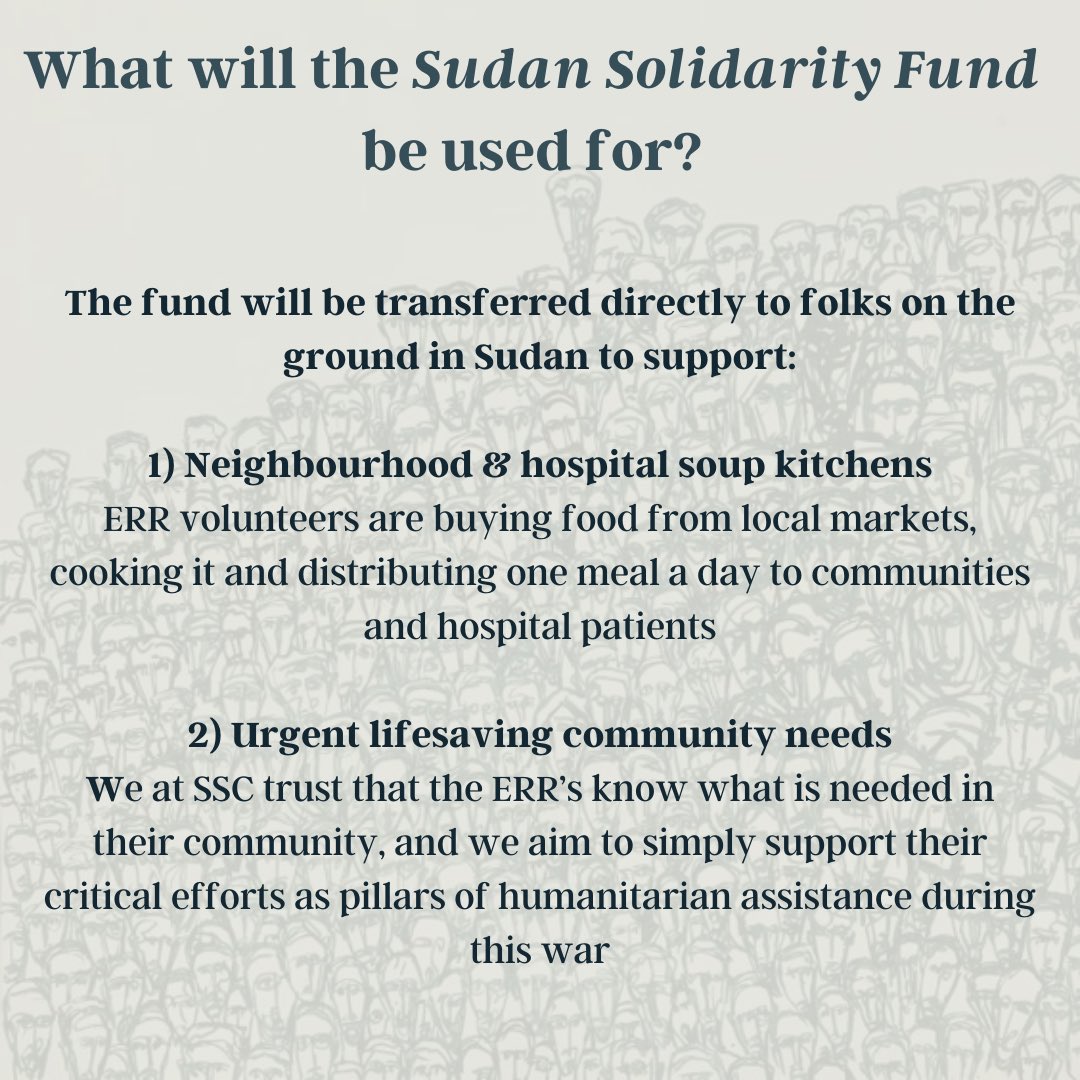
Sudan Solidarity Collective, in partnership with Darfur Diaspora Association, is raising money for the Khartoum, Nyala & El Fasher Emergency Response Rooms.
Be in solidarity with the Sudanese people✊🏾DONATE & SHARE!
https://t.co/JG7AUpn6JC
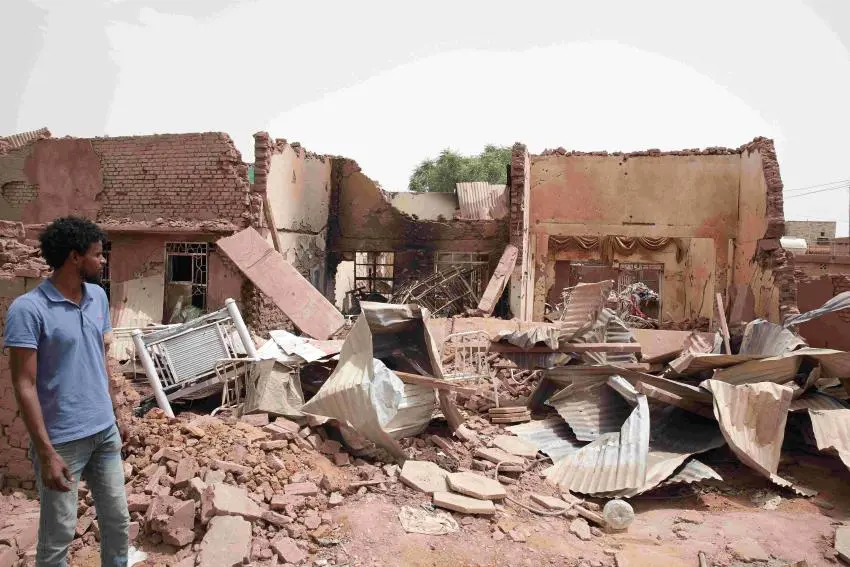
In April 2023, conflict hit Sudan, leaving +25M in need.
CORE, in collaboration with Sudanese Development Call Organization, RedRose, & Cashi, is piloting MPCA programme in the neighbourhoods of Burri and Aljiriaf.
Key learnings are now available ⤵️
https://t.co/xbQwx1UukC
#Sudan's collapsing #economy threatens a famine more devastating than the #war itself.
This macro-economic crisis precedes the conflict, but the war has tilted it now into a death spiral and jammed shut most of the possible emergency exits.
Pointing fingers at speculators isn't the answer and doesn't rebuild trust in the official monetary system. Addressing the liquidity crisis and reinstating public trust through clear monetary policy and forward communication now is more vital than ever.
To stabilise, there's a need for a market-driven flexible exchange rate and increased cross-border trade to reduce the spread between official and parallel markets and to increase access to essential goods. Temporarily easing regulations restricting informal money transfer agents (e.g. hawalas) would probably increase accessibility, speed and efficiency of financial services. Ending the economic isolation of areas beyond eastern Sudan and reviving currency flow across all banks, especially in regions like Khartoum, Kordofan, and Darfur, is crucial both to avert massive food insecurity but also to maintain national monetary sovereignty.
Lifting bureaucratic and arbitrary restrictions on aid organisations can bring more and quicker relief and foreign funds to disaster-affected regions, especially at a time when external investments and international financing is scant. Of course, international aid should strengthen, not sidestep, local markets as much as possible - there needs to be a far greater focus on large-scale delivery of cash-based programming than there is right now. Every relief truck dispatched - as vital as it may be in that moment - is also a missed opportunity to help bolster local economies at a time when they sorely need it.
Almost all the risk factors for #hyperinflation are present now in Sudan, perhaps slowed only by an incapacity to print much money and also the dying purchasing power of most Sudanese households.
The collapsing economy is yet another alarm call that should waken the world to Sudan's catastrophe. Will the world hit the 'snooze' button again?
Time to act.
https://t.co/O0ekwX5LJK
https://t.co/6ZlIYakbjw
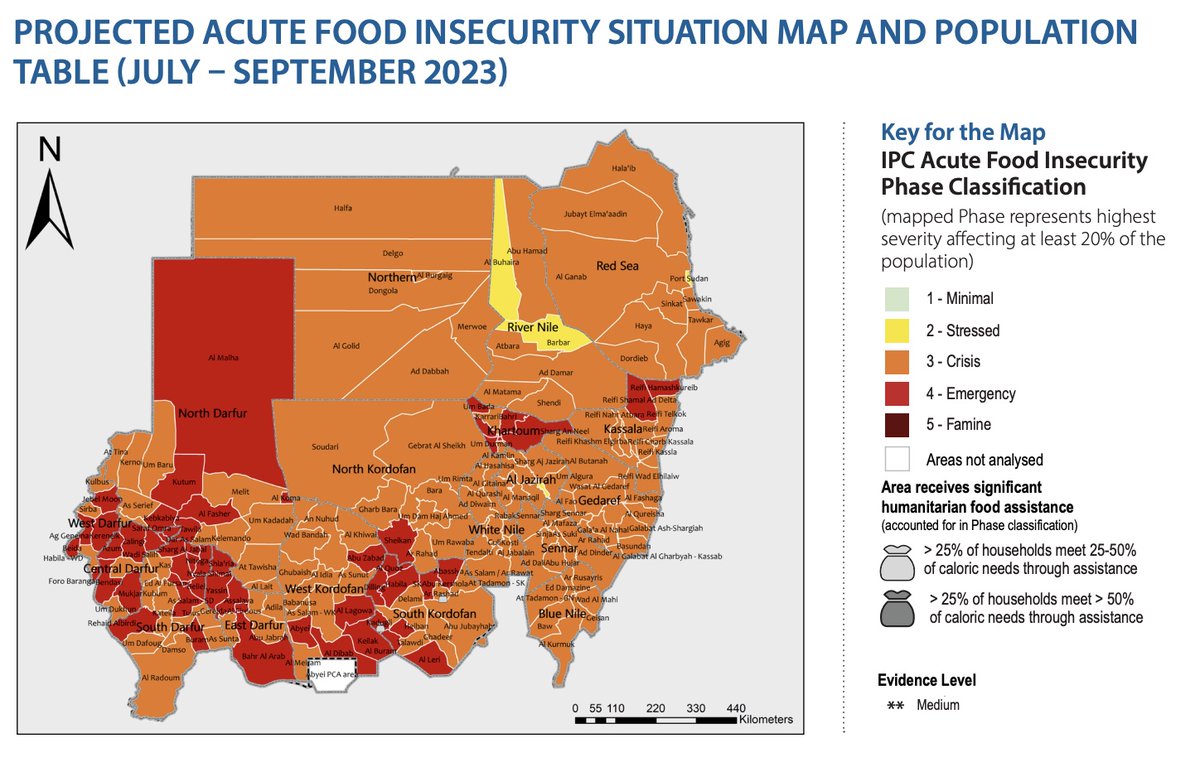
This is truly grim. More than 20 million people in #Sudan are projected to be in 'crisis' or '#emergency' levels of food insecurity over the next few weeks - double the estimate last year.
This number is more people than those suffering high levels of acute food insecurity in CAR, Somalia, South Sudan, and Yemen *combined*.
Combined.
Worse still, this assessment may underestimate the full impact of the liquidity and banking crises, worked with now-outdated conflict #displacement data, and has assumptions that ceasefire agreements may be reached in the next few weeks. So if anything, this is an optimistic readout.
I'm pleading now, for all bureaucratic restrictions on #humanitarian aid to be lifted.
---
FYI, the definition of 'emergency' levels of food insecurity, of which over 6 million people in Sudan are projected to be in, generally households either:
- have large food consumption gaps that are reflected in very high acute malnutrition and excess mortality
- are able to mitigate large food consumption gaps but only by employing emergency livelihood strategies and asset liquidation
This is preventable.
https://t.co/1u8uZ7LUPk
A hundred days of hell.
Our brief on the human impact, and state of the #humanitarian response in #Sudan.
Please read, share, act.
https://t.co/HKcGMHIWDo
Very timely peice by @WillCarter_NRC on why donors must contribute more funds to #Sudan
My 2 cents: donors must see their financial and political investments today as an investment against imminent state collapse, the toll for which will be far higher.
https://t.co/ZkPPIowaX5
#Sudan seems to slipping away from the headlines. It shouldn’t. We need to manifest real support for this country and its people before it’s too late. We have to #KeepEyesOnSudan.
"I think the difference maker will come from outside. My understanding is that the Emiratis have become fully invested in an RSF victory,” says @_hudsonc https://t.co/rmpEOokG8q
A new roundup of recent podcasts on Sudan covering a range of topics!
1) @Qabdulshafi, @SulimanBaldo, and @bechamilton speak with @pshah518 on @just_security about the history and context of current events in Sudan beyond just "two warring generals"
https://t.co/dnqupiOegd
1)🚨 New @hrw investigation finds that Sudan's warring parties have repeatedly used explosive weapons in populated areas resulting in significant civilian harm, destroying key infrastructures & leaving millions in Sudan without access to water, healthcare https://t.co/xn0glNuOrO
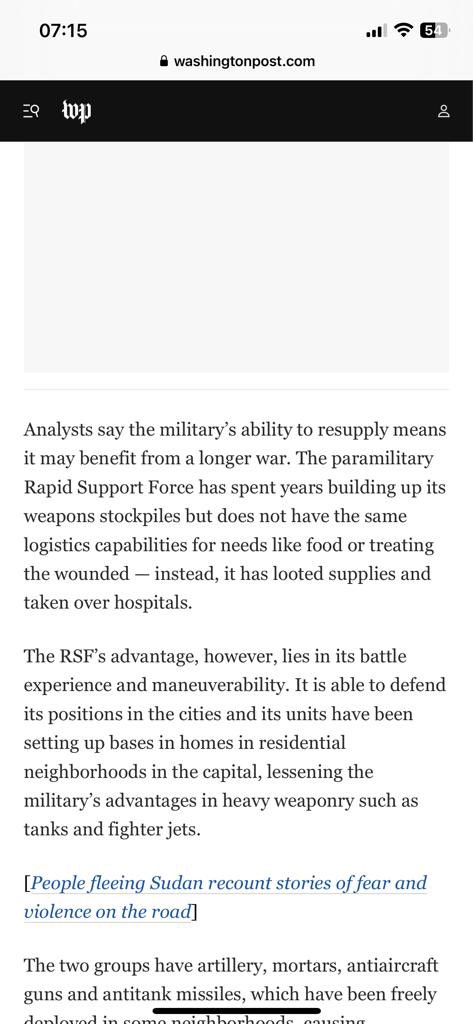
Screenshots of the points that jumped out to me: control of the pipelines, the weapons both have, the Khartoum areas under the control of both and the fact this could be a drawn out affair
A roundup of recent podcast episodes on Sudan:
1) @matnashed & @ReemWrites on @CBCNews' Nothing is Foreign podcast with @anima_tk talking about Reem's decision to stay in Khartoum and the role of western diplomats in the conflict
https://t.co/FfPf3aLCaB
Sudanese fleeing war in Khartoum call out ‘shocking’ lack of UN presence or other international humanitarian aid organisations at border crossings. https://t.co/2ODMQFAeXx
Fears that the ongoing civil-war in #Sudan can spread and splinter, co-opting rival communities in #Darfur
So far, violence is most acute in al-Genina, where people are being ethnically targeted, not caught in the crossfires.
My latest for @AJEnglish
https://t.co/ruZHelFjCT
#Sudan's putschits, *all*, are perfecting their modus operandi:
- Raise the stakes by threatening war,
- Gain concessions from those pushing for change, domestic or international,
- De-escalate and keep the concessions.
Rinse and repeat.
'Til next time, folks!
Except... +
The supply chain of a seemingly innocuous cash crop – sesame – has intersected with war, exacerbating tensions between Ethiopia and Sudan, writes @AhmedSolHoA (@AfricaProg).
https://t.co/ScMuFoylV1