The New York Times writes an article praising ROSALÍA and her performance on the “LUX” TOUR. Here are some excerpts from the article:
“When pointe shoes appear in mainstream culture, dancers tend to react with discomfort. This is because ballet is not only about aesthetics: en pointe is an extremely demanding technique, built over years of intense training. It is not something that can be easily imitated, and when done improperly, it can feel like a distortion of the art itself.
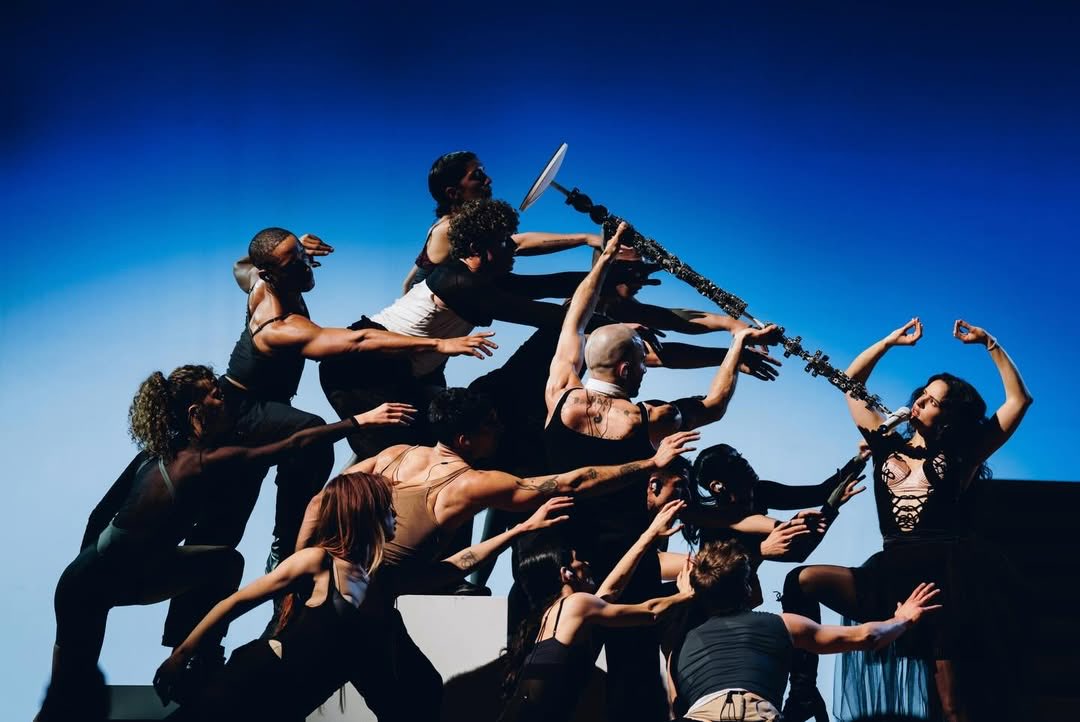
That is why it drew attention when ROSALÍA opened a show on the “LUX” tour at Madison Square Garden dressed as a ballerina, wearing a voluminous tutu and pointe shoes. The initial reaction was one of anticipation and caution, since this kind of representation often feels superficial from the perspective of dance professionals.
But as she began to move, the perception shifted. Although no one confuses her with a professional ballerina, ROSALÍA demonstrates an approach marked by respect and genuine curiosity toward ballet. In “Porcelana,” she performs arabesques and small bourrées with surprising precision, revealing attention to technical detail and bodily awareness. What emerges is not a hollow imitation, but an attempt to translate ballet as a language.
This same logic guides the album “LUX,” which blends opera, multiple languages, and classical references into an experimental pop aesthetic. The tour expands this by transforming ballet into a physical equivalent of opera, treating technique and expression as part of the same artistic pursuit.
The impact of this approach is also reflected in the reactions of major figures in dance, such as Misty Copeland and Tiler Peck, who praised the way ROSALÍA engages with the language of ballet. Choreographers involved in the project, such as the collective (La)Horde, have stated that many of the core ideas came from the singer herself, including the decision to open the performance as a ballerina.
Throughout the show, the concept expands beyond ballet, blending styles such as flamenco, contemporary dance, and pop culture elements. The result is a multi-act performance that shifts between classical delicacy, chaotic intensity, and theatrical visual references. At times, the aesthetic feels like both a museum and a nightclub, reinforcing the idea of fluidity between artistic languages.
Ultimately, what stands out is not technical perfection but intention. ROSALÍA comes across as someone who treats ballet not as decorative fantasy, but as a demanding discipline and a form of expression. And it is precisely this willingness to submit to difficulty rather than simply imitate its surface that gives weight to the “LUX” project.”
Based on Jane Austen's iconic masterpiece, watch the trailer for SENSE AND SENSIBILITY, starring Daisy Edgar-Jones, Esmé Creed-Miles, Caitríona Balfe, George MacKay, and Fiona Shaw. Only in theaters October 16.
Zohran Mamdani has turned blocks in front of 50 NYC public schools into car-free ‘Soccer Streets’ where children can play in celebration of the upcoming World Cup.
Rosalía conquista a la prensa más prestigiosa de Alemania con el LUX TOUR:
“Se debería ver de rodillas porque es la prueba de la excelencia de la mayor artista de su generación” — @zeitonline
“Un refugio cultural: pura inspiración sin fronteras de una visionaria” — @derspiegel
Info request: I'm looking for someone who went to Dara O'Brien's show at the Edinburgh Playhouse a couple of weeks ago? Please DM me if you cam help. Thanks.
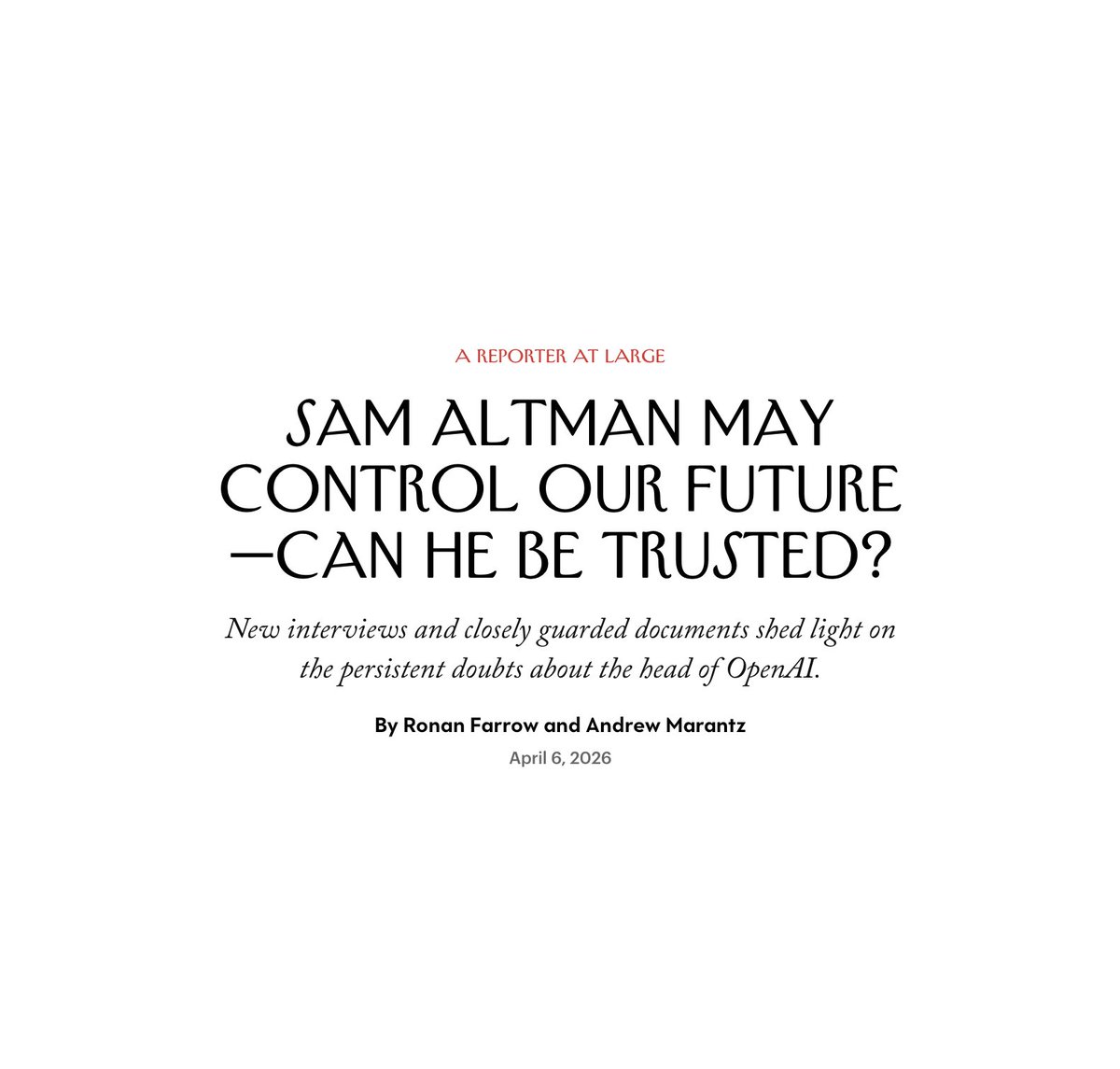
(🧵1/11) For the past year and a half, I've been investigating OpenAI and Sam Altman for @NewYorker. With my coauthor @andrewmarantz, I reviewed never-before-disclosed internal memos, obtained 200+ pages of documents related to a close colleague, including extensive private notes, and interviewed more than 100 people.
OpenAI was founded on the premise that A.I. could be the most dangerous invention in human history—and that its C.E.O. would need to be a person of uncommon integrity. We lay out the most detailed account yet of why Altman was ousted out by board members and executives who came to believe he lacked that integrity, and ask: were they right to allege that he couldn't be trusted?
A thread on some of of our findings: