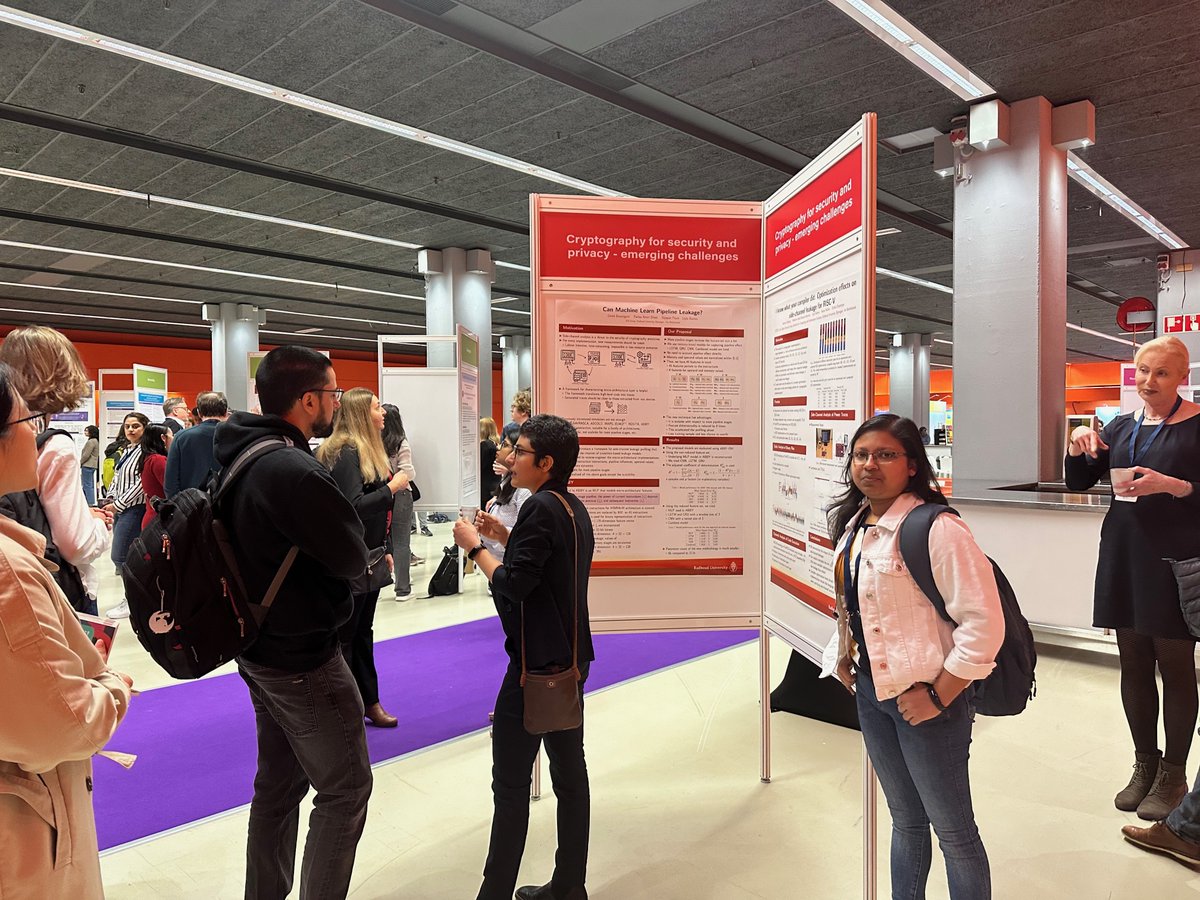
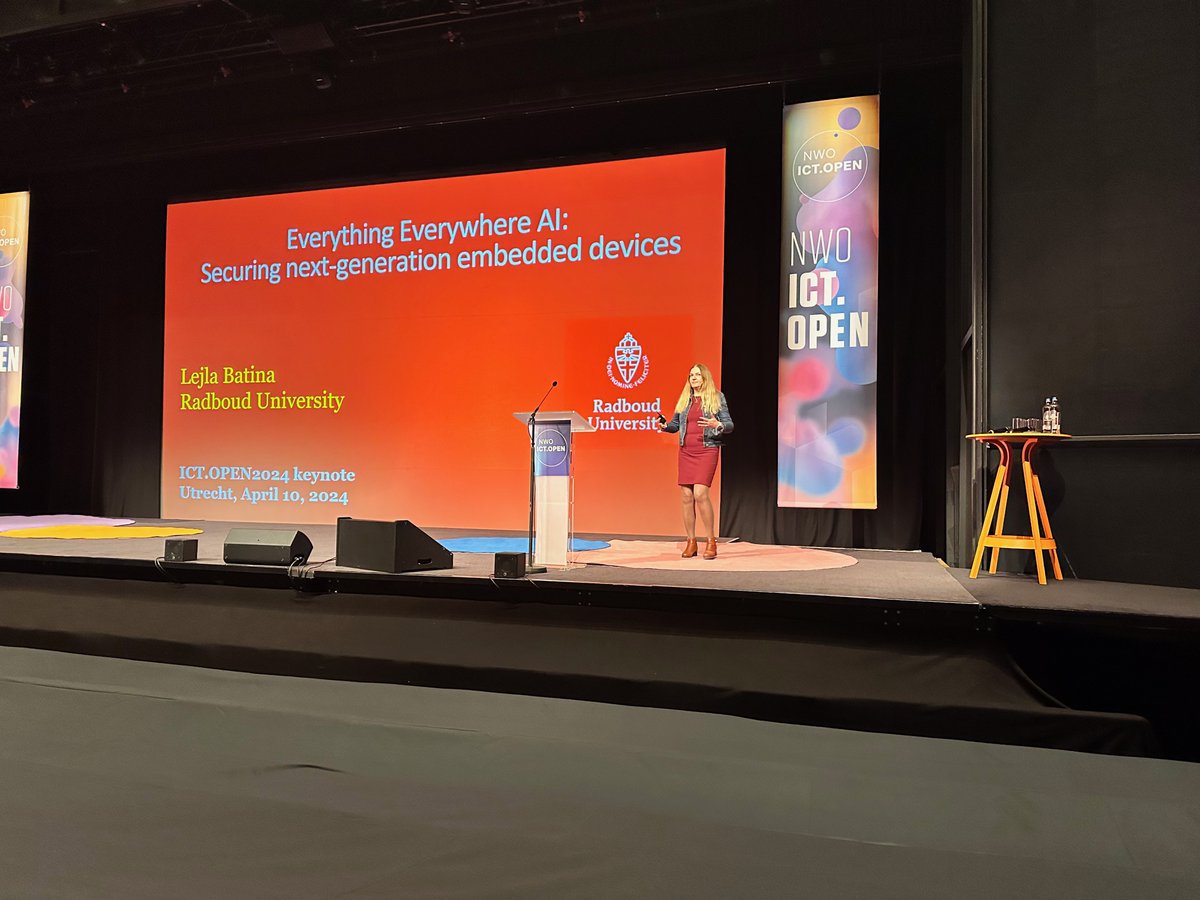
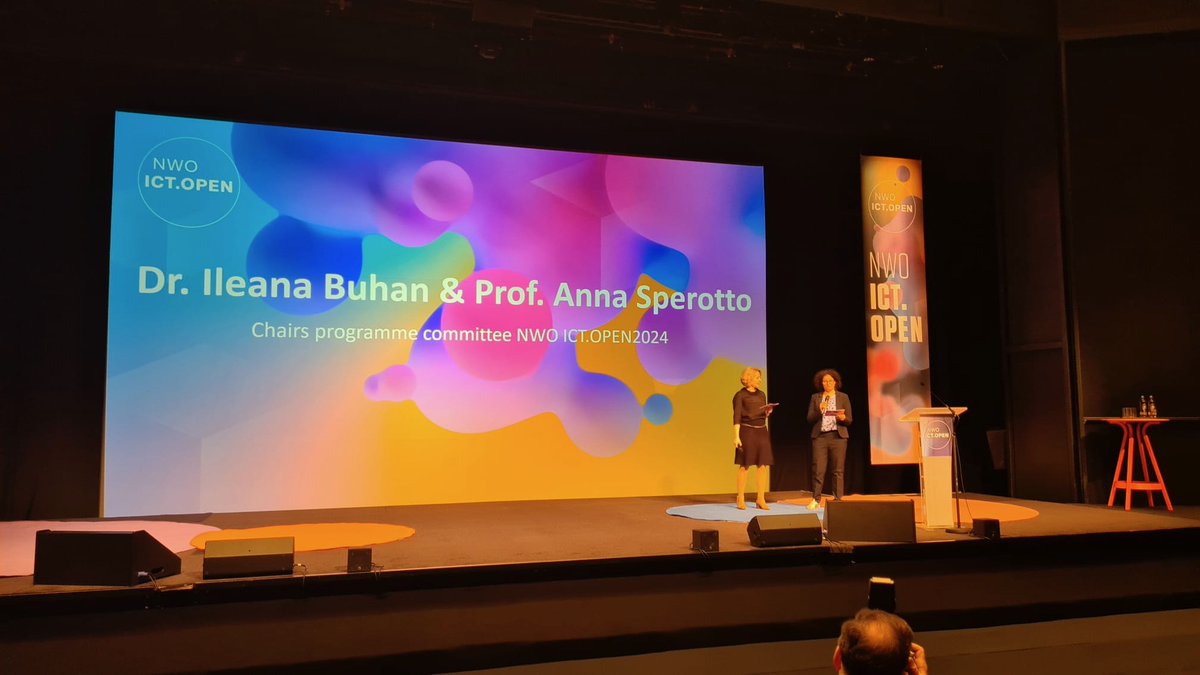
DiS had a large footprint at NWO ICT.OPEN2024! with @ileanabuhan as program co-chair, @lejla_batina contributing a keynote talk, Simona Samardjiska as one of the track co-chairs, and, of course, many posters
Want to know more about which people have secured our Digital World? An interesting article about Joan Daemen from Radboud University and its role in creating today's cryptosystems here https://t.co/CvkUUYwXQN
The study investigated how online trackers collect email addresses and passwords typed in web forms before user submits a form or gives
consent. Read more about the study here: https://t.co/ji60YCrONu
DiS researchers Gunes Acar and @fborgesius (& their coauthors from KU Leuven and University of Lausanne) won the prestigious
🏆 CNIL-Inria Award for Privacy Protection 🏆.
The paper "Indifferentiability of the sponge construction" by Guido
Bertoni, Joan Daemen, Michaël Peeters and Gilles Van Assche presented at
Eurocrypt 2008 won the Test-of-Time award of the IACR https://t.co/O5IvJQvQ0K
Applications for the joint Erasmus Mundus AI master program are open until the 1 March. Want to know more? register and join the webinar, on the 8th of February
https://t.co/ZYG4TctnIN
@neu_rips@UPFBarcelona@SapienzaRoma@Radboud_Uni@unilj Thanks Gergo! Applications actually close on March 1. We are presenting the EMAI programme online next Wednesday 8, at 15:00 CET. Interested students can register https://t.co/hYVpsyLAkx
We are hiring! Are you interested in a Ph.D. position on post-quantum cryptography? Check this out https://t.co/kOgl6CUte1 and apply by 27 October 2022. Please share this tweet!
@StjepanPicek_ gives a tutorial on deep learning-based side-channel analysis at CHES2022, 18.09 which covers both theoretical and practical aspects. This is a unique opportunity to understand the basics and ask questions about advanced concepts. Join here https://t.co/VfBb8ezvz8
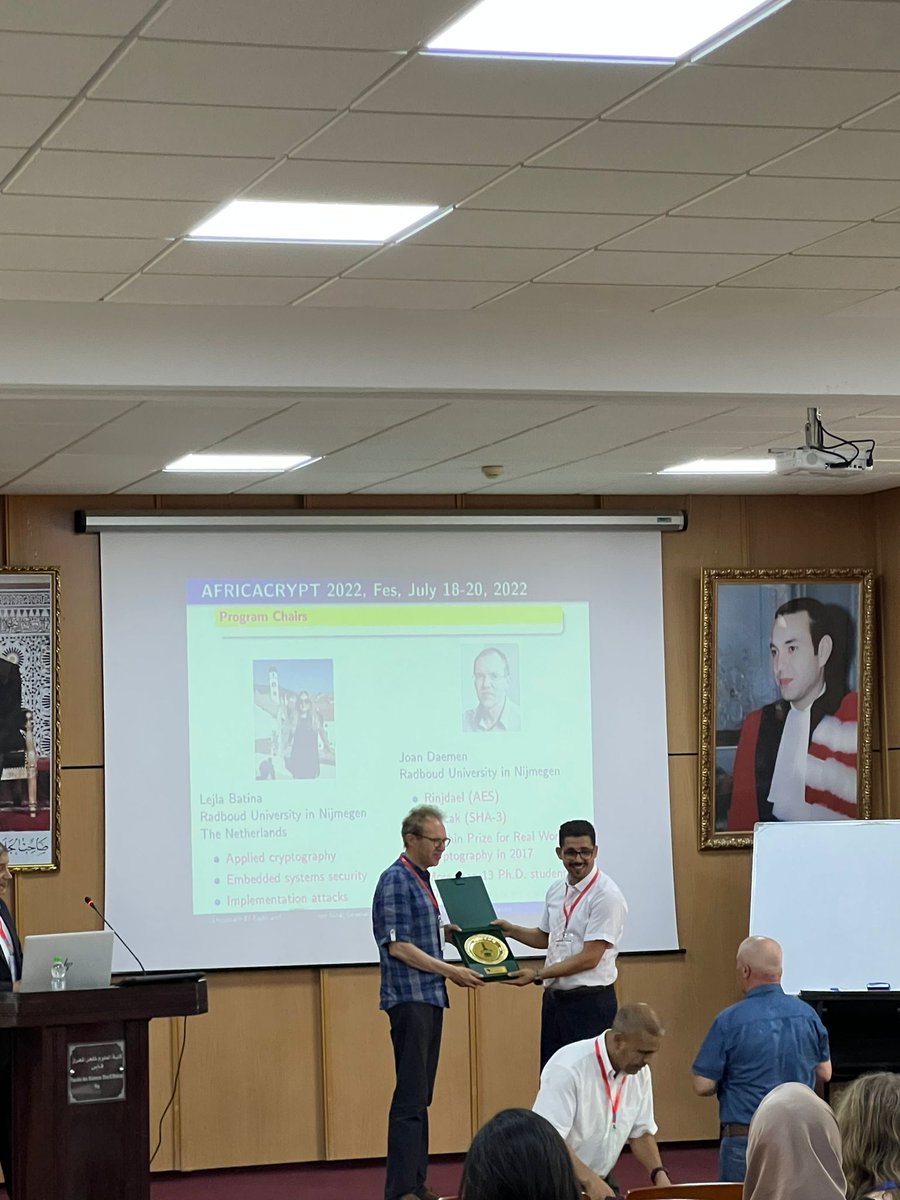
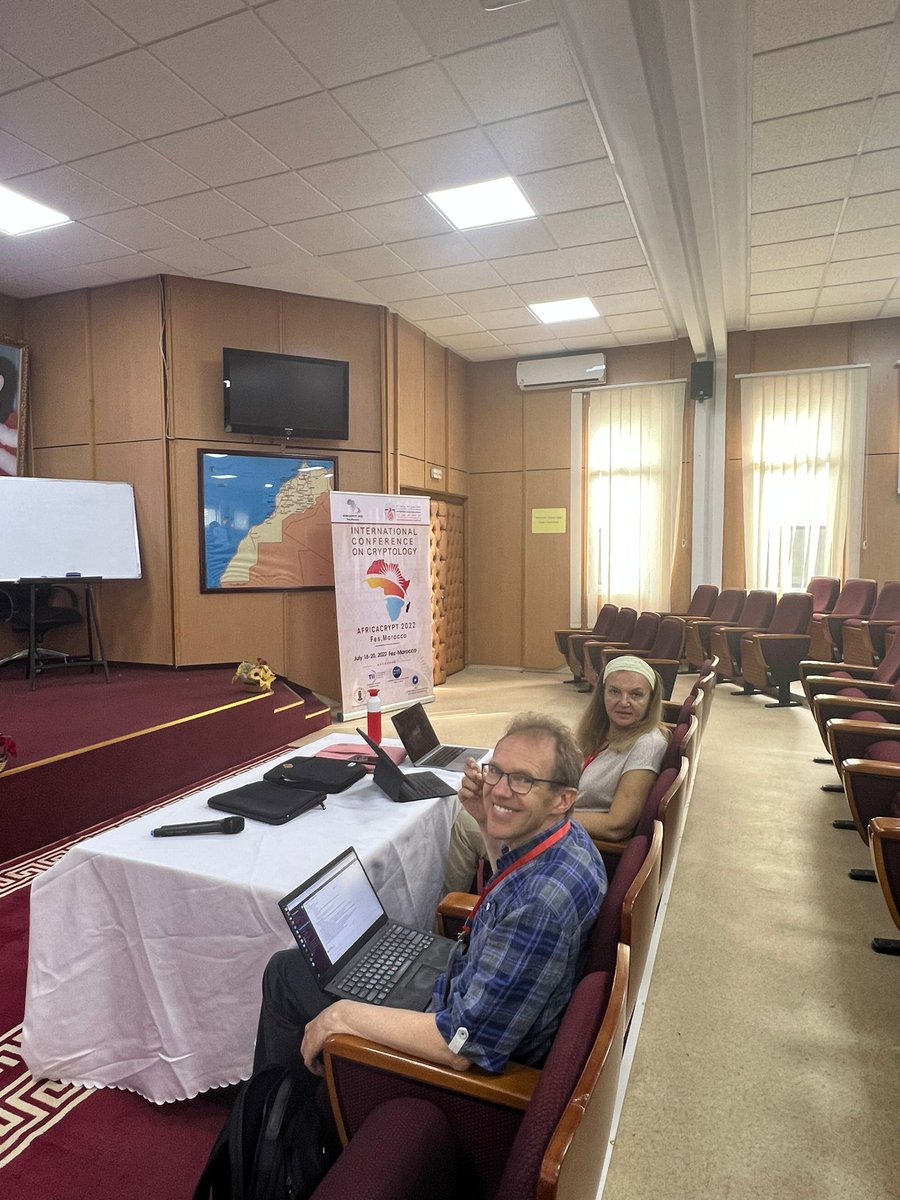
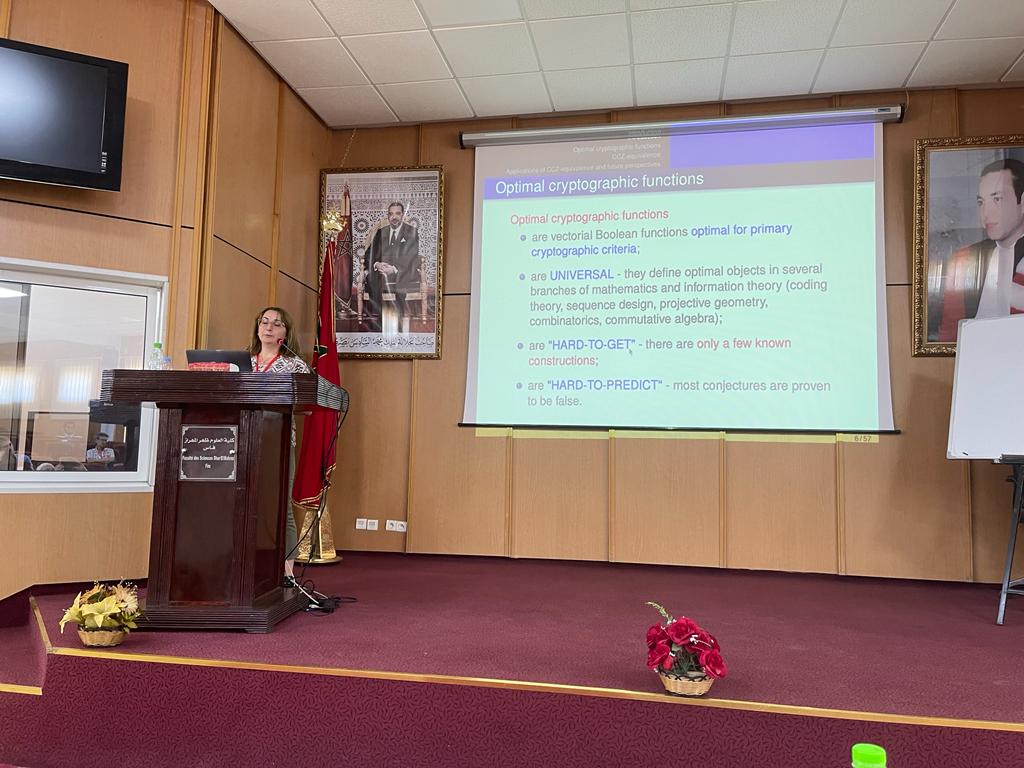
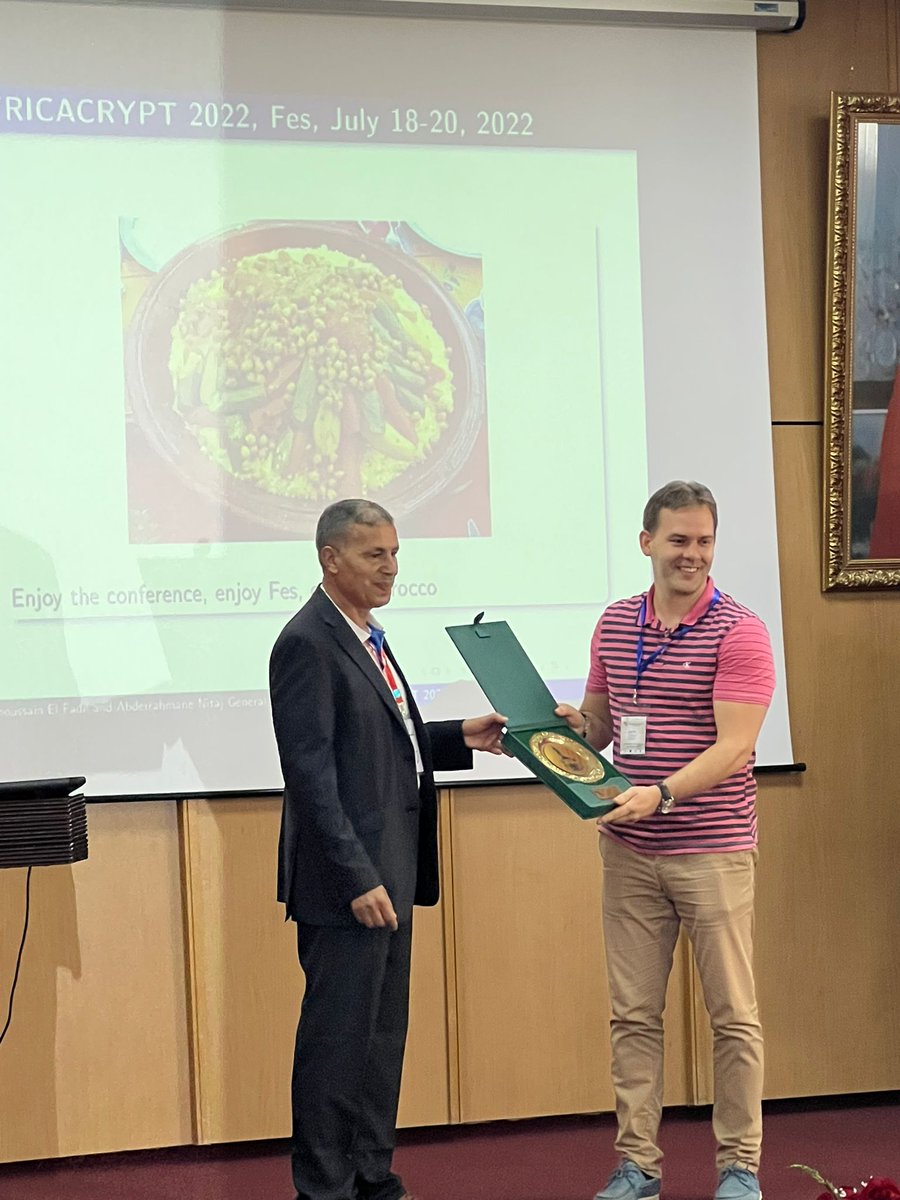
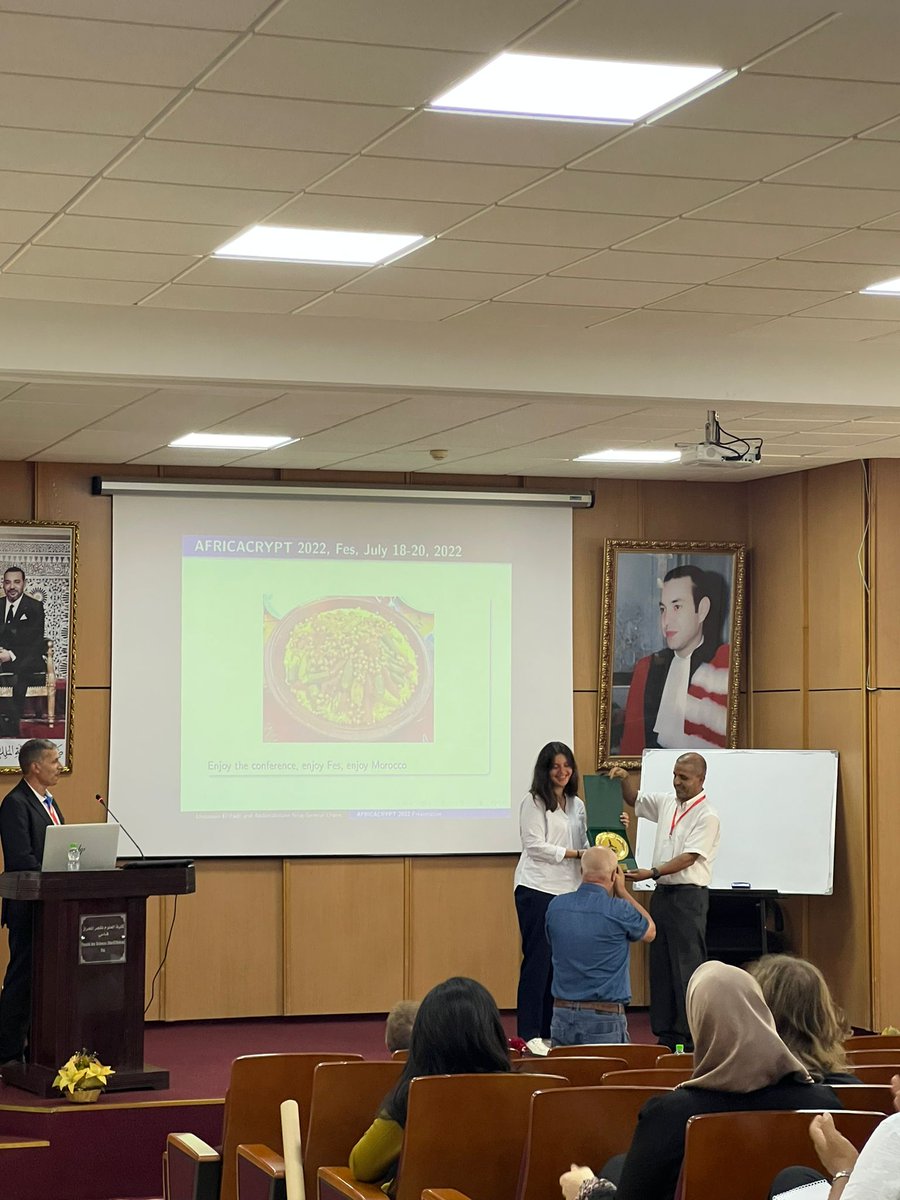
Africacrypt2022 started today with strong participation of @RadboudSecurity: Joan Daemen and @lejla_batina as program chairs, @Constance_Mitel web designer and poster presenter and @StjepanPicek_ as the poster session chair.
NIST chooses Kyber, Dilithium and SPHINCS+ as standards for post-quantumcryptography. The underlying technology must ensure that the encryption of sensitive communication will continue to be secure in the coming decades. https://t.co/CbWAJANBSD @cryptojedi
De achterliggende technologie moet ervoor zorgen dat de versleuteling van gevoelige communicatie ook in de komende decennia veilig blijft https://t.co/dtO4rxfcUq @cryptojedi