Don*t deal with 🇷🇺 as it*s a doomed nation. No peace talks are possible with the doomed leaders, doomed authorities, doomed peacemakers. Ukraine does not need support from other countries. Ukraine needs the recognition of the war & civil crimes committed against Ukrainians 😌
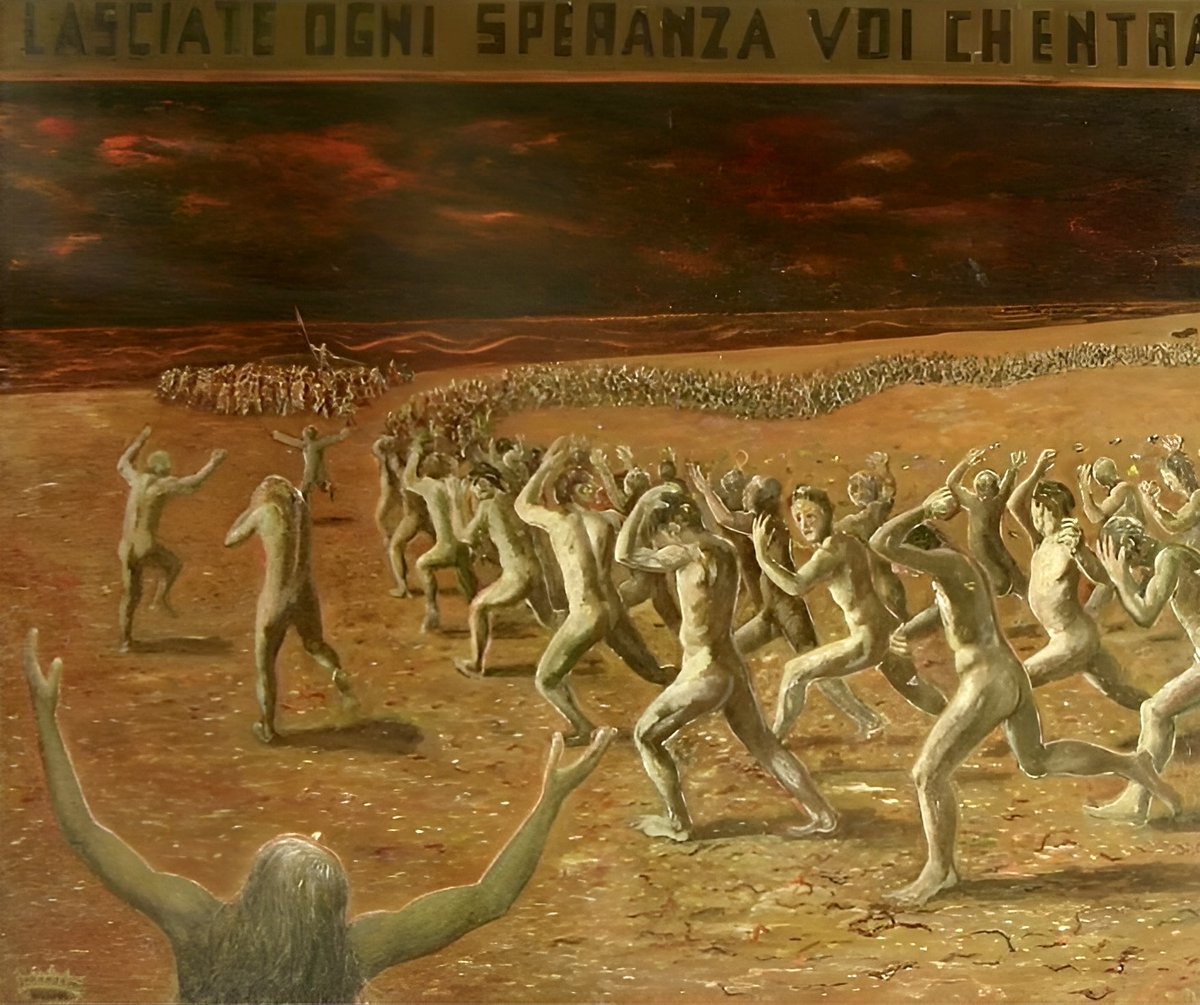
In Dante's Inferno, people who were neutral in life are treated just as harshly as those who sinned.
These are the "uncommitted" who chose no side. They are rejected by both Heaven *and* Hell.
Lukewarm souls are made to wait forever in the "Vestibule of Hell". They're stung by wasps while they run around in pursuit of a meaningless white banner (in punishment for standing beneath no banner in life).
Even worse, their blood and tears flow from their faces onto the ground to be consumed by maggots. Why?
In Christianity, Christ's blood is shed for man's salvation, and the blood of the martyrs is considered the seed of the Church. To bleed — whether literally or metaphorically — for a worthy cause is a great act of love.
But in the case of the lukewarm, their blood merely feeds maggots. "You shall know them by their fruits," Christ says, but the only "fruit" the lukewarm produce is nourishment for worms.
Dante himself was exiled from his hometown of Florence by a rival faction after years of civil conflict. His dislike of the lukewarm stemmed from those who sat on the sidelines and did nothing while his sentence was handed down — those who let injustice slide and were more concerned with protecting their own lot in life.
Dante doesn't even give them the courtesy of mentioning them by name in his Inferno. The "uncommitted" are all nameless.
His warning to the spineless is thus:
Stand for nothing, and nothing is what you'll become.
Scotland has just done something quietly brilliant for its birds 🐦
New buildings across the country will now have to include "swift bricks", hollow bricks built straight into the walls that give birds a safe place to nest.
It sounds like a small thing but it isn't. Swift numbers in the UK have fallen by around 60% since the mid-1990s, and one of the biggest reasons is heartbreakingly simple: modern buildings have nowhere for them to go. Swifts have always nested in the nooks and gaps of our houses, and as those disappeared, so did they.
The birds themselves make it worse by being loyal to a fault. Swifts return to the exact same nest site year after year, having flown thousands of miles from Africa to get there.
When they arrive to find it sealed up, some will keep flying at the spot again and again, sometimes injuring themselves in the process.
The bricks cost about £30 each. They need no maintenance, they don't affect insulation, and once they're in the wall, you'd never know they were there. Sparrows, starlings and house martins use them too, all species in trouble for the same reason.
One RSPB conservationist put it starkly. In his part of Glasgow, not a single swift bred in 2025, the first time in his 30 years there. He called it "nothing short of heartbreaking."
Scotland is the first country in the UK to write this into law. Campaigners are now hoping the rest follows.
The feast of St. Mary Magdalene is considered one of the most mystical of feasts, and it is said that of all the songs of the saints, that of Mary Magdalene is the sweetest and strongest because her love was so great. That love was praised by Jesus Himself who said that because much was forgiven her, she loved much. Where she is buried, no one knows. Legend has her dying in Provence, France, in a cavern where she spent her last days, and her body resting in the chapel of St. Maximin in the Maritime Alps. Another has her buried in Ephesus where she went with St. John after the Resurrection. This latter view is more likely, and St. Willibald, the English pilgrim to the Holy Land in the eighth century, was shown her tomb there.
She was the first recorded witness to the resurrection of Jesus, His most ardent and loving follower. She had stood with Mary at the foot of the Cross on that brutal Good Friday afternoon and had been by the side of Mary during these difficult hours. On Easter morning, she went with the other women to the tomb and it was there, in the garden near the tomb, that Jesus appeared to her. It was she who brought the news of the Resurrection to the Apostles, and Peter and John raced to the tomb to see what had happened.
She was from Magadala, a small fishing town on the Sea of Galilee, between Capernaum and Tiberias. She was known to be a "great sinner," a woman of the streets who heard Jesus speak of the mercy and forgiveness of God and changed her life completely. Her matter-of-fact witness to the Resurrection moved Peter and John to go and see for themselves: "I have seen the Lord and these things he said to me." Jesus had chosen her to bring the news to them and she simply told them what had happened.
She has always been the example of great love and great forgiveness, one of those close to Jesus who grasped the truth of God's love for human beings and spent her life bearing witness to that love. (Excerpted from The One Year Book of Saints by Rev. Clifford Stevens)
🌾" I desire mercy”, namely the loyalty of a heart that recognizes its own sins, that mends its ways and returns to be faithful to the covenant with God. “And not sacrifice”: without a penitent heart, every religious action is ineffective!
Gospel of the Day (Matthew 12,1-8)
Jesus was going through a field of grain on the sabbath. His disciples were hungry and began to pick the heads of grain and eat them.
When the Pharisees saw this, they said to him, "See, your disciples are doing what is unlawful to do on the sabbath."
He said to them, "Have you not read what David did when he and his companions were hungry,
how he went into the house of God and ate the bread of offering, which neither he nor his companions but only the priests could lawfully eat?
Or have you not read in the law that on the sabbath the priests serving in the temple violate the sabbath and are innocent?
I say to you, something greater than the temple is here.
If you knew what this meant, 'I desire mercy, not sacrifice,' you would not have condemned these innocent men.
For the Son of Man is Lord of the sabbath."
https://t.co/CCWejl46XP
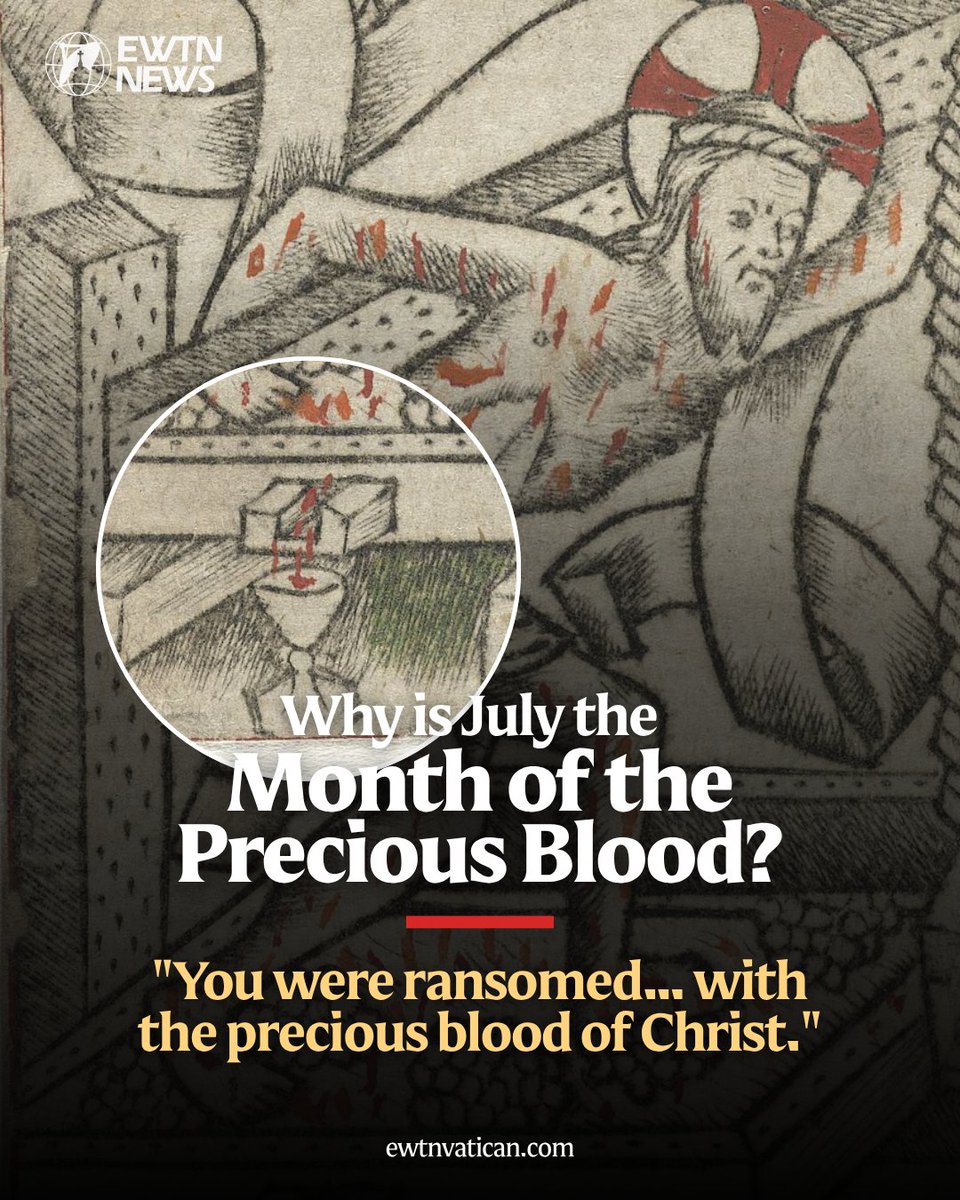
July is dedicated to the Most Precious Blood of Christ, inviting Catholics to reflect on the Blood Jesus shed on the Cross for the redemption of the world. The Church teaches that this is the same Blood made sacramentally present in the Eucharist under the appearance of consecrated wine, offered in an unbloody manner at every Mass.
The devotion became universal in 1849 when Blessed Pope Pius IX, after returning safely from exile, extended the feast to the entire Church. St. Pius X later fixed its celebration on July 1, and Pope Pius XI raised it to the rank of a Solemnity in 1934. Following the Second Vatican Council, the feast was removed from the universal calendar, but the month of July remains dedicated to honoring the Precious Blood, with votive Masses celebrated throughout the month. In the Holy Land, the traditional July 1 celebration continues by special permission.





![RadchenkoOlena's tweet photo. Rosa Ventorum [4; 8; 16] ✨
🎶https://t.co/d4dfscvlDm https://t.co/FuWEQkqgg6](https://pbs.twimg.com/media/HN29fPXXkAAB07s.jpg)