I am a member of the Norwegian Nobel Committee.
There are five of us. Five people, appointed by a parliament most of the planet could not find on a map, who decide, once a year, which human being the world has agreed to call good.
I know. I know. I think about it on the tram.
We meet in a building on Henrik Ibsens gate, a street named after a man who wrote almost exclusively about people discovering they are frauds, which nobody on the committee finds funny except me. There is a room with a long table and the portraits of the dead laureates looking down, Mandela, the Dalai Lama, a great many earnest men in spectacles, and one portrait we do not discuss, which is Kissinger, 1973, awarded while the bombs were still falling, after which two of our predecessors resigned and the satirist Tom Lehrer said political satire was now obsolete. We keep him on the wall. A reminder. Every family has the uncle.
It is October in Oslo, which means the sun gives up around four in the afternoon like a civil servant, and it rains the particular Norwegian rain that isn’t quite falling, just hanging there, judging you. I arrive with wet shoes. I always arrive with wet shoes. There is coffee, because this is Norway and there is always coffee, we drink more of it per person than almost anyone alive, and someone’s wife has sent kanelboller, the cinnamon buns, and we sit, five Norwegians, damp, caffeinated, sugared, and we decide the moral standing of the entire species.
Let me tell you how it actually works, because the world imagines a cathedral and it is, I promise you, a book club with a mandate.
287 nominations this year. 208 people, 79 organizations. Anyone can nominate, that’s the secret nobody understands: a professor, a parliamentarian, a former laureate, so the “nominee” list is meaningless, it’s a suggestion box, and every autumn some congressman nominates his own golden retriever and the press writes “SHORTLISTED.” Nobody is shortlisted. There is no short list the public ever sees. There is us, and the coffee, and the rain, and the portraits, and a Norwegian stubbornness that is older than the prize itself.
We read reports. The institute’s advisers write them, thick dull documents, and we argue. Our chairman told the BBC once that in the final meeting “there is a high temperature.” High temperature, for a Norwegian, means someone slightly raised an eyebrow and then apologized for it. We don’t do high temperature. We do a long silence, and then Kristin says “well,” and everyone knows exactly what “well” meant, and it’s settled. That’s our shouting. “Well.” You’d have to be raised here to hear the violence in it.
Now. This year. I will not say the name, because we never say the name, but you know the name.
A certain head of state wanted this prize the way a child wants a thing in a shop window, which is to say loudly, and in public, and with the full belief that wanting it was itself the argument. He said he deserved it. He said he’d ended eight wars, a number that grew most times he said it, like a fish. He had other heads of state phone us. Israel’s prime minister posted it on the internet, “Give him the Nobel.” The leaders of Cambodia and Pakistan announced they’d nominated him, as though announcing it were part of it, as though we tally mentions. A man flew around the globe collecting endorsements for a Norwegian committee the way you’d collect signatures for a petition to the council about a noisy dog.
And here, uff da, is the detail I treasure, the one that makes me smile into my coffee. The nomination deadline is the 31st of January. He took office on the 20th. So for all the phone calls, all the posts, all the gilded lobbying, the only nominations that could possibly count for this year’s prize were filed in the first eleven days of his term, before he had, by his own arithmetic, ended a single one of the eight wars. He campaigned all year for a prize whose window had shut while he was still hanging up his coat. We didn’t have to reject him. The calendar did. We just watched. Norwegians are very good at watching. We have long winters.
People think we sit there weighing his deeds. We don’t. That’s the thing I can’t make the world understand. We’re not grading his homework. We don’t owe anyone the prize for a ceasefire, however real, however loud the announcement. “He made peace” is not a sentence that ends in a medal, the way he believes it does, the way he believes every good thing ends in his name on it. The will of a dead Swede says the prize goes to whoever did the most for fraternity between nations. A dead Swede, I should add, who made his entire fortune inventing dynamite and selling arms, and spent his last years horrified at his own obituary, which called him a merchant of death, and so bought his way to immortality as a man of peace. The whole prize is one guilty arms dealer’s attempt to launder his name. We are, all of us, administering a dead man’s public relations. I find this clarifying. It keeps me humble. It should keep everyone humble, and it keeps, by my count, no one humble at all.
So who did we give it to?
An eighty-five-year-old woman. A judge. Born in Durban, under apartheid, granddaughter of a Tamil man who came to South Africa as indentured labor, a bus driver’s daughter from the poor Indian quarter, who became the first non-white woman to run a law practice in her province, who defended Mandela’s people when defending them was dangerous, who sat on the Rwanda tribunal and the court at the Hague, and who, at eighty-five, is right now a judge weighing whether a genocide is a genocide. When we told the world, our chairman said the rule of law “underpins the system we have set up to ensure peace,” and that “peace requires justice.” She wasn’t even in Oslo. She was in Nuremberg. In courtroom 600. The actual room where they tried the Nazis. You cannot stage that. God staged that, and God, it turns out, is a better satirist than any of us.
She did not phone us. She did not post. No prime minister demanded it for her on the internet. She had, as far as our deliberations are concerned, the one qualification the loud man could never manufacture, which is that she wanted the work and not the medal. The medal finds those people. It flees the ones who chase it. This is not a rule we wrote. It’s just the only pattern the hundred-odd years of our mistakes has ever shown.
The reaction from across the ocean was immediate. His spokesman posted that we “place politics over peace.” Ja. Perhaps. We’re five damp pensioners in a rainy city; of course it’s political, it was always political, it was political when we gave it to a sitting American president nine months into his first term for the promise of things he had not yet done, and we have been quietly embarrassed about that one for fifteen years, so believe me, we had a particular reason this year to prefer a woman with fifty years of verdicts behind her over a man with eight wars in front of him and a deadline already behind him.
Here is what he will never understand, the thing I’d tell him on the tram if he ever took one. We are the one prize he cannot buy, cannot post his way to, cannot have a friendly dictator phone in for him. Not because we’re incorruptible, nei, we’re as vain and wrong and human as the portraits on our wall. But because the entire point of the thing, the only power a small cold country’s book club has ever held, is that it goes to the person not performing the wanting. The moment you demand it, you’ve proven you don’t understand what it’s for, and proving that is itself the disqualification. He ran the most expensive campaign in the history of the prize and the campaign was the reason. He was never losing to Navi Pillay. He was losing to the concept.
It’s dark now. Four o’clock dark. The buns are gone. Kristin said “well” an hour ago and we all went home. I’m on the tram with my wet shoes, and somewhere across the water a very powerful man is explaining to a camera that the prize is rigged, that we’re corrupt, that he’ll win it next year, and he genuinely might, we’re only five idiots and we’ve been wrong before, Kissinger is still on the wall.
But not this year. This year an old woman in Nuremberg, in the room where the law once stared down the exact kind of man who thinks wanting a thing loudly enough should make it his, got a phone call she didn’t ask for.
That’s the job. We don’t reward the man who ends the war and announces it.
We reward the woman who spent fifty years deciding what a war was.
He’ll never see the difference. That’s rather the whole point of him.
Takk for i dag. I have to change trams.
13/13
Summary Rule of Relationship Karma:
Every rising sign carries a house where its 7th Lord exalts (saves the bond) and where it debilitates (ruins the bond).
Stop feeding the debilitation house habits and start investing in your exaltation house behaviors.
What’s your Rising Sign? Drop it below! 👇
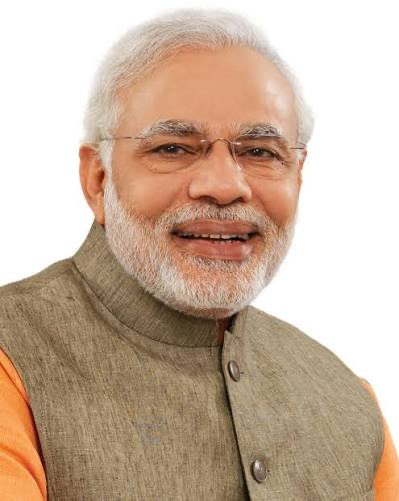
Happy 76th birthday to one of Ma Bharati’s favorite children, Prime Minister Narendra Modi ji!
Though I predicted some weakness for him during Sept 2025-Sept 2026, next one year is stronger.
He has managed things quite skillfully for India during some pivotal & messy years in the middle of a chaotic & transformational decade for the world. Indians are fortunate to be led by him, even if many of them may not yet realize it.
Wishing him the very best for the coming year!
As an empty nester, I’ll tell you this…
Your children eventually build lives that don’t revolve around you.
They grow up.
They build careers.
They fall in love.
They make their own friends, routines, traditions, and families.
And that’s exactly what you raised them to do.
But while you’re helping them build a life of their own, make sure you’ve built one that doesn’t revolve around them.
Keep your friendships.
Take care of your relationship.
Have hobbies that belong to you.
Learn something you’ve always wanted to learn.
Travel when you can.
Set goals that have nothing to do with your children.
Because one day, the house may become quieter.
They may call less often.
They may spend holidays somewhere else.
They may need your advice less than they used to.
That doesn’t mean you’re no longer important.
It means you succeeded in raising someone who can stand on their own.
Parenthood is a chapter of your life—not the entire book.
Love your children deeply.
Be there for them.
But don’t put your entire identity, happiness, and purpose inside their lives.
They need a life of their own.
And so do you.
Share your opinion ..............................
Chanting Hanuman Chalisa is one of magical remedy if you are facing issues related to anything.
Doing it seven times a day, usually helps you in better confidence, clarity and will power.
@AstroSharmistha But earlier you were so sure that there will be a different leader in Delhi in place of Modiji in 2027 ? Now you are sure about Modi 4 😄
What about Destiny @AstroSharmistha ?
Karma is described as a law of action and result, which is broadly correct. This leaves a basic problem: karma is jaḍa, inert, with no intelligence of its own.
A past action cannot decide when its result matures, what form it takes, or through whom it arrives. The ordering of karmic results belongs to Īśvara.
Prārabdha is the portion already bearing fruit in this life. It determines much of the field into which a person is born: body, family, temperament, relationships, opportunities, losses, and conditions never consciously chosen.
The mind is part of that field. It carries saṃskāras formed by earlier actions, influencing desire, fear, judgment, habit, and reaction. Someone may feel drawn towards a course because earlier causes prepared the mind for it. Buddhi allows viveka to operate: an impulse can be recognised, examined, restrained, or refused. The response becomes fresh action and generates kriyamāṇa karma.
Earlier karma shapes the force of a tendency; present action adds something new. Repeated anger makes angry reactions easier, indulgence strengthens attachment, and discipline renders restraint natural.
Desire colours perception, perception directs action, and the result generates pleasure, frustration, pride, fear, or another desire. The next action arises from a mind already altered by the previous one.
Sañcita is the accumulation of karma from all prior lives. Prārabdha is the portion of sañcita now maturing to shape present conditions, drawn from across many births. Kriyamāṇa is the fresh karma generated through responses within those conditions.
To understand this cycle, the attachment sustaining it must be examined.
Bondage develops through kartṛtva, the sense of doership, and bhoktṛtva, the sense of being the experiencer of the result: I am the doer; this result belongs to me; I must obtain this; I must prevent that. Each experience can strengthen the conditions for further action.
Bhakti changes the basis from which action is performed. Bhagavat-kṛpā is ahetukī, granted freely by Bhagavān and unearned by any prior act.
Sādhana, prayer, devotion, and surrender transform the devotee’s orientation without creating a debt Bhagavān must repay. Kṛpā lies outside the transactional calculus of karma.
Nimitta is the instrumental means through which results take form. A physician may become the nimitta through which illness is cured; an astrologer may provide a warning through which danger is recognised early. A teacher, ritual, medicine, or unexpected opportunity may similarly become the means through which prārabdha unfolds or relief arrives.
Claims about “defeating destiny” are difficult to sustain. The warning, physician, money for treatment, or decision to act may themselves belong to the causal sequence. What appears as intervention may itself be the mechanism through which prārabdha reaches its result, making it impossible from within the sequence to know whether destiny was altered or fulfilled.
Śaraṇāgati concerns the devotee’s relation to agency. A person continues to fulfil duties, make decisions, and experience pleasure and pain while gradually offering action, motive, result, and authorship to Bhagavān.
If surrender is pursued mainly for worldly desires, the desired result still governs the act. Śaraṇāgati matures as Bhagavān becomes the centre of action.
Prārabdha, once it begins to fructify, must run its course, though its intensity can be reduced through prāyaścitta karma. Sañcita can be burned through knowledge, while fresh karma need no longer bind. Spiritual freedom can therefore arise while prārabdha remains active.
What changes is the relationship with what must still be lived through. Fear, desire, and the need to control every consequence lose force as action is offered to Bhagavān.
The question then is: how much of the action remains organised around the individual self, and how fully has it been offered to Bhagavān?
The 27 nakṣatras form the reference frame for the Sidereal Zodiac. The term nakṣatra admits three derivations:
1] na (not) + √kṣar (to perish): na kṣarati iti nakṣatram, 'that which does not perish', the imperishable.
2] √nakṣ (to approach, attain): Yāska's derivation at Nirukta 3.20; 'those that approach' or 'those that are reached'.
3] nakta (night) + tra (guard): 'guardians of the night'.
Unlike grahas whose positions constantly change, nakṣatras remain fixed (insignificant proper motion across millenia). Hence the connotation of imperishability.
The name of each nakṣatra is itself descriptive:
1. Aśvinī (अश्विनी) — 'belonging to the horse riders': swift, healing, pioneering.
2. Bharaṇī (भरणी) — 'the bearer', from √bhṛ (to bear, carry): gestation, restraint, transformation through containment.
3. Kṛttikā (कृत्तिका) — 'the cutters', from √kṛt (to cut): sharp, discerning, purifying through severance.
4. Rohiṇī (रोहिणी) — 'the red one, the growing one', from √ruh (to grow, ascend): fertile, ascending, luxurious growth.
5. Mṛgaśirā (मृगशिरा) — 'deer's head': searching, curious, gentle pursuit.
6. Ārdrā (आर्द्रा) — 'moist, fresh, green': emotional, transformative, fresh beginnings and terrible endings, the storm.
7. Punarvasū (पुनर्वसू) — 'the two who are good again': renewal, restoration, coming out of solitude/hibernation/meditation, return to light.
8. Puṣya (पुष्य) — 'nourisher', from √puṣ (to nourish): nurturing, supporting, most auspicious.
9. Āśleṣā (आश्लेषा) — 'embracer, entwiner', from √śliṣ (to embrace): clinging, binding, one with the lover, one with one's ideas, dedication, obsessive attachment, serpentine wisdom.
10. Maghā (मघा) — 'the mighty, the bountiful': powerful, ancestral glory, regal authority, connection to the pitṛs.
11. Pūrvāphālgunī (पूर्वाफाल्गुनी) — 'former reddish one': creative, procreative, pleasure-seeking, artistic enjoyment.
12. Uttarāphālgunī (उत्तराफाल्गुनी) — 'latter reddish one': patronage, friendship, contractual bonds, generosity.
13. Hasta (हस्त) — 'hand': skilled, dexterous, craftsmanship, manipulation.
14. Citrā (चित्रा) — 'brilliant, variegated': artistic, diverse, the cosmic architect, creating beauty.
15. Svāti (स्वाति) — etymology uncertain; the traditional gloss is 'the independent one', and the nakṣatra's association is with Vāyu: freedom-seeking, moving like the wind, flexibility.
16. Viśākhā (विशाखा) — 'forked, branching': goal-oriented, ambitious, determined pursuit, the divided.
17. Anurādhā (अनुराधा) — 'following Rādhā' (Rādhā being the older name of Viśākhā), also read as 'following worship/devotion': devotional, cooperative, friendship and alliance.
18. Jyeṣṭhā (ज्येष्ठा) — 'eldest, the most excellent': senior, protective, authority, the chief among equals.
19. Mūla (मूल) — 'root': foundational, investigative, going to the source, destruction preceding creation.
20. Pūrvāṣāḍhā (पूर्वाषाढा) — 'former invincible one': victorious, invincible, purification before triumph.
21. Uttarāṣāḍhā (उत्तराषाढा) — 'latter invincible one': final victory, unchallengeable, leadership, universal principles.
22. Śravaṇa (श्रवण) — 'hearing', from √śru (to hear): learning, listening, learning through hearing.
23. Dhaniṣṭhā (धनिष्ठा) — 'the most wealthy': abundant, rhythmic, musical, prosperity through rhythm. Vedic: Śraviṣṭhā, 'the most renowned'.
24. Śatabhiṣaj (शतभिषज्) — 'hundred physicians': healing, mysterious, the veiled healer, esoteric knowledge.
25. Pūrvābhādrapadā (पूर्वभाद्रपदा) — 'former auspicious foot': spiritual elevation, the burning pair, intensity leading to transformation.
26. Uttarābhādrapadā (उत्तराभाद्रपदा) — 'latter auspicious foot': depth, wisdom of the deep, cosmic waters.
27. Revatī (रेवती) — 'the wealthy one', feminine of revat, from rayi/rai (wealth, riches): nourishing, concluding, journey's end, moving to the other, invisible side through completion.
A GenZ Nationalist from Kerala brutally destroys Left Propaganda, algorithm, Cockroach Protest & their hypocrisy, all in just 2 minutes of clarity .
Must Listen and Share Max
Although... we do not agree with the policies and the steps taken by the former Prime Minister Smt. Indira Gandhi ji, she was blunt in admitting the actions that she had taken. Now, Congress party is not even realising their own errors & shortcomings.
If you've got multiple planets in the 8H, then you should know you're here to break the illusion that anything lasts forever.
People change. Jobs end. Plans collapse. Don't spend your life chasing permanence. Learn to become someone who can begin again without losing yourself.
Taurus Lagna.
Taurus is a fixed sign. For every fixed Lagna, the 9th lord becomes the Badhakesh. For Taurus, the 9th house is Capricorn, and Capricorn is ruled by Saturn. So, Saturn becomes the Badhakesh. The 2nd house is Gemini, which is ruled by Mercury, and the 7th house is Scorpio, which is ruled by Mars. That is why Mercury and Mars become the Maraka planets for Taurus Lagna.
From what I have observed, Saturn as the Badhakesh works in a very different way for Taurus Lagna. The 9th house is the house of dharma, fortune, guru, father, and higher wisdom. So when Saturn dasha runs, the biggest obstacle does not usually come through career or health in the beginning. It slowly enters through the person's beliefs, guidance, and the people they look up to. I have seen Taurus Lagna natives changing their guru, leaving the spiritual path they had followed for years, breaking their relationship with their father or a father-like figure, or making major decisions without proper guidance. At that time, those decisions often look completely right. But later they create a deep karmic gap that slowly affects many other areas of life.
One thing that Taurus Lagna should never do during Saturn dasha is become too stubborn. Being firm is one of the natural strengths of a fixed sign. It helps them stay stable when other people lose direction. But during the dasha of the Badhakesh, the same quality can become the biggest obstacle. From my experience, the person often holds very tightly to the one belief, one decision, or one position that actually needs to change. The refusal to let go becomes the place from where the obstruction slowly enters life.
Mercury as the 2nd house Maraka also teaches an important lesson. During Mercury dasha, words and documents become very sensitive. I have seen people facing serious problems because they signed papers without reading them carefully, shared financial information too easily, trusted verbal promises without proof, or gave written commitments that they later could not fulfill. During this period, communication itself becomes both the strength and the weakness. A few careless words or one small mistake in a document can create much bigger problems than expected.
Mars as the 7th house Maraka brings another lesson. During Mars dasha, partnership decisions need extra patience. This is not the best time to enter a marriage or start a major business partnership without thinking very carefully. Mars acts quickly, and during its dasha many decisions feel urgent and completely right. But after studying many charts, I have noticed that the same decisions often create difficulties that continue for many years. The faster the decision, the greater the need to stop, think, and examine every detail before moving forward.
There is also a beautiful lesson from the life of Bhishma Pitamaha that explains this placement very well. His great vow was noble and full of sacrifice, but the same vow also shaped the suffering of an entire generation. From my understanding, this is one of the clearest examples of Saturn as the Badhakesh for a fixed sign. A strong promise is a beautiful thing, but if it is held without flexibility even after life changes, it can slowly become the very reason for long-term karmic suffering.
You really want to fight the information war? But then why don't we follow such positive channels by the lakhs??? The left follows negative channels immediately. Let's do this.
THE SELF IS ALWAYS REALIZED
Q: Can the guru enable a disciple to realize the Self by transmitting his own power to him?
~ Ramana Maharshi:
Yes. But the guru does not bring about realization; he merely removes the obstacles to it, for the Self is always realized.
Conscious Immortality








![VEDANJANAM's tweet photo. The 27 nakṣatras form the reference frame for the Sidereal Zodiac. The term nakṣatra admits three derivations:
1] na (not) + √kṣar (to perish): na kṣarati iti nakṣatram, 'that which does not perish', the imperishable.
2] √nakṣ (to approach, attain): Yāska's derivation at Nirukta 3.20; 'those that approach' or 'those that are reached'.
3] nakta (night) + tra (guard): 'guardians of the night'.
Unlike grahas whose positions constantly change, nakṣatras remain fixed (insignificant proper motion across millenia). Hence the connotation of imperishability.
The name of each nakṣatra is itself descriptive:
1. Aśvinī (अश्विनी) — 'belonging to the horse riders': swift, healing, pioneering.
2. Bharaṇī (भरणी) — 'the bearer', from √bhṛ (to bear, carry): gestation, restraint, transformation through containment.
3. Kṛttikā (कृत्तिका) — 'the cutters', from √kṛt (to cut): sharp, discerning, purifying through severance.
4. Rohiṇī (रोहिणी) — 'the red one, the growing one', from √ruh (to grow, ascend): fertile, ascending, luxurious growth.
5. Mṛgaśirā (मृगशिरा) — 'deer's head': searching, curious, gentle pursuit.
6. Ārdrā (आर्द्रा) — 'moist, fresh, green': emotional, transformative, fresh beginnings and terrible endings, the storm.
7. Punarvasū (पुनर्वसू) — 'the two who are good again': renewal, restoration, coming out of solitude/hibernation/meditation, return to light.
8. Puṣya (पुष्य) — 'nourisher', from √puṣ (to nourish): nurturing, supporting, most auspicious.
9. Āśleṣā (आश्लेषा) — 'embracer, entwiner', from √śliṣ (to embrace): clinging, binding, one with the lover, one with one's ideas, dedication, obsessive attachment, serpentine wisdom.
10. Maghā (मघा) — 'the mighty, the bountiful': powerful, ancestral glory, regal authority, connection to the pitṛs.
11. Pūrvāphālgunī (पूर्वाफाल्गुनी) — 'former reddish one': creative, procreative, pleasure-seeking, artistic enjoyment.
12. Uttarāphālgunī (उत्तराफाल्गुनी) — 'latter reddish one': patronage, friendship, contractual bonds, generosity.
13. Hasta (हस्त) — 'hand': skilled, dexterous, craftsmanship, manipulation.
14. Citrā (चित्रा) — 'brilliant, variegated': artistic, diverse, the cosmic architect, creating beauty.
15. Svāti (स्वाति) — etymology uncertain; the traditional gloss is 'the independent one', and the nakṣatra's association is with Vāyu: freedom-seeking, moving like the wind, flexibility.
16. Viśākhā (विशाखा) — 'forked, branching': goal-oriented, ambitious, determined pursuit, the divided.
17. Anurādhā (अनुराधा) — 'following Rādhā' (Rādhā being the older name of Viśākhā), also read as 'following worship/devotion': devotional, cooperative, friendship and alliance.
18. Jyeṣṭhā (ज्येष्ठा) — 'eldest, the most excellent': senior, protective, authority, the chief among equals.
19. Mūla (मूल) — 'root': foundational, investigative, going to the source, destruction preceding creation.
20. Pūrvāṣāḍhā (पूर्वाषाढा) — 'former invincible one': victorious, invincible, purification before triumph.
21. Uttarāṣāḍhā (उत्तराषाढा) — 'latter invincible one': final victory, unchallengeable, leadership, universal principles.
22. Śravaṇa (श्रवण) — 'hearing', from √śru (to hear): learning, listening, learning through hearing.
23. Dhaniṣṭhā (धनिष्ठा) — 'the most wealthy': abundant, rhythmic, musical, prosperity through rhythm. Vedic: Śraviṣṭhā, 'the most renowned'.
24. Śatabhiṣaj (शतभिषज्) — 'hundred physicians': healing, mysterious, the veiled healer, esoteric knowledge.
25. Pūrvābhādrapadā (पूर्वभाद्रपदा) — 'former auspicious foot': spiritual elevation, the burning pair, intensity leading to transformation.
26. Uttarābhādrapadā (उत्तराभाद्रपदा) — 'latter auspicious foot': depth, wisdom of the deep, cosmic waters.
27. Revatī (रेवती) — 'the wealthy one', feminine of revat, from rayi/rai (wealth, riches): nourishing, concluding, journey's end, moving to the other, invisible side through completion.](https://pbs.twimg.com/media/HPyE5oqbAAAi-jc.jpg)


