As many of you will know, the exceptional Prof Nick Beresford died last year following a year-long battle with #cancer. Here we reflect on Nick's life and his positive influence on the lives of so many friends and colleagues worldwide: https://t.co/BfsRjINr1l. @UK_CEH
Good news! Our article received enough downloads to be a #topdownloadedarticle;
Wildfires in the Chornobyl exclusion zone—Risks and consequences
https://t.co/08X2IqIhVC
If you enjoy working with spatial data, we're hiring! & your experience could be in a wide range of topics: environmental, social or health data or modelling ...
SETAC North America 44th Annual Meeting, Louisville, Kentucky (and online), 12–16 November 2023. There are two radioecology related sessions. https://t.co/hNHMDJMEZZ Submit abstracts by 24th May 2023
International Union of Forest Research Organizations (IUFRO) 2024 World Congress, Stockholm; June 23-29 2024. There is a radioecology related session; the abstract call closes 2 June, 2023 https://t.co/q4e3S6AzCb
Develop spatial models around biodiversity potential.
Evaluate green infrastructure benefits for a range of pressures, e.g. heat, pollution, noise.
Interpret results & communicate to specialists & non-specialists.
Contribute to papers, reports, funding calls etc.
My statement today to the @IAEAorg Board of Governors on the situation and recent developments at nuclear power plants in #Ukraine, part 2 of 2
https://t.co/ac6mR2p4qG
My statement today to the @IAEAorg Board of Governors on the situation and recent developments at nuclear power plants in #Ukraine, part 1 of 2
https://t.co/ac6mR2p4qG
Feeding animals in the Chornobyl EZ - to my knowledge this was relatively restricted to the rangers putting some hay out in winter for deer species etc.. Animals are not routinely fed and I am not aware of feeding having taken place close to the Red Forest
There have been a few questions/comments on #Przewalski`s horse in the #Chornobyl Exclusion Zone. They were introduced into the Zone in 1998–1999 and appear to be doing well. See paper by @SGashchak https://t.co/oky2OmCqxH
The article on #Przewalski’s #horses in the #Chornobyl Exclusion Zone https://t.co/oky2OmCqxH has some interesting photographs - horses using abandoned collective farm buildings, interacting with domesticated horses ……..
It is Open Access - so anybody can download.
PS on effects of radiation on wildlife in the #Chornobyl Zone. When looking at our results then we need to take into account potential confounding factors - not least the fact that there has been minimal human disturbance across the 5000km2 area for approaching 40y.
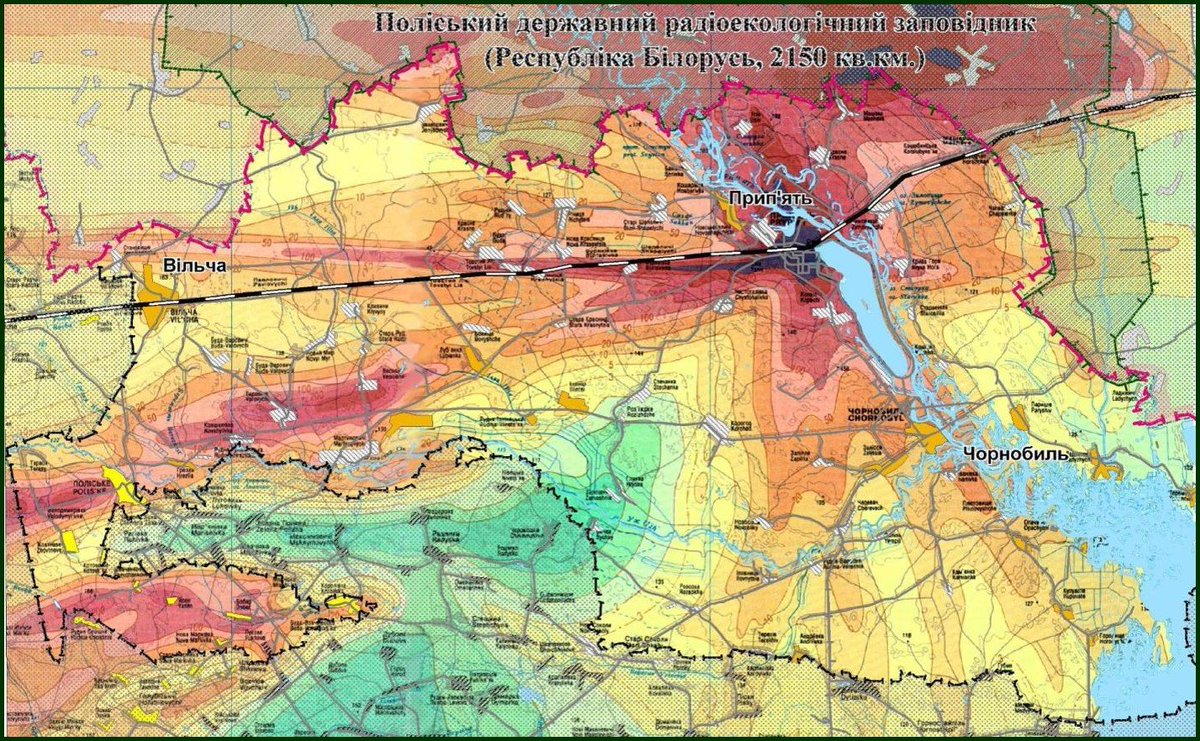
Does radiation impact on #Chornobyl wildlife? As somebody has already said - Cs-137 & Sr-90 contamination across the Exclusion Zone is highly heterogenous. They range from 'very low' to concentrations at which we might expect to see radiation induced effects in wildlife. 1/3
Does radiation impact on #Chornobyl wildlife 3? There is lots of controversy with respect to reporting wildlife effects in the Chornobyl EZ. If interested see Towards solving a scientific controversy – The effects of ionising radiation on the environment https://t.co/GdChkd9iOW
Two more of the mammal species observed in #Chornobyl Red Forest by our camera trap study- see our paper https://t.co/4ap2tjnwFh All images available from https://t.co/cN0eticUSw