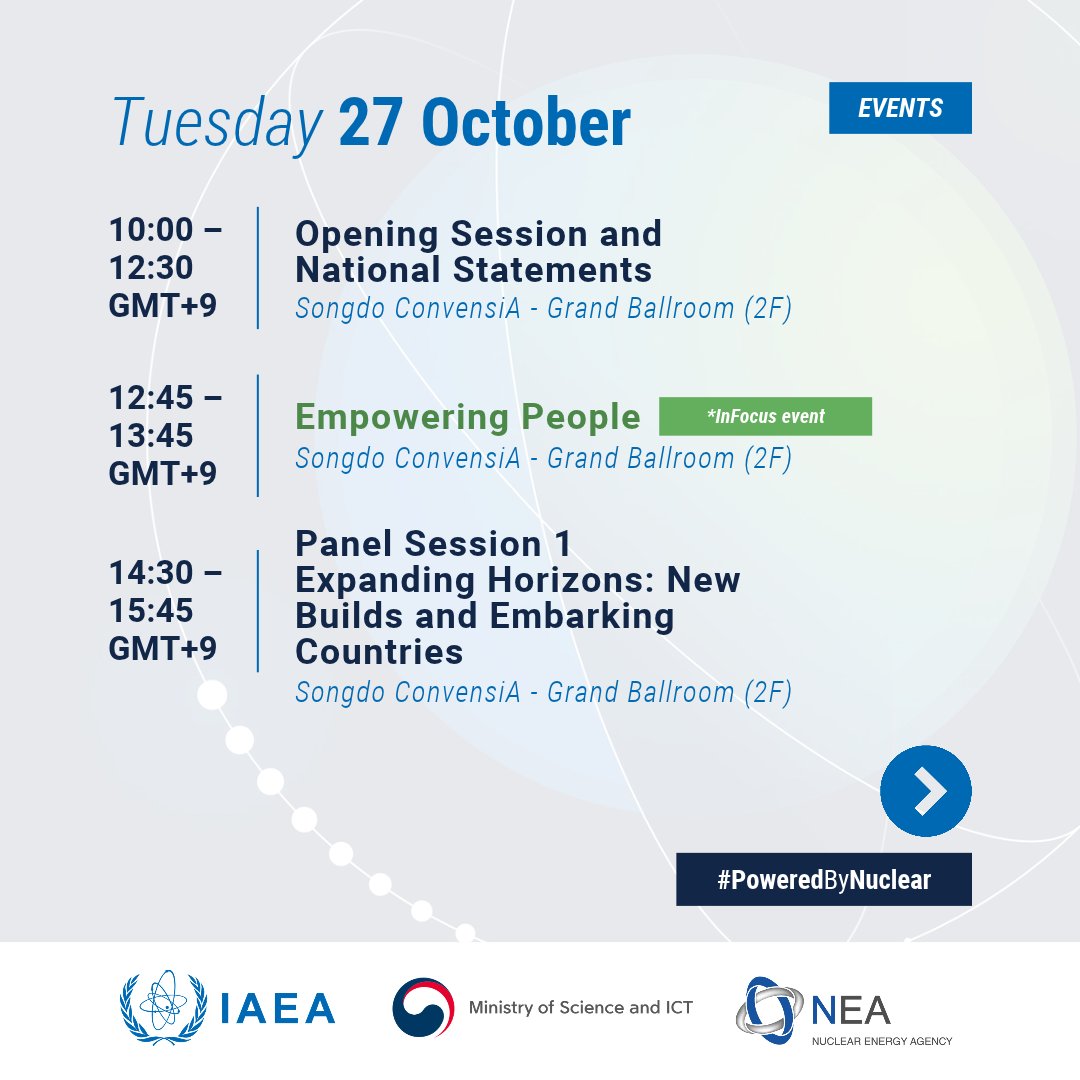
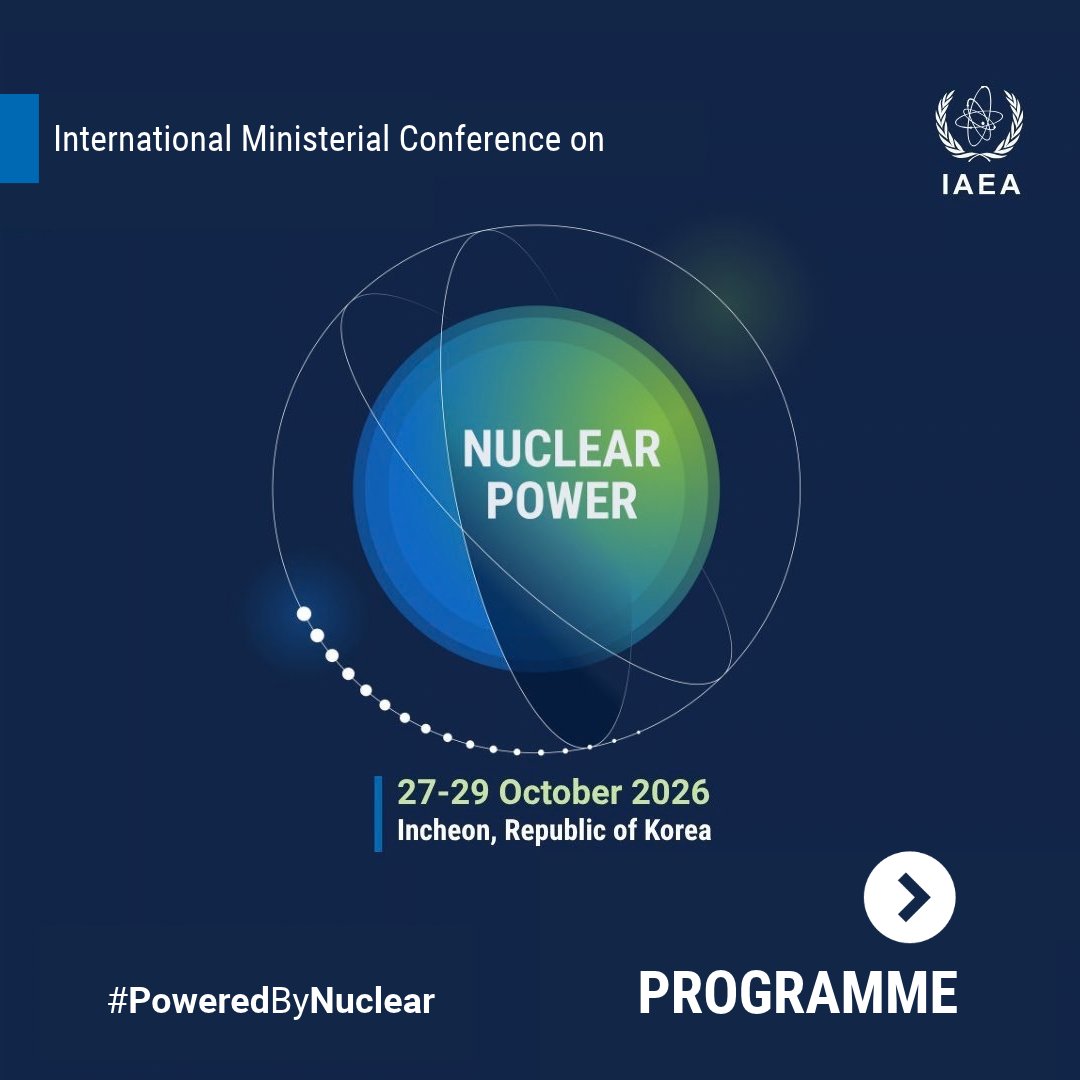
The IAEA Nuclear Power Ministerial kicks off today in the Republic of Korea!
Organized by the IAEA and hosted by the @msitmedia, this high-level forum brings together ministers, policymakers, and energy leaders from across the world at a pivotal moment for nuclearThe IAEA Nuclear Power Ministerial kicks off today in the Republic of Korea!
Organized by the IAEA and hosted by the @msitmedia, this high-level forum brings together ministers, policymakers, and energy leaders from across the world at a pivotal moment for nuclearThe IAEA Nuclear Power Ministerial kicks off today in the Republic of Korea!
Organized by the IAEA and hosted by the @msitmedia, this high-level forum brings together ministers, policymakers, and energy leaders from across the world at a pivotal moment for nuclearThe IAEA Nuclear Power Ministerial kicks off today in the Republic of Korea!
Organized by the IAEA and hosted by the @msitmedia, this high-level forum brings together ministers, policymakers, and energy leaders from across the world at a pivotal moment for nuclearThe IAEA Nuclear Power Ministerial kicks off today in the Republic of Korea!
Organized by the IAEA and hosted by the @msitmedia, this high-level forum brings together ministers, policymakers, and energy leaders from across the world at a pivotal moment for nuclearThe IAEA Nuclear Power Ministerial kicks off today in the Republic of Korea!
Organized by the IAEA and hosted by the @msitmedia, this high-level forum brings together ministers, policymakers, and energy leaders from across the world at a pivotal moment for nuclear.
IAEA Director General @rafaelmgrossi called on countries to turn growing support for nuclear power into concrete results as the International Ministerial Conference on Nuclear Power opened in the Republic of Korea today.
Read more: https://t.co/XM5AhToDnc
Just briefed the @UN Security Council in New York today on current nuclear non-proliferation issues, with a focus on Iran.
Gradual, technical steps could allow @IAEAorg inspectors to return and pave the way to normal safeguards implementation while contributing to a confidence-building atmosphere conducive to a wider agreement.
Only diplomacy, underpinned by IAEA verification, can prevent nuclear proliferation in the long-term, in Iran and around the world.
My full statement to the #UNSC: https://t.co/lO2Qe3S1MX
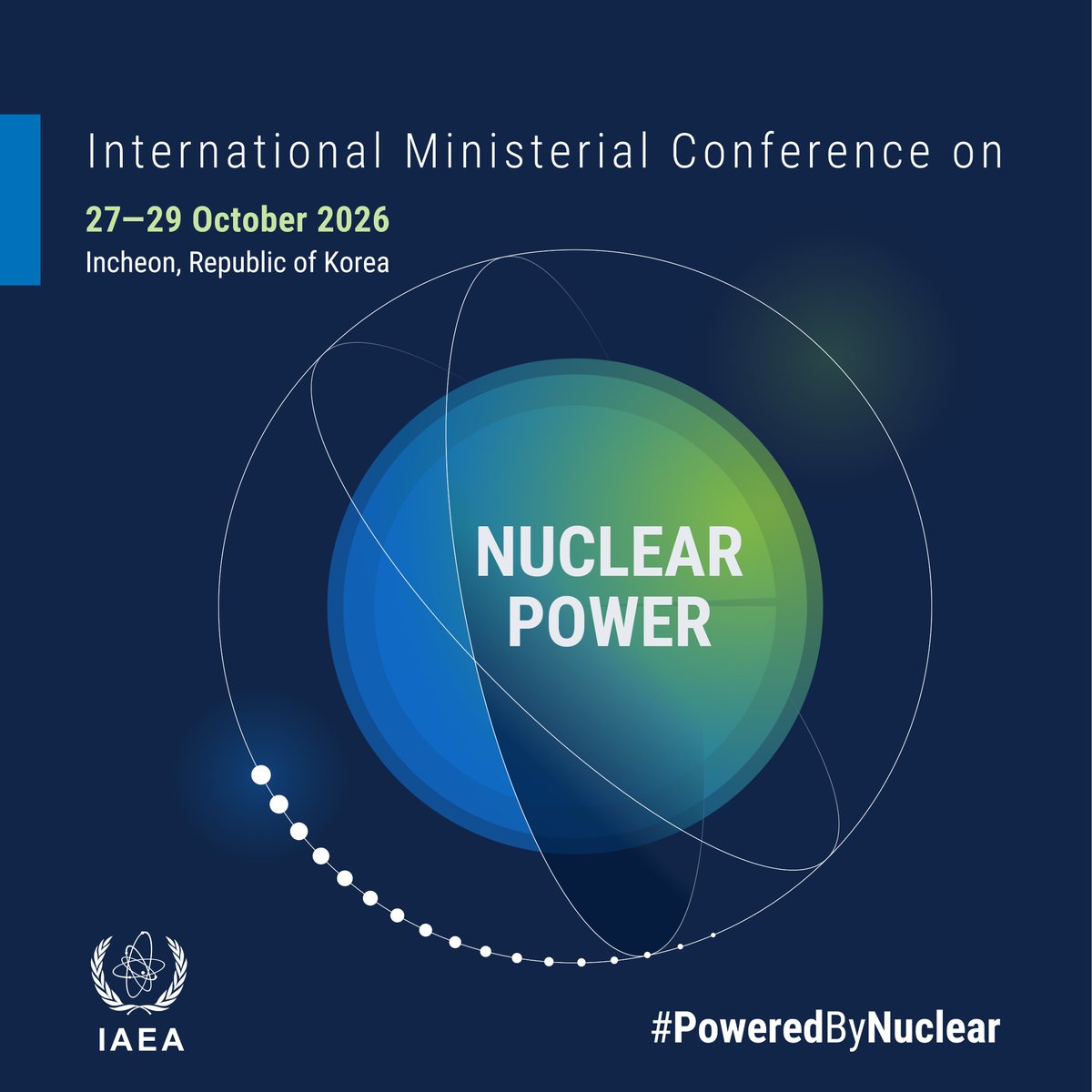
Ministers, policymakers and energy leaders from around the world convene today at the International Ministerial Conference on Nuclear Power this October in Incheon, Republic of Korea.
Organized by the IAEA and hosted by the @withmsit, this conference comes at a pivotal moment when global cooperation and new conversations are essential to shaping the future of nuclear power.
From 27–29 October 2026, this high-level forum will share national strategies and long-term visions for nuclear energy, address key challenges in developing, maintaining and expanding nuclear power programmes, and strengthen international collaboration on next-generation nuclear technologies and the future nuclear workforce. #PoweredByNuclear
Are you attending? https://t.co/NQsEeGkFEt
IAEA Director General @rafaelmgrossi will brief the @UN Security Council #UNSC on current nuclear non-proliferation issues today at 10AM New York time / 3PM Vienna time.
Watch live: https://t.co/BMnocPrVSl
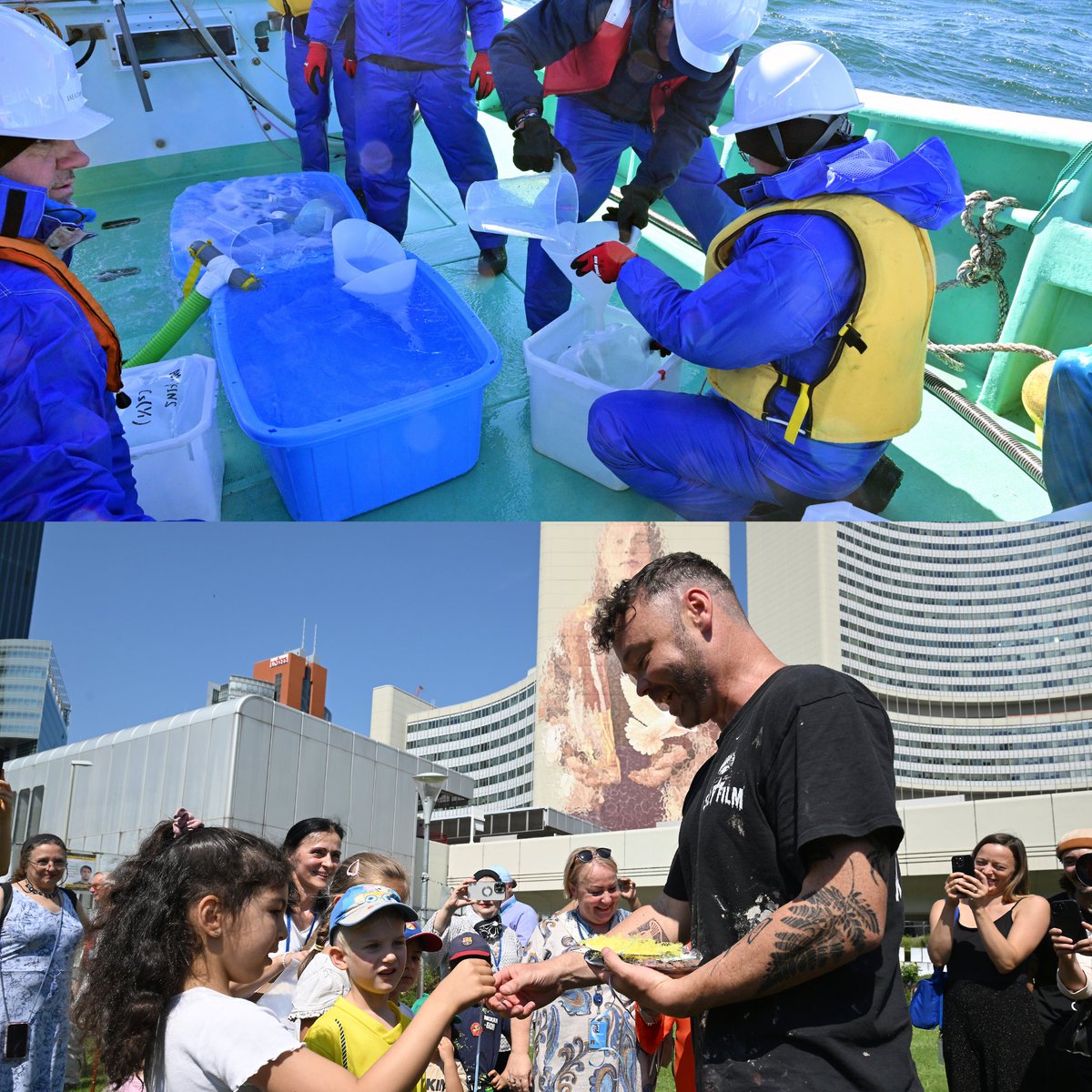
The IAEA has confirmed that the tritium concentration in the 25th batch of Advanced Liquid Processing System (ALPS)-treated water, which Tokyo Electric Power Company (TEPCO) commenced discharging yesterday from the Fukushima Daiichi Nuclear Power Station (FDNPS), is far below Japan’s operational limit and consistent with international safety standards.
https://t.co/ubbE9C2uQL
IAEA Director General @rafaelmgrossi will brief the @UN Security Council #UNSC on current nuclear non-proliferation issues tomorrow, Tuesday 27 October, at 10AM New York time / 3PM Vienna time.
Watch live: https://t.co/BMnocPrVSl
As the global interest in nuclear energy continues to grow, the IAEA Nuclear Power Ministerial “In Focus” sessions will explore some of the trends, opportunities and innovation shaping the nuclear sector today.
The In Focus sessions will spotlight:
🔵Empowering the future workforce: exploring how young professionals and future leaders can help shape the future of nuclear energy
🔵Nuclear energy’s new era: examining the role of digital innovation and advanced nuclear technologies in enhancing the safety, efficiency and versatility of nuclear energy
🔵Stakeholder and public confidence: exploring the importance of building and maintaining public confidence throughout the development and operation of nuclear power programmes
🔵Financing for the future: exploring new approaches to financing nuclear power expansion in both developed and developing countries
🔵AI in action: examining the growing relationship between nuclear energy and the digital economy
Alongside national statements and expert panel discussions, the In Focus sessions will create space for in-depth exchanges on the issues that will help shape the next chapter of nuclear energy.
See the full programme here: https://t.co/0ZXAHqgse1
A recent IAEA Small Modular Reactor (SMR) School held in Russia gave policy makers and regulators from around the world an opportunity to learn directly from organizations involved in the design, regulation and operation of SMRs and nuclear-powered vessels.
Held in Murmansk from 24 to 28 August and hosted by the Russian Government through the Rosatom Technical Academy, the School brought together 22 participants from 13 IAEA Member States. The programme combined classroom discussions, technical visits and a virtual tour of the Akademik Lomonosov floating nuclear power plant.
Read more: https://t.co/BkyqbTgNok
Watch Director General @rafaelmgrossi present IAEA’s 2025 Annual Report to the @UN General Assembly #UNGA.
📘 Full report is available here: https://t.co/iWN8zdtyjt
Happy #UNDay!
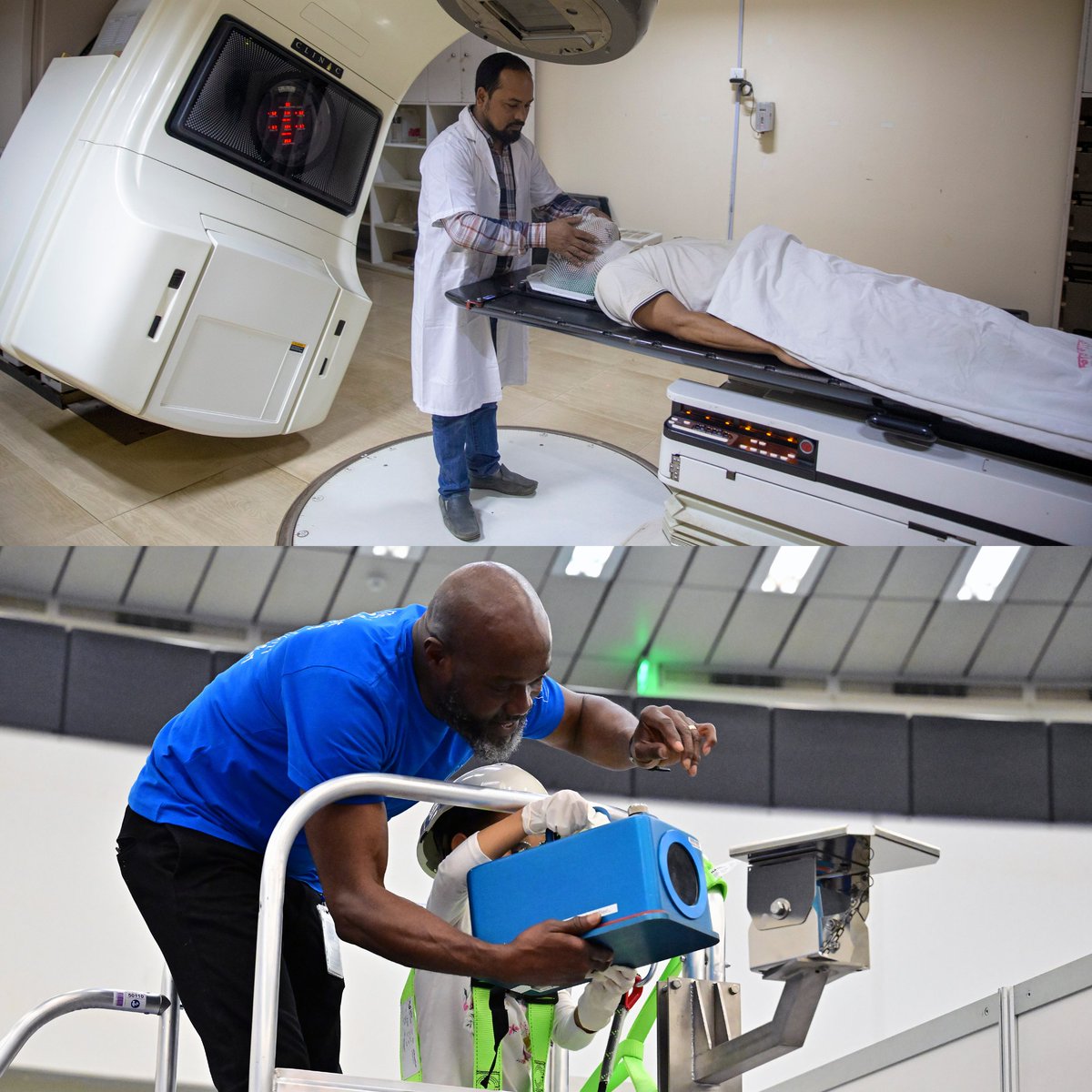
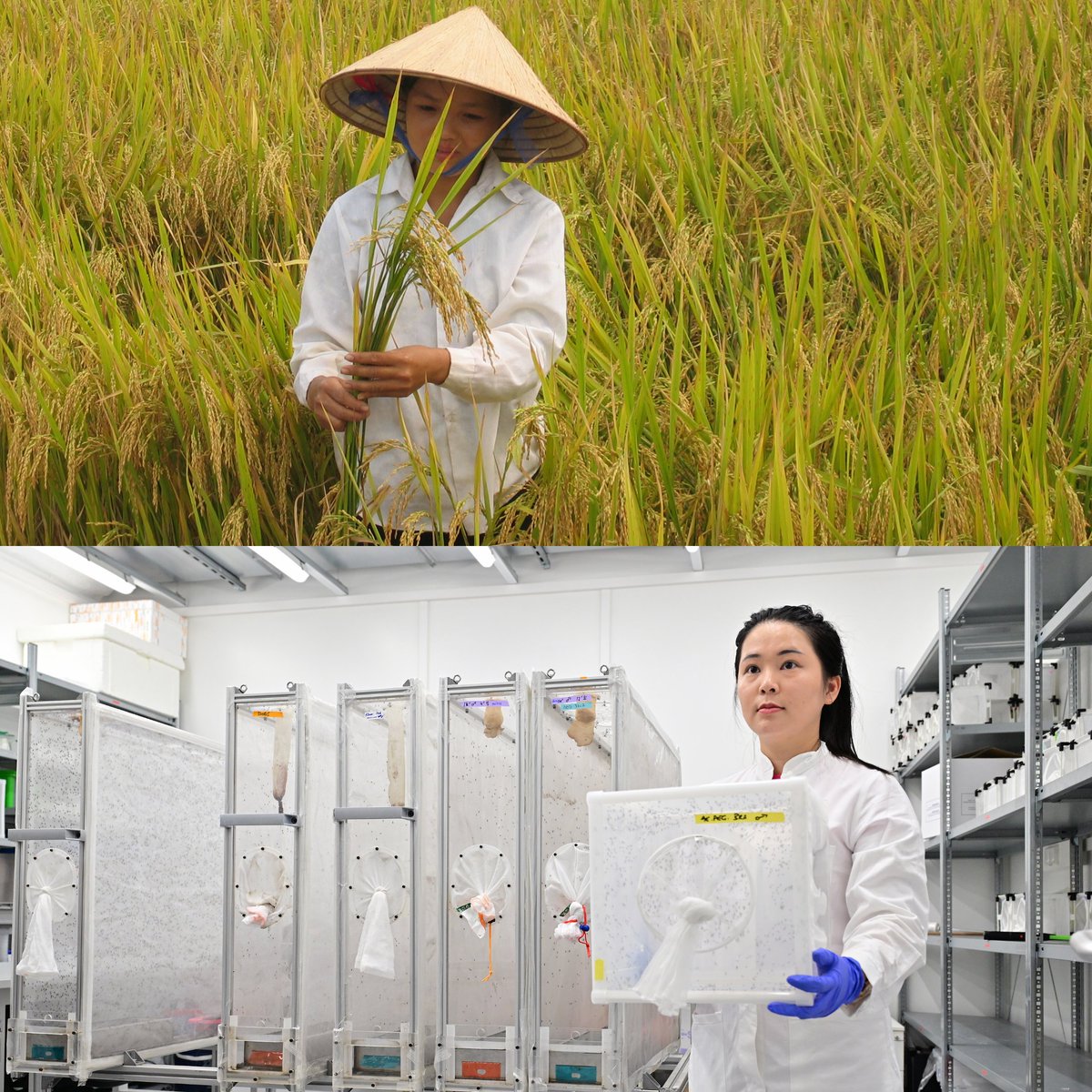
The IAEA is proud to be part of the United Nations family in Vienna, supporting countries around the globe through nuclear science — from expanding access to cancer care and strengthening food security to protecting the environment and enhancing nuclear safety. Discover more about the IAEA’s work and key initiatives: https://t.co/UpfYS8JPVU
Under the protection of the latest localized ceasefire negotiated by IAEA DG @rafaelmgrossi, repairs have been completed on power infrastructure that is of crucial importance for efforts to prevent a nuclear accident during the conflict in Ukraine.
The eighth such IAEA-brokered temporary truce took effect on 15 October, paving the way for the past week’s repairs of damaged electrical switchyard equipment , around 2 km from the Zaporizhzhya Nuclear Power Plant (ZNPP) and a key link in its access to off-site power.
The work - conducted near the frontline and monitored by an IAEA team - was at times accompanied by the sound of drones, gunfire and other military activity, stark reminders of constant dangers to nuclear safety and security.
The successful repairs have strengthened the connection between the ZNPP and its sole remaining external power line, the Ferosplavna-1, and reduced the risk of yet another loss of off-site power for Europe’s largest nuclear power plant.
The ZNPP’s connection to the electrical grid is especially important at this time as the site’s fuel reserves for emergency diesel generators have declined in recent months, potentially weakening its ability to cope with another lengthy loss of the external electricity needed for reactor cooling and other essential nuclear safety and security functions.
DG Grossi thanks the Russian Federation and Ukraine for agreeing to the ceasefire and paving the way for the repairs, demonstrating a readiness by both sides to engage constructively with the IAEA for the sake of nuclear safety and security.
The IAEA will continue its vital work to help protect the ZNPP and other nuclear installations during the conflict, DG Grossi adds.
@rafaelmgrossi présente le rapport annuel 2025 de l’@IAEAorg à l’Assemblée générale de l'ONU à New York.
Alors que les conflits et divisions mettent à l’épreuve la coopération internationale, l’AIEA poursuit son travail indispensable en faveur de la paix et du développement.
Presented @IAEAorg’s 2025 Annual Report to the @UN General Assembly #UNGA in New York.
At a time when conflict and growing divisions are testing international cooperation, the IAEA continues its indispensable work for peace and development.
Some highlights of our work include:
- Non-proliferation: conducting nearly 3,000 in-field verification activities, including work that led to the resolution of outstanding questions concerning Syria’s past nuclear activities.
- Nuclear safety and security in Ukraine: we have maintained an uninterrupted presence at all nuclear facilities, conducted 287 missions, and I have negotiated 8 ceasefires between the two belligerents to enable critical repairs at ZNPP.
- Health: our #RaysOfHope, now joined by more than 100 countries, is expanding access to life-saving cancer care one community at a time, and we are strengthening pandemic preparedness in 129 countries through ZODIAC.
- Food security: we are tackling hunger and boosting food security through #Atoms4Food with @FAO, in a partnership that spans 46 countries.
- Plastic pollution: 180 institutions from 110 countries are working together to beat plastic pollution and improve monitoring through #NUTECplastics.
The world is fractured, but progress continues in the patient work of peace, security and development. IAEA’s unique contribution to dialogue, transparency and multilateral cooperation remains indispensable.
Thank you, @UN_PGA Khalilur Rahman, for the opportunity to present our work.
IAEA’s 2025 Annual Report is available here: https://t.co/WIcfpN4PIC
Nitrogen pollution is an increasing threat to rivers, lakes and groundwater worldwide. Excess nitrate from wastewater discharges, agricultural activities and other human sources can degrade water quality, fuel harmful algal blooms and damage freshwater and coastal ecosystems. Yet identifying the origin of nitrate contamination is often difficult because nitrogen undergoes complex biological and chemical transformations as it moves through the environment.
Find out more: https://t.co/aOUP5mbyVD
Nobel laureate Ilya Mikhaylovich Frank was born today in 1908! This Russian physicist is famous for explaining Cherenkov radiation — the blue glow you see in a reactor.
Frank, together with his colleague Igor Tamm, concluded in 1937 that Cherenkov radiation was the result of charged particles interacting with electrons because particles travel faster than light in an insulating medium such as water. This interaction produced the bluish light first discovered by and named after their compatriot Pavel Cherenkov three years earlier. This explanation earned Frank and Tamm the Nobel Prize in Physics in 1958.
An IAEA team of experts found that Kenya is committed to continuous improvement of the safe management of radioactive waste as it prepares to introduce nuclear power to its energy mix.
The experts noted the considerable progress made in recent years and gave recommendations for the country to further develop, finalize and implement its national plan for waste management.
https://t.co/OW5CejrsST
Today is the birthday of Clinton Joseph Davisson, the Nobel Prize-winning American physicist who discovered electron diffraction. In an experiment conducted with physicist Lester Germer, Davisson showed that, when directed at a crystal, an electron beam will produce a diffraction pattern with wave-like attributes. The Davisson-Germer experiment confirmed a similar hypothesis proposed in 1924 by Louis de Broglie, with Davisson and Lester becoming the first to demonstrate the wave properties of the electron.
Their Nobel Prize-winning work proved the principle of wave-particle duality, which states that every elementary particle or quantic entity exhibits properties, not only of particles, but also waves.
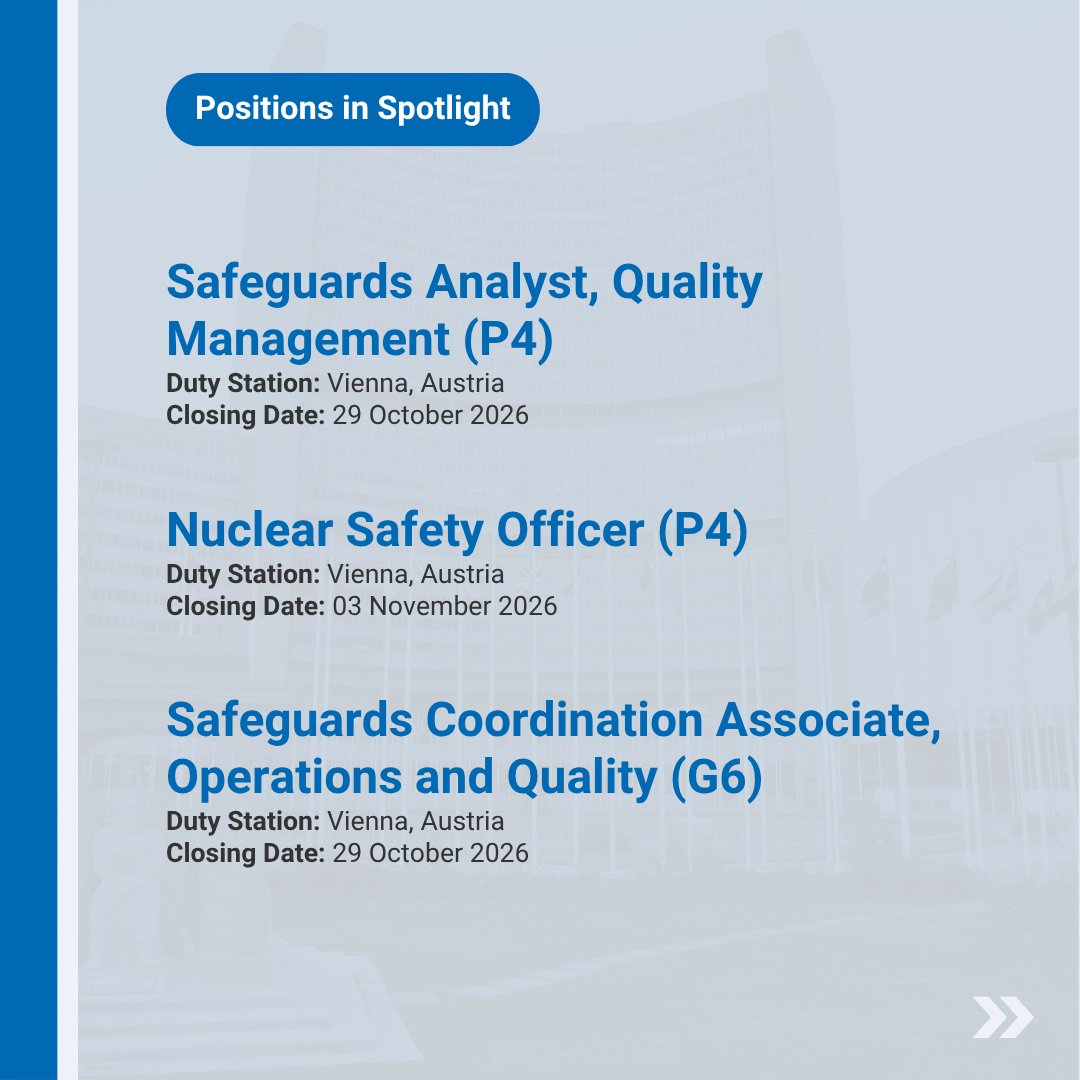
📢 We are hiring for many positions at the IAEA! Check all positions that are closing soon and apply before the closing date 👇
𝐒𝐚𝐟𝐞𝐠𝐮𝐚𝐫𝐝𝐬 𝐀𝐧𝐚𝐥𝐲𝐬𝐭, 𝐐𝐮𝐚𝐥𝐢𝐭𝐲 𝐌𝐚𝐧𝐚𝐠𝐞𝐦𝐞𝐧𝐭 (𝐏𝟒)
Apply by 29 October: https://t.co/YjcepFRItH
𝐆𝐮𝐢𝐝𝐚𝐧𝐜𝐞 𝐚𝐧𝐝 𝐒𝐭𝐚𝐧𝐝𝐚𝐫𝐝𝐬 𝐍𝐮𝐜𝐥𝐞𝐚𝐫 𝐒𝐞𝐜𝐮𝐫𝐢𝐭𝐲 𝐎𝐟𝐟𝐢𝐜𝐞𝐫, 𝐓𝐞𝐜𝐡 𝐋𝐞𝐚𝐝 (𝐏𝟒)
Apply by 02 November: https://t.co/JK2bFMhPr6
𝐍𝐮𝐜𝐥𝐞𝐚𝐫 𝐒𝐚𝐟𝐞𝐭𝐲 𝐎𝐟𝐟𝐢𝐜𝐞𝐫 (𝐏𝟒)
Apply by 03 November: https://t.co/HGdZKSRejt
𝐒𝐚𝐟𝐞𝐠𝐮𝐚𝐫𝐝𝐬 𝐂𝐨𝐨𝐫𝐝𝐢𝐧𝐚𝐭𝐢𝐨𝐧 𝐀𝐬𝐬𝐨𝐜𝐢𝐚𝐭𝐞, 𝐎𝐩𝐞𝐫𝐚𝐭𝐢𝐨𝐧𝐬 𝐚𝐧𝐝 𝐐𝐮𝐚𝐥𝐢𝐭𝐲 (𝐆𝟔)
Apply by 29 October: https://t.co/2JJoggbToa
𝐄𝐱𝐩𝐞𝐫𝐭/𝐋𝐞𝐜𝐭𝐮𝐫𝐞𝐫 𝐓𝐞𝐜𝐡𝐧𝐢𝐜𝐚𝐥 𝐂𝐨𝐨𝐩𝐞𝐫𝐚𝐭𝐢𝐨𝐧 𝐏𝐫𝐨𝐠𝐫𝐚𝐦𝐦𝐞
Apply by 31 October: https://t.co/xDLzx6O4WV
𝐂𝐨𝐧𝐬𝐮𝐥𝐭𝐚𝐧𝐭 – 𝐋𝐚𝐛𝐨𝐫𝐚𝐭𝐨𝐫𝐲 𝐓𝐞𝐜𝐡𝐧𝐢𝐜𝐢𝐚𝐧, 𝐍𝐮𝐜𝐥𝐞𝐚𝐫 𝐒𝐞𝐜𝐮𝐫𝐢𝐭𝐲 𝐓𝐫𝐚𝐢𝐧𝐢𝐧𝐠 𝐚𝐧𝐝 𝐃𝐞𝐦𝐨𝐧𝐬𝐭𝐫𝐚𝐭𝐢𝐨𝐧 𝐂𝐞𝐧𝐭𝐫𝐞
Apply by 23 October: https://t.co/LnoYZf5Lhi
𝐂𝐨𝐧𝐬𝐮𝐥𝐭𝐚𝐧𝐭 - 𝐏𝐫𝐨𝐣𝐞𝐜𝐭 𝐈𝐦𝐩𝐥𝐞𝐦𝐞𝐧𝐭𝐚𝐭𝐢𝐨𝐧 𝐨𝐟 𝐂𝐨𝐦𝐛𝐚𝐭 𝐒𝐨𝐢𝐥 𝐒𝐚𝐥𝐢𝐧𝐢𝐭𝐲
Apply by 29 October: https://t.co/QGMsDj2Ejg
𝐂𝐨𝐧𝐬𝐮𝐥𝐭𝐚𝐧𝐭 - 𝐑𝐞𝐬𝐞𝐚𝐫𝐜𝐡𝐞𝐫 𝐒𝐨𝐢𝐥 𝐍𝐮𝐭𝐫𝐢𝐞𝐧𝐭 𝐔𝐬𝐞 𝐚𝐧𝐝 𝐂𝐫𝐨𝐩 𝐐𝐮𝐚𝐥𝐢𝐭𝐲
Apply by 02 November: https://t.co/yxjcbaJcHt
𝐂𝐨𝐧𝐬𝐮𝐥𝐭𝐚𝐧𝐭 - 𝐓𝐨𝐱𝐢𝐜 𝐄𝐥𝐞𝐦𝐞𝐧𝐭 𝐒𝐩𝐞𝐜𝐢𝐞𝐬 𝐦𝐞𝐚𝐬𝐮𝐫𝐞𝐦𝐞𝐧𝐭 𝐢𝐧 𝐅𝐨𝐨𝐝
Apply by 03 November: https://t.co/GBuTGbKEFX
For the complete list of our current vacancies, applicant resources, and information on employment with the IAEA, please visit https://t.co/z5TJxa538t.
Stay up to date on current employment opportunities and upcoming webinars by subscribing to our Careers Newsletter at https://t.co/gCMO4eOtfq.
#IAEAjobs #UNjobs #UNcareers #careers
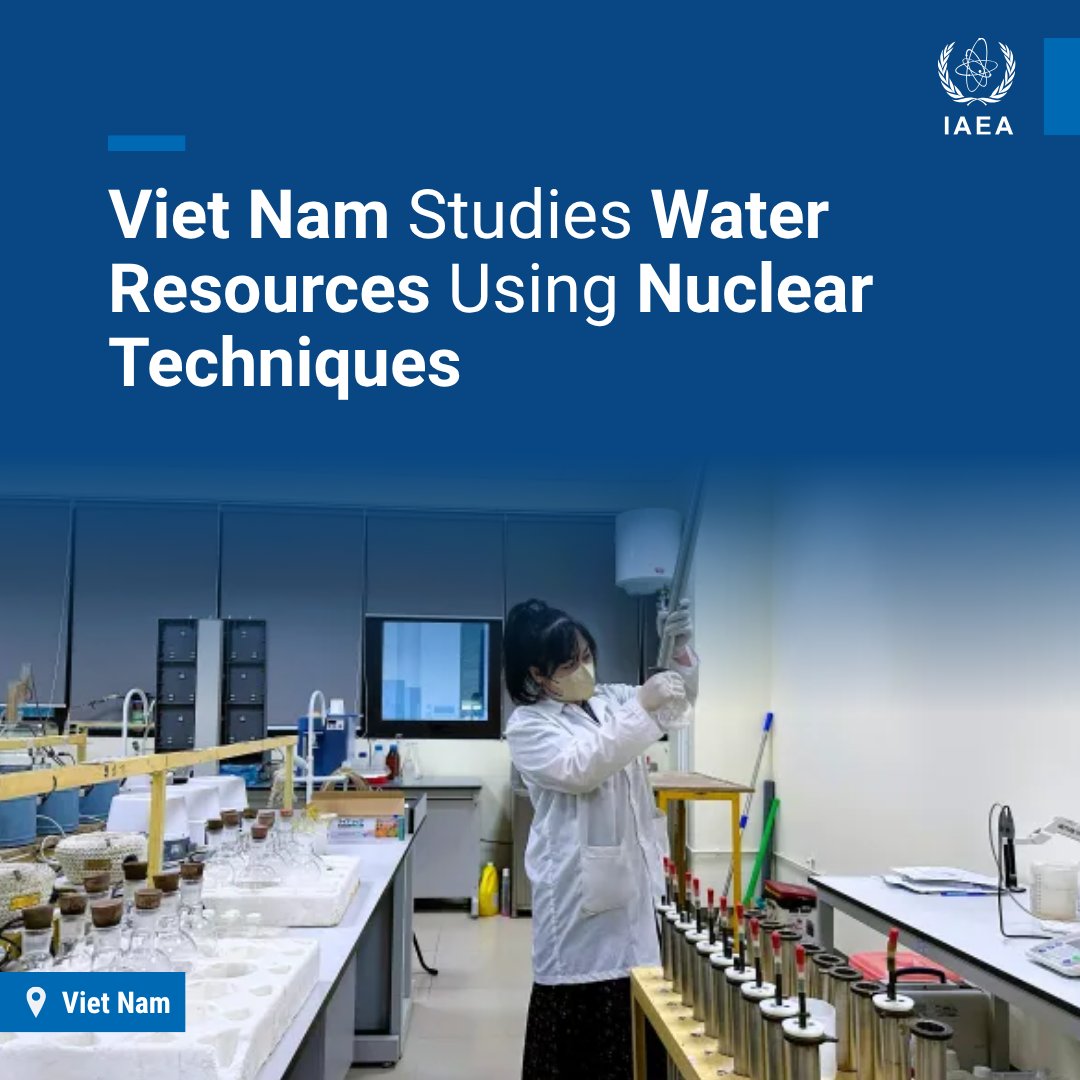
From the Mekong River Delta to the Red River Delta, Viet Nam is using nuclear-derived techniques to better understand its water resources. After more than four decades applying isotope hydrology with IAEA support, the country is now sharing its expertise with other nations in the Asia-Pacific region.
Read more: https://t.co/FAfYCvVne2