Want to mirror your @github repositories to @radicle ?👇
A community member built a GitHub App that does it automatically: install it on a repo, and every push is fetched from GitHub and mirrored to a local Radicle node. It also retries missed syncs and reports the Radicle RID back to GitHub as a check.
https://t.co/bKDsmSfAzM
GitHub went down, so I went looking for a decentralized alternative and found @radicle, a peer-to-peer code forge, and contributed a quick fix to test the flow.
Contributing via a native patch instead of a PR is wild🌱
Thanks for making it happen @cloudhead@lftherios
every other month github goes down and people say we should build a decentralised version of it
we already have it @radicle
could it be a better interface? sure. getting started isnt exactly straightforward
but the tech is here
Kind reminder: Partners help us to build independent, non-biased and impactful digital human rights activism.
Here are Cypherpunk Congress partners:
feat
@ZcashCommGrants - a community-elected grants committee that funds Zcash-related projects in order to bring financial privacy to everyone in the world
@0xprivacypools - a compliant way to anonymously transact on Ethereum.
@Logos_network - a social movement & private-by-default tech stack built to revitalise civil society.
@protocollabs - an innovation network of 700+ teams and projects, driving breakthroughs in computing to push humanity forward.
@radicle - Local-first, peer-to-peer and secure code collaboration.
@fatsolutionsxyz - a team of engineers and researchers working towards making privacy tooling onchain actually usable.
@ConsensysAudits - Smart contract audits. AI-assisted auditing tools. ZK fuzzing research. Securing Ethereum since 2017.
@ShutterNetwork - in the future everyone will be protected against malicious MEV & real-time censorship — by default. That's what Shutter is building toward.
@ethswarm - a decentralised storage and communication system, OGs.
@DyneOrg - Free software foundry, digital innovation think & do tank, passionate stewards of hacker culture since 1999.
5000 people are gathering here: https://t.co/CCUMdLl5Zp
BTW. Now that everyone complain about Github, probably a good time to remind that I've migrated all personal projects to Radicle and I've been using selfci https://t.co/kn4EiJk6hh to ensure clankers keep the trunk working at all times, and I couldn't be happier.
Welcoming @radicle as sponsor of ECC3 🎊
Radicle is facilitating code collaboration with a p2p, Git-native network that gives devs ownership over their software and workflows.
Let’s advance open-source infra and a more sovereign internet together: https://t.co/SrDRumXMUR
In response to India's recent ban of the Bitchat source code on GitHub, there are now
- 50 nodes seeding the code on Radicle, an unstoppable peer-to-peer alternative to GitHub
- 25 copies on GitHub
- copies on codeberg, gitlab, gitlawb, and more
Thank you, I guess?
UPDATE: Bitchat is now mirrored on @Radicle — censorship-resistant, peer-to-peer code hosting:
iOS/macOS: rad:z2v9tRJz1oknFAqCSY5W5c76nVvm6
Android: rad:z347HbE1F4c77DVLvsPe2ApoEEw6f
Clone it. Seed it. Keep it alive. 👇
One of our most requested features has landed: performance for large repos. You can now browse repositories at the scale of the Linux kernel. 🤯
🎉 Radicle Desktop v0.13.0 is here!
⚡ Virtualized file tree + diff views for smooth scrolling
📋 New diff actions menu (copy / save-to-disk)
🚀 Faster file opening, diff stats & commit counting
https://t.co/eD4NQDuFc1
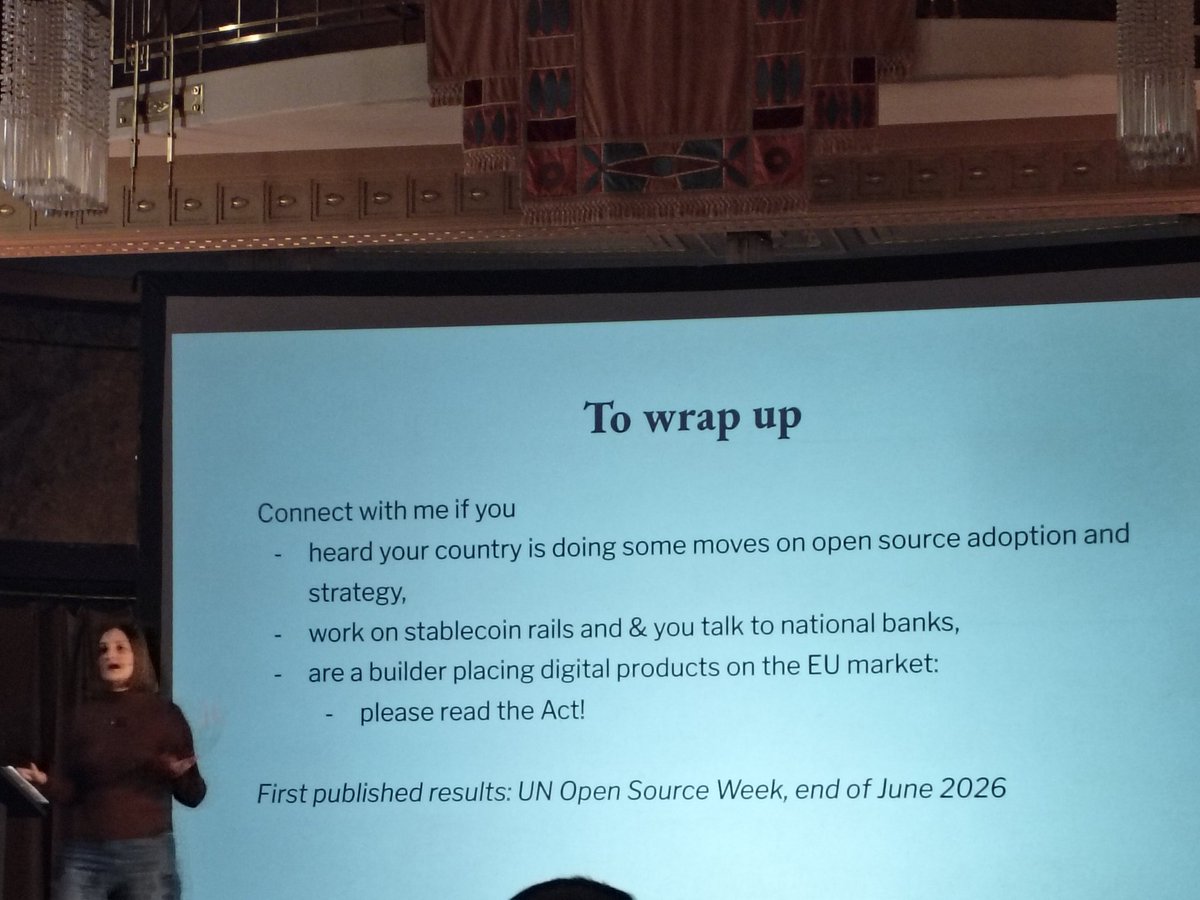
Next up was my other colleague from the funding coordination team, @sonkiski
She started by laying out the problem in stark terms; just 3000 OS developers created 8.8 trillion in value, but only get an average of $3200 a year for their effort
She then digs into government as a solution to this issue, specifically looking at different European programs to fund OSS & the new cyber resilience act forcing digital product owners to make public their software dependency graph
By analyzing an OS funding program from schleswig holstein, she found that majority of the dependencies were outside the EU jurisdiction. So channeling the funds would either require high maintenance overhead or else a consultant who manages it
This is where she believes that Ethereum can add value, by becoming the rails thru which gov programs distribute funding to dependencies
She tested this hypothesis through interviews with government software funding agencies. Most initially responded that Ethereum was a volatile coin and were unaware of stablecoins entirely
Since all governments want to see pilots, she concluded with an example of UNICEF deploying funds through @dripsnetwork , an already live initiative
Her full research is coming out in time for UN OS week in NY, love the detailed research done so far
@guitaripod Radicle is already there pretty much. everything is cryptographically signed and private repos and workflows are a thing already. see https://t.co/qJL6kus4S7
in case you are after encryption at rest, reach out and we can demo something new 👀