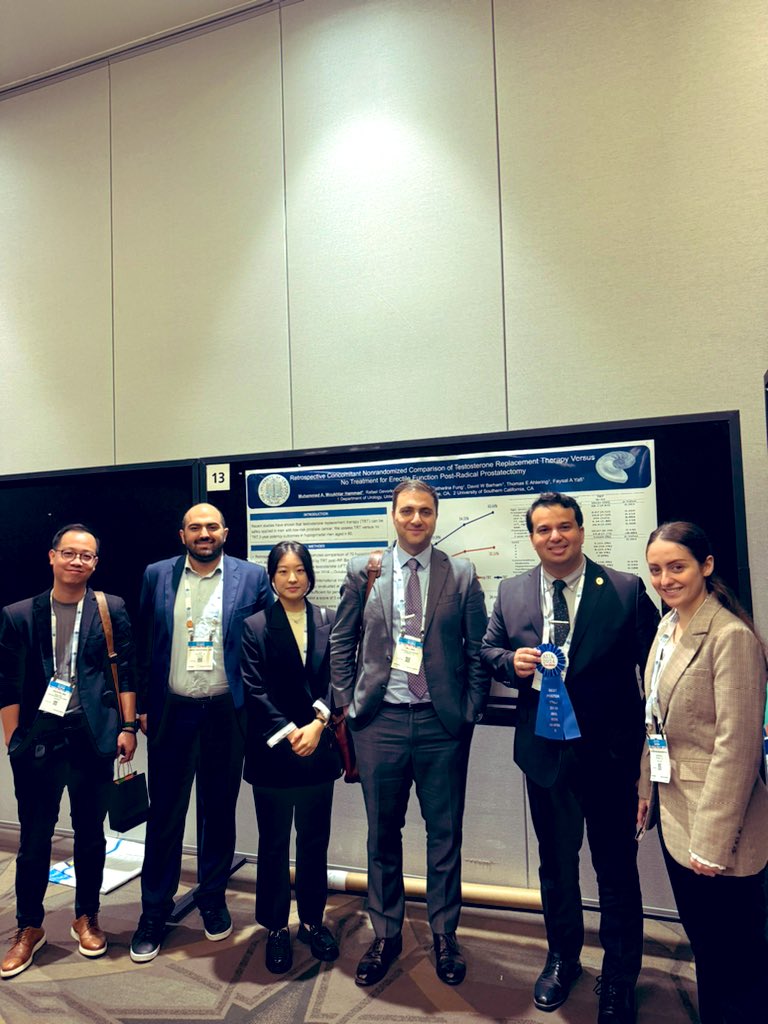
Impactful work is never the product of one person: it takes years of dedication and true village. Grateful to Dr. Yafi’s & Dr. Ahlering’s research teams, from whom I learned so much while undertaking this project.
@UCI_Urology@TuanNguyenUro@hsnakamura1210@its_lindamy@Raf_Gev
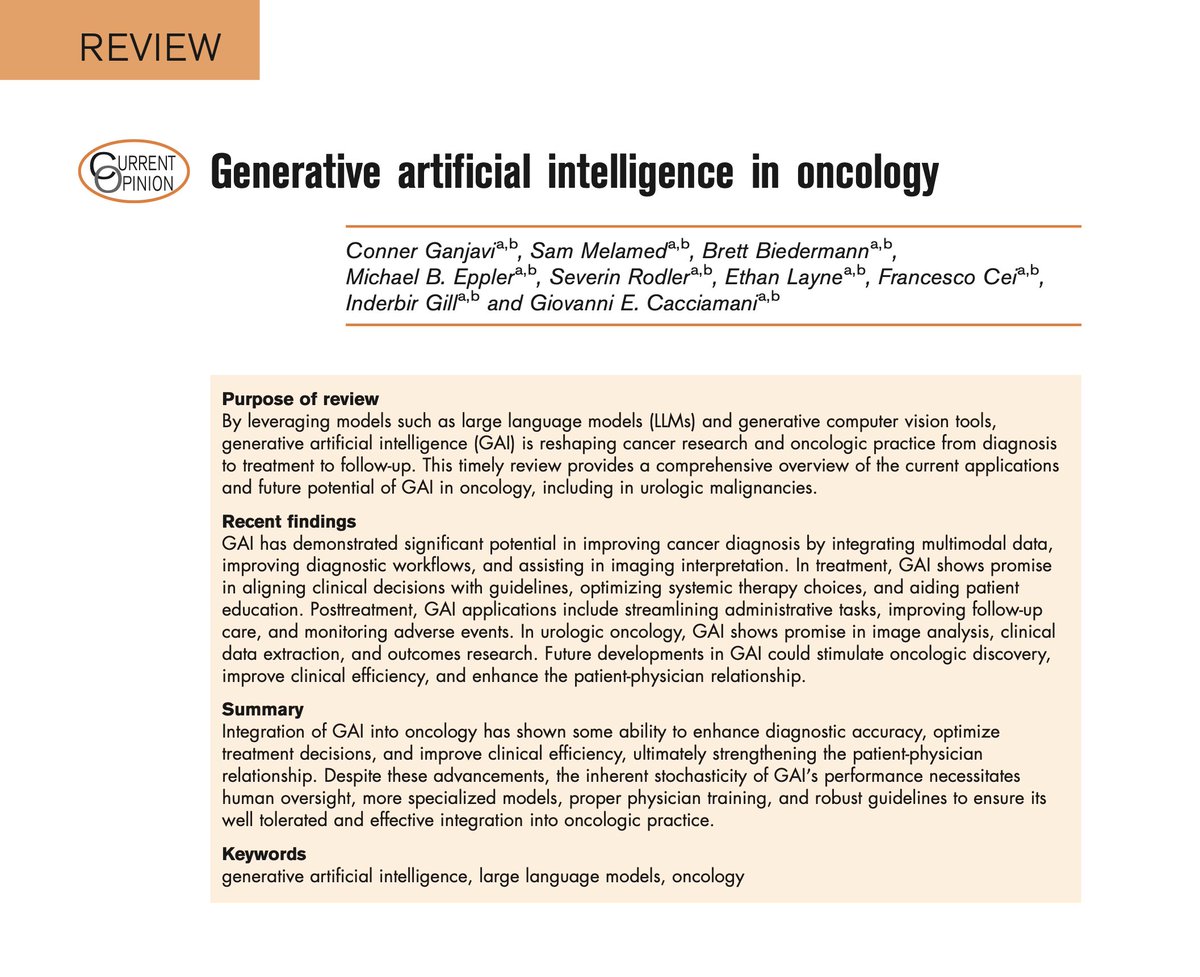
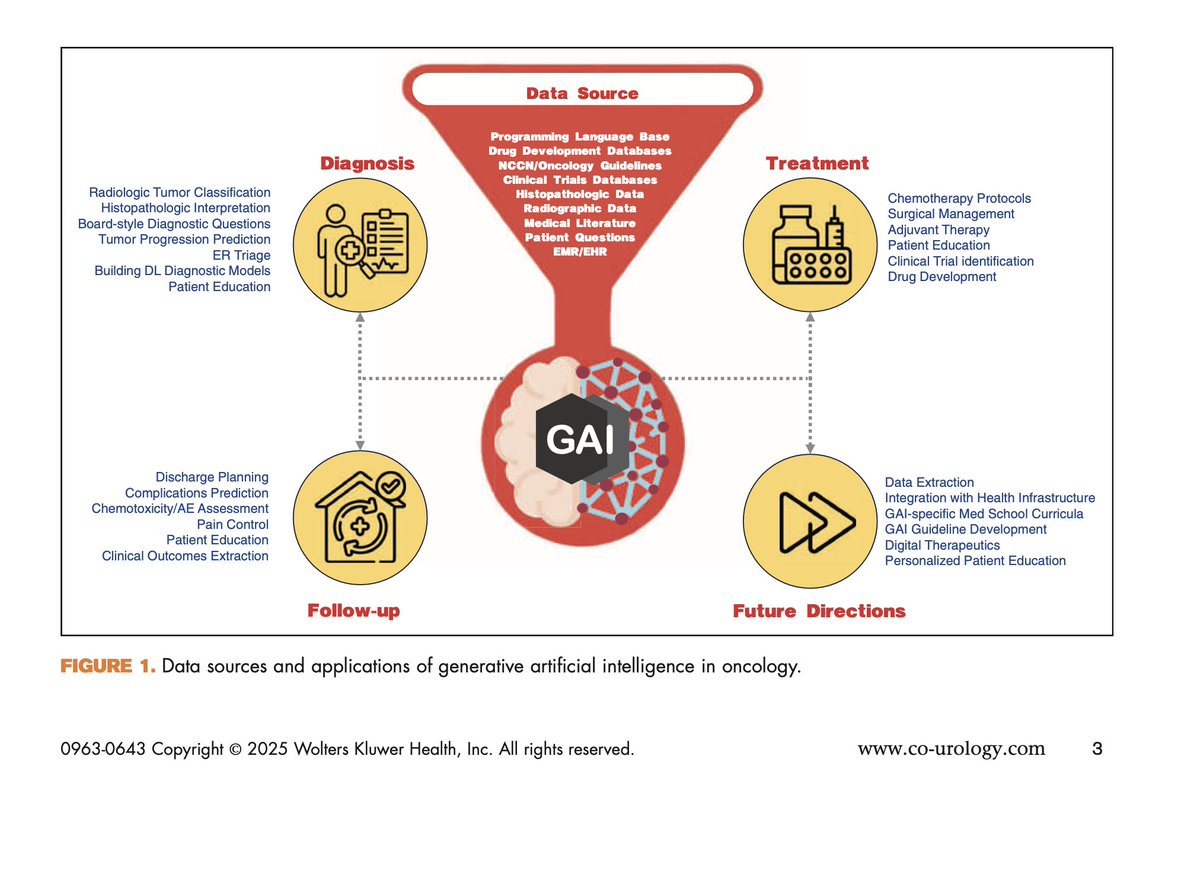
🤖 Will AI Transform Outpatient Urology? https://t.co/fMlQHK37D6
AI is reshaping outpatient urology by enhancing clinical workflows and reducing administrative burdens
🩺 Clinical Support - AI aids decision-making from prediagnosis to posttreatment
📈 Efficiency Boost - Automates routine tasks, freeing clinicians for patient care
🛠️ Remaining Hurdles - Workflow adaptation and validation needed for smooth adoption
#HealthcareAI #Urology #AI #Pub2Post
@JacobHershen@USC_Urology@Urology_AI@Current_Urology@shariat
post powered by @pub2post
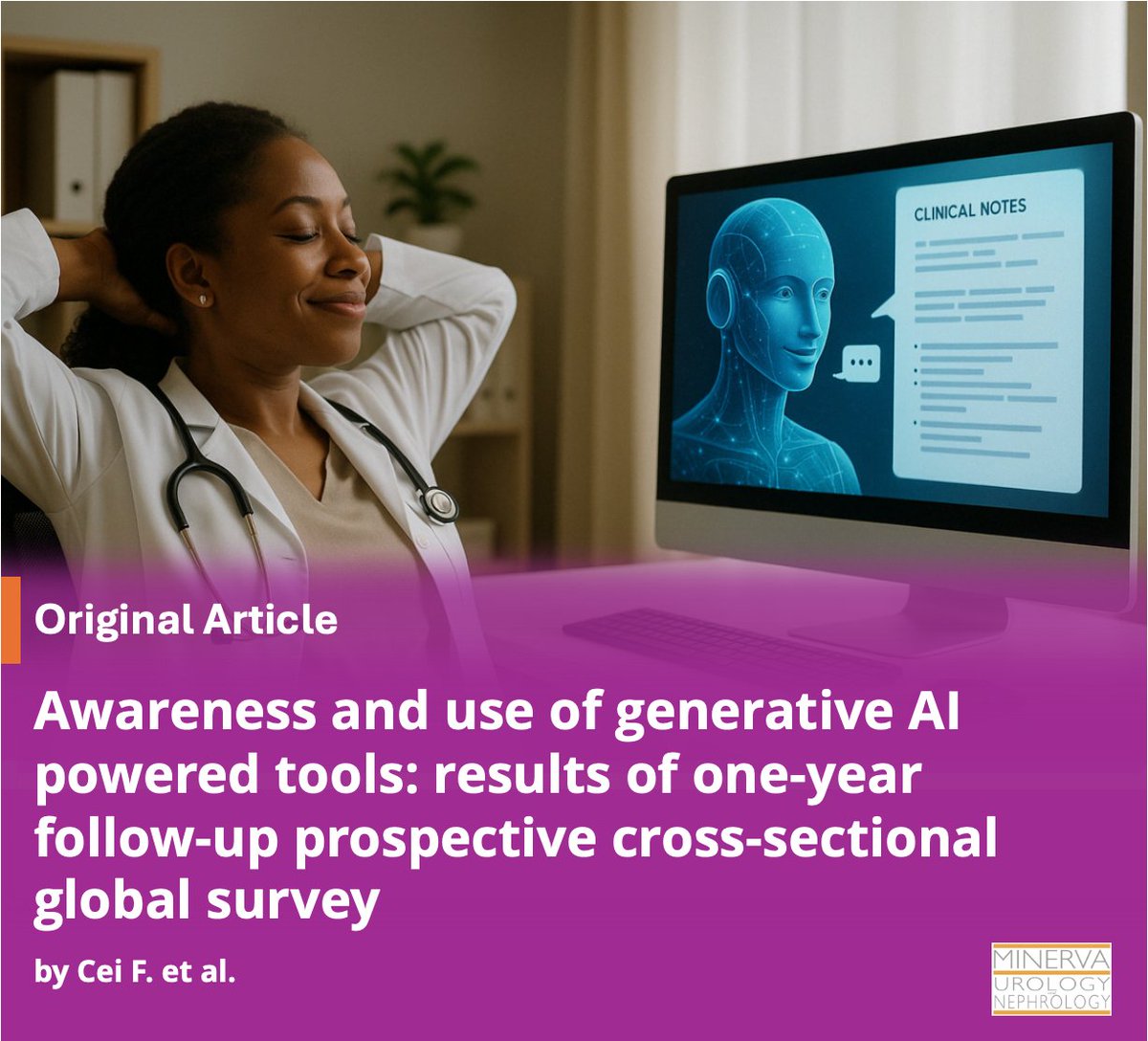
🤖 How Are GPTs Transforming Urology?
Our study analyzes GenAI usage in urology, noting shifting attitudes over 1 year
📈 Academic Growth - 86% now use GPTs for academic tasks, up from 52% last year
🔄 Clinical Hesitance - Use in clinical tasks like treatment decisions has dropped
👨⚕️ Human-Centered - Insights guide future AI development in healthcare
#GenerativeAI #Healthcare #AIInUrology #Pub2Post @MUN_journal
https://t.co/Hp3msYrsxp
post powered by @Pub2Post
Kudos to @hershenhouse and the team!
Ecstatic to discover that our research landed on Prostate Cancer and Prostate Diseases (PCAN) Editors Choice 2024! Thank you @cosimonunzio @pcan_journal
Love the open mind @VickersBiostats! Politeness, Expertise, and Avoiding Reviewer 2 Syndrome: How to Write Reviews to Authors
(this how I handle it from the invite to preview to the closing remarks... open to my reviewer colleagues to add points to it)
Let's be honest and clear: Publication is a team effort between authors, peer reviewers, and editors, all aiming to advance the field or highlight areas for improvement. Maintain politeness, offer unbiased views, and steer clear of a paternalistic “Henry the VIII” attitude. How you deliver your feedback can significantly impact the authors and the quality of the final publication!
1. Consider Timing and be Responsive: If you’re unable to review a manuscript, don’t just ignore the email. Let the editor know promptly so they can find another reviewer and make timely decisions
2. Stay Within Your Field: If the paper doesn’t align with your area of expertise, simply decline. Don’t accept just because you’re willing to review... that does not help anyone.. Ask to the editor to add a statistical/AI expert review in case needed.. for the same reason you do not want a statistician to do a prostatectomy, as physicians we should not improvise statistics!
3- Acknowledge Your Limits and Be Honest About Understanding: If the paper is in your area of interest but uses an innovative approach you’re not familiar with, it’s okay to reject. Inform the editor and authors about your difficulty in understanding the innovation
4- Check Reporting Guidelines and Ensure Compliance: Verify that the authors have followed proper reporting guidelines (e.g., @EQUATORNetwork standards). This helps maintain high-quality standards in the manuscript and ensure reproducibility of the findings
5. Separate "Feelings" from "Evidence" and Provide Clear Explanations: If you find issues like poor flow, explain what (and WHERE!!!!) the problems are and suggest improvements. Use evidence or references to support your points instead of subjective statements like “in my humble opinion.” Ensure all your critiques are supported by clear evidence or references.
6. Be Ready for Discussion and Stay Open-Minded: Not every comment you make will be addressed by the authors. Be prepared for disagreements and focus on improving the manuscript rather than asserting your authority
7. Maintain Objectivity and Avoid Bias Set Personal Feelings Aside: Ensure that personal relationships or beliefs do not influence your review. Objectivity is key to fair assessments.
8. Avoid "Reviewer 2 Syndrome "Be Constructive, Not Demeaning: Don’t let frustration make you overly critical. Aim to help authors improve their work with thoughtful and respectful feedback.
9. Review Section by Section - Be Specific: Instead of saying “this paper is good/bad,” provide detailed comments on each section to guide the authors on what needs improvement.
10. Avoid making BOLD final decisions like “this should be rejected” as that’s the Editor’s role. Focus on providing the expertise needed to inform the editor’s decision, while provide a fair guidance
Dr. Giovanni Cacciamani (@cacciamani_md) explores the current landscape of artificial intelligence in healthcare. Listen free NOW on Spotify, Apple Podcasts, Amazon, and Youtube.
Link below!
https://t.co/G0QTa8LWKt
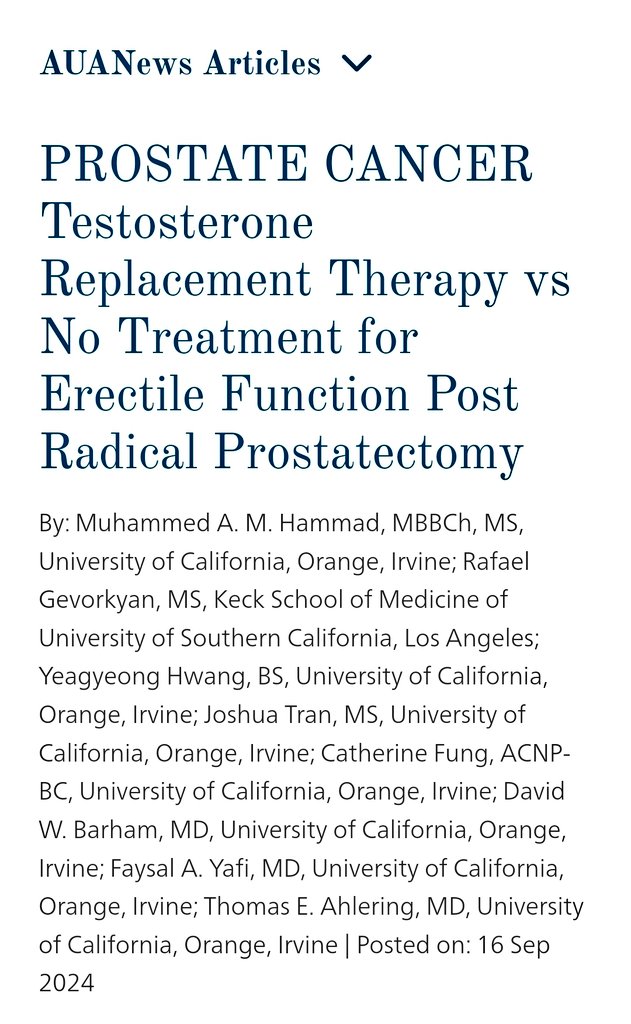
We thank the editor Dr. Tanaka @tanaksta & guest editor Dr. Stratton for the kind invitation to feature our #AUA2024 best poster at the #AUANews FOCUS ISSUE-Prostate Cancer:
https://t.co/pgG6OvPFmq
Fond of Spanish edition too⏬️
@Raf_Gev@dbarhammd@faysal_a_yafi@UCI_Urology
We thank the editor Dr. Tanaka @tanaksta & guest editor Dr. Stratton for the kind invitation to feature our #AUA2024 best poster at the #AUANews FOCUS ISSUE-Prostate Cancer:
https://t.co/pgG6OvPFmq
Fond of Spanish edition too⏬️
@Raf_Gev@dbarhammd@faysal_a_yafi@UCI_Urology
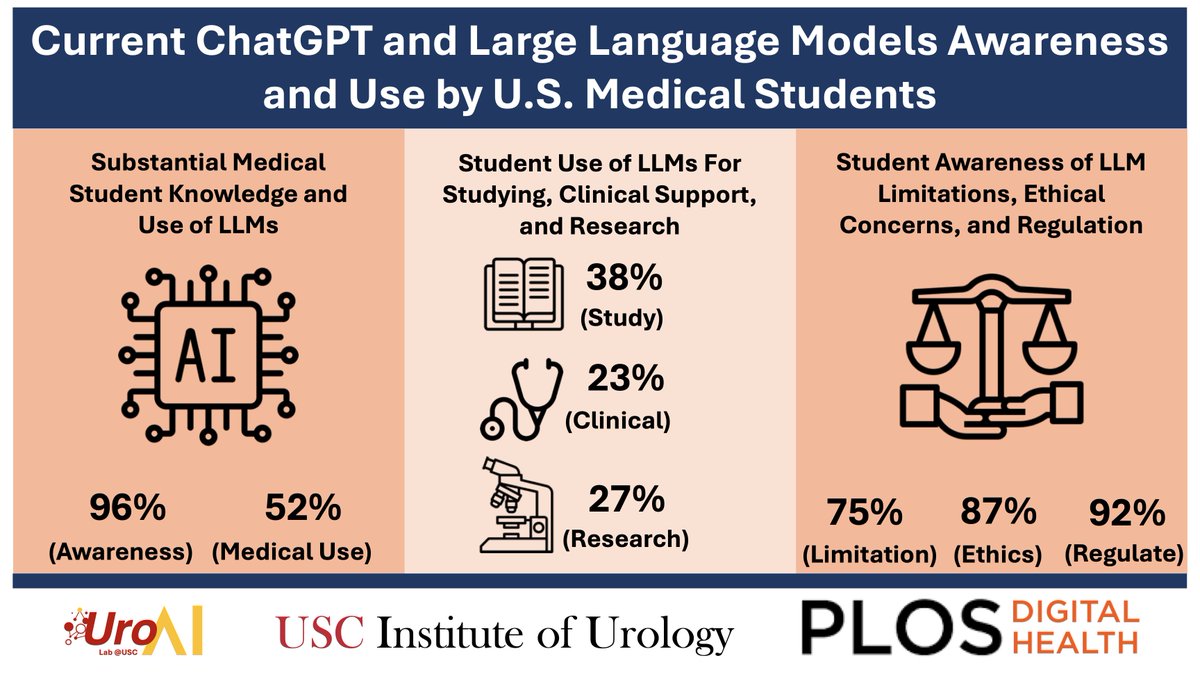
#Survey on #ChatGPT use among U.S. medical students:
🧑⚕️ 96% awareness, 52% usage for coursework
🔍 49.8% found it time-saving
📚 Used for studying (38.4%), brainstorming (29.4%)
📝 Utilized in research (27.4%) for proofreading
💭 Ethical concerns: privacy, bias
#MedicalEducation #GenerativeAI #ChatGPT #StudentResearch #HealthcareTech #AIInMedicine #Pub2Post @ConnerGanjavi@DeanMeltzer@PLOS@Urology_AI@KeckMedicineUSC@USC@USC_Urology
https://t.co/VZ0KWfCXaV
Congratulations to the @UCI_Urology team on this update to our 2020 trial on testosterone supplementation and risk of prostate cancer recurrence. 👏🏻 👏🏻
A year of hard work and dedication. With the greatest team and mentors. Thank you @Mo_Moukhtar@faysal_a_yafi for extending the opportunity to work on this with you.