Orangotango selvagem é visto usando planta para curar ferida
Um artigo lançado na revista Scientific Report mostrou que um orangotango de Sumatra, na Indonésia, se automedicou usando uma pasta feita de plantas para curar uma grande ferida na bochecha. Segue o fio 👇👇👇
impressionante o comercial estadunidense dirigido pelo brasileiro José Padilha sobre a principal causa de morte de crianças nos Estados Unidos: ataques com armas de fogo. #AmericanCancerStory
📍O acordo de Lula com a BYD para produção nacional dos veículos elétricos foi um golpe muito duro no Elon Musk.
⚠️ Pra quem não entendeu, abrir uma fábrica aqui significa não só pegar o mercado brasileiro, mas toda a América Latina.
🚨 Recentemente a BYD ultrapassou a Tesla na produção de carros elétricos no mundo. Imaginem agora com a entrada no Brasil (e consequentemente nos nossos vizinhos).
☝🏽 Caso não tenha ficado claro, a produção em solo brasileiro foi um acordo vantajoso para ambos, pois facilita a logística chinesa e dinamiza a economia brasileira, pois o acordo foi produzir com boa parte dos insumos de empresas nacionais.
📢 Por falar em logística, a logística chinesa para a venda na América Latina tbm foi muito beneficiada, pois é muito mais fácil e menos custoso exportar daqui do que direto da China, concordam?
👉🏽 Resumindo: Elon Musk está puto, mas muito puto mesmo por perder esse negócio. Esses ataques ao Alexandre de Moraes (e agora ao Lula) têm muito a ver com isso.
🚨 Fiquem atentos!
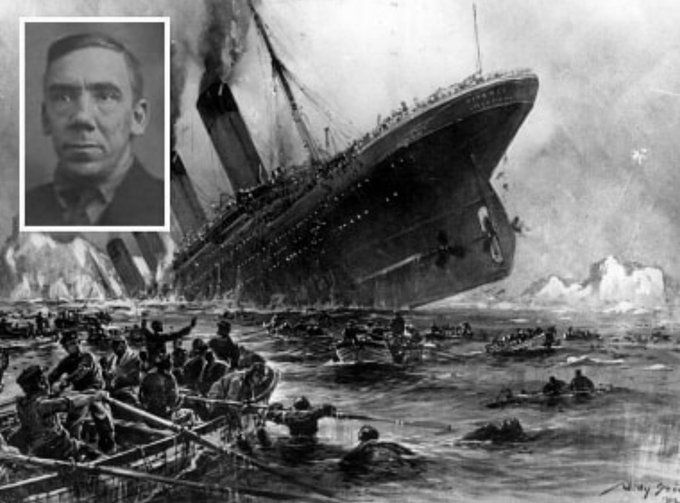
Charles Joughin was the chief baker on the Titanic and one of its most unlikely survivors. He was interrogated by the British Titanic inquiry, which was tasked with finding out how the Titanic had sunk. Below is his interrogation by Mr. Cotter:
"What did you do with the children when you put them into the boat?
- Handed them into the boat or dropped them in.
Threw them in?
- Threw them in.
And what did you do with the mother?
- We wanted to throw her in, and I think she preferred to try and step in.
What happened?
- She missed her footing.
You said that you never went into your boat. Why did not you go, seeing that you were in charge?
- I would have set a bad example if I had jumped into the boat. None of the men felt inclined to get into the boat.
When you found your boat had gone you said you went down below. What did you do when you went down below?
- I went to my room for a drink.
Drink of what?
- Spirits.
The Commissioner: Does it very much matter what it was?
Mr. Cotter: Yes, my Lord, this is very important, because I am going to prove, or rather my suggestion is, that he then saved his life. I think his getting a drink had a lot to do with saving his life.
In between helping women and children get inside the lifeboats, Joughin kept returning to his cabin for shots of heavy liquor. When the final lifeboats departed, Joughin remained calm and rode the Titanic down like an elevator.
A drunk person is more likely to freeze to death than a sober person because of vasodilation (dilation of blood vessels). A drunk person is more prone to hypothermia because all the blood rushes away from the vital organs to the surface of the skin.
However, in the case of Joughin, the North Atlantic Sea was approximately -2°C (26.4°F) that night, which was cold enough to constrict his blood vessels, and as a result, counterbalance the alcohol in his system.
Joughin said he was relatively calm in the water and felt no pain.
Joughin spent two hours in the water before he was able to climb aboard an overturned lifeboat. He was later saved by a passing lifeboat.
Fotos de Waldemar Anacleto, fotógrafo e cinegrafista do governo de SC, de 1955 a 1987. Encontradas no repositório da @UFSC que abriga parte de seu acervo digitalizado.