Messi se situe à 5,9 écarts-types (σ) au-dessus de la moyenne des attaquants des 5 grands championnats européens, en buts + passes décisives / 90 minutes.
Explications
En statistiques, la courbe normale dit que :
99,7% des individus sont dans les ±3σ
À 5,9σ, la probabilité d’exister est inférieure à 1 sur 500 millions
Imagine que tu prends tous les attaquants des 5 grands championnats européens, on a des des centaines de joueurs.
Tu les ranges du moins bon au meilleur en buts + passes par match.
La grande majorité des joueurs se retrouvent au milieu, c’est la bosse de la courbe sur le graphique
Les très bons (Haaland, Lewandowski) sont déjà loin à droite de cette bosse.
Messi n’apparaît même plus sur le graphique. Il est tellement loin que la courbe ne le représente plus.
Si tu mesures la taille de tous les hommes français, la moyenne est environs 1m75. Quelqu’un à 5,9σ au-dessus ferait plus de 2m30.
Ça n’existe pas. C’est ça Messi dans le football. C’est une anomalie
Ça veut dire que statistiquement, un joueur comme lui apparaît une fois toutes les centaines de millions de carrières de footballeurs.
Ô ne reverras probablement jamais ça de notre vivant, et c’est les maths qui le disent, pas juste une opinion.
Messi est une anomalie mathématique
The new European format really favours EPL teams over the rest of Europe because the financial gap is becoming too large and impossible to ignore.
Since the UEFA Conference League started in 2021, 2 EPL clubs have already won it. Since the new format came in, 2 EPL teams have reached the final already. In the Europa League too, 3 of the last 4 finalists have been from England, with Premier League clubs holding a 100% win rate in those finals.
Since the start of the 2024-25 season, Premier League teams have played 20 knockout ties (two-legged rounds and finals) vs non-English opposition across the Europa League and Conference League. They have won all 20 ties.
And honestly, it’s not hard to see why.
The Premier League’s financial power has completely changed the competitive balance of the Europa League and Conference League.
At Champions League level, clubs like Real Madrid, Bayern, PSG, Barcelona will always survive because their pull is historical and global. They can still attract elite talent, elite coaches and compete financially at the very top.
But once you drop below that level, the gap becomes brutally wide.
Take tonight for example.
Aston Villa’s reported wage bill for 24/25 was around £273m. Freiburg’s was £20.6m.
That’s not football competition anymore, that’s two completely different economic worlds trying to compete in the same tournament.
Mid-table Premier League clubs now financially overpower historic clubs across Europe. A team finishing 8th or 9th in England can outspend Champions League regulars from Portugal, Netherlands, Belgium, Turkey or Germany outside Bayern. Nottingham Forest was 17th on the EPL table when they defeated Porto this season.
That was not really the case before. It used to be a little bit balanced financially.
TV revenue has basically turned the Premier League into a football super league without officially calling it one. Even “smaller” EPL clubs can afford deeper squads, better facilities, higher wages and more transfer flexibility than clubs regularly playing European football elsewhere.
And over time, this changes the identity of these competitions. The Europa League and Conference League used to feel unpredictable, where smart recruitment, coaching and tactical identity could genuinely bridge the gap. Now the financial disparity is becoming so large that depth alone often decides ties.
You still need good coaching, mentality and structure to win, of course. Money alone doesn’t guarantee trophies. But when one side can bring £40m players off the bench while another club is selling talents just to stay sustainable, the margin for error becomes microscopic.
European football is slowly moving toward a reality where England has the deepest league, the richest squads, and increasingly, control of the competitions beneath the Champions League too.
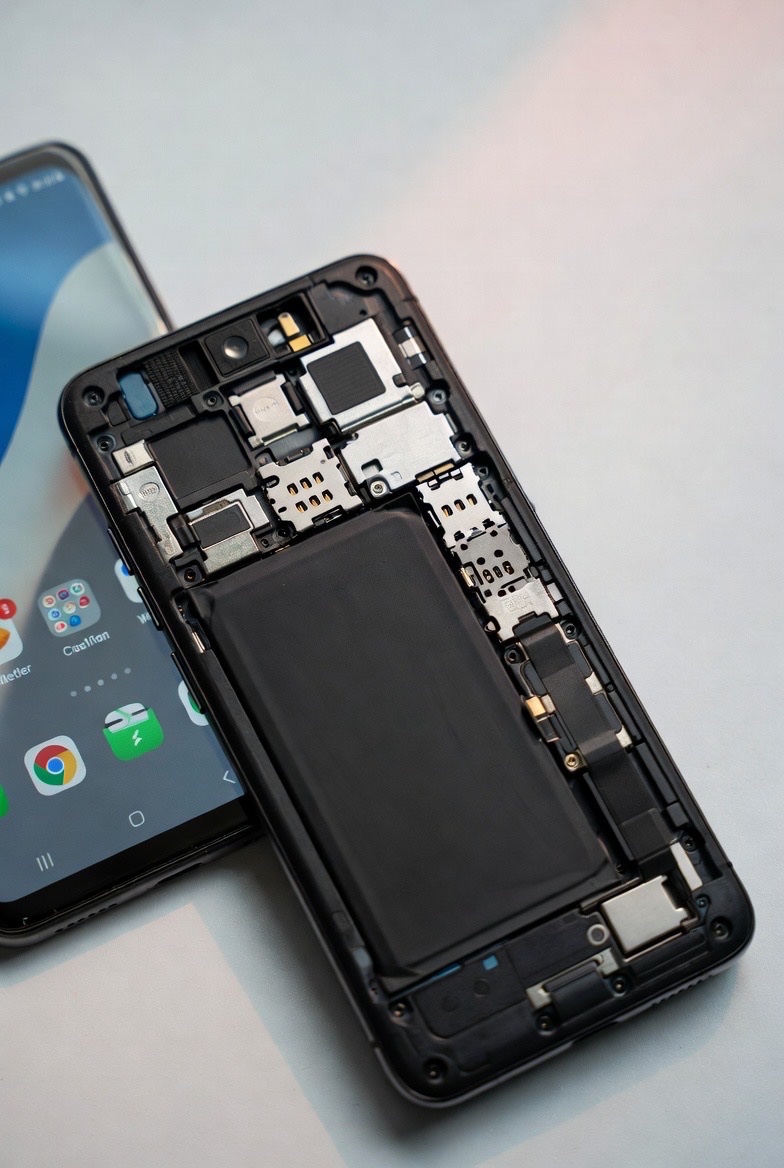
Starting in 2027, smartphones sold in the European Union will be required to have user-replaceable batteries designed for greater durability and more charging cycles.
Manufacturers must also provide spare parts and repair manuals for at least 10 years after a model is released.
This is real pressure against planned obsolescence. It should mean phones that actually last longer, cheaper fixes, and a lot less electronic waste piling up. About time.
The reason software eats RAM is the same reason factories used to dump chemicals in rivers. The cost is externalized.
Every mass of inference compute shows up on an engineering manager's AWS bill, broken down to the cent, reviewed quarterly. Every mass of RAM consumed on YOUR machine shows up nowhere in anyone's budget. Chrome could cut memory usage by 60% tomorrow and Google's revenue wouldn't move a single basis point.
Docker's 2GB idle footprint costs Docker Inc. exactly $0. Electron's 500MB todo list costs the Electron team exactly $0. The user paid for the RAM. The user pays the electricity. The user deals with the fan noise. The company ships faster because they chose the laziest possible runtime.
The token-optimization obsession makes this even clearer. Companies optimize inference cost because inference cost hits their margins. They'll spend six months shaving 200ms off a model response. They won't spend six days reducing a desktop client's memory footprint because that memory belongs to someone else's hardware.
This is why the 16GB vs 32GB debate is a trap. You're asking consumers to buy more expensive hardware to subsidize the software industry's refusal to optimize for a resource they never have to pay for.
The market will never fix this on its own. The people writing the checks and the people running out of RAM are on opposite sides of the transaction.