For Community 15M FDV
is great.
@P2Pdotme is one of the best platform we need in crypto
crypto can be used like Fiat with privacy with @P2Pdotme only at this time
We were going to raise another VC round at $150 Mn FDV
However - what was right thing to do is to launch a community round at $15 Mn FDV
We are gonna do the right thing 🫡
Doing the right thing matters more than anything.
For Community 15M FDV
is great.
@P2Pdotme is one of the best platform we need in crypto
crypto can be used like Fiat with privacy with @P2Pdotme only at this time
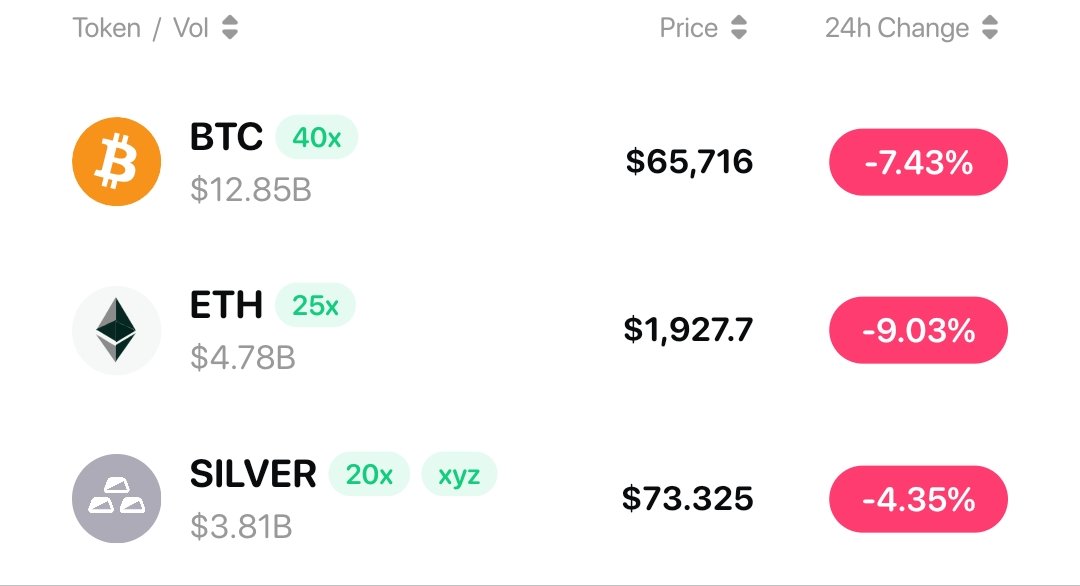
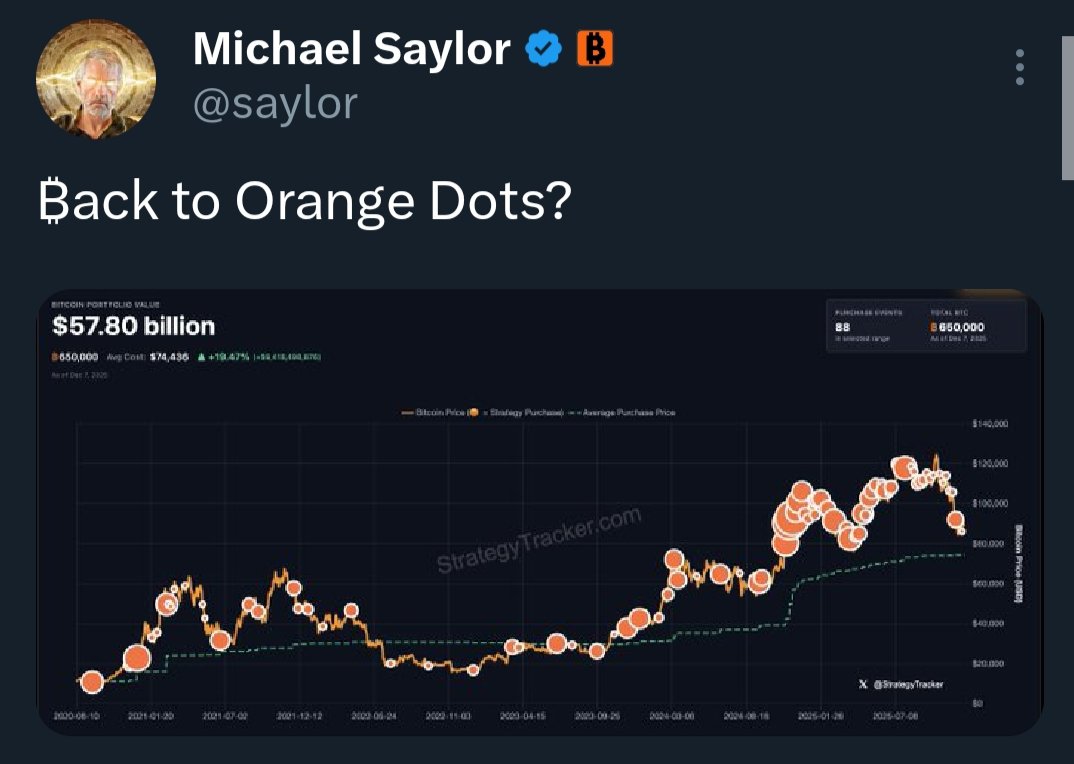
❤️🩹 BTC and ETH down another 10-20%
Maybe reason is Jeffrey Epstein
many posting that Jeffrey Epstein is real mastermind behind bitcoin
do you believe he is ?
he created bitcoin ?
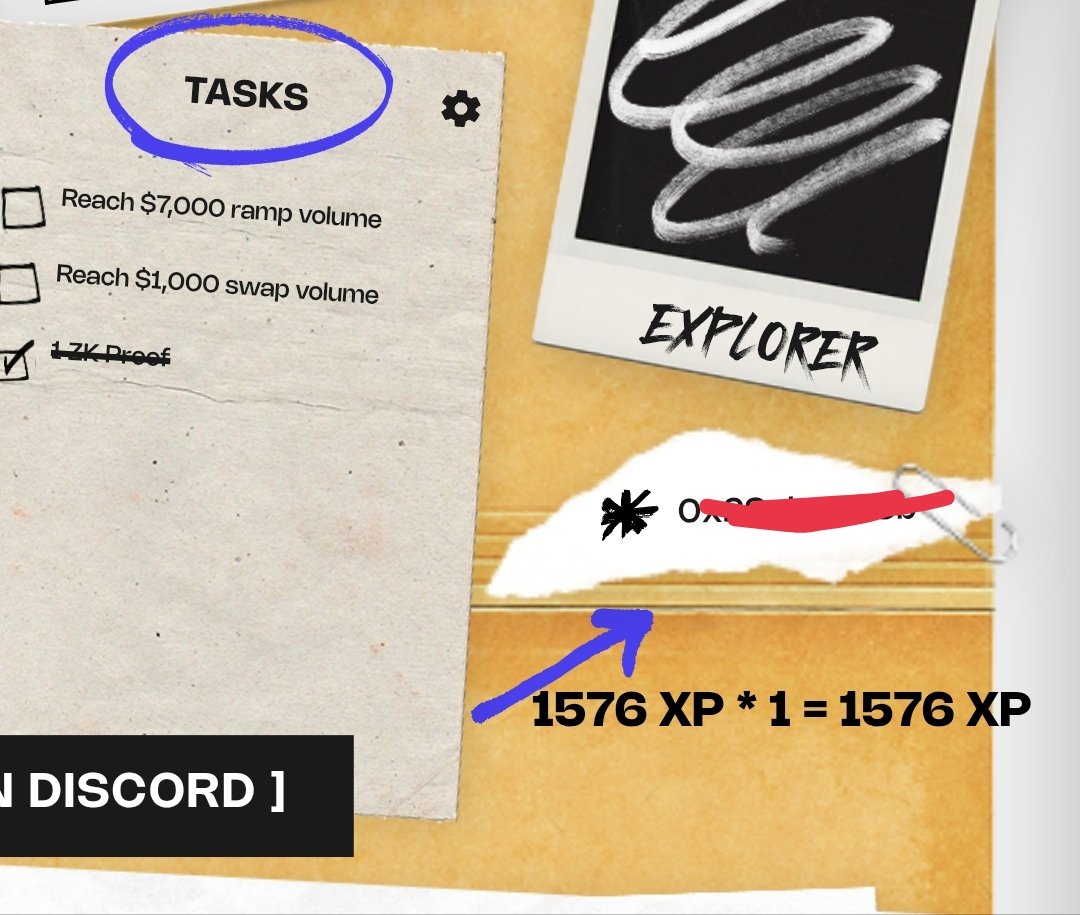
Btw let's check in daily @easydotfunX
💤 GN Friends
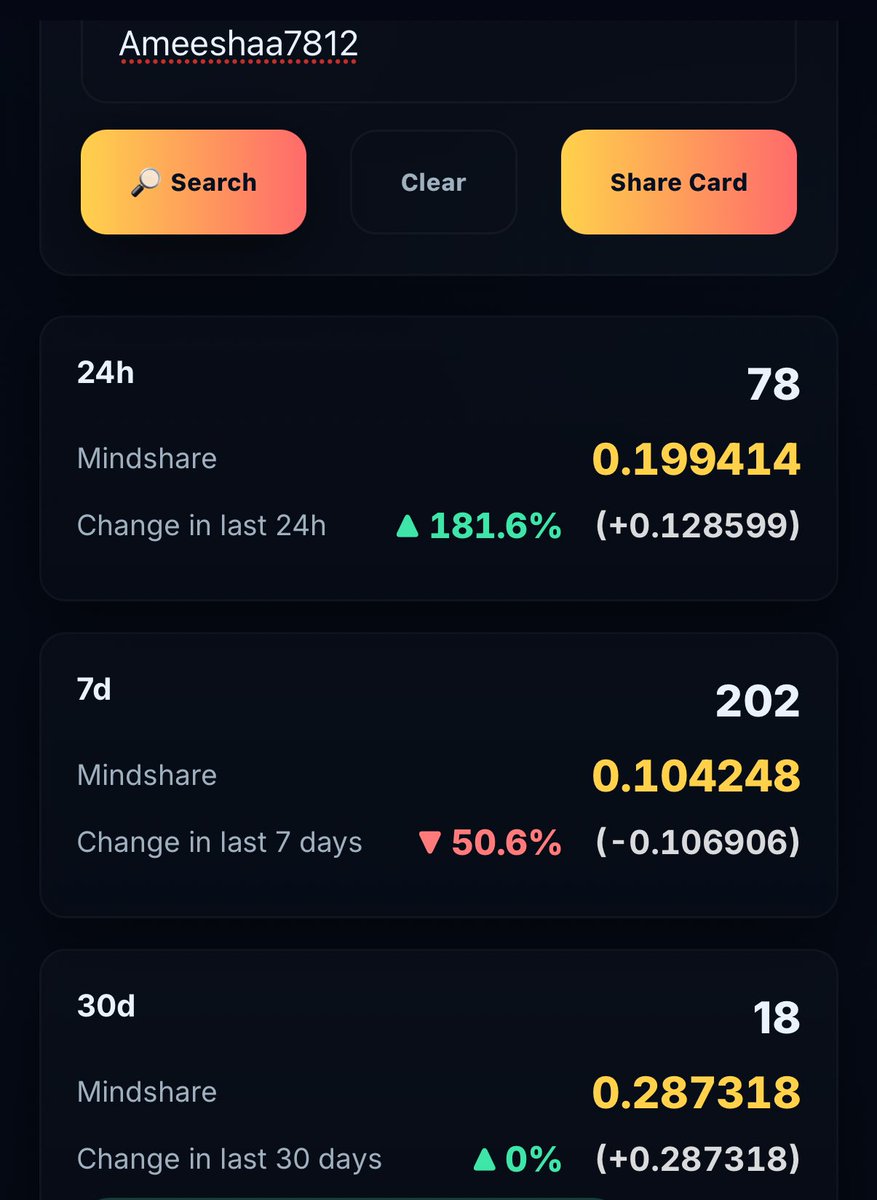
🤝 Just joined @tonso_ai today and it already feels like the Attention Economy of Crypto Telegram is finally here.
Tonso is the AI Signal protocol of CTG, connecting users, creators, and projects in one network where attention actually earns.
join now - https://t.co/VkEyjCXjgm
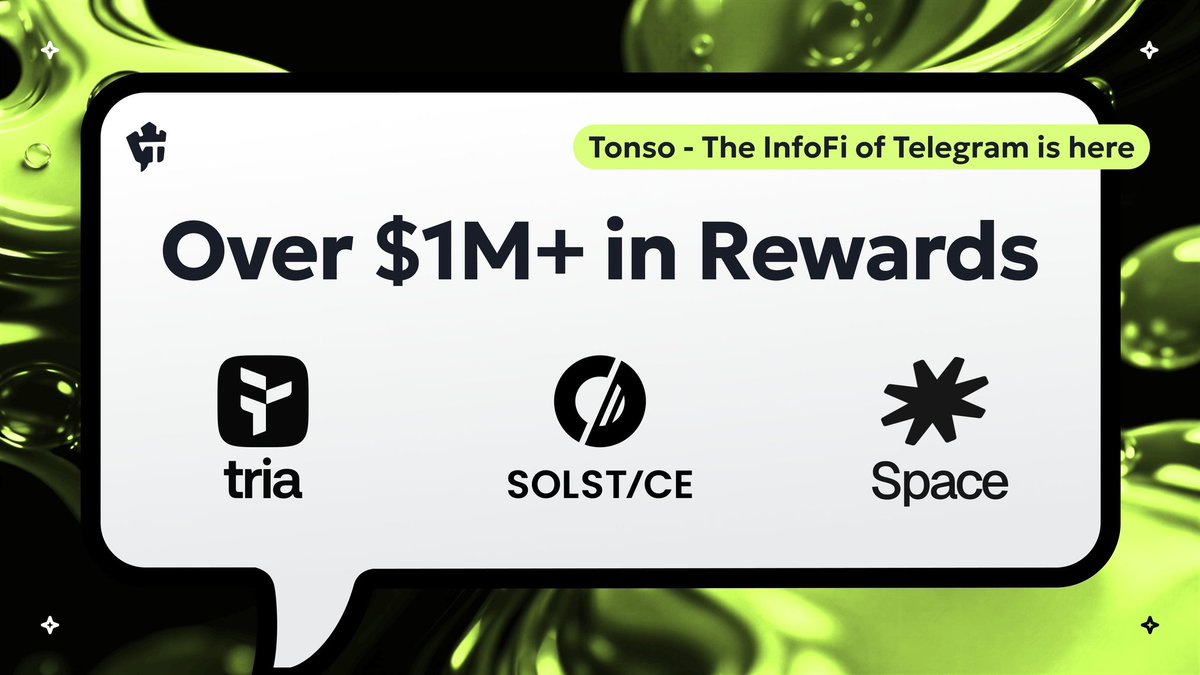
Campaigns just went live with $1M+ in rewards, featuring: @solsticefi – leading Solana yield infra with $300M+ TVL
@intodotspace – leveraged prediction markets from the $1.5B UFO Gaming team
@useTria – self-custodial neobank across 150+ countries
TG creators can compete for mindshare and earn.
Users discover projects, contribute to growth, and get rewarded.
Bonus for X creators with Yaps or an @ethos_network score who connect their profile.
🟨🐣 Late GM @zama Friends 🐣
Today we talked about payroll – and why it’s one of the biggest reasons real companies can’t move onchain yet.
Salaries are sensitive. Public blockchains expose who earns what, which makes onchain payroll impossible for businesses. With Zama’s FHE, payroll can run onchain while salary data stays encrypted and private.
This is how blockchains move from experiments to real-world infrastructure.
#ZamaCreatorProgram
🟨 Why Payroll Can’t Go Onchain Without @zama 🏢
Payroll is one of the most basic things every company does.
Paying salaries, bonuses, incentives, and reimbursements happens every month yet blockchains are still completely unusable for this.
📝 Let's See Why 👇
Because blockchains are public by default.
If a company pays salaries onchain today, everyone can see who earns what, when they get paid, and how much. That’s unacceptable for employees, illegal in many regions, and impossible for real businesses.
This is the real reason payroll still lives in banks and Web2 systems.
🟨 How @zama solve this problem 🤔
Zama uses Fully Homomorphic Encryption (FHE) – a technology that allows computations to happen on encrypted data. In simple words, smart contracts can calculate salaries, bonuses, taxes, and payouts without ever seeing the actual numbers.
🔶 Here’s what that enables:
• Salary amounts stay private
• Payroll logic still runs onchain
• Taxes and deductions are calculated correctly
• Payments remain auditable and verifiable
• Only the employee can see their own salary
A company could run payroll fully onchain while keeping compensation data confidential – just like traditional payroll systems, but with blockchain transparency where it matters.
This isn’t just for startups or DAOs.
Global companies, remote teams, and enterprises could use onchain payroll without leaking sensitive information. DAOs could finally pay contributors fairly without exposing internal compensation structures. Even governments could distribute funds while protecting citizen privacy.
For blockchains to replace real financial infrastructure, they must handle real-world use cases and payroll is one of the biggest ones.
Zama doesn’t just make payroll possible.
It makes private, compliant, onchain payroll realistic for the first time.
#ZamaCreatorProgram
Exposing the Unofficial Zama Leaderboards 🔍 ⚠️
Official Zama S5 leaderboard currently under maintenance, a lot of “Unofficial leaderboard” portals have started circulating
It’s important to say this clearly: those rankings are not real, not accurate, and not worth reacting to
Most of these leaderboards are pretending to be taking data from zama API-
~ either they are faking that they are getting data from API
~ if they are getting data from api then why Zama official leaderboard isn’t working
Most probably the API data is currently under updating and inaccurate that’s why the official leaderboard is currently under maintenance and these unofficial checkers are getting wrong data
I personally checked my two different ranks at same time:
~ I checked my rank with my phone it showed me 18
~when I checked with my laptop it at the same time showed me 135
Any one is suddenly moving up or down hundreds of positions right now
Any one is being removed quietly
But the only source of truth is the official @zama leaderboard, and until it’s back online, everything else is just noise
The right approach here is simple
Keep contributing, keep engaging, and keep building within the ecosystem, that work still counts
When the official leaderboard goes live again, that’s when real positioning will be visible and that’s when reactions actually matter
Until the official leaderboard returns, ignore unofficial rankings, trust the process, and stay bullish on Zama
Have you also seen such drastic change in your rank also ?
What is @zama?
$ZAMA is building privacy tech for Web3 using Fully Homomorphic Encryption (FHE) a system that lets blockchains run computations on encrypted data without ever revealing the real information.
- Encrypted smart contracts that keep user data hidden during all operations
- Cross-chain compatibility, so builders can use FHE on multiple networks
- Open-source tools that help developers integrate privacy easily
- Strong research background, backed by real cryptography experts
- A growing ecosystem of apps using FHE for secure voting, finance, identity & more.
Zama aims to make privacy a default layer across Web3 without breaking transparency or decentralization.
#ZamaCreatorProgram
the first time i plugged my wallets into @bluwhaleai,
i finally understood how much I've been missing out on.
for years, my on-chain life felt like scattered fragments
one tool for tracking trades, another for risks, another for DeFi positions…
different chains, different dashboards, different guesses.
i thought i had a full picture but turns out i only had fragments.
but BluWhale changes the entire experience.
it pulls everything into one intelligence layer and shows you the version of your wallet you’ve never actually seen.
and the best part?
it understands your behavior better than you do.
⪼ catches the small trading patterns you don’t notice
⪼ surfaces hidden risks before they become losses
⪼ exposes opportunities you would’ve scrolled right past
⪼ organizes cross-chain chaos into something you can act on instantly
it feels less like a dashboard
and more like having an on-chain financial brain watching your back.
this is where the evolution gets real:
with AI agents powered by $BLUAI and $BLUP,
@bluwhaleai isn’t just reading your data. it’s learning from it, adapting to you, and getting smarter with every interaction.
and now with Whale Score added, it goes even deeper:
⪼ measures your wallet behavior
⪼ identifies your strengths and blind spots
⪼ scores your edge across DeFi, liquidity movement, and activity patterns
suddenly, your wallet stops being a random set of transactions.
it becomes a readable identity, a strategy you can refine.
every action → improves your agents
every query → sharpens the intelligence layer
every insight → feeds back into the system
a full loop of usage, learning, and improvement.
this isn’t just a tool.
and $BLUAI isn’t just a token.
it’s a decentralized, personalized, self-learning AI ecosystem
built for people who actually live on-chain
traders, DeFi users, operators, and anyone who wants clarity instead of noise.
bluwhale didn’t just organize my data.
it changed how i operate
Could @zama be the answer to gaming privacy nobody asked for?
Yesterday i installed pubg and some web3 games when i opened them they asked for permissions like contacts, location, storage photos i kept clicking allow just to play
then i realized we're giving away so much data as permission without thinking and web3 games even worse your wallet is public so everyone sees what you own and every move you make
Then i started thinking what if there was a way to keep gaming data private
can zama actually be used in games and if yes then how i know they can encrypt wallet stuffs and etc but what about all those permissions we gave to games can this tech actually stop games from getting access on our contacts, location and photos i really wanted to know since i play a lot of games
#ZamaCreatorProgram
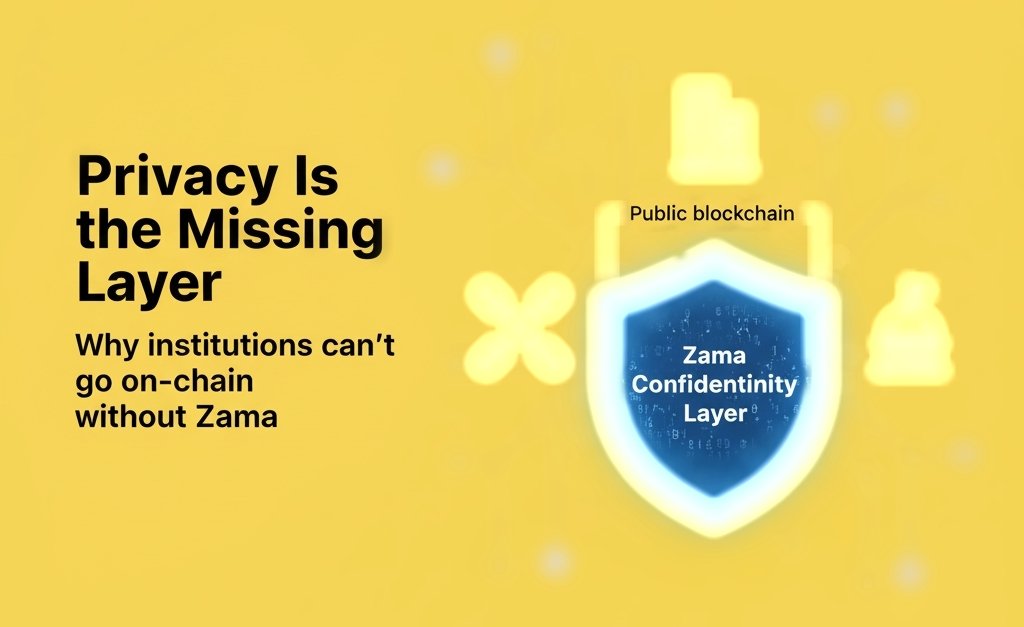
🟨 Why Institutions Can’t Use Blockchains Without @zama 🛡️
Blockchains promise transparency, efficiency, and global settlement but transparency is exactly why large institutions cannot use them at scale today.
For retail users, public balances and transactions are an inconvenience.
For institutions, they are a deal-breaker.
🔸——————————🔸
💥 The Main Problem
On most blockchains, everything is visible:
🔸Wallet balances
🔸Transaction amounts
🔸Counterparties
🔸Trading strategies
Now imagine this applied to real institutions.
BlackRock managing Multi Billion Dollar portfolios cannot expose positions in real time.
JPMorgan cannot reveal liquidity movements, payroll flows, or client transfers.
Goldman Sachs cannot execute strategies where competitors can front-run every action.
Governments cannot put citizen payments, taxes, or benefits on a fully transparent ledger.
This is why most institutional blockchain activity today is either:
– Off-chain
– Permissioned
– limited pilots with heavy constraints
🔸——————————🔸
🟨 Why “Private Chains” Didn’t Solve It
🔶 Institutions tried private and permissioned blockchains. They gained privacy but lost
🔸Composability
🔸Liquidity
🔸Network effects
🔸Open innovation
A closed blockchain is just a shared database with extra steps.
Institutions don’t want isolation.
They want privacy on public infrastructure.
🔸——————————🔸
🟨 Where @zama Changes Everything
Zama introduces Fully Homomorphic Encryption (FHE) to blockchains.
This allows
➡️ Balances to stay encrypted
➡️ Transactions to remain confidential
➡️ Smart contracts to execute on encrypted data
➡️ Verification without revealing underlying information
In simple terms
You get the openness of public blockchains, without exposing sensitive data.
🔸——————————🔸
🌐 Real Institutional Use Cases
🪙 Asset Management (BlackRock-style funds)
A fund can rebalance portfolios on-chain without revealing holdings, timing, or strategy. Competitors see activity is valid but not what it contains.
🏛️ Banking & Payments
Payroll, treasury movements, interbank settlement processed on-chain with encrypted amounts and recipients.
🗺️ RWA & Tokenized Securities
Institutions can issue and manage tokenized bonds, funds, or equities without broadcasting positions to the market.
🛡️ Compliance Without Exposure
Regulators can verify correctness and rules compliance cryptographically without seeing private data.
🔸——————————🔸
😶🌫️ Institutions operate under:
🔸Fiduciary duty
🔸Regulatory requirements
🔸Competitive risk
🔸Client confidentiality
Without confidentiality, public blockchains are unusable at Big scale
no matter how fast or cheap they are.
Zama doesn’t add privacy as a feature.
It makes privacy a primitive.
🟨 GM @zama Friends ☀️
In the last posts, we talked about privacy in Generative AI and AI agents – why AI can’t go mainstream in sensitive areas unless data stays protected, and why exposing raw data is a deal-breaker for real users and enterprises.
Today, i try to show why zama important for big institutions.
In the next post, we’ll talk about
👉 Why Institutions Can’t Use Blockchains Without Zama
This isn’t just a crypto discussion.
It’s about how finance, AI, and global institutions actually move on-chain.
#ZamaCreatorProgram