Drag-and-drop UI to build AI agents!
Langflow is a powerful visual tool for building and deploying AI-powered agents and workflows - without writing any code.
Supports all major LLMs, vector DBs, etc.
100% open-source, 137k stars 🌟
We certainly don't do everything right, but I'm proud of how much knowledge @google shares for free.
Here's an outstanding new, ungated paper from @antoniogulli and Kimberly about agent session and memory. Check it out.
https://t.co/ud3BAkoiAY
Your RAG system is failing?
It's not your vector database - it's how you're chunking your data.
Everyone focuses on picking the perfect vector database or embedding model. But here's what actually makes or breaks your RAG system: how you prepare your data before it ever gets embedded.
The fundamental challenge with chunking is this: your chunks need to be small enough for precise vector search, but complete enough to give your LLM the context it needs to generate accurate responses. Get this wrong, and even the best retrieval system will fail.
𝗖𝗵𝘂𝗻𝗸𝗶𝗻𝗴 𝘀𝘁𝗿𝗮𝘁𝗲𝗴𝗶𝗲𝘀 (𝗳𝗿𝗼𝗺 𝘀𝗶𝗺𝗽𝗹𝗲 𝘁𝗼 𝗮𝗱𝘃𝗮𝗻𝗰𝗲𝗱 ):
𝗙𝗶𝘅𝗲𝗱-𝗦𝗶𝘇𝗲 – Split by token count (~512). Fast and simple, but cuts mid-sentence.
𝗥𝗲𝗰𝘂𝗿𝘀𝗶𝘃𝗲 – Splits by structure (paragraphs → sentences). Best for articles.
𝗗𝗼𝗰𝘂𝗺𝗲𝗻𝘁-𝗕𝗮𝘀𝗲𝗱 – Uses inherent structure (headers, HTML tags). Perfect for structured content.
𝗦𝗲𝗺𝗮𝗻𝘁𝗶𝗰 – Detects topic changes via embeddings. Variable-length chunks, one idea each.
𝗟𝗟𝗠-𝗕𝗮𝘀𝗲𝗱 – Uses AI to identify propositions. High quality, high cost.
𝗔𝗴𝗲𝗻𝘁𝗶𝗰 – AI agent decides which strategy to use per document. Custom but expensive.
𝗟𝗮𝘁𝗲 𝗖𝗵𝘂𝗻𝗸𝗶𝗻𝗴 – Embeds full document first, then derives chunks. Retains full document context.
𝗛𝗶𝗲𝗿𝗮𝗿𝗰𝗵𝗶𝗰𝗮𝗹 – Multiple layers at different detail levels. Start broad, drill down when needed.
𝗔𝗱𝗮𝗽𝘁𝗶𝘃𝗲 – Dynamic chunk sizes based on content density. Small for complex sections, larger for simple ones.
𝗕𝘂𝘁 𝗵𝗲𝗿𝗲'𝘀 𝘄𝗵𝗮𝘁 𝗺𝗼𝘀𝘁 𝗽𝗲𝗼𝗽𝗹𝗲 𝗺𝗶𝘀𝘀:
Chunking isn't a standalone problem. It's one piece of 𝗖𝗼𝗻𝘁𝗲𝘅𝘁 𝗘𝗻𝗴𝗶𝗻𝗲𝗲𝗿𝗶𝗻𝗴 – the architecture that determines what information your LLM sees and when.
You also need query augmentation, agents, memory, and tools working together. You can't optimize chunking in isolation.
We just released a guide covering all of this, including decision trees to help you pick the right chunking strategy for your use case.
Get your free copy here → https://t.co/FRPyeDeyPh
First tools, then memory...
...and now there's another key layer for Agents.
Karpathy talked about it in his recent podcast.
Tools help Agents connect to the external world, and memory helps them remember, but they still can't learn from experience.
He said that one key gap in building Agents today is that:
"They don't have continual learning. You can't just tell them something and they'll remember it."
This isn't about storing facts in memory, but rather about building intuition.
For instance, when a human masters programming, they don't just memorize syntax.
Instead, they develop heuristics, learn edge cases, understand context, and build genuine expertise/skills through repeated interaction.
But current agents typically start from scratch every time.
Karpathy mentioned one possible path forward, which is to provide Agents with some kind of "distillation phase" that takes what happened during interactions, analyzes it, generates synthetic examples, and updates their understanding via RL.
This is similar to how humans consolidate experiences into learning.
Composio is actually building the infrastructure to solve this and provide a shared learning layer for Agents to evolve.
Think of it as the "skill layer" that gives Agents an interface to interact with over 10k tools while building practical knowledge from those interactions.
Interestingly, this direction also aligns with what Anthropic is exploring, codifying repeated agent behaviors as skills .md files.
Both approaches point toward a similar design pattern where agents progressively turn experience into reusable, composable skills.
So when one agent learns how to handle specific API edge cases, that knowledge becomes available to every other agent via Composio's collective AI learning layer, resulting in Agents that don't just automate but rather develop real intuition.
This is what Karpathy meant by continual learning, where Agents don't just memorize, but accumulate skills as they interact.
I have shared the Composio GitHub repo in the replies!
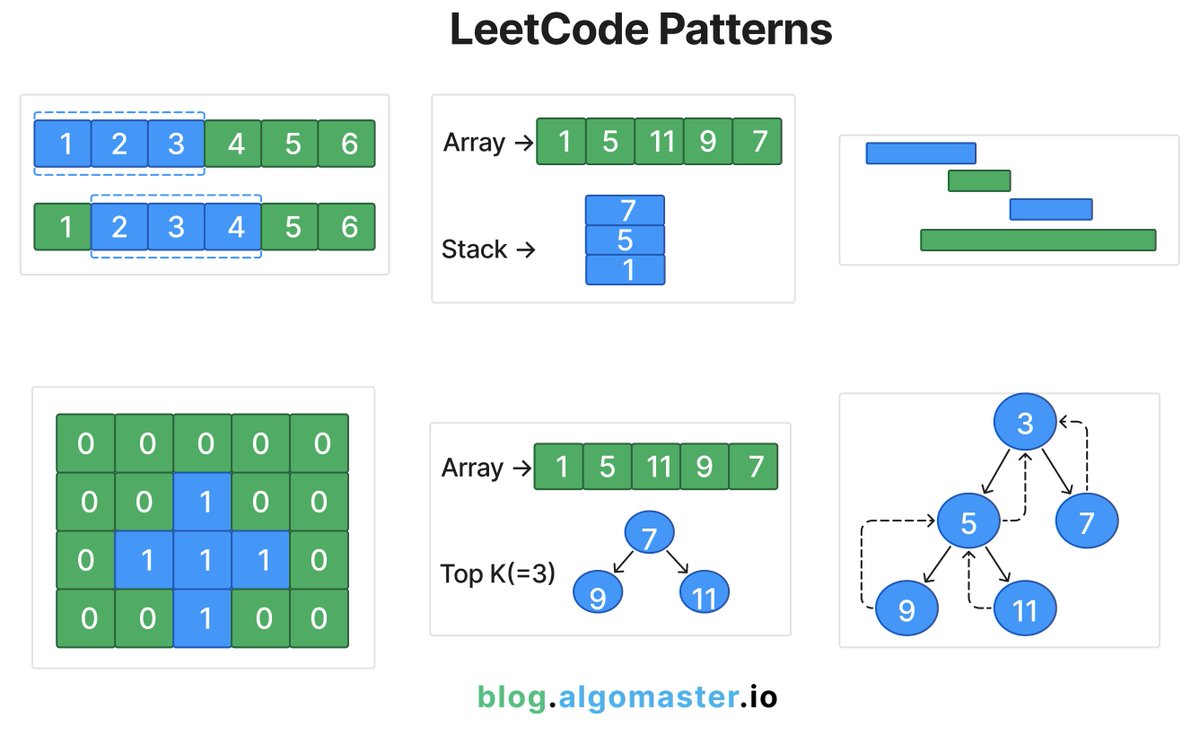
LeetCode was HARD until I Learned these 15 Patterns:
1. Prefix Sum
2. Two Pointers
3. Sliding Window
4. Fast & Slow Pointers
5. LinkedList In-place Reversal
6. Monotonic Stack
7. Top ‘K’ Elements
8. Overlapping Intervals
9. Modified Binary Search
10. Binary Tree Traversal
11. Depth-First Search (DFS)
12. Breadth-First Search (BFS)
13. Matrix Traversal
14. Backtracking
15. Dynamic Programming Patterns
I wrote a detailed article on these patterns and provide links to leetcode problems you can practice to learn them better.
Check it out here: https://t.co/dFv9UPKFUB
Subscribe for more such articles every week.
OpenAI Co-founder Andrej Karpathy explains the new computing paradigm:
"We're entering a new computing paradigm with large language models acting like CPUs, using tokens instead of bytes, and having a context window instead of RAM.
This is the Large Language Model OS (LMOS)"
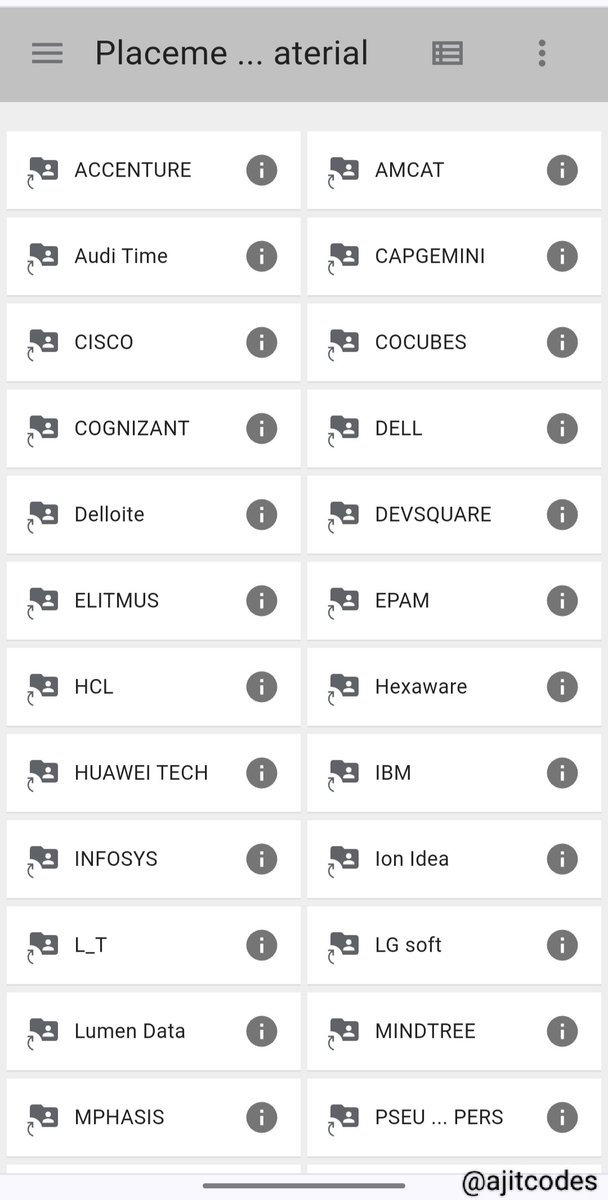
All Companies Placement Materials🔥😱
Just Free Of Cost!!
Simply:
1. Follow (So that I can DM)
2. Like and Repost
3. Comment "placement" to recieve your copies