On the morning of June 4, 1942, Ensign George Gay climbed into his TBD Devastator torpedo bomber and flew toward the largest concentration of Japanese naval power ever assembled.
He knew exactly what he was flying into.
Torpedo Squadron 8 had 15 planes and 30 men. Their aircraft were slow, outdated, and completely unescorted. No fighter cover. Command had promised them protection. It never showed. The flight leader, Lieutenant Commander John Waldron, had written a farewell letter to his wife before takeoff. He knew.
Waldron found the Japanese fleet first. Before the attack, he got on the radio one last time: "My greatest hope is that we encounter a favorable tactical situation, but if we don't, and the worst comes to worst, I want each one of us to do his utmost to destroy our enemies. If there is only one plane left to make a final run in, I want that man to go in and get a hit."
Then they dove.
The Japanese Combat Air Patrol fell on them like wolves. Dozens of Zeros. The Devastators had no altitude, no speed, and no cover. They had to fly low and straight to line up torpedo shots, which meant they couldn't evade. They could only absorb fire and keep flying.
One by one, the planes went down.
Gay watched them fall around him. Friends. Bunkmates. Men he had trained with, eaten with, played cards with. Going into the water one after another. No parachutes. No survivors.
His gunner, Robert Huntington, was hit. Dying in the backseat as Gay flew forward.
Gay himself took a 20mm cannon round. His left hand was hit. The plane was on fire.
He kept flying.
He lined up on the Japanese carrier Soryu and dropped his torpedo at point-blank range, closer than doctrine called for, because he had no other choice. He watched it run toward the ship.
Soryu turned. The torpedo missed.
Then his plane was hit again and went in.
As the nose of the Devastator knifed into the Pacific, Gay forced the canopy open against the rushing water pressure and pulled himself free. He surfaced surrounded by burning fuel and wreckage, wounded, alone, in the middle of the Japanese fleet.
He had one Mae West life vest. One seat cushion. That was it.
The Japanese destroyers were close enough that he could see sailors moving on their decks. He knew if they spotted him, they would not rescue him. So he did the only thing he could do.
He held the seat cushion over his head and floated.
Every time a Japanese aircraft flew low over the water, he pushed himself under and pressed the cushion above him to break his silhouette. For hours he did this. Treading water. Hiding. Bleeding. Watching his friends' planes burn on the surface around him.
He was the last man. Every single other pilot and gunner in Torpedo Squadron 8 from the Hornet was dead. All 29 of them.
And then, from high altitude, the American dive bombers arrived.
SBD Dauntlesses. They had found the fleet almost by accident, following the wake of a Japanese destroyer. And when they arrived, the sky above the carriers was empty.
Here is the part that will haunt you.
VT-8's attack had looked like a catastrophic failure. But it wasn't. By flying low, slow, and straight into the teeth of the Japanese fleet, they had pulled every single Zero in the Combat Air Patrol down to sea level to kill them. For those few critical minutes, the carriers below had nothing above them. No protection. No altitude cover.
The dive bombers came straight down out of the sun.
Akagi: hit. Fires reached the torpedo magazine. Gone.
Kaga: hit. Fuel ignited. Gone.
Soryu, the same carrier Gay had attacked alone minutes before: hit. Gone.
Three of Japan's six fleet carriers, the core of the force that had attacked Pearl Harbor, were mortally wounded in under five minutes.
George Gay watched all of it.
From fifty yards away, treading water with a shot-up life vest and a seat cushion over his head, he watched three Japanese aircraft carriers burn to the waterline. He watched the explosions. He watched the smoke columns rise so high they could be seen for miles. He watched the fleet that had seemed invincible that morning begin to die.
He floated there for thirty hours total. When darkness finally fell, he inflated the life raft. It was full of bullet holes but held enough CO2 to keep him on the surface through the night.
A Navy PBY Catalina patrol plane found him the next morning and pulled him out.
He later met with Admiral Chester Nimitz personally and confirmed what he had seen: three carriers destroyed. His eyewitness account was among the first human confirmation that the battle had turned.
He was 26 years old.
He was awarded the Navy Cross. He recovered from his wounds. He went back to flying, eventually spending 30 years as a commercial pilot for Trans World Airlines, carrying passengers on routes across America. He never made a big show of what he had done. He gave interviews when asked. He wrote a book. He went to reunions.
He died in 1994 in Marietta, Georgia.
His name was Ensign George Henry Gay Jr. He is, to this day, the only known combatant in history to survive a major naval battle by floating in the middle of it while it happened around him.
He flew in with 29 men. He came home alone. And the battle those men died in changed the course of the entire war.
Today is the 84th anniversary of the Battle of Midway.
Remember his name.
John Cornyn’s loss tonight should be a wake up call to the Republican-controlled Senate. Powerful, long-time incumbent Senators don’t often lose primaries. The closest recent comps are Richard Lugar’s defeat in 2012 and Bob Bennett’s in 2010.
The Senate has many John Cornyns.
John Cornyn’s loss tonight should be a wake up call to the Republican-controlled Senate. Powerful, long-time incumbent Senators don’t often lose primaries. The closest recent comps are Richard Lugar’s defeat in 2012 and Bob Bennett’s in 2010.
The Senate has many John Cornyns.
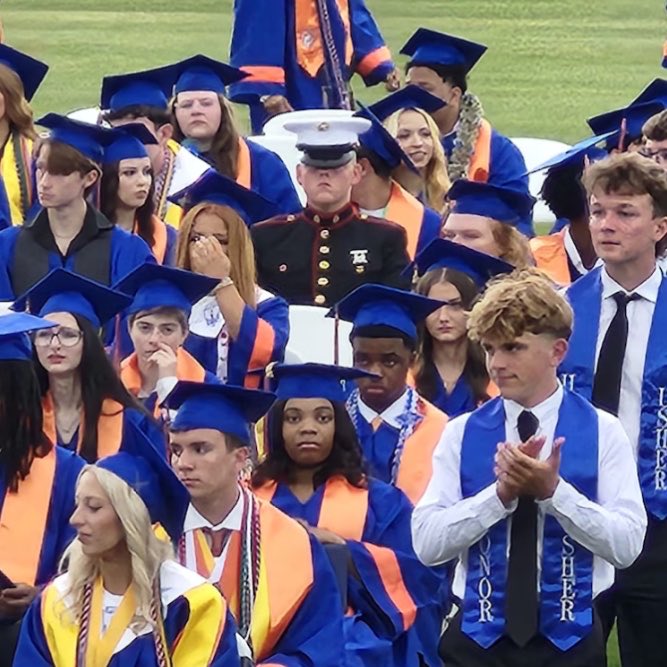
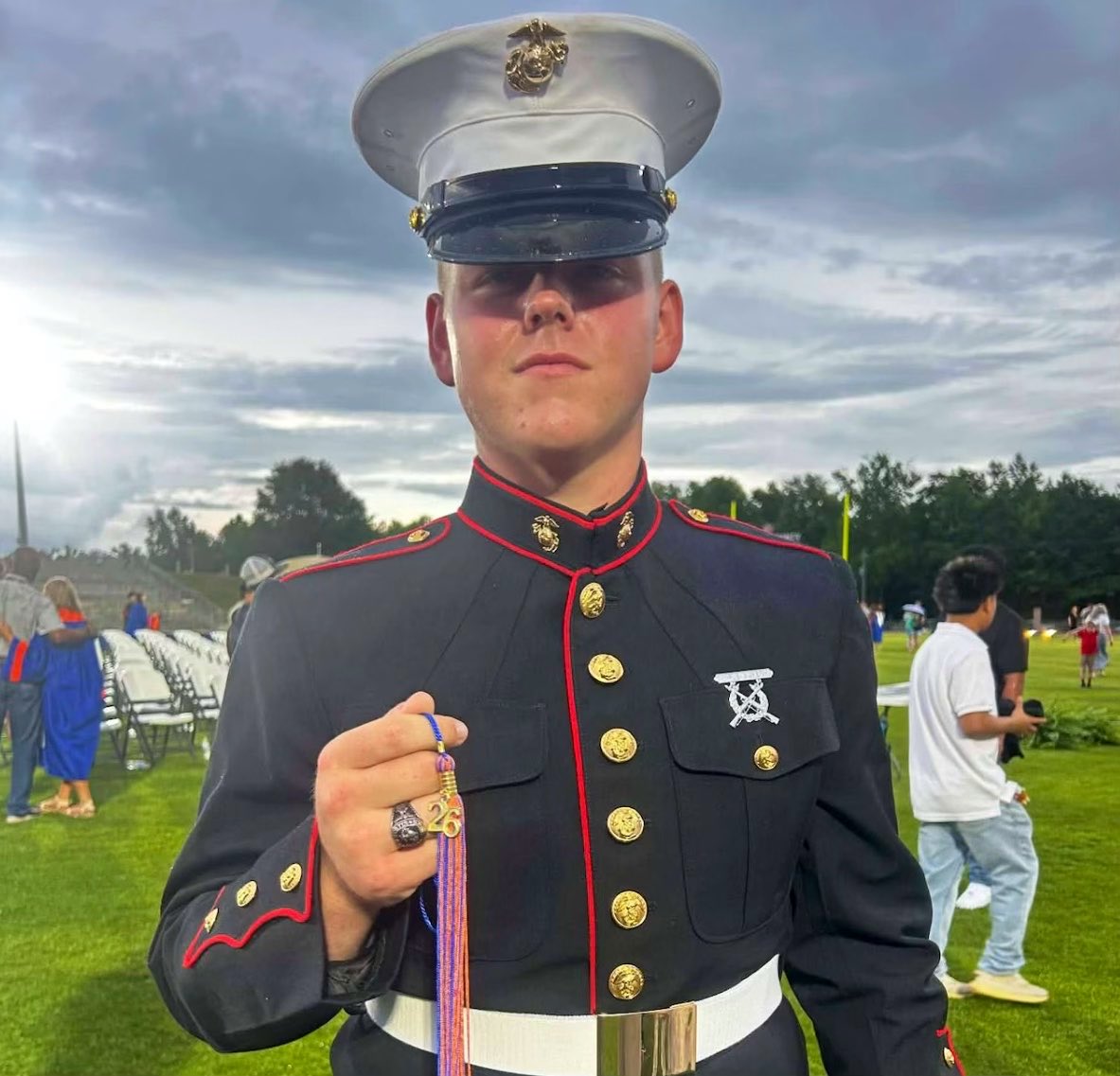
Alabama teen, Luke Owens, received a standing ovation when he walked across the graduation stage in his Marine Corps uniform after completing recruit training before finishing high school.
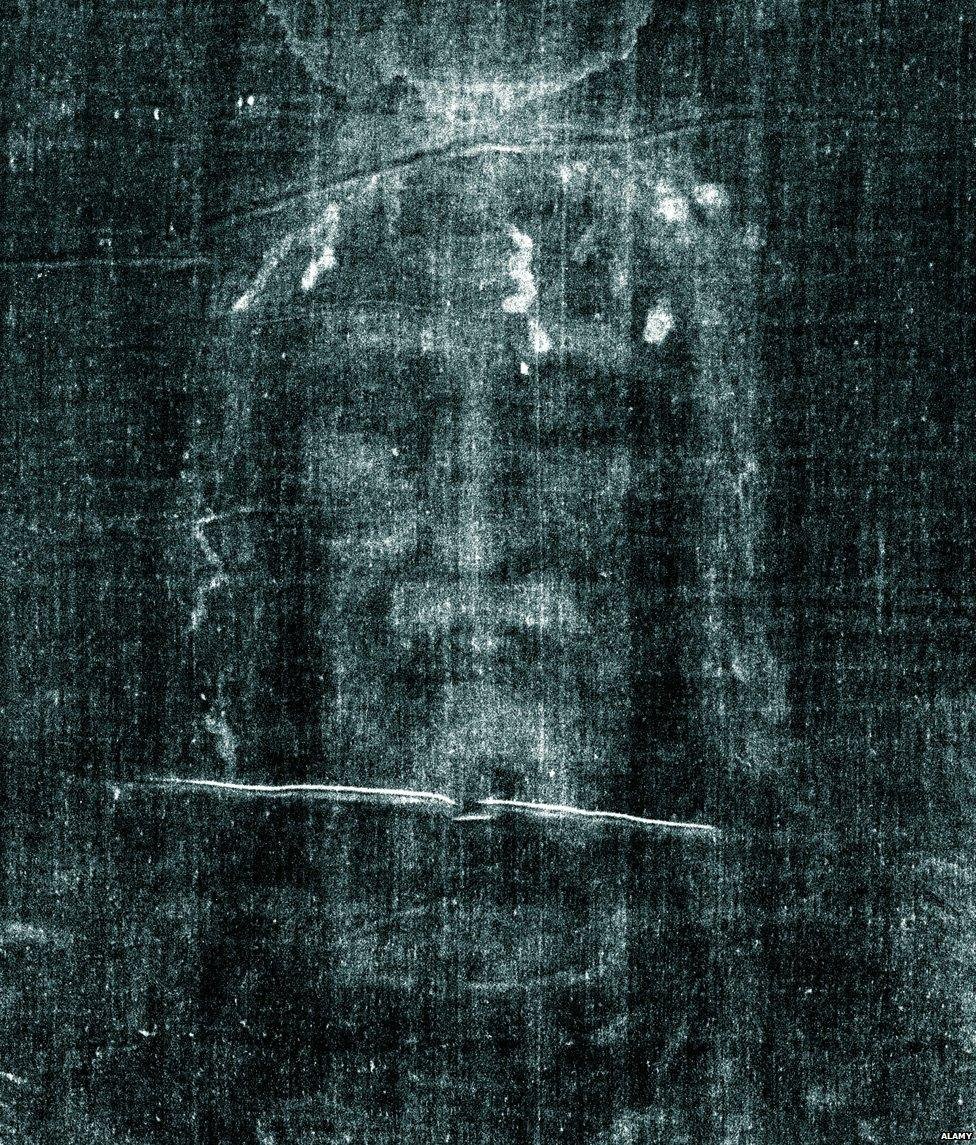
Here's a 3D image made by an intense burst of vacuum ultraviolet light radiation, without heat, inprinted in just 200-500 nanometers deep into the shroud, far thinner than a human hair.
Science can neither explain it or reproduce it.
Good enough?
The last time I saw my grandfather, Izu, was in 2003. He was dying of lung cancer in Venezuela.
He was a larger than life man from the Kingdom of Romania who was orphaned at 10 years old, came to Venezuela, and built his entire life from scratch.
I was at playing football at the Columbia University when my father called and said, "Look, I know you're really busy with school and sports and all that, but if you ever want to see him again, this is the time."
So I talked to my coaches and worked things out and I flew down to Caracas with my father.
If you know Venezuelan history, in 1998, Hugo Chavez, the dictator, became president. And the Constitution was clear you could run for only one five-year term. So in 2003, his term was up, but as an autocrat, he was not going to take that lying down.
So what does he do? He packs the Supreme court with a bunch of his buddies and petitions for reconsideration.Constitution is clear, you can't run again."
So what does he do? He packs the supreme Court with a bunch of his buddies and petitions for reconsideration.
The new Supreme Court told him that not only could he run again, he could run as many times as he wanted to. He ruled until 2013 when he died of cancer.
After the ruling, there were mass protests which happened to coincide with when I was visiting my grandfather.
My grandfather, who was down to roughly 85 pounds and confined to a wheelchair, asked me to wheel him outside onto the balcony and set up the chessboard so we could play one last time. As a little boy, he had taught me how to play chess.
I set up the pieces. He couldn't lift his arm enough to move them, so I was moving them for him.
He said to me, "Your father tells me you want to go to law school." And I said, "I do." And he said, "Where do you want to go to law school?" So I said, "I want to go to Yale, but I don't know if I'll get in."
And then he said, "Well, what kind of lawyer are you gonna be?" And I said, "I really don't know, I'm just in college, I mostly just care about football, you know?"
And he looked at me and he had watery eyes at that moment, and he picked up his very bony finger, which took a great deal of effort, and he pointed out at the crowd below and said, "Always remember, this is what happens to a country when good people don't serve it."
And so when I got the call to serve as a federal judge, it was a no-brainer. This country welcomed us with open arms when we had nothing and gave us everything we have today.
It's the honor of a lifetime to be able to serve, and I'm grateful for it every single day.
At @Hillsdale we had our graduation ceremony. @MrsErikaKirk was our speaker. She gave a fine talk. But she did something else very few speakers do; she stood, for two hours, and shook the hand of every single graduate. 420 people she had never met. Just because. Thanks Erika.
"We founded the Daily Wire to promote truth, virtue, and freedom. And we're nor going to trade those causes for the temporary nicotine high of Pakistani clicks and Groyper likes"