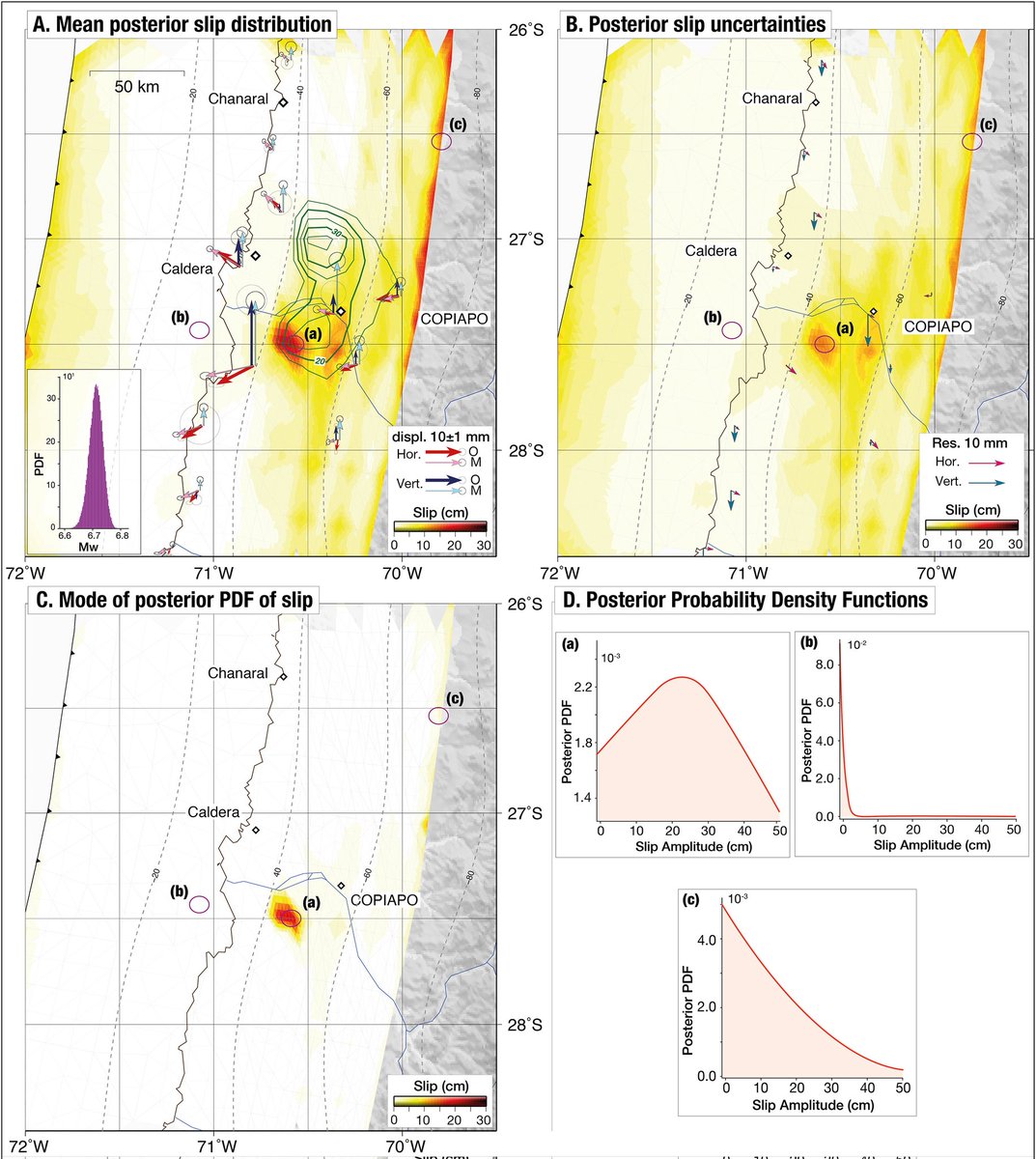
A 🔟 años del #25M os dejamos este hilo en el que explicábamos la publicación de @tatianuskaya en el que se reconstruye el proceso y los daños ocurridos en la ciudad de Copiapó resultado del proyecto #COPIFLOOD de @ANID_Chile ⬇️
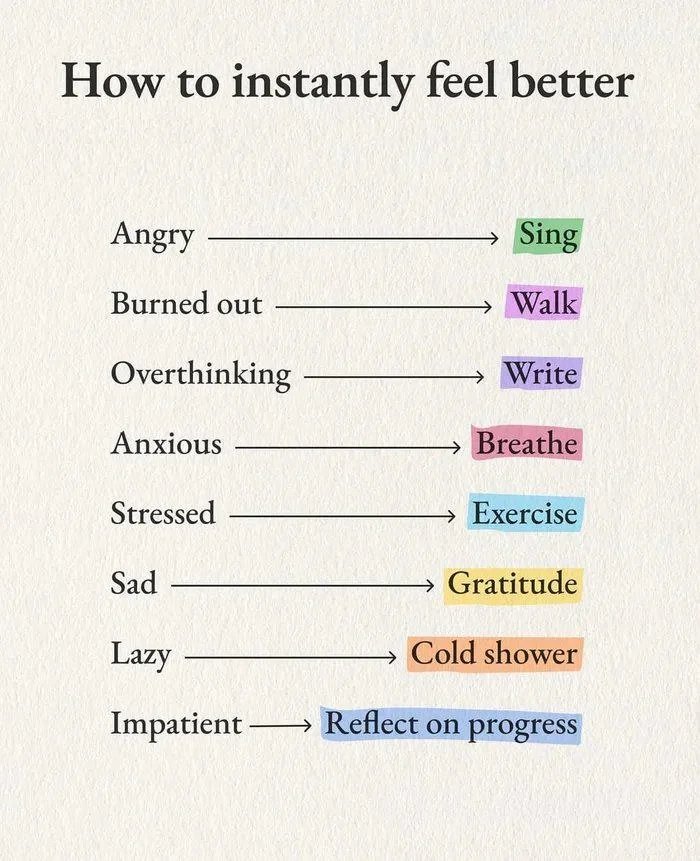
Grok-3 can help you create Mind Maps.
Studying and understanding complex topics is now easier than ever.
Here’s how to create a mind map in just few minutes:
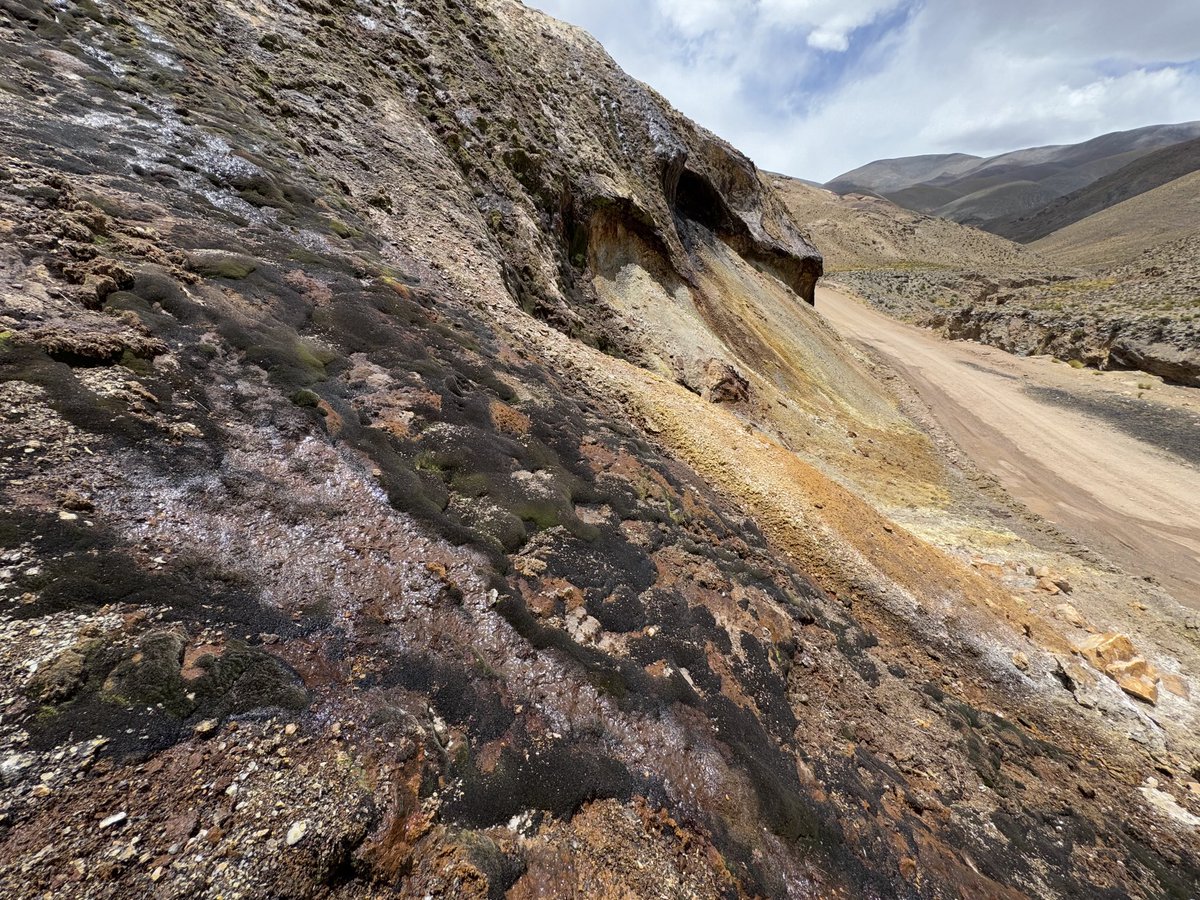
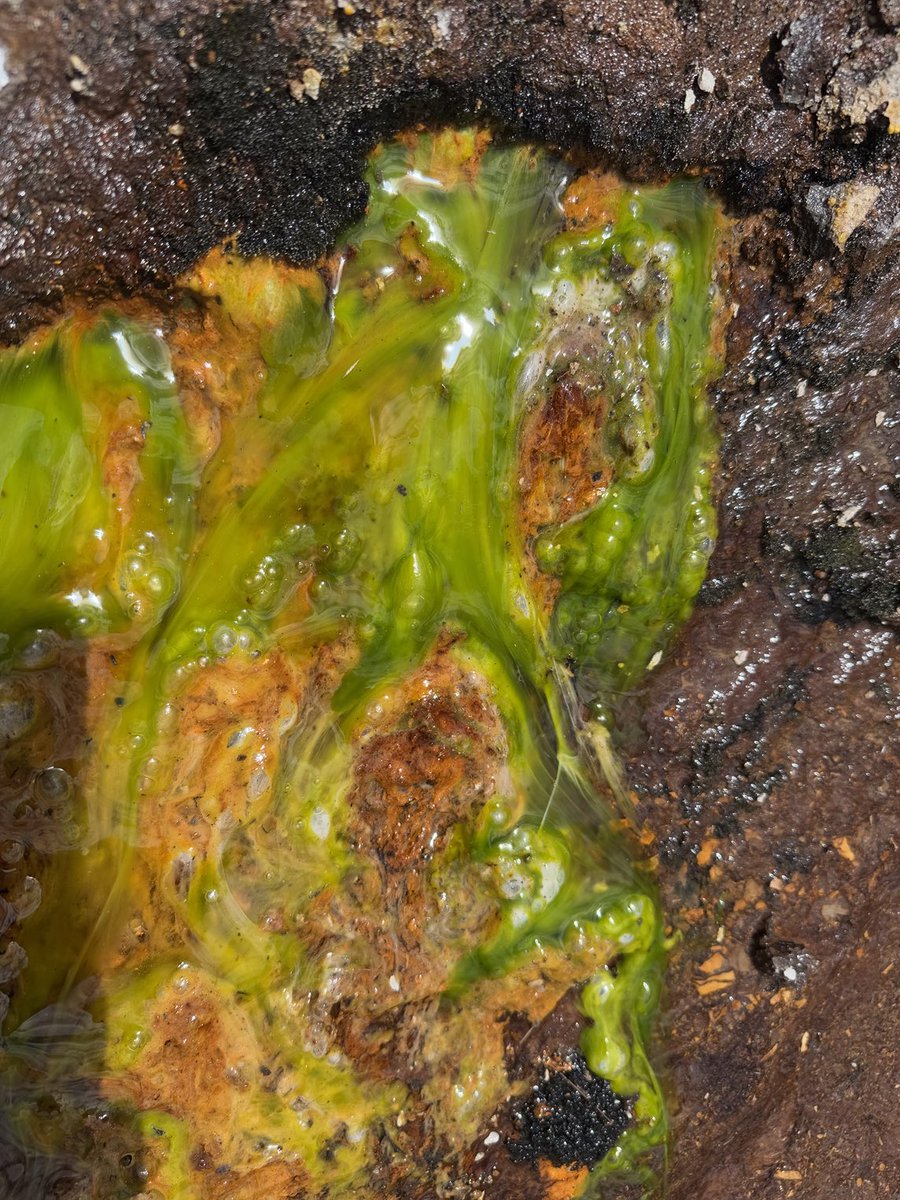
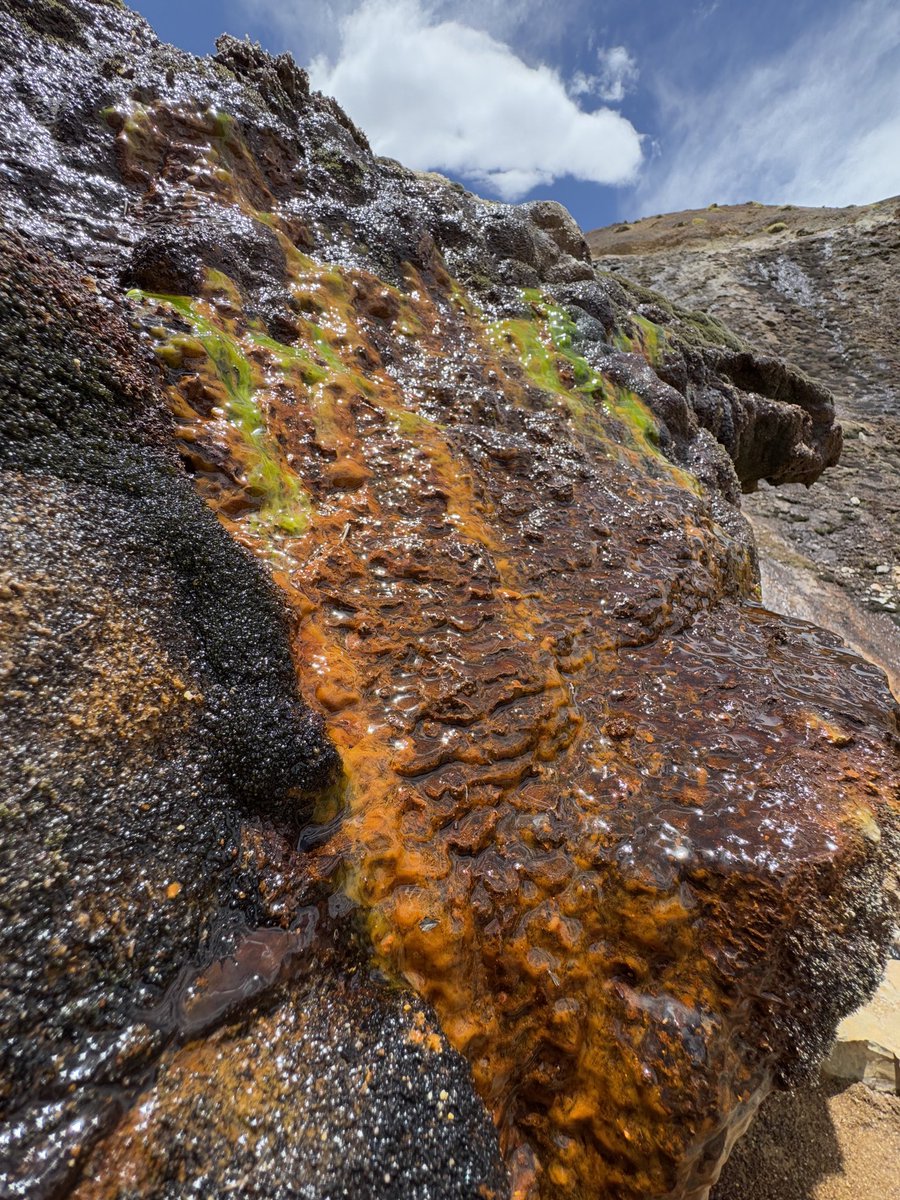
Iron oxyhydroxide biofilms forming large scale structures in the high Andes. Formed from spring waters that passed through sulfide rich shales. Structures look similar to travertine deposits but this spring seems to be largely carbonate free.
🦎 Gecko es una herramienta de código abierto que te ayuda a encontrar los artículos más relevantes para tu investigación, optimizando el proceso de revisión de literatura y facilitando el descubrimiento de nuevos hallazgos científicos.
https://t.co/xs9HhFx9il
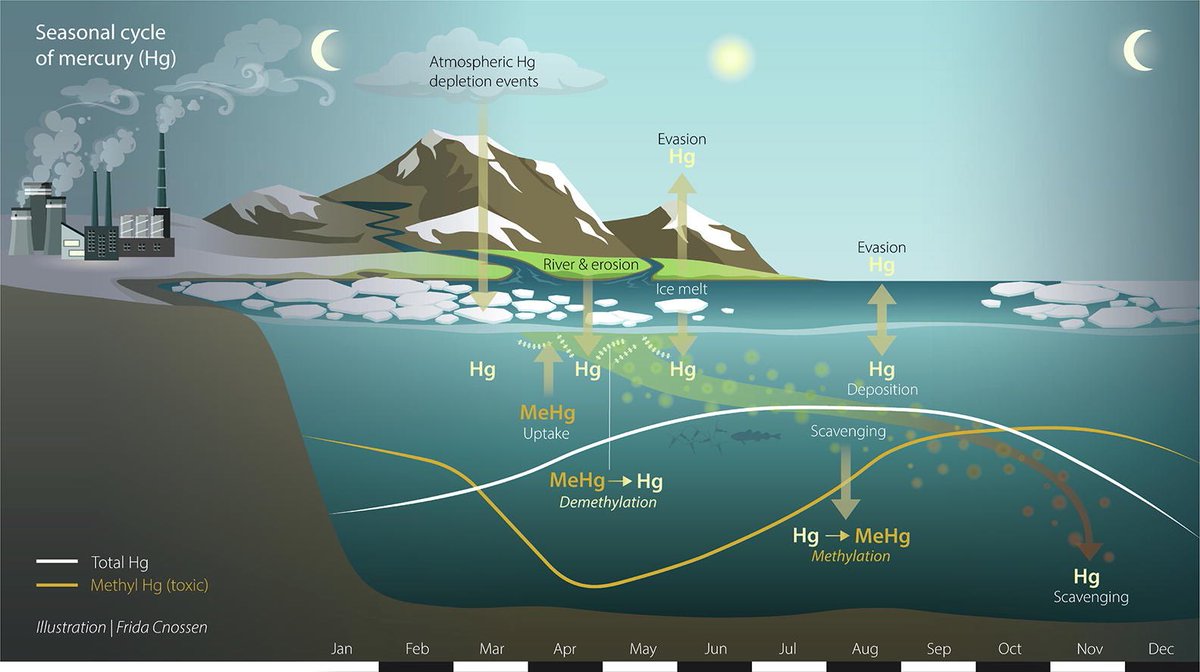
Revealing the seasonal #mercury cycle in the #Arctic ocean based on 4 oceanographic cruises. Our current budgets and models need some updating.
https://t.co/zk6EkwzRqg
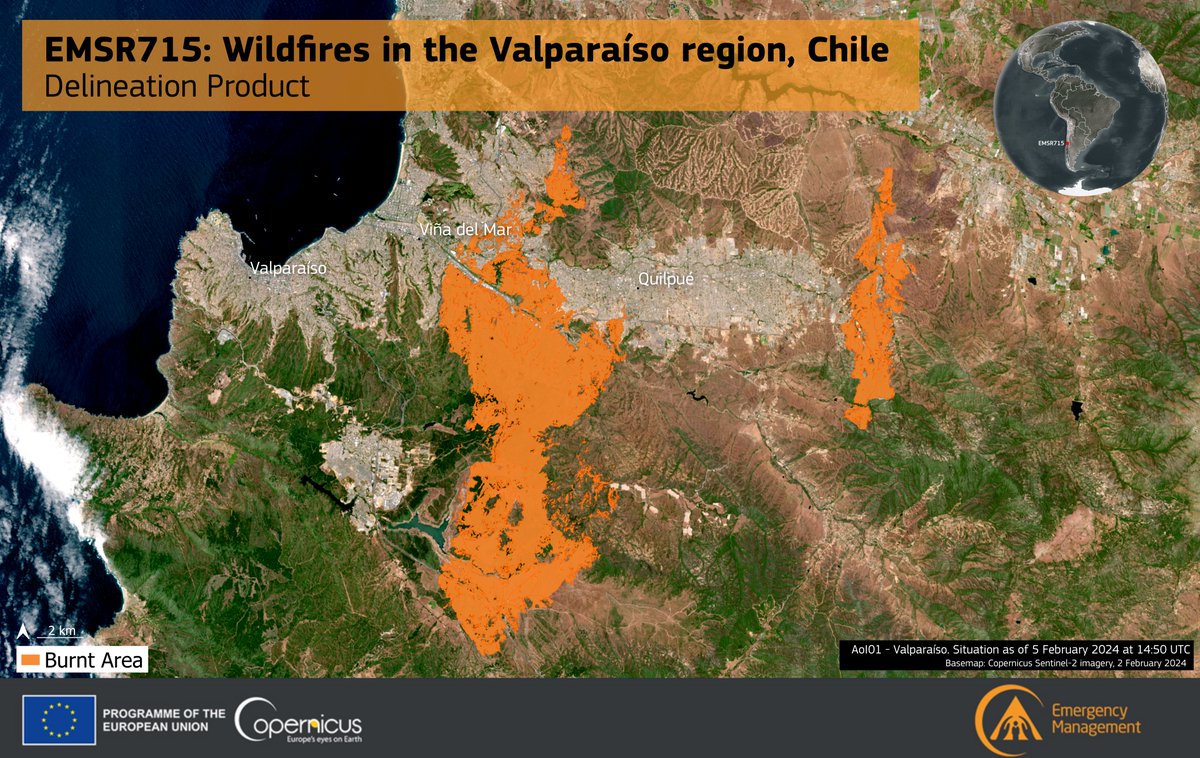
#EMSR715#Incendios en #Chile🇨🇱
Nuestro equipo de Mapeo Rápido ha entregado su Producto de Delimitación para el área de #Valparaíso🔥
➡️Superficie afectada: 8⃣,7⃣1⃣8⃣ ha❗️
➡️Personas afectadas: +5⃣,0⃣0��0⃣
🔗https://t.co/KIifwG1QY9
@the_rock_guy@kennecottutah Hello, I saw your publication in which you offer to do a PhD and I am interested, I would like to know what are the requirements. I am a Chilean geologist and I am very interested in porphyry and hydrothermal systems.
@ClaudioASaez detalló en la sesión los fundamentos científicos que avalan nuestras metodologías y los resultados obtenidos, destacando la responsabilidad pública, sin fines de lucro, que la casa de estudios mantiene con los territorios. Lea la nota en: https://t.co/Sk5NL4tg2l
Understanding Exploration Results - A Guide for Investors
Are you keen to comprehend what makes a mining exploration project truly promising?
Let's break down the significance of exploration results and how to interpret them from company announcements.
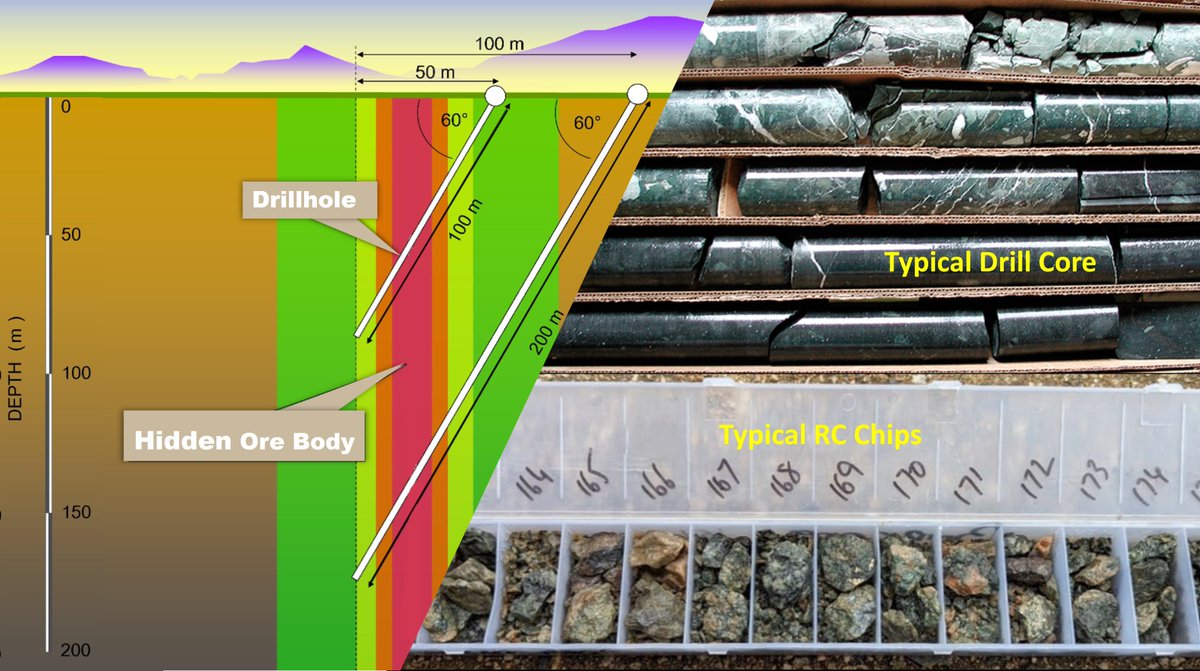
Interpreting Drill Results: A Guide for Investors
Understanding high-grade mineralization in mining is a nuanced concept, with its definition changing based on the depth and size of the ore body. In modern mining, even ores with relatively low grades can be economically viable, especially if they're located near the surface and are expansive enough to allow for bulk mining. This is made possible by advanced mining technology that enables efficient processing of large ore volumes at a low cost. Therefore, simply looking at a drill result based on grade is a not enough and sells short the true potential of a potential deposit, low grade is okay and often preferred… if it has the tonnage.
The economics of mining often come down to a balance between quantity and quality. Extracting large quantities of low-grade ore at lower costs can be just as profitable as mining smaller quantities of high-grade ore at higher costs. The profitability hinges on the cost-effectiveness of both mining and processing. Therefore, large-scale operations with low-grade ores can achieve similar levels of profitability as smaller-scale operations with high-grade ores, thanks to the reduced costs per unit of metal mined and processed.
How can we tell from company reporting what’s going to make it or not?
Key Questions for Open Pit Mining:
Is the zone less than 200 to 300 metres deep?
Is the drill intercept over 100 metres thick?
Answering “yes” to these questions indicates that even lower grades can be economically viable due to the reduced cost of mining and the extent and size of the mineralisation.
Economic Grades for Different Commodities
Large Tonnage Scenarios:
Copper (CU): Over 1% copper or copper equivalent (with other elements extracted as credits) in intercepts over 100 metres can be considered high-grade. Examples of these are Cu porphyry mines in Chile that have large volumes of material with a relatively low Cu content, and sometimes Gold (Au) credits.
Nickel (Ni): Given its rarity in bulk tonnage, over 20 metres thick with 2% or higher nickel grade is high-grade. It would need to be significantly larger and close to surface to support less than 1%. This could be the case with Ni Oxide deposits.
Lithium (Li2O): Over 50 metres at above 1% Li2O in pegmatites containing Lithium bearing mineralisation such as Spodumene, would be attractive for open cut scenarios. Typical operating mines are looking for production through puts of greater 1.5% Li2O to be economic. This ensures a likely economic grade LCE (Lithium Carbonate Equivalent) concentrate can be produced.
Gold (Au): Typically reported in grams per tonne (g/t), 1 - 2 g/t or higher is viewed as high-grade for bulk tonnage mining in large near surface open cut mining operations. One example of a large, very low-grade gold mine that has been operating for years is the Super Pit, also known as the Fimiston Open Pit, located in Kalgoorlie-Boulder, Western Australia.
Uranium (U3O8): For open-pit mining, 0.1% uranium over 100 metres can be economic. High-grade for underground deposits starts at approximately 1.0%. Exceptions to this are Olympic Dam where U3O8 is a credit element along with the other minerals mined, so is very low grade, large tonnage (0.04 % to 0.08% U3O8). Low grade open pit Uranium mines such as Ranger and Jubiluka of the Alligator River Province in NT Australia, have typical grade ranges of 0.2% to 0.5% U3O8
Diamonds: Generally, 1 carat/tonne is considered high-grade. The geometry of the deposit, such as pipe vs. dike, is the main influence on economic viability.
Small Tonnage Scenarios: Underground Mining Viability
In smaller tonnage scenarios where mining costs are higher, the threshold for what constitutes high-grade increases. For instance:
Copper (Cu): 4% copper in 5 metres or more is considered high-grade. However there needs to be significant volumes of material at this grade to justify the high costs of mining so “size is important”.
Gold (Au): A grade of approximately 30 grams per tonne is considered high-grade in underground mining. However, mining narrow veins underground can be costly, making the volume of the ore an important factor. Therefore, accurately estimating the size of the deposit is crucial, as it helps determine the total amount of metal available and, consequently, the potential value of the mining operation.
Uranium (U3O8): In the Athabasca Basin, 1% uranium is considered high-grade. The Athabasca Basin in Saskatchewan, Canada, is known for its significant uranium deposits and is home to several uranium mines, many of which are underground. The ore grades at Cigar Lake Mine are among the highest in the world, with uranium concentrations well above the global average. Uranium ore at Cigar Lake typically contains grades exceeding 20% U3O8.
Platinum (Pt) and Palladium (Pd): Grades of 6 grams/tonne over 5 metres are considered high-grade. The choice of mining method depends on the depth and economic feasibility of the ore body. As the Merensky Reef and UG2 Chromatite layers of Soth Africa, go deeper and increase in grade, mining tends to shift from open pit to underground. The Sudbury Basin of Canada, employ both methods. Some deposits near the surface are accessible via open-pit mining, while deeper and more complex ore bodies are mined using underground methods.
Making Sense of Company Announcements
When evaluating company announcements, it's crucial to consider the type of mining (open pit vs. underground), the geometry of the deposit, vertical, inclined or horizontal, and the depth and thickness of the ore zone.
Understanding these factors helps in assessing whether a project “makes the grade” or not.
Remember, assays should be thought of in terms of dollars per tonne of material being mined. A deposit is generally profitable if the metal value of the element extracted from the mined material is twice the mining cost. Always determine if the deposit is suitable for bulk tonnage or low tonnage mining before deciding on its potential success.
This post is tailored for investors, geologists, and mining professionals, providing a clear understanding of what constitutes a good assay in various mining scenarios and how to evaluate this from company announcements.
Find our discovery insights valuable? Give us a like & hit that retweet button to share the knowledge. Let's help investors make more informed decisions in the resource sector.
Stay ahead of the game - follow us for expert tips on mineral exploration and ASX announcements.
Want to catch the next big discovery? Don’t miss out - Start your 30-Day Free Trial now and stay ahead of the curve.
https://t.co/QsIAo23svZ
Thank you, the Discovery Alert Team!
[Noticias CIGIDEN] La investigadora Alejandra Gubler, junto al ex subdirector de ONEMI, @vicorellana, lideran el proyecto “Chile 3D”, iniciativa que busca desarrollar una plataforma que permita el acceso a datos de elevación de alta resolución, abiertos a la comunidad científica
Libro gratuito: Algoritmos para el procesamiento de imágenes utilizando #satélites del programa #COPERNICUS de la Unión Europea https://t.co/XGFf3exzlf #libros#Sentinel