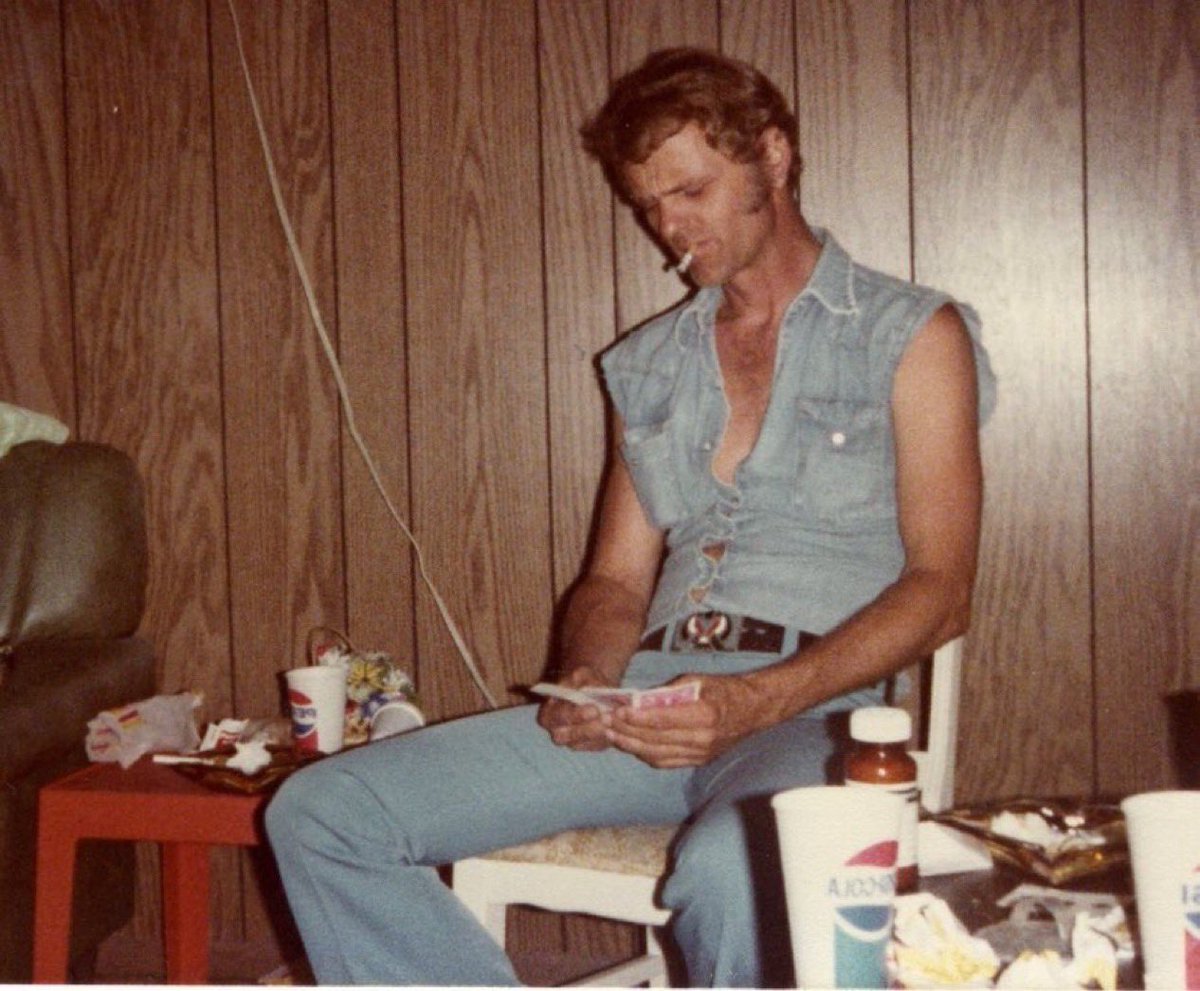
George Kennedy on the what set John Wayne apart from other big stars of the era:
“Duke was Duke. Very bright. I worked with and dearly loved Jimmy Stewart, and I worked with Burt Lancaster and Paul Newman. Heavyweights. But Wayne was on a different planet. If you put him in a group with other movie stars, the eye went to him, and that is the ultimate marker of respect. He was john Wayne. He was very real. It didn’t matter if he wasn’t Olivier; Olivier wasn’t John Wayne.”
("John Wayne: The Life and Legend", Scott Eyman, 2014)
P.S: On this day, 61 years ago, Henry Hathaway's "The Sons of Katie Elder" (1965) premiered in Chicago, Illinois, USA.
Actor Kelsey Grammer: There is a virus that has infected a very small number of people, I think, who just want to tear things down. They've been consumed by hatred... I pray for them.
👑 Cadillac Royalty: When Luxury Ruled the Road
This stunning classic Cadillac is a reminder of when American luxury was built bigger, bolder, and more elegant than anything else on the road.
From the massive V8 under the hood to the plush red interior and unmistakable styling, Cadillacs like this weren't just transportation, they were a statement of success.
They represent an era when chrome was king, comfort mattered, and every drive felt special.
Would you take this classic Cadillac over a brand-new luxury car today? Why or why not?
🇺🇸 A true Texas hero is being recognized on one of sports’ biggest stages, according to reports.
U.S. Coast Guard rescue swimmer Scott Ruskan will receive the Pat Tillman Award for Service at the 2026 ESPY Awards after helping save 165 children during the devastating Texas Hill Country floods at Camp Mystic.
It was Ruskan’s very first rescue mission.
The ESPY Awards air July 15.
❤️ Congratulations to a hero whose courage and selflessness made an incredible difference.
Heavenly Father,
Thank You for Your love and mercy. Please give me strength, wisdom, and peace today. Guide my steps, protect me from harm, and help me trust You in every situation. Fill my heart with faith and hope. In Jesus’ name, Amen.
Robert Stell Fletcher, from Planview, Texas, was left without legs after a bomb attack in WW I. This photo shows him getting ready to dive into the pool at Walter Reed Army Hospital not too long after he came back to the U.S. I found a tremendous 1919 Associated Press article about Robert, and I've transcribed it. Trust me: you'll want to read this.
"LOSS OF LEGS IN BATTLE HASN'T SPOILED LIFE FOR THIS TEXAN
Lieutenant Robert S. Fletcher of Plainview, Texas, a patient at the Walter Reed Hospital in Washington, D. C., now home on a furlough, declares that he has "no kick" coming, and there's a reason ---- Lieutenant Fletcher hasn't any legs. Both limbs were blown off by a German shell during the Neuse-Argonne offensive in France.
But there's another reason, and a better one. Lieutenant Fletcher is just another example ---- although an exceptional one ---- of that American optimism and indomitable spirit which refuses to be drowned by adversity, but maintaining a cheery outlook surmounts every obstacle in the fight for the good things of life.
He does not complain, because his loss was for the benefit of his country. He has no criticism to make of the War Department or the manner in which the war was waged. He takes his condition philosophically and never has "the Blues."
In climbing over obstacles the officer has no peer. Thus far he has learned to swim better than almost any able-bodied man, and he often dives into the water from a height of 30 feet. Recently his comrades up at the Walter Reed Hospital rigged up a rope and pulley to aid him in reaching the top of the diving tower at the hospital pool. Before a large crowd which has gathered to witness his skill as an aquatic performer, he disdained the use of this contrivance and mounted the latter used by other swimmers.
In getting about the streets, Lieutenant Fletcher also eschews the aid of friends and propels himself along on a roller seat at a rate faster than a man can walk. And he is not satisfied with this mode of transportation, but declares that before long he will be walking again, for the army surgeons are working on a pair of artificial limbs for him, flexible at knee and ankle joints, which he expects to use with the aid of canes.
The soldier's latest achievement was accomplished during his present furlough when, with two passengers, he drove a motor car from his home in Plainview to San Angelo. In order to do this he devised a lever which was attached to the clutch, and then operated the lever with a wire extended to with an easy reach of his hands.
As soon as his treatment at the hospital is finished, Lieutenant Fletcher expects to take up the study of law.
The young officer was a member of the Texas National Guard prior to America's entrance into the World War. Previously he had worked several years on a ranch in Pecos County and was in splendid physical condition. Up to the time he was wounded, Lieutenant Fletcher was six feet two inches in height and weighed 190 pounds.
In May, 1916, while serving as a private with the Fourth Texas Infantry, he was assigned to duty on the Mexican border and served at Sanderson, Boquillas, and Alpine. Later he entered the third officer's training camp and received his commission there. He went to France as an officer of the 142nd Infantry, and was serving with that organization when he received the wounds which cost him his legs.
Lieutenant Fletcher is the possessor of several decorations for distinguished service, but seldom wears them. He takes the position that his condition speaks more eloquently of his services to his country than any number of medals."
---- Associated Press, 1919
It's almost too much to comprehend, isn't it? Robert's story doesn't end here, though. He went on to lead a full life. I'll have more about that in a subsequent post later today
American cars back in the 70’s and 80’s may not have been fast, built for a slalom, nor did they get great mileage. But they were distinctly American, luxurious, and incredibly comfortable cruisers.