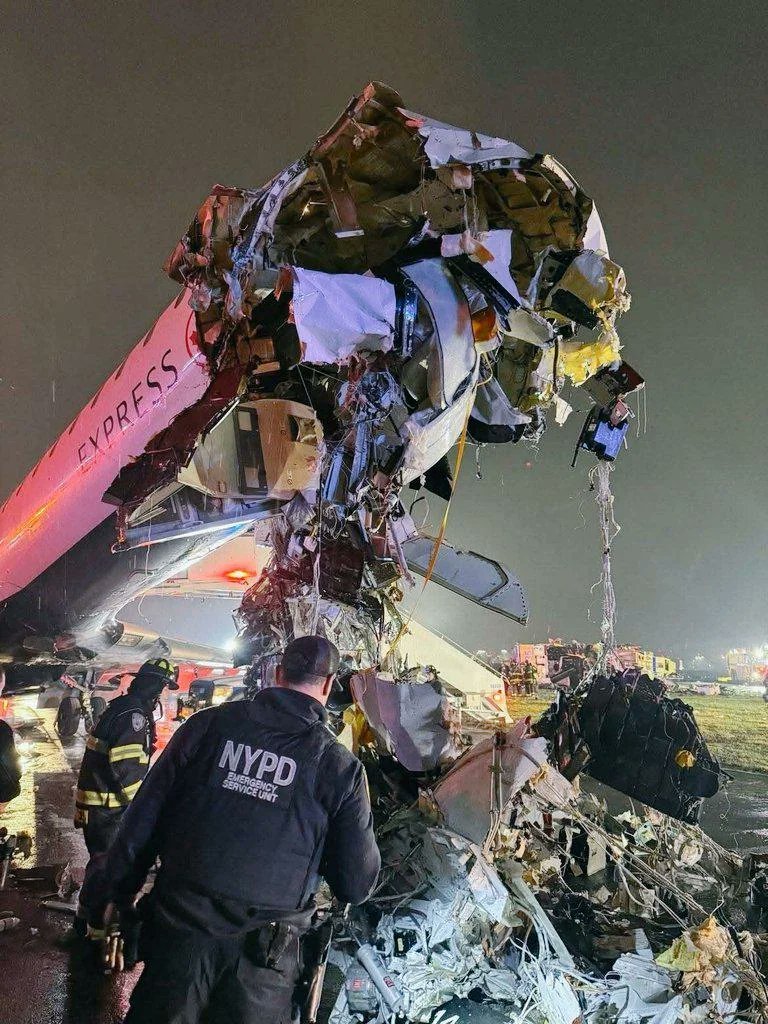
At a New York airport, an Air Canada plane collided with a ground vehicle during landing, killing two pilots.
The incident happened on the runway as the plane was landing and the vehicle was moving toward another plane.
There were 72 passengers and four crew members onboard. 41 people were hospitalized.
The airport was temporarily closed.
Imperdible: Netflix estrenará el próximo 27 de marzo la serie “Aún es de noche en Caracas”, inspirada en los últimos años de violencia política en Venezuela.
El mundo debe saber el horror que ha vivido Venezuela en manos del chavismo.
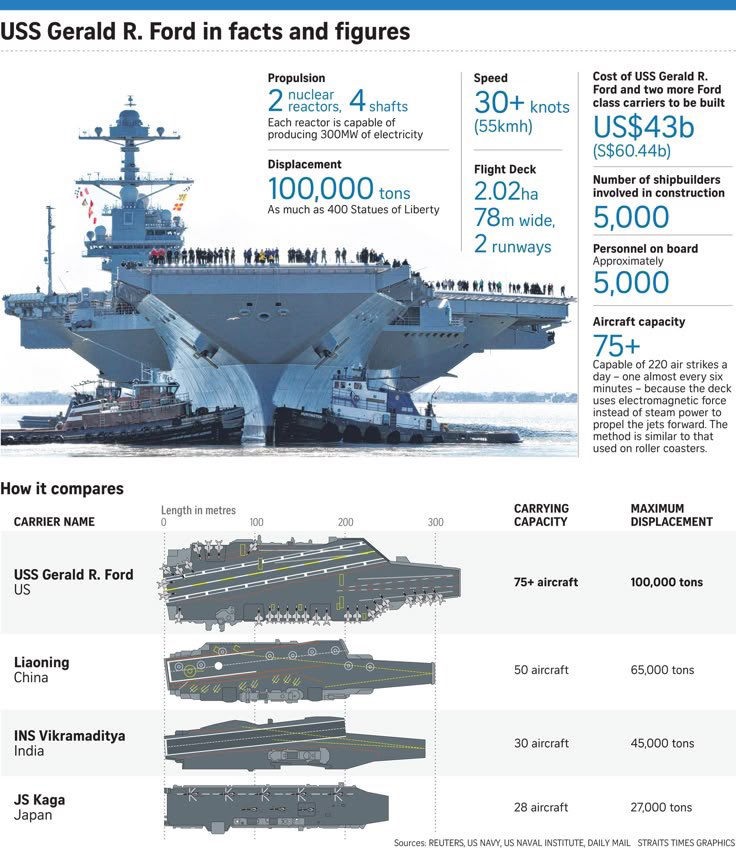
The USS Gerald R. Ford is not parked near Iran. It is parked off Israel. And nobody is asking the only question that matters: why.
The $13.3 billion crown jewel of the US Navy, the largest warship ever constructed, just positioned itself off Haifa. Not in the Arabian Sea where the Lincoln sits 850 kilometers from Iranian shores loaded for offensive operations. Not in the Gulf where strike range is optimal. Off Israel. Defending Israel.
This is not redundancy. This is architecture.
Two carriers. Two missions. Two entirely different strategic functions. The Lincoln is the sword, positioned to launch strike packages into Iranian airspace within hours of an order. The Ford is the shield, its Aegis missile defense systems creating an umbrella over Israeli population centers against the retaliation that follows the first Tomahawk.
America just split its carrier doctrine into offense and defense simultaneously. That has not happened since the Pacific theater in 1945.
But the positioning reveals something deeper than tactics. When Iran retaliates, and every wargame says Iran retaliates, its missiles and drones fly toward Israel. They will fly through the same airspace where a US carrier strike group is now stationed. Every Iranian missile aimed at Tel Aviv or Haifa must traverse the Ford’s defensive envelope. Shooting at Israel means shooting at, around, and through an American carrier group.
Iran cannot retaliate against Israel without engaging American naval assets. The Ford’s position makes that physically impossible. The carrier is not defending Israel as a favor. It is positioned so that any Iranian response to American strikes automatically becomes an attack on American forces, triggering the full unrestrained weight of US military response without a single additional political decision required.
This is escalation insurance written in steel and seawater. If the campaign goes longer than planned, if munitions run thin in 7 to 10 days, if allies hesitate, the Ford’s position ensures that Iranian retaliation does the political work Washington cannot do alone: it transforms a limited American strike into an act of self-defense that no ally can refuse to support.
You do not park a $13.3 billion carrier where the enemy’s return fire will hit it unless you want the enemy’s return fire to hit it.
The Ford is not there to prevent escalation. The Ford is there to guarantee that if escalation comes, it comes on terms that make American restraint politically impossible and allied participation politically unavoidable. https://t.co/BrzGRrU3VW
Como si no nos bastara, tendremos a un panameño en el Super Bowl LX.
Jaylinn Hawkins de los New England Patriots. Y antes de que digan algo, el panameño nace donde quiere, las raíces nunca se olvidan. 🇵🇦🇵🇦🇵🇦
Por primera vez en la historia, tres jugadores latinoamericanos Andy Borregales 🇻🇪, Christian Gonzalez 🇨🇴 y Jaylinn Hawkins 🇵🇦 forman parte de un equipo en el Super Bowl @Patriots. Un hito sin precedentes que marca un antes y un después para la presencia latina en la NFL.