This Monday, Frances Dean from UC Berkeley and UCSF will be joining us to talk about their work on building digital twins of cardiac hemodynamics. Catch it at 1-2pm PT this Monday on Zoom! Subscribe to https://t.co/Tr8mrytDbz #ML#AI#medicine#healthcare
Can you tell which datasets these images are from, with only their segmentation maps?
In our new work, we find neural networks can do this task quite well, with ~70% accuracy for a three-way classification problem, for three large-scale image datasets.
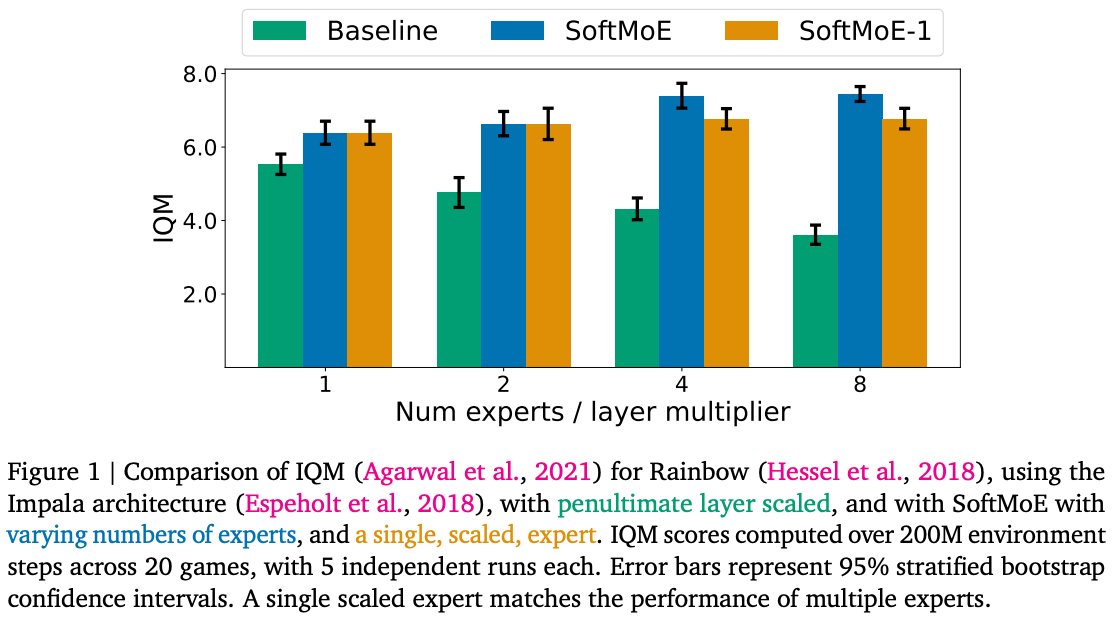
📢Don't flatten, tokenize!📢
tl;dr: the key reason for softmoe's efficacy in deep RL turns out to be tokenization!
i.e. the common practice of flattening the output of conv encoder layers is quite suboptimal!
👇🏾more details in thread below👇🏾
1/11
From moving into their dorms to taking part in "tradition," our first-year students have had a busy start to Discover Week 💙 Take a look at how the CWRU community welcomed the #CWRUClassOf2028 home:
For too long, users have lived under the software lottery tyranny of fused attention implementations.
No longer.
Introducing FlexAttention, a new PyTorch API allowing for many attention variants to enjoy fused kernels in a few lines of PyTorch.
https://t.co/IXeUS6AkrY
1/10
We built a real-time music jamming system using RL and generative models -- you can play along with this model and learn more about our work at #ICML2024 🎶!
📄 paper: https://t.co/9HdyO7PHhU
🌐 website: https://t.co/1JEfQdgHca
🕐 Tue 23 Jul 1:30 - 3 p.m. CEST
📍 Hall C 4-9
🧵
Entropy minimization is often used to increase the accuracy of models on unlabeled data, but it isn’t clear why it works. In our new ICML paper, we show that it clusters the embeddings of its inputs. With @ziv_ravid, @ylecun, @MatthiasBethge
https://t.co/RzdIgxbZaH
1/5 🧵👇
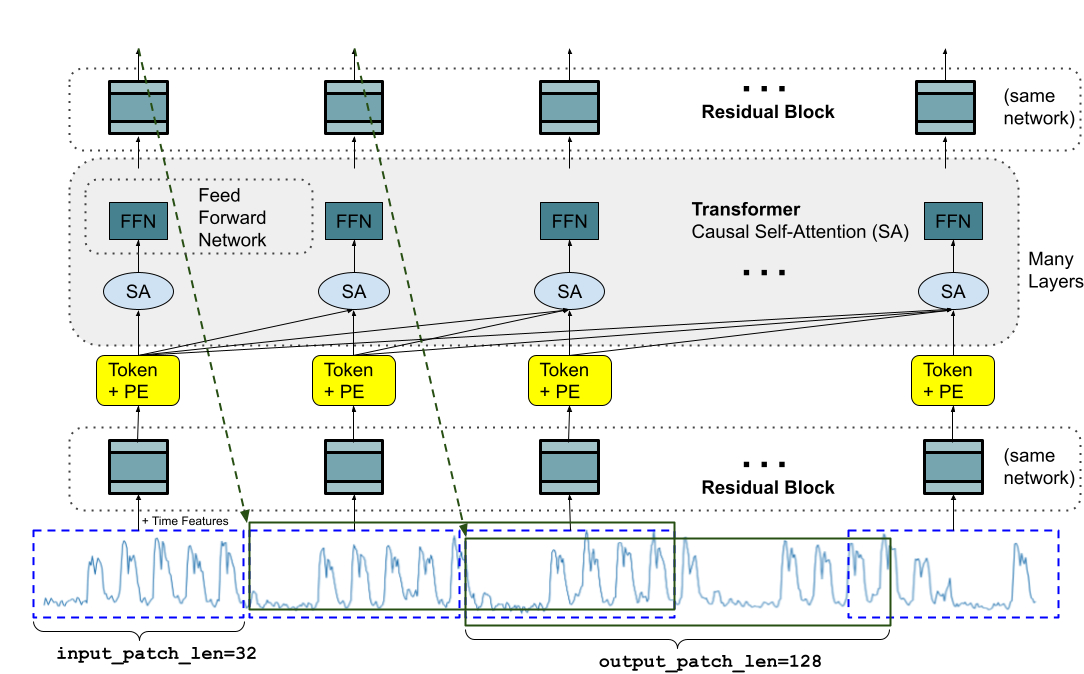
TimesFM is a forecasting model, pre-trained on a large time-series corpus of 100 billion real world time-points, that displays impressive zero-shot performance on a variety of public benchmarks from different domains and granularities. Learn more → https://t.co/U1OctNPZET
The idea of "machine unlearning" is getting attention lately. Been thinking a lot about it recently and decided to write a long post: https://t.co/YWFco5xNNq 📰
Unlearning is no longer just about privacy and right-to-be-forgotten since foundation models. I hope to give a gentle overview of unlearning and touch on things like copyright, NYT v. OpenAI, NeurIPS unlearning challenge, retrieval-based systems, AI safety, & pretending to unlearn.
I hope it'll be a fun weekend read!
Concerning results: We've evaluated Transformer-, Mamba-, and CNN-based architectures, revealing widespread validation flaws in #MedicalImageSegmentation. Many claims of superiority do not withstand strict testing. Time to push for rigor in the field :) https://t.co/xVRI1wX1mB
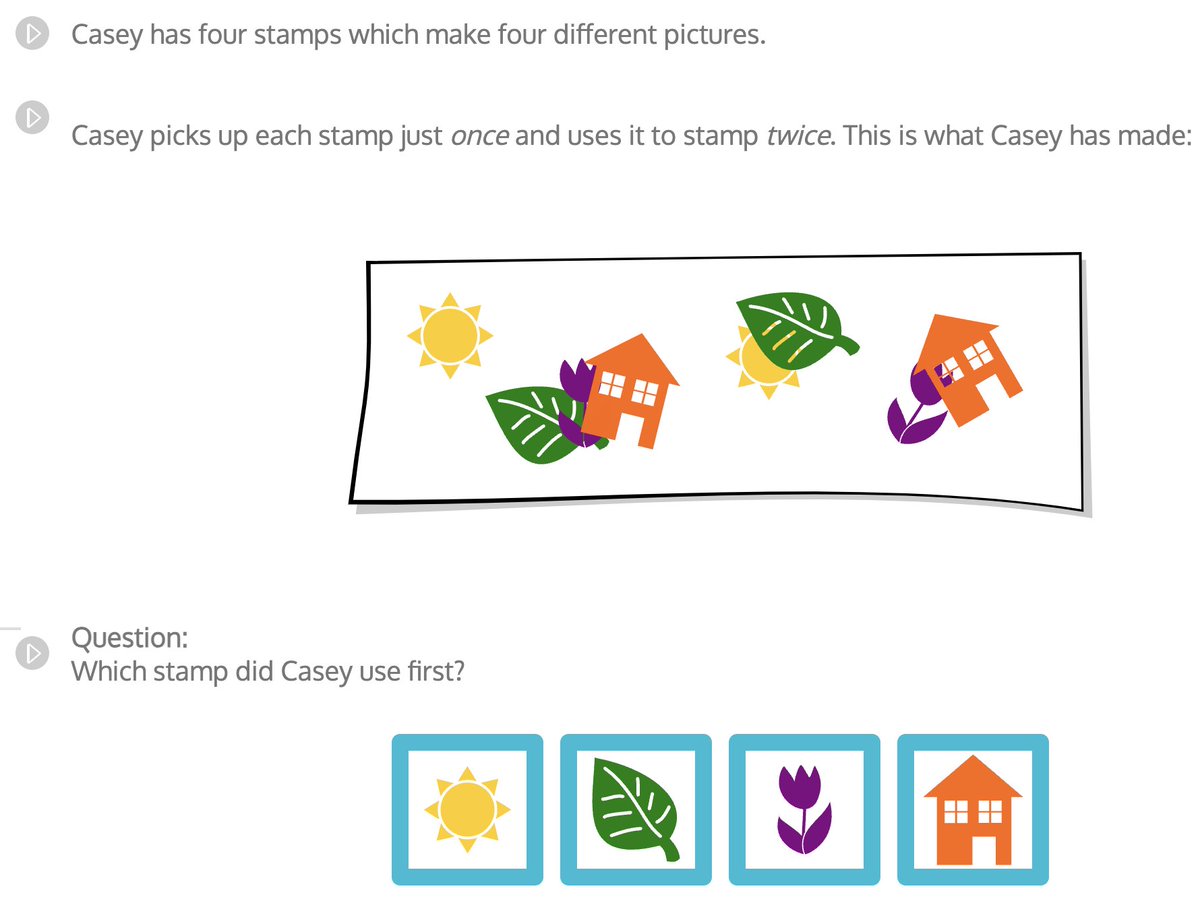
In Australia we have a computational thinking competition for kids each year called Bebras. You get a certificate if you get all of them right.
Here's one of the "easy" level questions for children in grade 3.
GPT 4 got it wrong.
MYSTERY SOLVED!
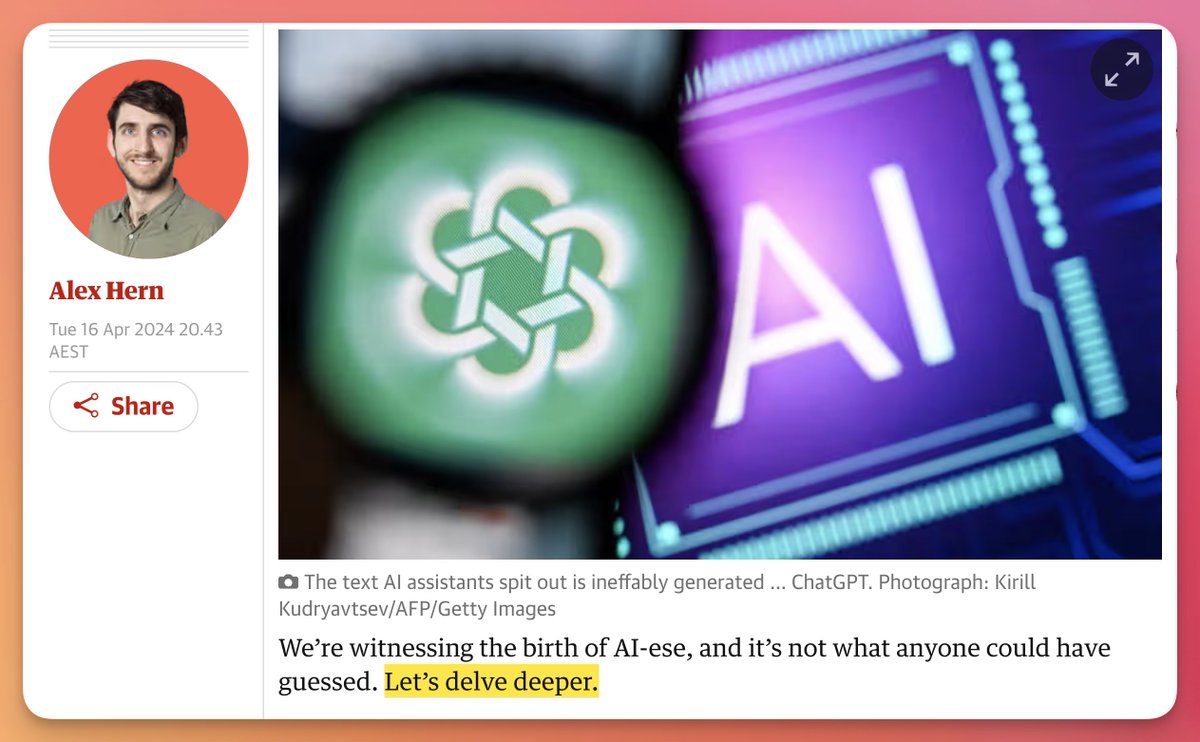
Why does ChatGPT use the word "delve" so much? We've seen a 10x increase in the proportion of medical studies using the word "delve" from 2022 to 2024. But why?
@alexhern at The Guardian might've just solved it. Thread below, complete with the trail of clues:
RNNs are not dead yet‼️
In fact, they are coming back with a vengeance recently. Very nice paper about “The Illusion of State in State-Space Models” (https://t.co/TPhu4g8NtW) and thread 👇
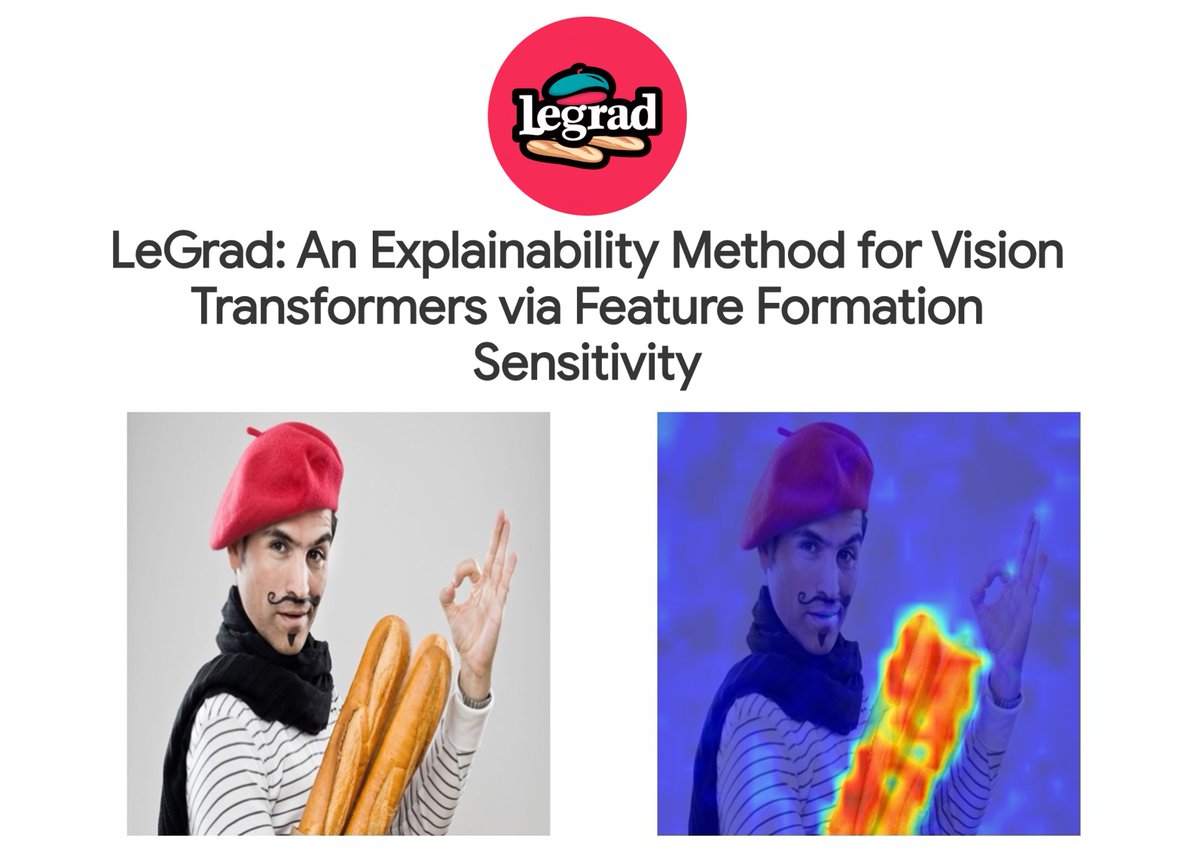
Ever asked yourself what's the best explainability method for ViT Transformer at the moment?
🚨 We present you LeGrad, a Layerwise Explainability GRADient method for large ViT transformer architectures. 🚨
So, grab your ☕️ and 🥐, release your inner 🇫🇷, and join us on our journey through the layers of different ViT models.
Authors: @BousselhamWalid did all the programming, but we would have been lost without the wisdom of @angie_boggust and @hen_str ! Thanks so much for being so great collaborators!
@MIT_CSAIL@MITIBMLab