Open science for the weekend! Here's my conversation with Lukas Röseler, Managing Director of the Münster Center for Open Science at the University of Münster. We discussed his experience leading a department dedicated to open science,
https://t.co/TNlqDfT09x
Massive fraud, ESP, and a roadmap of misconduct - 2011-2012 was a big time for psychology. Diederik Stapel had a career's worth of fraud exposed. Daryl Bem published a study claiming ESP is real. A trio of researchers detailed how to find support for any hypothesis.
The call of metascience - Brian Nosek learned in grad school that science is actually about getting papers and grants, but reading luminaries in the field enlightened him to the solutions to the problems he encountered.
Brian Nosek has led some of the most impactful replication projects in psychology. Hear him tell the story of how he switched his undergrad focus from computer engineering to psychology, and how he ported his computational skills to his newfound research discipline.
What is the future of science? Let's imagine that more research is rigorous, incentives for positive data are fixed, and publish or perish is a thing of the past. What does that world look like? How is the academic career trajectory reimagined? Tim Errington gives his thoughts.
Good post but it misses the elephant in the room: the literature is biased by the perverse incentives of the Positive data > Paper > Grant loop. Null data don’t get published or are mangled to appear positive (eg p-hacking, selective reporting). AIs inherit these biases.
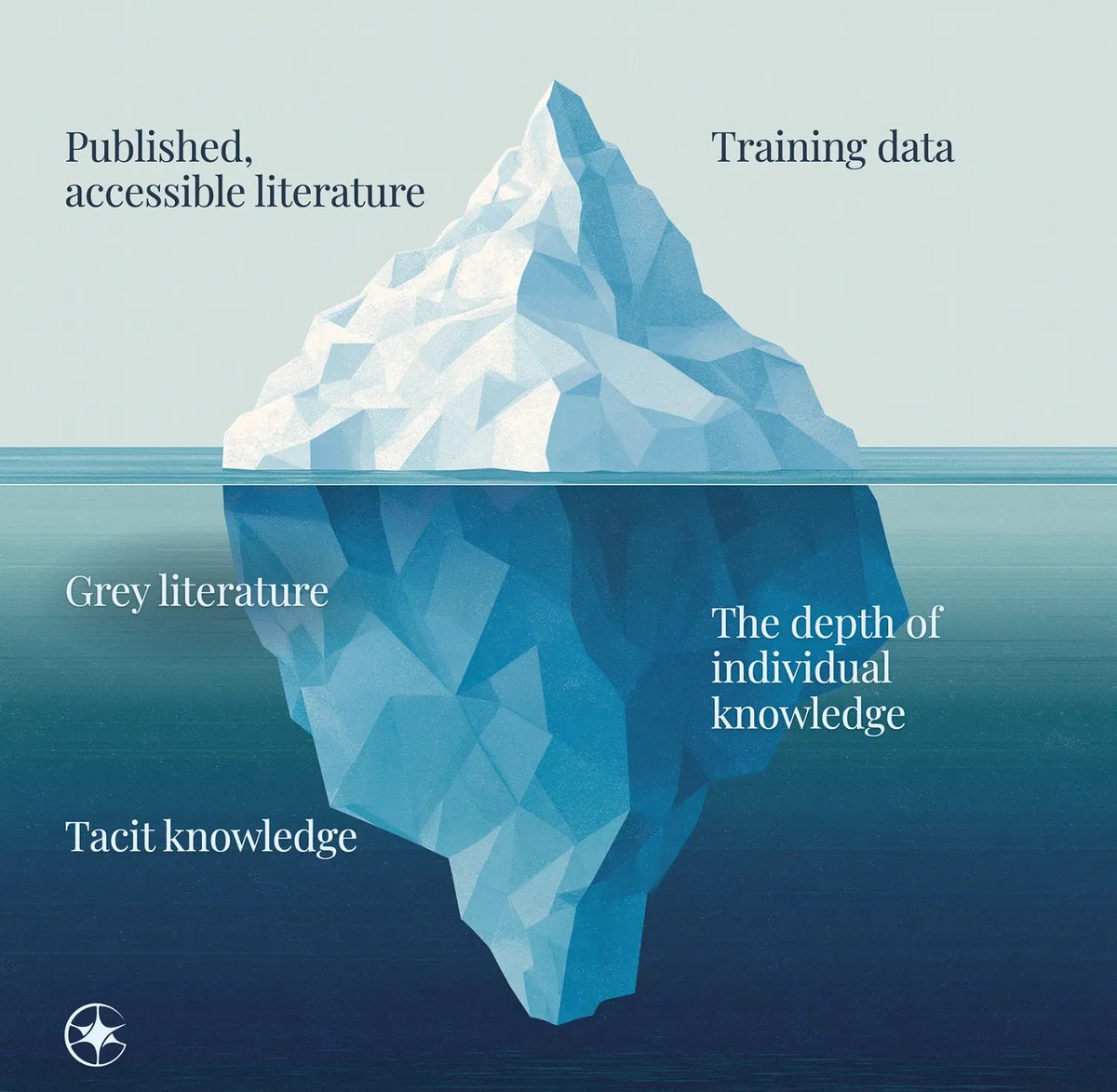
Where are the LLM-powered scientific discoveries? A guest essay from Iulia Georgescu and Venkatesh's Narayanamurti argues that discovery depends on the practical know-how of working scientists. They write that LLMs are missing at least one essential ingredient for making scientific breakthroughs: tacit knowledge.
https://t.co/Wx3zKgi8Mz
serving as Editor-in-chief of the diamond open access journal Replication Research, developing the video game Guess The Replication, and how scientific publishing is breaking under financial and other pressures placed on scientists.
Open science for the weekend! Here's my conversation with Lukas Röseler, Managing Director of the Münster Center for Open Science at the University of Münster. We discussed his experience leading a department dedicated to open science,
https://t.co/TNlqDfT09x
Strange? Implausible? Well, it took Alex's detective work to identify this and many other problems with these datasets. Alex is currently completing his PhD in Australia and I'm very excited to see where his journey continues.
He discovered that two commonly used diabetes and stroke datasets, used in over 120 papers, some of which have been cited in medical device patents, had striking irregularities. One example was HBA1C (a continuous variable) having only 18 unique values in 100,000 data points.
What's wrong with peer review?
We are obsessed with "narrative", replacing the science with the story.
Devaluing the paper in favor of a researcher’s contribution is the first step to fixing this.
#science#research#stem#metascience#ethics
Why AI for Science Will Never Work
Training AI on scientific literature is a "Garbage In, Garbage Out" trap of 1) false positive data, and 2) lack of null data.
Firms are spending millions to redo experiments because they don't trust the literature.
#AI#Science#Research