3. To be a good trader we have to stay even keeled.
-When I am doing well I tell myself “you are not as good as you think, relax”
-When I am doing poorly I tell myself “you are not as bad as you think, relax”
7 years ago I broke my own rule.
A position moved against me.
I was convinced it would come back.
So I averaged down.
It came back.
I got out green.
On paper, a beautiful trade.
But I knew the truth.
I hadn't been disciplined.
I'd gotten lucky.
And my brain logged it as a win anyway.
So I did it again.
But this time the market didn't care about my conviction.
I lost $500,000 in 2 days.
That trade never recovered.
That's the day I stopped measuring trades by whether they made money.
I started measuring them by whether I executed correctly.
A bad trade that makes you money teaches you the wrong lesson.
It just doesn't feel that way until it's too late.
Outcomes can lie…
Only your process compounds.
Stick to your rules.
This is one of the most reliable sell signals in history.
Just look at TIME's latest issue.
I've been doing this since 1981, and when I see a cover like that, I don't get excited.
Because history has a brutal sense of humor about moments exactly like this one:
In 1979, BusinessWeek ran the most infamous cover in the history of financial journalism: "The Death of Equities."
The argument was that inflation had broken the stock market for good and that stocks were finished as a serious place to put your money, perhaps permanently.
The country agreed and everybody gave up.
But what came next was the single GREATEST bull market in American history.
Stocks returned roughly 18% a year for the next two decades. Off the 1982 low, with dividends reinvested, the S&P went on to gain nearly 7,000%. The cover that buried equities turned out to be the starting gun.
Now look at the second cover.
In 2019. Bloomberg Businessweek puts a dead, deflated dinosaur on the front and asks "Is Inflation Dead?" The consensus was unanimous - inflation was extinct, a relic, never coming back.
3 years later we printed the WORST inflation in four decades, with prices peaking at 9.1% in June of 2022. That was the exact opposite of what the cover declared, and it happened all over again.
This is the oldest pattern there is.
By the time a story is so obvious, so universally accepted, so completely understood that the editors of a mainstream magazine slap it on the cover, every single person who was ever going to believe it already does.
So the trade is crowded, the buyers are exhausted, and there is nobody left to come in behind you and push the price higher.
The cover doesn't predict the future the editors think they're describing - it marks the exact moment a belief became unanimous. And unanimous belief is the textbook definition of a top.
But here's what makes the AI cover even MORE dangerous than the two that came before it:
"Death of Equities" and "Is Inflation Dead" were business magazines, read by people already in the markets. TIME is a general-interest newsweekly read by over 100 million people who don't trade stocks for a living.
When the AI build-out has saturated the public mind so thoroughly that it becomes the cover of TIME, the message is that there's almost nobody left who hasn't already heard the story and bought in.
And the fundamentals are screaming the same thing the cover is whispering:
The largest tech companies are set to spend north of $600 billion on AI infrastructure in 2026, up from roughly $388 billion just last year. Tech investment is now running near 4.4% of GDP, approaching the peak of the dot-com bubble.
These founders are literally saying that they'd rather go bankrupt than lose this race. Hundreds of billions of dollars and mountains of debt are all resting on a single untested premise - that the profits eventually show up to justify the spending. But so far they haven't.
Now let me be honest with you, because that's the only way I know how to do this.
I'm not telling you AI is worthless or that the whole thing collapses tomorrow. The 1979 cover was about three years early, and the real bottom didn't arrive until 1982. The 2019 cover took two years to be proven right.
Covers mark the mood, not the exact day, so I'm not calling the top to the week.
What I am telling you is that the EASY money has already been made, the consensus is now total, and the risk and the reward have flipped upside down. When everyone you know already owns the story, the story stops being an opportunity and becomes a liability.
Mr. Market hands out a scorecard every single day, and that scorecard doesn't care what TIME magazine believes. It only cares about valuation.
And right now the things nobody would ever put on a cover - gold, silver, energy, real assets, the unloved corners of this market - are exactly where the next decade of returns is hiding.
People think traders got lucky.
They didn't see the losses.
The pain.
The sacrifices nobody knew about.
The moments where quitting made more sense than staying.
Luck had nothing to do with it.
🚨 Anthropic just showed a 24-minute workshop on how to actually do prompts for Claude.
Taught by the people who built it.
Free. No registration. No paywall.
I've seen $300 courses that don't cover what they teach in the first 8 minutes.
Watch it and bookmark it now.
Only ~5% of SpaceX stock is floating right now
~95% $SPCX is still locked
Most don’t realize bearish pressure often comes later, when insiders finally get liquidity
Unlock schedule below ⬇️
Trading is NOT for weak minded people.
You sacrifice years nobody sees.
You fight your own demons every morning.
You lose money, sleep, and confidence.
But you show up anyway.
That's why the ones who make it live a life most people only dream of.
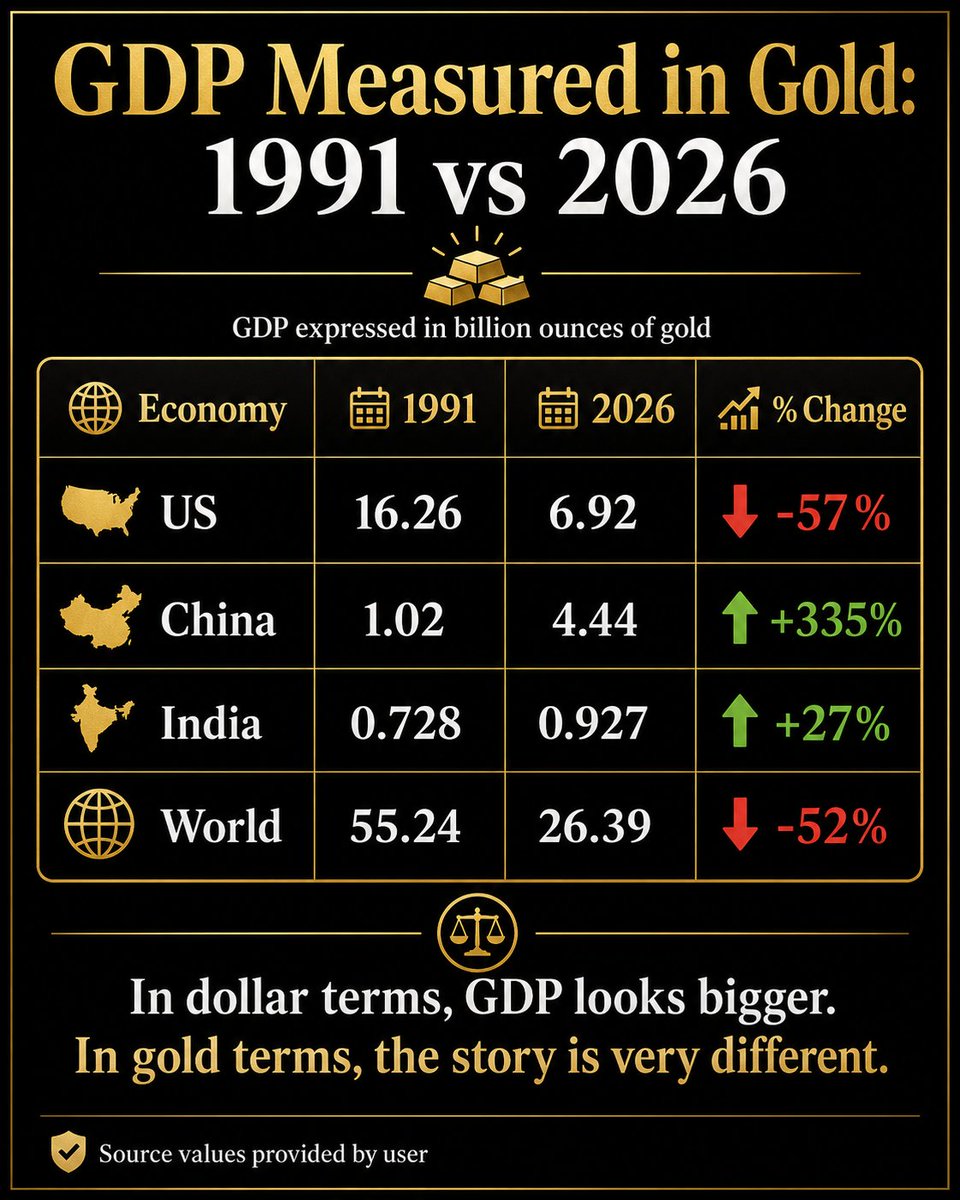
GDP measured in gold tells a completely different story.
In 1991, US GDP was worth 16.26 billion ounces of gold.
By 2026, it is only worth 6.92 billion ounces.
That is a 57% collapse in gold terms.
China moved from 1.02 billion ounces to 4.44 billion ounces.
That is a 335% rise.
India moved from 0.728 billion ounces to 0.927 billion ounces.
That is a 27% rise.
And the world itself moved from 55.24 billion ounces to just 26.39 billion ounces.
That is a 52% collapse.
So yes, in dollar terms, everything looks bigger.
But in gold terms, the world is smaller.
The US economy looks massive on paper, but against hard money, its purchasing power has collapsed.
China is the clear exception because its productive rise was strong enough to show even against gold.
India has grown, but much slower.
The bigger message is simple:
Fiat GDP shows expansion.
Gold-adjusted GDP shows debasement.
That is why gold matters.
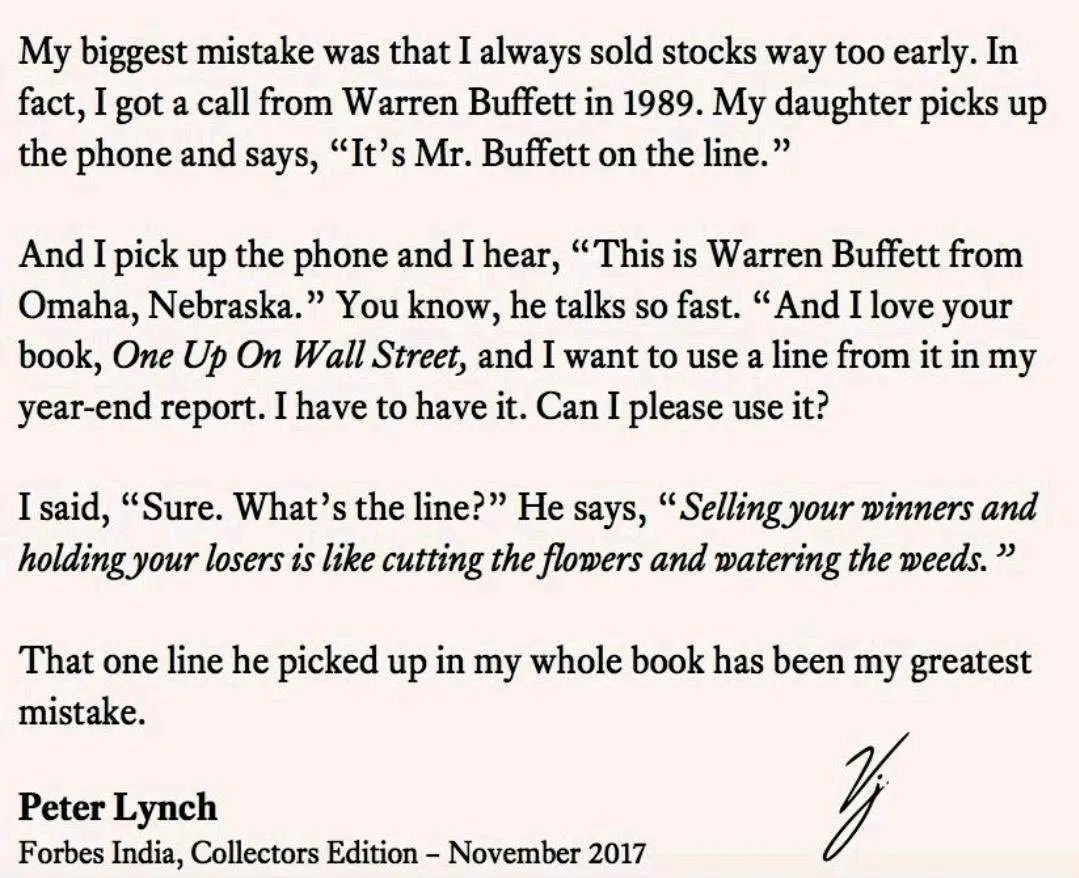
Buying Fear is the hardest thing you'll do as a Trader.
2nd Hardest Thing, is letting your winners run, or adding more to an already winning position.
3rd hardest thing you'll do is cut your losses early and often when a trade goes bad. It's hard to face facts that you are in a bad trade.
4th hardest thing, manage your position size.
Life Lesson = Trading is HARD.
6 money making rules I've followed for 16 years:
1. Size every position assuming it could go to zero.
2. Withdraw every week without fail.
3. Only trade when your level is undeniable.
4. Never average down on a losing futures position.
5. Never revenge trade. Close the platform and come back tomorrow.
6. When the market is choppy and directionless, do nothing.
You don't make money as a trader by getting the market right.
Many of the most successful traders and investors have terrible hit rates. - Warren Buffett, arguably the greatest investor in history, has a 4% hit rate.
What he has is a risk process that works. Minimal losses when wrong. Significant wins when right.
And crucially, the temperament to control the impulses and behaviours that get everyone else into trouble.
That is where the real edge lives. Not in being right. In what you do when you are wrong.
In trading you will have days where everything falls apart.
Times where nothing works.
Nights where you question everything.
Moments where the future feels uncertain.
Push through all of it.
Because on the other side is a skill that pays you for the rest of your life.
No boss can take it.
No company can lay you off from it.
It's yours forever.
WILD STORY: Nepali mountain guide Hilary Dawe Sherpa, 52, was presumed dead after disappearing during his descent from Mount Everest following a successful summit on May 29.
His oxygen supply ran out near Camp 4 at roughly 7,950 meters. After losing contact with his client, Dawe Sherpa vanished into the mountain’s notorious “death zone,” where oxygen levels are too low to sustain human life for long periods.
Helicopter searches found no trace of him. His family began funeral preparations.
But Dawe Sherpa survived.
For nearly 6 days, he endured subzero temperatures, thin air, avalanches and severe dehydration. He survived initially without food, later finding a few chocolates in his pocket. He chewed ice and melted snow for water.
At one stage, he fell into a crevasse and remained trapped for about 2.5 days. An avalanche later filled part of the crevasse with snow, creating an escape route that allowed him to climb out.
Using fixed ropes left on the mountain, he continued descending through the night despite frostbite, exhaustion and injuries.
On June 5, members of a cleanup team working near the Khumbu Icefall spotted him crawling toward Base Camp and carried him to safety.
He was later airlifted to Kathmandu suffering from frostbite, dehydration and a broken bone.
“I didn’t think I would survive. I thought this is how I was going to die,” Dawe Sherpa said from his hospital bed.
His wife, who had begun funeral rites the previous day, learned he was alive only after rescuers brought him down from the mountain.
Search teams described the rescue as nothing short of a miracle on the world’s highest peak.
Paul Tudor Jones opens a fireside chat with Druckenmiller by admitting one of his biggest mistakes:
"after the crash of '87, i was so worried about debt to GDP that it caused me to be short the stock market for the entire decade of the nineties."
an entire decade. one of the greatest bull markets in history. and one of the greatest traders alive sat short through the whole thing because of a macro obsession.
then Druckenmiller adds his own version:
"the one rule i had for thirty years of trading was never let my obsession with the debt interfere with my trading. because it never had market impact."
"and then i looked at the numbers and i threw out my playbook."
two of the best macro traders ever, both admitting that the hardest part of their career has been separating what they believe should happen from what the market actually does. until the math finally forces you to act.
Rule changes for the SpaceX $SPCX IPO:
Index providers waived the profitability requirement and cut the seasoning window from 90 days to 5.
This forces over $30 trillion in passive 401k and retirement money to buy SpaceX at IPO valuations.
Bloomberg Intelligence estimates S&P 500 funds must absorb 19% of SpaceX's float within 6 months.
Russell 1000 and Nasdaq 100 funds will absorb 24%.
The rules built to protect passive investors:
1. S&P 500 has required 12 months of trading and 4 quarters of GAAP profitability since 2002. Both waived.
2. Nasdaq cut its inclusion window from 90 trading days to 15.
3. FTSE Russell cut its to 5.
All three benchmarks are now structured to buy SpaceX at IPO pricing.