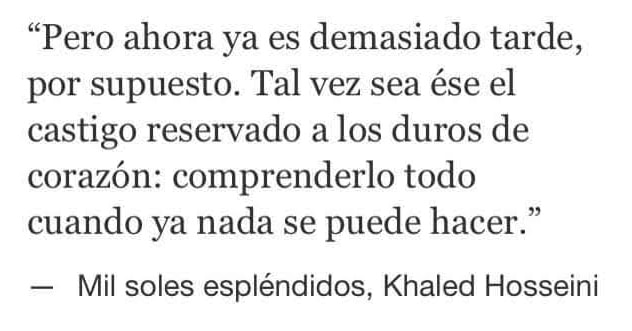
Ante tanta sobreabundancia de miseria, bajeza, maldad pura y pusilanimidad, quizá como un mecanismo de defensa, una parte de la nación se volvió cínica y perdió la capacidad de detectar la grandeza, la integridad y el verdadero coraje. Poco a poco se irá recobrando esa capacidad.
Viendo el ambiente político del "X" venezolano, uno concluye que estamos en presencia de la gente menos ingenua, más suspicaz y sagaz, que siempre descubre la farsa en el otro y nunca se deja engañar. Paradójicamente, aún con tanta sagacidad y agudeza, el país se perdió.
It's not a contradiction; the encyclical explicitly states that AIs lack consciousness, while Olah says he sees things that suggest it but doesn't know what it's about. They don't have to match exactly. Stop the drama
This, from Olah, plainly contradicts the encyclical, which confidently asserts that AI does not have, and never will have, “real” thoughts or feelings. It’s disappointing to see Anthropic align itself with a document that violates their own moral and intellectual principles.
La startup @somoscashea procesa hoy varios puntos porcentuales del PIB venezolano y Yummy es el mayor empleador privado del país.
Lo que están construyendo estas compañías es una caso de estudio para la historia y una cátedra de cómo a través de tecnología se pueden transformar estructuralmente las condiciones de un país atravesado por décadas de colapso institucional. https://t.co/HTGNJjn957
No pill for exercise: My friend and Harvard colleague, the biological anthropologist Dan Lieberman, invokes evolution to explain why GLP-1s can’t replace physical activity https://t.co/hhN9gCZZmP
He fell victim to his materialistic bias: since I only believe in what I can measure, and I cannot measure consciousness because it is subjective, I assume that if the measurable aspects of two entities are similar, then the unmeasurable aspects must also be the same in both
While there have been some fun memes and banter about @RichardDawkins’ Unherd article, I think his reflections were actually quite interesting, as I said to @guardian in the piece below. My full comment was as follows —
“As a researcher who works on AI consciousness professionally, I realise it's easy to sneer at Richard Dawkins' reaction to interactions with the Claude large language model, as many have been doing on social media, or to dismiss it as naive anthropomorphism. However, I don't think this is quite right, for two reasons.
The first is that Dawkins' reaction is widely shared, and not just by new users of the technology. According to an international investigation by the Collective Intelligence Project surveying LLM users around the world, "more than one third of the global public reports having already felt that an AI truly understood their emotions or seemed conscious." Another study conducted by Clara Colombatto and Steve Fleming at University College London found an even higher proportion of ChatGPT users attributed some degree of consciousness to the system. Strikingly, people who used ChatGPT more often were more likely to think it was conscious, suggesting that this is not simply a mistake made by naive users encountering the technology for the first time. I fully expect the idea that AI systems are conscious to become increasingly mainstream over the course of this decade, and to spark some heated debates.
The second reason I regard Dawkins' writeup as a positive contribution to the growing debates about AI consciousness is that it comes with valuable thoughtful reflections. As he notes, we still don't have a good theory of what consciousness is actually for, and whether it evolved for a specific purpose or is a mere byproduct of other abilities like cognitive complexity. For my part, having written and published in the field of consciousness science for a decade and a half, I would say that we're still largely in the dark about how consciousness works and which beings or systems can have it, a position begrudgingly shared by most leading experts. Meanwhile, the Turing Test has largely ceased to be relevant: a large-scale implementation of the Test last year by researchers at UC San Diego found that GPT-4.5 was judged to be human rather than AI more often than the actual human participants. In light of all of this, if anyone says that they know for sure that LLMs or future AI systems couldn't possibly be conscious, it's more likely to be an indicator of their own dogmatism than a reflection of the current state of scientific and philosophical opinion.
All that said, I do think Dawkins is likely jumping the gun. My own view is that current LLMs probably lack consciousness, at least in the sense that we understand it in the case of humans or animals. Claude, ChatGPT, Gemini, and other LLMs may be getting more sophisticated by the day, but they're still very different from us: they lack embodied experience, have no persistent personal identity, and are not embedded in time the way we are, coming into being only in response to intermittent user prompts.
When you see how far the technology has come in a very short time, these seem more like temporary limitations than core deficiencies of artificial systems in general, so I hold that view with fairly low confidence, and the question could look very different as architectures evolve. The uncertainty here cuts both ways, but the direction of travel favours taking the possibility of AI consciousness seriously rather than dismissing it out of hand.”
Quien cree que la consciencia es producto de la actividad neuronal creerá fácilmente que unos chips de Nvidia activados lo harán también. Se trata de una extrapolación de creencias sin base científica. Anil, lo tiene claro.
¿De dónde debería emanar el poder real que esos tecnócratas necesitan? Sin ese poder real no serán capaces de hacer nada. ¿Se pueden imponer desde afuera? ¿Con un acuerdo político? ¿Con elecciones? ¿De dónde vendría ese poder?
Totalmente de acuerdo.
Las transiciones reales no empiezan con “power sharing” político, sino con tecnócratas con poder real en áreas críticas: economía, servicios, seguridad jurídica, petróleo, electricidad.
Ahí se reconstruye la institucionalidad.
Sin gente competente dispuesta a asumir riesgos y a gobernar técnicamente desde dentro, no hay democratización posible.
Solo retórica.
Ha fallecido en Gernica el muy apreciado Alberto Amorebieta Zuñiga, seguramente muchos tuiteros de mi TL lo conocieron en su restaurante La Cita en La Candelaria, Caracas (Goian Bego, QEPD) , información vía @jazoera .
Por eso el ejercicio de la política no es para todos. Hay que entrar a ese "infierno abandonado de toda esperanza" y maniobrar para salir de allí acompañado de la mayor cantidad de almas que se atrevan a apostar por la trascendencia de la humanidad. No es lugar para gente frágil.
Si toma la política en serio y la ves como moralista, sufres o te engañas para no sufrir. Si sigues el consejo de Dante y entras a ese infierno abandonado toda esperanza, no gozas pero al menos sabes de qué se trata realmente. Pero la realidad es dura muchos prefieren el engaño.
Western civilization is a victim of neo-Rousseauian ideology: once again, the narrative of the "noble savage" versus the "evil civilization", framed as a form of "suicidal empathy".
Es impresionante la cantidad de canciones hermosas que compuso el maestro Otilio Galíndez. Aquí nuestro nuestro humilde homenaje por su inmensa labor en la música venezolana.
👇🏼👇🏼👇🏼👇🏼👇🏼👇🏼
Isn't it amazing that humans are a kind of ape that can be told that it is more important, high status, satisfying and rewarding to climb some work achievement hierarchy than to have offspring?
Yo sé que a muchos les parece absurdo que uno diga que tenemos un sistema de salud equitativo (vs países similares), pero es cierto. En Colombia es bajo el gasto privado (via seguros o de bolsillo) y eso ha ayudado a muchas familias a superar la pobreza.
Estas son malas noticias
La frase de Eduard Bello que describe el buen momento de Venezuela:
"Yo creo que es fe en acción. No es solamente fe, porque la fe sin obra es muerta" (Video) https://t.co/jf7BNWIWjW