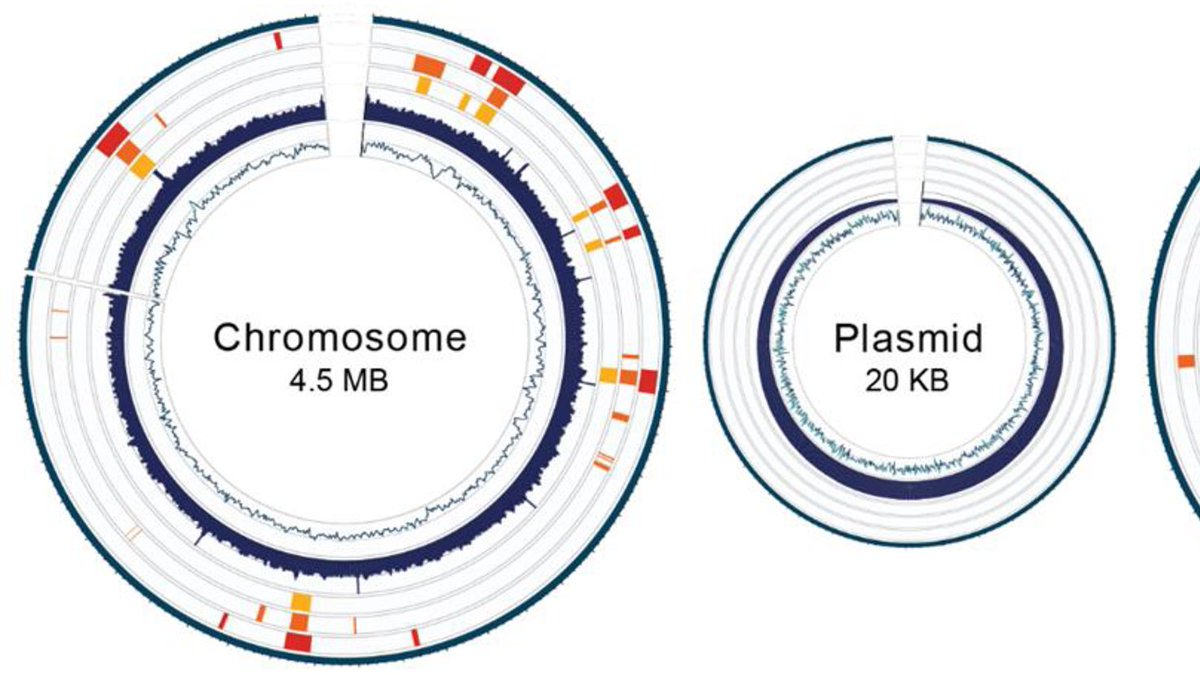
🚨 New paper out
@MicrobioSoc! #Genome 🧬 characterization of #CCA-associated bacteria 🦠, with antimicrobial activity against antibiotic💊-resistant pathogens! #AMR
https://t.co/eVAGuXj7oM
@PSUmBiome
It is worth mentioning that this study was greatly led by the at the time undergrad student @DiegoDLera. Proof of how great #UndergradResearch can be! 🤓
Stoke to announce that I will be joining the Dept of Biology @txst this coming Fall semester as an Assistant Professor!
Looking for grad students with interests in #Symbiodiniaceae, #corals 🪸, microbial #symbiosis 🦠, comparative #genomics 🧬 and #phylogenomics soon. Reach out!
🌍 Conservation biology needs a microbial upgrade!
This review, from @RaulGoch & others, highlights how microbiome research can enhance conservation genomics & improve biodiversity management in a changing world.
https://t.co/MDHF1E1EEF
#Microbiome#Conservation#Genomics
🧵I am teaching a course in #coral#reefs 🪸 and happy to see how students apply their knowledge in our journal clubs, where we discuss relevant scientific papers🤓. Starting a weekly thread of some my fave phrases from their assignments✍️:
“It’s interesting that we can see changes in coral health through a symbiotic relationship.”🪸
“Not to be dramatic, but the planet is gettin’ toasty & salty.”♨️
“Sometimes it is difficult to tell the significance of ethical science when in the context of current world events.”🌎
I'm looking for a postdoc! The successful applicant will lead neuro- and comparative genomic analyses to characterize neurobiology-related genetic variation in wild coral populations. Learn more and apply here - I will be reviewing apps beginning Oct 18: https://t.co/7WfWy0oboX
⚠️Because this is only a draft genome, results are to be interpreted conservatively. We emphasize the need for genomes of higher quality and the use of other omics to address questions explored in this study!
🧬Though we identified extensive genome duplication in this genome, #WGD appears inconclusive. Other mechanisms, such as segmental duplication driven by mobile elements (at least partially) may be playing a role.
Many novel Asgard genomes, cultivated Lokiarchaeia, new phylogenetic analyses: what insights do these and other recent studies provide into the enigmatic origin of eukaryotes? In this review in @Nature , we discuss the latest findings and open questions: https://t.co/LnGcoz50ot