Physical AI Days are back at #NVIDIAGTC, this time in Taipei. ✈️
Check out our curated set of sessions on all things physical AI - from robots and industrial AI to digital twins and simulation - built to help you turn ideas into real-world deployments.
📅 June 3 (Wednesday) – June 4 (Thursday), 2026
📍 TICC (Taipei International Convention Center)
Add it to your schedule: https://t.co/IfNQxCyAtm
Can’t make it in person? Sessions will be available on demand.
⚡ A Tiny Chip Trick That Could Change Everything…
In Japan, scientists are testing a new 10nm nanoimprint method that could replace traditional chip-making like EUV lithography.
Instead of complex light systems, it uses a simple “stamp” to create tiny circuits—while using up to 90% less energy.
If successful, this quiet breakthrough could make future technology cheaper, faster, and more powerful… without most people even noticing.
Source Imec. Nanoimprint lithography for advanced semiconductor scaling.
Reliability is a ground-up problem. 🤖
Figure CEO @adcock_brett demonstrates why the Figure 03 needs to master the "burpee". From low-battery safety to emergency recovery, the ability to transition to the floor and back up safely is a cornerstone of Figures "Never Fall protocol".
Achieving this requires a significant range of motion in the hips and legs.
There is more within each track than most systems can reveal. With Uni-Q driver technology, LS50 Wireless II delivers sound with clarity, balance and remarkable precision.
📷 COMIRAN
Shop LS50 Wireless II: https://t.co/N7fyF3LD4r
A slight twist, but a big impact.
A new study in APS Open Science shows misaligned layers in nanomaterials can create moiré patterns that change how electrons organize — opening doors for future device design: https://t.co/CS4ISaGt8l
Our robot is designed to insert hundreds of ultra-fine, flexible threads with thousands of electrodes within microns of targeted neurons while avoiding vasculature and adapting to real-time brain motion.
For decades, system-on-chip (SoC) design focused on increasing compute performance through smaller transistors, faster clocks, more parallelism, and specialized processors. Today, that model is changing. As SoCs become more complex with AI workloads, heterogeneous integration, and new system demands, performance depends less on raw compute power and more on efficient data movement.
Many chips are now data-movement-bound rather than compute-bound. Bandwidth, latency, and energy-efficient communication across the chip have become critical challenges. Adding more compute units no longer guarantees better performance if those resources cannot access data fast enough. This article discusses how @arteris_noc is helping address this shift through advanced on-chip interconnect solutions.
Learn more: https://t.co/YibJxKbiY0
#engineering #semiconductors #SOCs
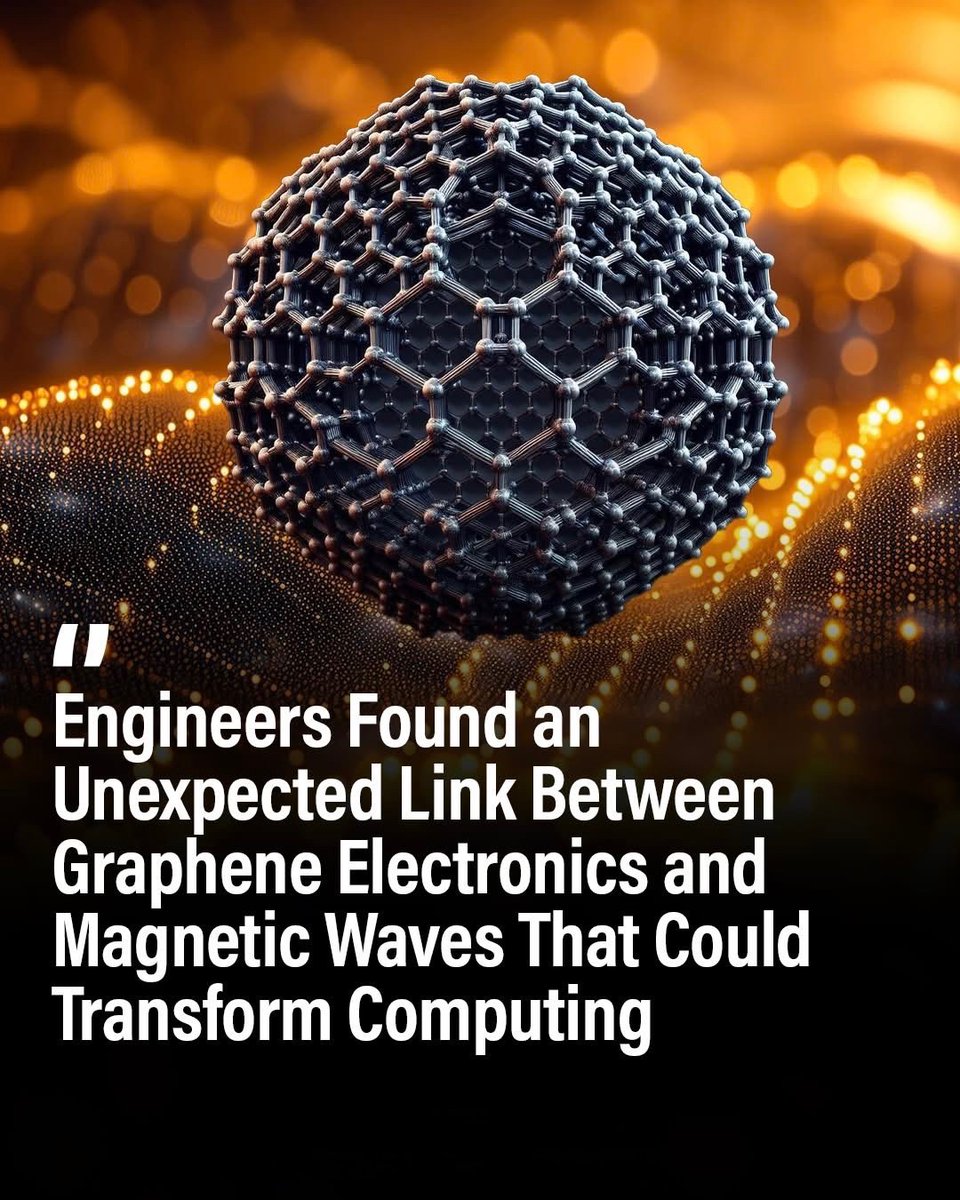
⚡ Scientists Just Discovered a Strange Secret Inside Graphene
For years, researchers have been fascinated by Graphene, a material only one atom thick but incredibly strong and powerful for electronics. Many believe it could shape the future of computing.
Now engineers have uncovered something surprising. They found that magnetic waves can behave almost exactly like the electrons moving inside graphene. When scientists built a magnetic structure with the same honeycomb pattern as graphene, the waves started moving in the same unusual way as graphene’s electrons.
Why is this exciting? Because magnetic waves can carry information without moving electric charge, which means future computers could run much faster while using far less energy. It’s still early research, but this unexpected link could open the door to a completely new kind of technology called magnonic computing.
Sometimes the biggest breakthroughs begin with a mystery and this strange connection might be one of them.
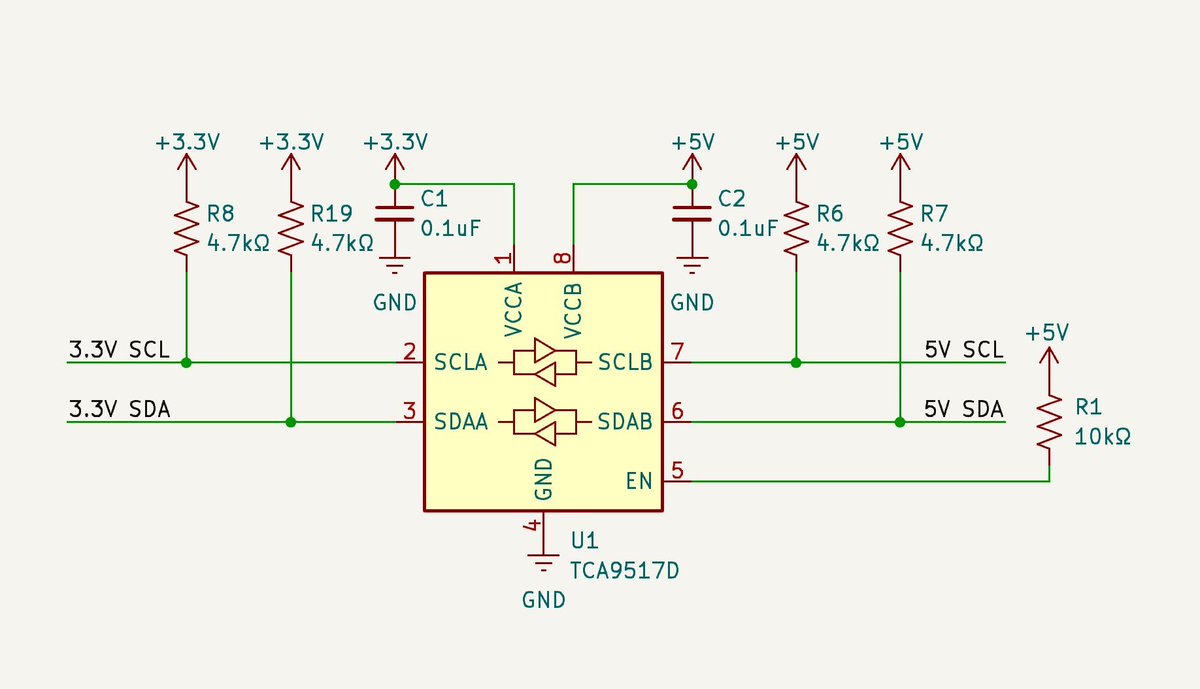
If you need to have a logic shifter for your I2C bus, this is all you need. This will autosense the data's direction and act seamlessly in your design.
#Toshiba's new reference design is a 3kW power supply for servers and telecoms using our latest surface-mounted SiC devices. It achieves high power density by separating these SiC devices from the main-board and implementing them as a sub-board.
https://t.co/rooz0yb8GV
Adiós a los USB, tarjetas de memoria y discos duros, llega el cristal indestructible capaz de guardar archivos de forma ilimitada
Fuente: Computer Hoy
https://t.co/FWG9mgNZJ5
Un servicio técnico ruso ha creado un comprobador de memoria DDR5 para SODIMM que incluye una pantalla LED para leer hasta 100 códigos POST https://t.co/JESACuJyFv