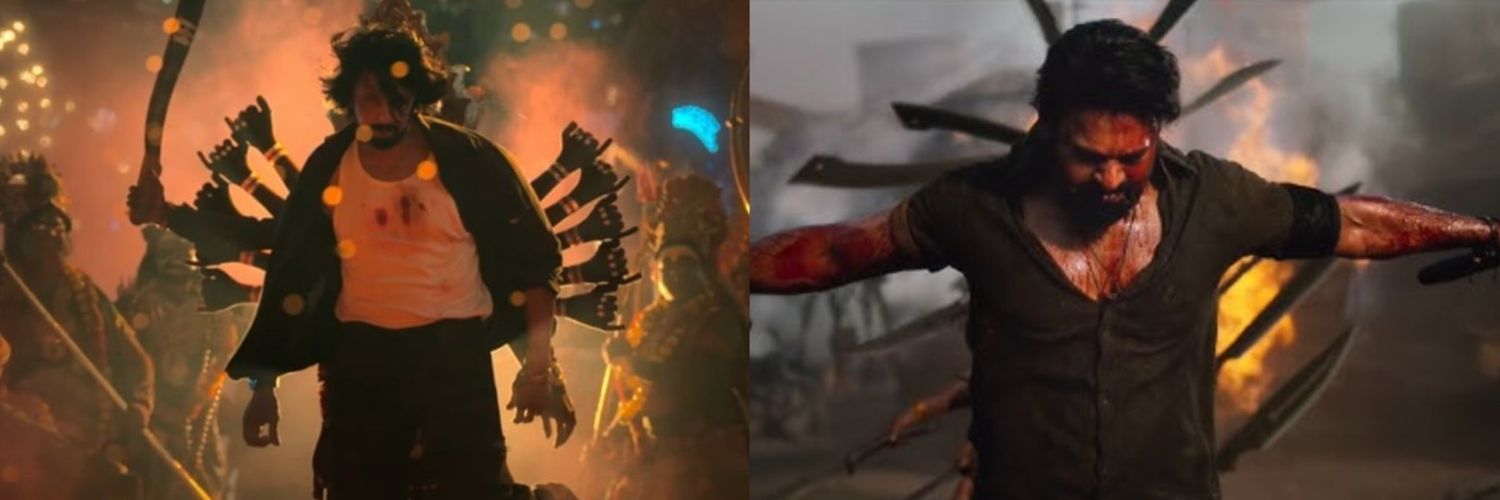
SUDEEPIANS, WE NEED YOUR VOTE! 🔥
We're creating a special Birthday Tribute for @KicchaSudeep on September 2nd🎥
What duration would you love to watch?
Do Cast your vote ❤️
I'm often asked, "Why a night story?" or "Why do you shoot in the dark?"
My honest answer is simple:
"I don't know."
Many filmmakers around the world have explored darkness as a powerful cinematic language. I hesitate to list their names because I don't want it to seem as though I'm comparing myself with them. I'm still a student of cinema, and there are masters who have transformed darkness into a canvas for imagination.
One such filmmaker is Jaume Collet-Serra.
His films are known for their dark visual atmosphere, high-contrast imagery, relentless suspense, and the ability to create tension within confined spaces through dynamic visual storytelling.
I, too, enjoy working with darkness. I like writing stories that unfold within compressed timelines and move with a fast narrative rhythm. But those choices should always emerge from the story and its purpose—not from habit or style alone.
I have no desire to keep repeating the same cinematic language. Every story deserves its own identity, and as a filmmaker, I want to keep exploring new ones.
Mr @VKartikeyaa u r built for adventure
You are best at direction , screenplay,
Making audience suspense,
Creating elivations
What stoping you from doing a adventures mass genre🥶🔥.. please write a story considering that genre , Offcose sitting with a talented story writers
Mr @VKartikeyaa u r built for adventure
You are best at direction , screenplay,
Making audience suspense,
Creating elivations
What stoping you from doing a adventures mass genre🥶🔥.. please write a story considering that genre , Offcose sitting with a talented story writers
Nothing in any field is entirely new. Almost everything is, in one way or another, a reinterpretation, a recombination, or a recreation of what came before. Cinema is no exception.
Even stories celebrated around the world are often built by combining familiar ideas in fresh ways.
Likewise, many stories rooted in our own culture are shaped from folk tales, songs, legends, and oral traditions that have been passed down through generations.
Just as the narrow footpaths once walked by ancient travelers gradually evolved into broad highways, storytellers also walk paths created by those before them. Some widen those paths, some place milestones along them, and a few leave footprints so distinctive that the road itself becomes associated with them.
Some creators imitate almost exactly. Others adapt ideas to suit their own culture and audience. Some officially acquire the rights to existing works. These are simply different approaches to storytelling.
But lasting success belongs to those who create a new experience. They may begin on familiar ground, yet they shape their stories with original vision, personality, and craftsmanship.
Consider this sentence:
"Aarav traveled from Bangalore to Chennai."
That, by itself, is a story.
It may sound too ordinary to be one—but it is.
Every story begins with a simple event. At first, the idea may appear insignificant. Yet this is how almost every screenplay is born. Even films that went on to achieve worldwide success—excluding direct adaptations of novels—often started with an equally simple premise.
Take Baashha:
"Manickam moves from Bombay to Chennai with his mother, younger brother, and sisters."
That is the one-line premise.
Sholay- begins with two thieves arriving in a village.
Dilwale Dulhania Le Jayenge' follows a young man who travels to India in search of the woman he loves.
Maryada Ramanna begins with Ramu returning to his native village to sell his ancestral property.
Chennai Express' starts with Rahul meeting a woman while travelling to Rameswaram.
Ghilli' begins with Velu arriving in Madurai to participate in a Kabaddi tournament.
Max' begins with a suspended police officer arriving in a new city to resume his duties.
The list is endless.
A one-line premise is merely the seed. What ultimately matters is how that seed is nurtured.
The true artistry of a screenwriter lies in transforming a familiar idea into an unforgettable cinematic experience. Through compelling characters, meaningful conflicts, emotional depth, and engaging storytelling, an ordinary premise becomes extraordinary.
Originality is not always about discovering a path that no one has ever walked. More often, it is about walking a familiar path in a way that no one else can.
Nothing in any field is entirely new. Almost everything is, in one way or another, a reinterpretation, a recombination, or a recreation of what came before. Cinema is no exception.
Even stories celebrated around the world are often built by combining familiar ideas in fresh ways.
Likewise, many stories rooted in our own culture are shaped from folk tales, songs, legends, and oral traditions that have been passed down through generations.
Just as the narrow footpaths once walked by ancient travelers gradually evolved into broad highways, storytellers also walk paths created by those before them. Some widen those paths, some place milestones along them, and a few leave footprints so distinctive that the road itself becomes associated with them.
Some creators imitate almost exactly. Others adapt ideas to suit their own culture and audience. Some officially acquire the rights to existing works. These are simply different approaches to storytelling.
But lasting success belongs to those who create a new experience. They may begin on familiar ground, yet they shape their stories with original vision, personality, and craftsmanship.
Consider this sentence:
"Aarav traveled from Bangalore to Chennai."
That, by itself, is a story.
It may sound too ordinary to be one—but it is.
Every story begins with a simple event. At first, the idea may appear insignificant. Yet this is how almost every screenplay is born. Even films that went on to achieve worldwide success—excluding direct adaptations of novels—often started with an equally simple premise.
Take Baashha:
"Manickam moves from Bombay to Chennai with his mother, younger brother, and sisters."
That is the one-line premise.
Sholay- begins with two thieves arriving in a village.
Dilwale Dulhania Le Jayenge' follows a young man who travels to India in search of the woman he loves.
Maryada Ramanna begins with Ramu returning to his native village to sell his ancestral property.
Chennai Express' starts with Rahul meeting a woman while travelling to Rameswaram.
Ghilli' begins with Velu arriving in Madurai to participate in a Kabaddi tournament.
Max' begins with a suspended police officer arriving in a new city to resume his duties.
The list is endless.
A one-line premise is merely the seed. What ultimately matters is how that seed is nurtured.
The true artistry of a screenwriter lies in transforming a familiar idea into an unforgettable cinematic experience. Through compelling characters, meaningful conflicts, emotional depth, and engaging storytelling, an ordinary premise becomes extraordinary.
Originality is not always about discovering a path that no one has ever walked. More often, it is about walking a familiar path in a way that no one else can.