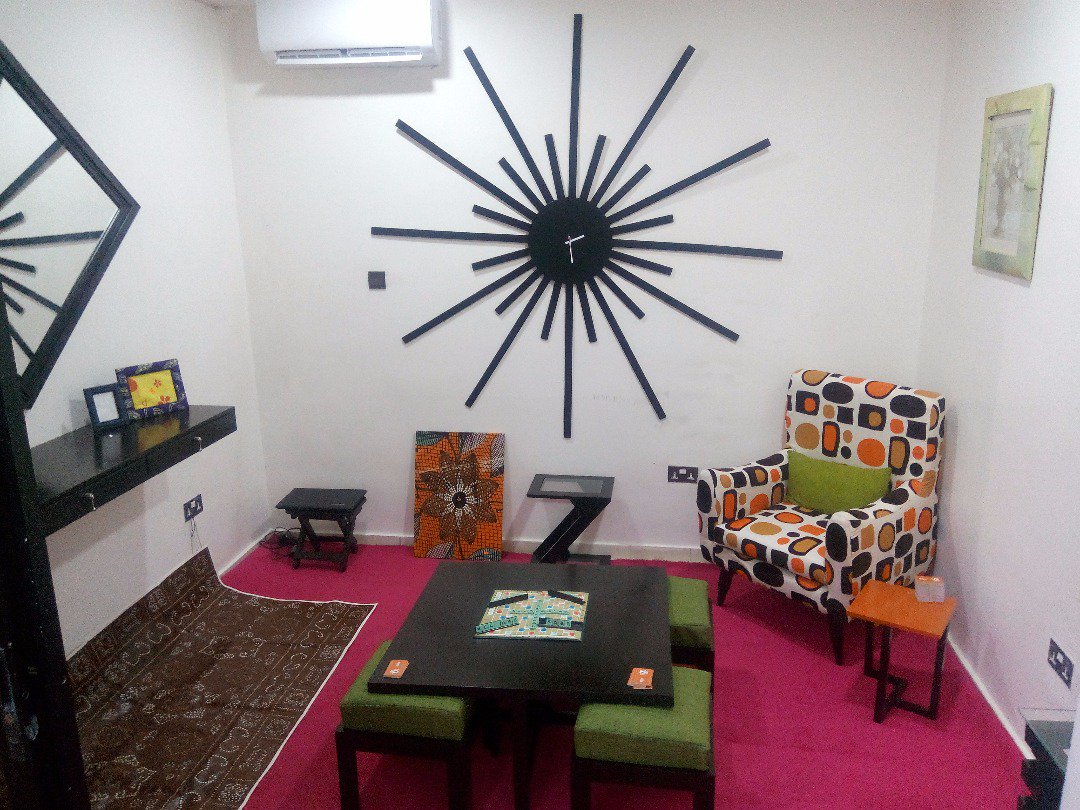
Today I run Skarabrand, a full-scope furniture design, fabrication, and maintenance company based in Abuja. We work with corporate, hospitality, and institutional clients who want one company to handle everything from design to delivery to maintenance.
I pioneered what is now Nigeria's cutting and edging sub-sector. I introduced the first flatpack sofas to the Nigerian market. I've worked across factory operations, conservation, sustainability, design and innovation.
I didn't start in the office. I went straight to the shop floor and spent the first three to six months just being with the craftsmen. Watching, asking questions, getting my hands dirty.
I had zero experience. I didn't wait to be asked. I grabbed it. Partly because I believed in the potential, and partly because I wanted to make my dad proud.
Then I got the chance to manage a small, struggling family business that processed and exported semi-finished parquet flooring made from Apa wood and Iroko.
@fmenvforestryng@EUinNigeria@FAO@FAOForestry@giz_gmbh@Climategovng@UNFCCC@UNBiodiversity I hope this covers illegal logging?! Where vast amounts of trees are cut down, transported, processed (at times), other times shipped as roundwood, thereby bypassing even basic processing that helps local sawmills survive here in Nigeria. I also hope they will be remunerated well
@The_Vimbai I must commend your boldness and intelligent analysis. You always say things as they truly are. Your comment about the market: the absence of government and creating and economy for the people of that area... Spot on!
This kind of work isn't easily converted to "political campaign equity". You cannot use it to easily show workings. That’s why politicians and people in executive positions don't like to hear it.
Maintaining public assets and infrastructure is difficult and not as glamorous building shiny new roads and bridges. This is why, it's not an important aspect of development to the nigerian executive leadership. It's mostly done behind the scenes and away from public view.