1. Spices and Meat
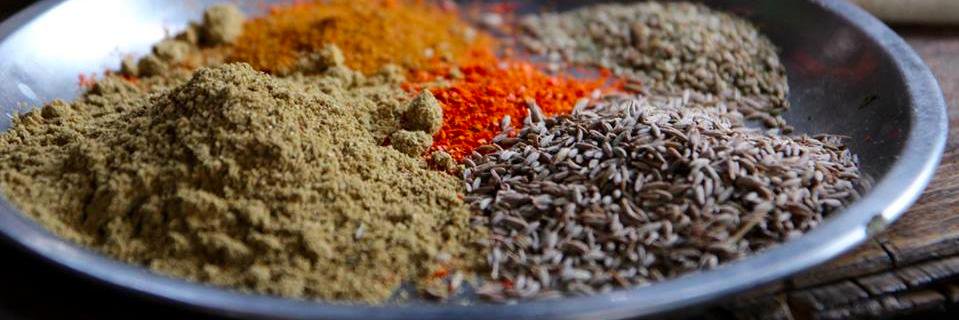
Surprisingly, flawed opinions persist about the use of spices in Early Modern Europe. Apparently it was to cover the smell of rotting flesh or to compensate for poor quality meat.
I read two instances recently.
We know globally, good school food depends on good jobs and access to cooked food (not processed, packaged, food)
Here is an example of how that is being undermined in India — by underpaying women cooks
Written by my sister in law Rema Nagarajan
https://t.co/mjDW2a1RTB
This is one of the more interesting books I have read about a post-colonial, transnational, gastroecology in terms of its empirical richness and theoretical provocation.
That critical juxtaposition of gastronomy and ecology gets us around the cliches of mere ethnocentric gourmandism.
It is a model of how to think through the complex history and experience of the world, that we consume (and destroy) to sustain ourselves.
Wow!! Looking forward to reading every issue. Each edition of On Eating is peppered with complex sociocultural, political, gender and economic realities that heat up kitchens
https://t.co/b92PYwsWdX
The film “Food and Country” is Ruth Reichl’s best work!
Drove me through tears, anger and hope
Interviewed by Food Studies PhD alum Mitchell Davis at the Ceres Food Film Festival; introduced by Jennifer Berg and Mayaan Laufer of Palms for Life Fund https://t.co/svlM9cPYu8
Here is the special issue of The Anthropology of Consciousness on touch in a digitized world
Most are open access, mine isn’t. Message me for my piece if you do not have institutional access
https://t.co/cyvD3Xarwo
Brilliant and subtle. Must read Himal more often. “Afghan refugees’ stories of food. Afghans living in Delhi preserve and construct ideas of home – both the remembered home lost to war in Afghanistan, and the home of refuge they are building in India.” https://t.co/0nxOem6nFI?
“Street Vendors of New York by the Numbers: Presenting the First Comprehensive Survey of NYC’s Iconic Street Vendors” - results of the first comprehensive survey. Thurs, Sept. 19th, 6-7:30 PM. NEO Philanthropy, 1001, 6th Ave 12th floor, New York, NY 10018
Farah’s writing is always so thoughtful; full of remorse and regret, critical of easy consumerism “Why would two people want to sit at a dining table, with its solid, vast distance between them? Instead, we acquired a 5x3 metre length of…”
https://t.co/KzhRdDOCwQ?
My take on a new translation of a book on Dalit cooking from Marathwada, India
It will be in three parts. This is the first one.
Thanks to Prof. Vandana Swamy and Prof. Ishita Dey in helping me navigate the related literature
https://t.co/ThUcdKjZcA
Touch, talk and taste. They made me think and work hard with my hands. Open access. “Hands called our attention because of their salience during the pandemic, which accelerated modes of digitization resulting in the deepening of a crisis of social touch.”
https://t.co/vIZK26OCw7
NYC public school edible schoolyard breakfast
The figs, greens, tomatoes, peppers and herbs = grown and harvested by the kids and their teachers
P.S. 216 Gravesend (figs), P.S. 7 East Harlem (peppers and tomatoes) and herbs from the Brooklyn Gardens Elementary School
This summer, Scott Alves Barton (PhD ‘16, Food Studies, NYU) is a part of the African American Garden at the New York Botanical Garden (NYBG). It explores Black culture through the lens of plants. This three-year project This three-year project is… https://t.co/xZ8RkIjogj
Two dominant Euro-American theorizations on appetite and power, which are omnivorousness and virtuous vegetarianism, fall flat on their faces here showing us how big theory coming out of traditional disciplines in western universities are in fact provincial
Shahu Patole’s Dalit (mostly Mahar and Mang) cooking from Marathwada has set me thinking. There are at least 22,000 cuisines in India — that is the # of dialects reported in the census — which is linked to landscape. That gives us a sketch of the sociogeography of Indian food…
"Why do they still consider us untouchable? Why don't they consider us equals? That is the question. There is something wrong in society, in their thinking, in the religion."
It is a treasure trove of practices and discourse that I am going to mull over for a long time to come