Monergism have translated Kuyper’s E Voto Dordaceno — his commentary on The Heidelberg Commentary. https://t.co/yXJrC1jD16 #Kuyper#Kuyperania#neocalvinism
Did you know @DrJamesEglinton has been awarded a grant of $120,000 by the Abraham Kuyper Christian Leadership Fund for the project, “Kuyper’s Encyclopaedia of Sacred Theology: Recovering a Lost Magnum Opus”? Read the full story on our website now 📰👇
https://t.co/5Jdn4fttyS
Heading home after a fantastic week in Mexico speaking at the Ser Reformada conference (organised by my friend @RaymundoVM at the Seminario Teológico Presbiteriano de México) and preaching a bilingual sermon on Pentecost Sunday. 🇲🇽
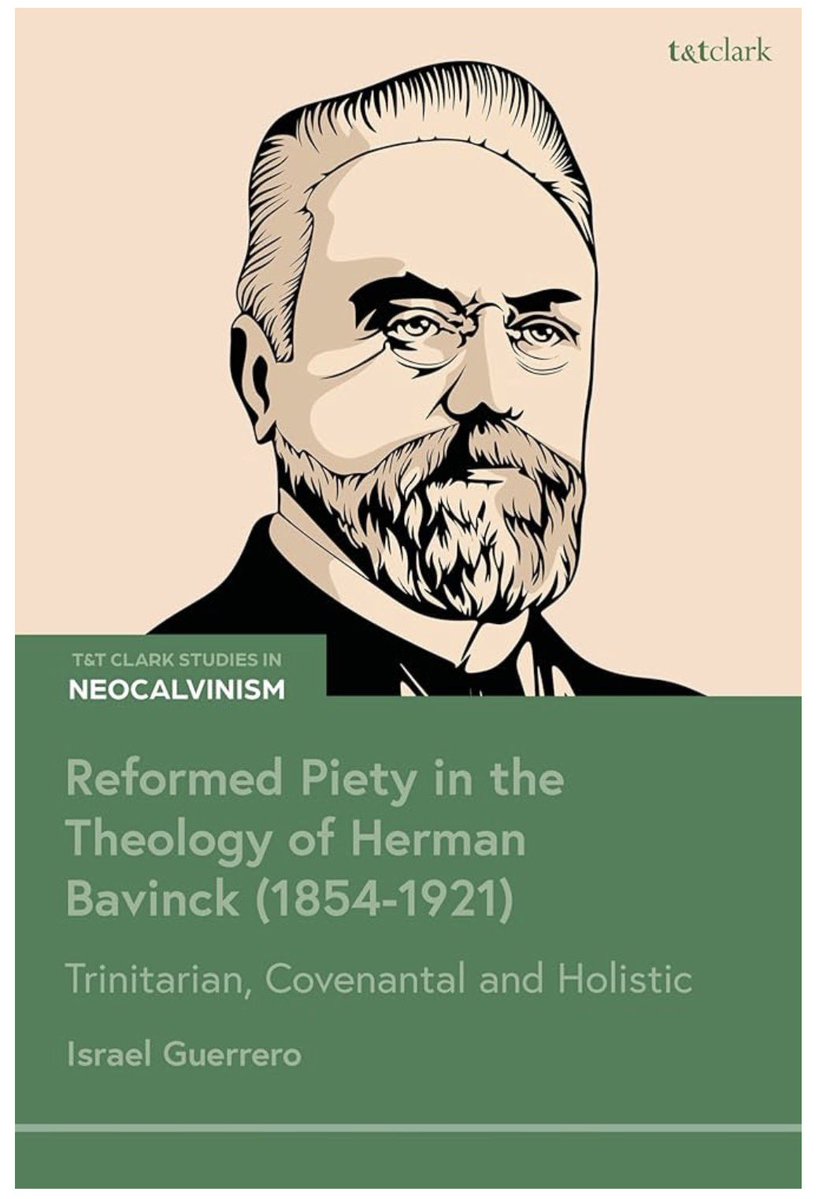
First book in our new T&T Clark Studies in Neo-Calvinism series (edited with @corycbrock, Gray Sutanto & Marinus de Jong), by @Isra_jguerrero 🇨🇱 @tandtclark@BloomsburyBooks. Lots more monographs in the pipeline!
Some of the commentary on this site about Sam Allberry has been ridiculous. Thank you @PeterOuld for clearly articulating what should be basic common sense and Christian decency https://t.co/HbtQdd4dyu
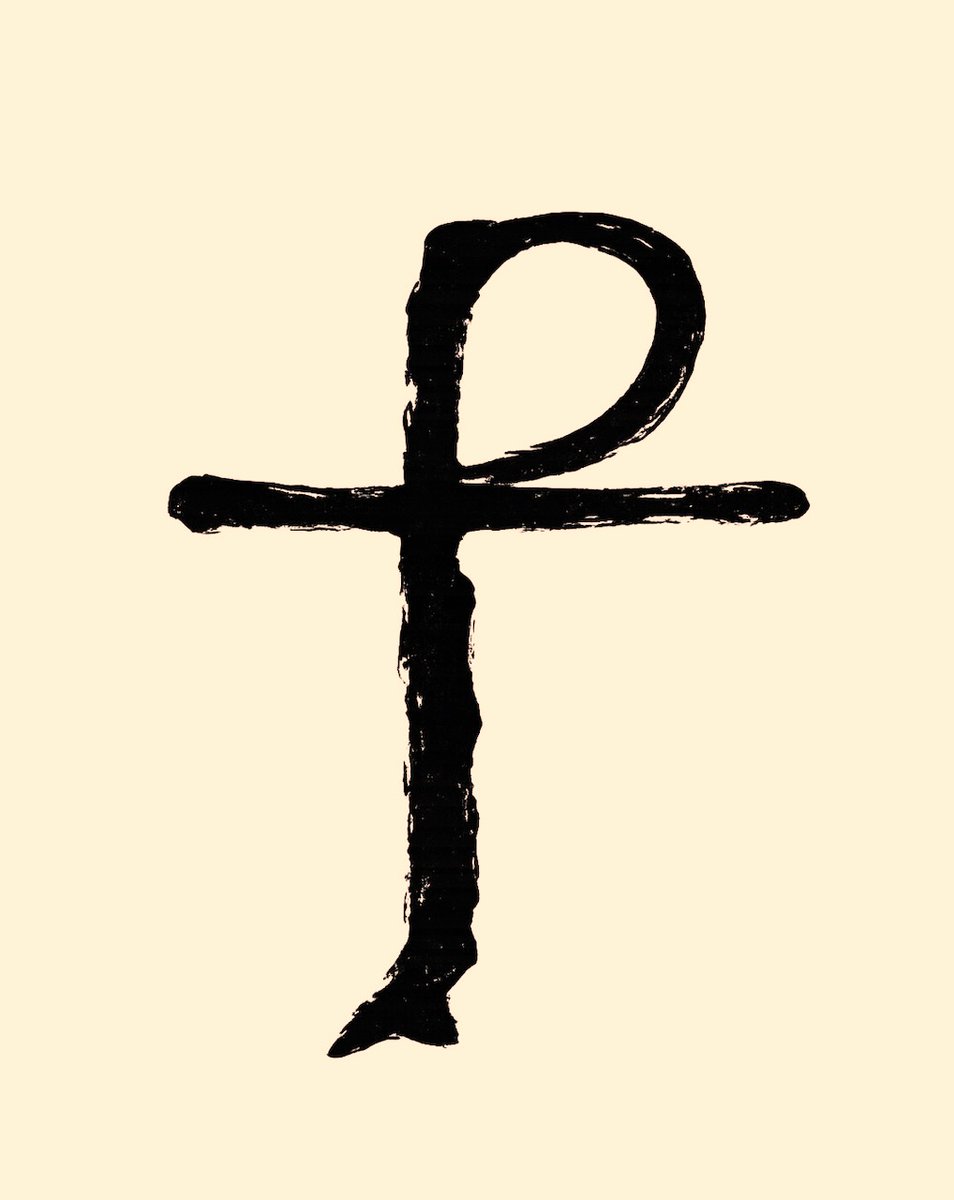
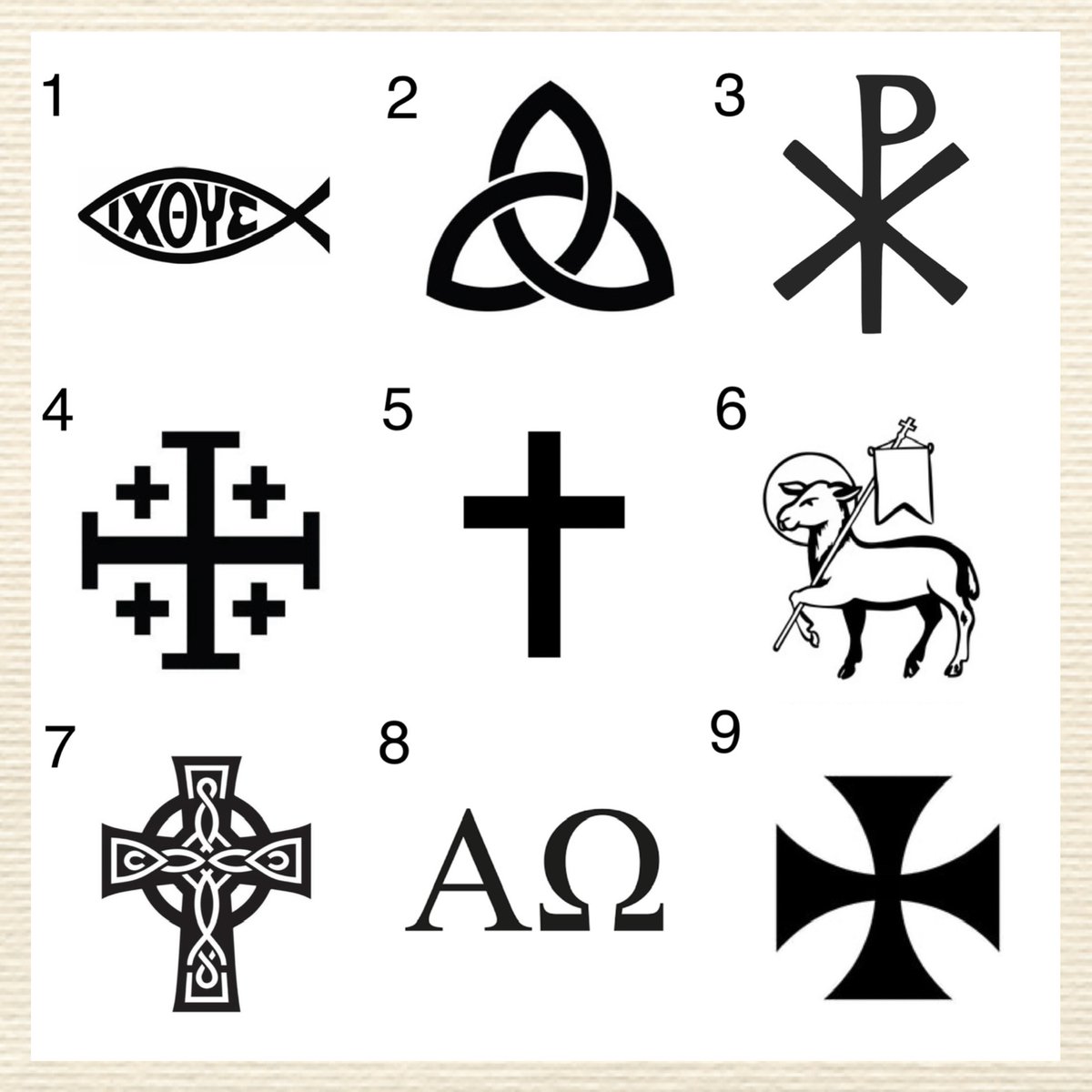
This is likely the earliest Christian symbol, exactly as it appears in the oldest manuscript of the Gospel of Luke (c. AD 200). It is a clever ligature — superimposing the Greek letters tau (Τ) and rho (Ρ) to depict a man hanging on a cross. Even better, the scribe formed this image within the Greek word for "cross" (ΣΤΑΥΡΟΣ, stauros) in the words of Jesus: "Whoever does not carry their cross and follow me cannot be my disciple" (Luke 14:27). And, yes, this is my next T-shirt.
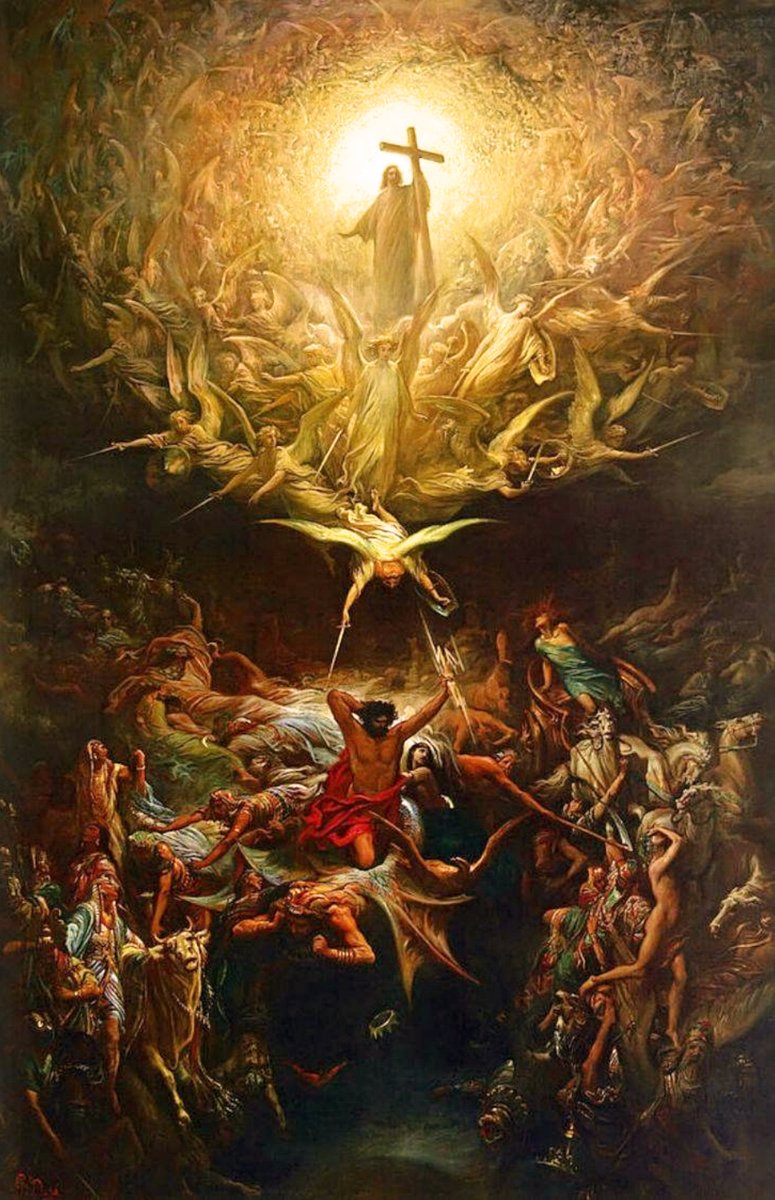
Why the ancient Romans persecuted the early Christians:
"In New Testament times, the Greeks had a term for the underlying principle that unifies the world into an orderly cosmos, as opposed to randomness and chaos. They called it the Logos. The Stoic philosophers conceived it as a pantheistic mind pervading the universe.
But the apostle John applied the term to Christ. “In the beginning was the Word”—Logos (John 1:1). Every Greek who heard John’s gospel understood that he was claiming that Christ himself is the source of the order and coherence of the universe. As Paul put it, “in him all things hold together” (Col. 1:17). Creation has a rational, intelligible order that reflects God’s creative plan.
From the beginning, however, this New Testament concept of truth came under fire. The Roman Empire did not regard religion as the search for truth about reality. That was the province of philosophers, not priests. The Romans defined religion solely in terms of ritual, ceremony, and cult practices.
The empire was perfectly willing to accept Christianity if it would take its place as just another set of religious practices. What the empire would not accept, says Catholic theologian Lorenzo Albacete, was Christianity “as a source of truth about this world.”
How did the early church respond? It resolutely refused to reduce Christianity to Rome’s relativistic definition of religion. As Albacete writes, Christianity “would not accept a place with the religions of the empire” as merely another set of rituals and practices. It “saw itself as a philosophy, as a path to knowledge about reality, and not primarily as a source of spiritual or ethical inspiration.”
The message of Christ’s resurrection—in a physical body, in historical time—did not allow for any dualism that shoved religion off into a separate sphere of life concerned only with spiritual rules and rituals. The early church insisted that biblical truth is a comprehensive unity, encompassing the realms of both priest and philosopher.
Truth is a unified whole."
(From Saving Leonardo)
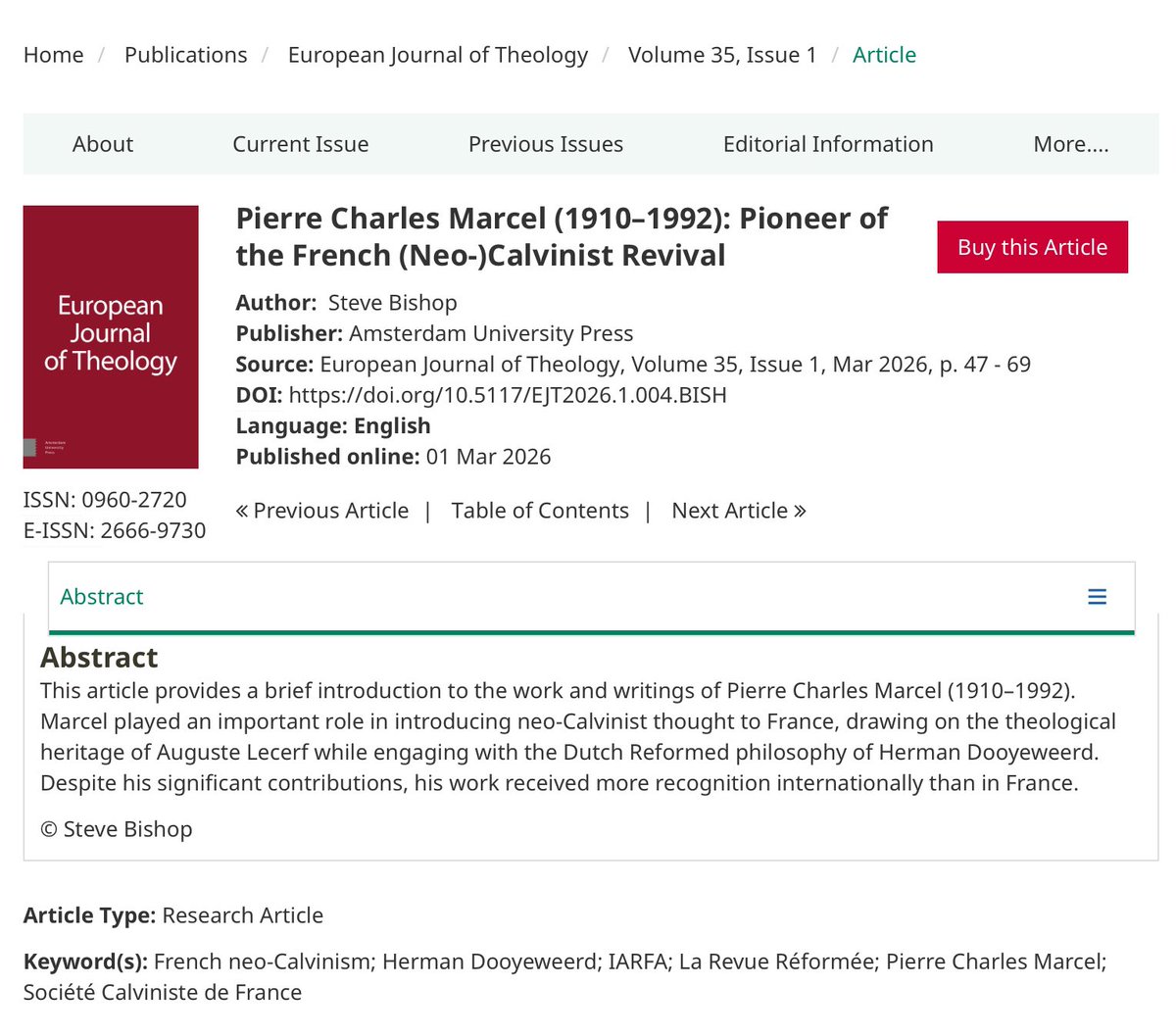
My article on “Kuyperania 1980s: English-language Literature on Abraham Kuyper” has just been published in the Journal for Christian Scholarship:
https://t.co/hiDmOA3tfj
#kuyperania#kuyper
Reflections from your friendly neighbourhood stegosaurus.
DISCLAIMER: THIS POST IS BROUGHT TO YOU BY MOM. DO NOT PROCEED IF YOU DON’T LIKE SPONSORED CONTENT.
Renato Coletto and my article has now been published:
Bishop, S., & Coletto, R. (2026). The Sciences, Their Roots, and Their Interconnections: James K. A. Smith Between Dooyeweerdian Philosophy and Radical Orthodoxy. Philosophia Reformata. https://t.co/pUSJVmeTqa
Carmen Aristegui reaccionó a las declaraciones de la presidenta Sheinbaum sobre el libro “Ni venganza ni perdón”, de Julio Scherer Ibarra y Jorge Fernández Menéndez, después de que la mandataria afirmara: “no lo he leído ni lo voy a leer” https://t.co/rA8MBoMn3h