“If just 6% of single-family property owners took advantage of this new zoning, Massachusetts would unlock the needed 222,000 new homes, without factoring in any of the new housing units obtained through larger multi-family development…” @berkie1
"There's this misconception that no parking minimums means there's no parking. We are trying to get to a place where there's flexibility in the system, so places where you need more parking you can have more parking & places where you need less, you can have less."
📍Boston
The triple decker might be the most Massachusetts thing there is. It's also illegal to build in almost every city and town.
Look around your block. Most of what you see couldn't be built today.
In Cambridge, 85% of our buildings were illegal until I helped fix it last year.
In most Massachusetts cities and towns, the housing that built the middle class and workforce would be illegal to build today. In Boston, 99% of existing residential buildings couldn’t be built today.
Our Commonwealth’s future depends on our willingness to fix what we broke.
The City of Beverly deserves far more credit for transforming a stretch of surface parking lots along Rantoul Street next to the commuter rail station into a vibrant mixed-use neighborhood.
Now, construction has begun on another 52-unit building directly across from the station.
Over the past decade, Beverly has added hundreds of units of walkable, transit oriented housing, and over 1,000 residents along Rantoul Street.
Despite the major influx in residents, this is the current traffic on this walkable street adjacent to the MBTA Commuter Rail station.
"If even the “low-hanging fruit” of zoning reform falters in the Commonwealth because of local red tape, then the state has bigger problems ahead to solve its housing crisis."
- @BostonGlobe Editorial Board
Many Massachusetts neighborhoods would be illegal to build today.
This tree-lined street in Swampscott would require 20,000sf lots to build a home today. 7 of the 12 homes sit on lots under 8,500sf & none exceed 12,000sf.
That’s how disconnected zoning has become from reality.
Great to have Marblehead’s David Modica helping rally more than 100 housing advocates from across Massachusetts as we head to the State House to meet with Senators and Representatives.
Massachusetts’ housing crisis is getting worse by the day, pricing out families, workers, and the next generation from the communities they call home. We urgently need bold, systemic, state-level housing reform that meets the scale of this crisis.
"Local government can keep property tax rates down while maintaining healthy balance sheets when more housing is built in established areas." @pewtrusts
Always grateful for @MassLtGov’s support. She’s one of MA’s elected officials with the strongest understanding of the policies, constraints, and systemic barriers driving Massachusetts’ housing shortage, and what it will actually take to build the homes we desperately need.
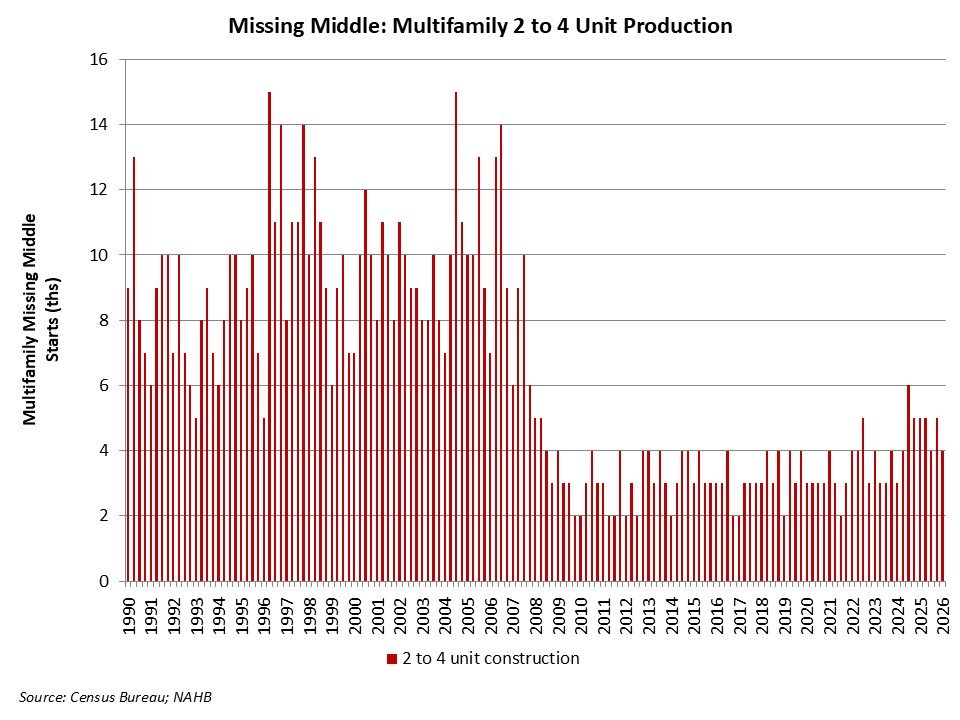
In the early 2000s, 2–4 unit buildings accounted for 11% of all monthly multifamily housing starts in America, peaking at 15,000 units.
Today, this “middle housing” type is just 4% of new multifamily units and for most of the past 20 years, monthly starts fell below 4,000 units.
A total of 12 streets are being pedestrianized across Montreal this summer, encouraging support for local businesses and bringing outdoor festivities and community building to the heart of the city’s vibrant commercial corridors.
📍Montreal 🇨🇦
Over much of the past decade, the City of Austin permitted more housing annually than the entire Commonwealth of Massachusetts.
In 2022 alone, Austin approved 24,227 new homes, roughly 1.5× the total number of housing units permitted statewide across Massachusetts that year.
This week marks the return of Open Streets season in Montreal, featuring some of the best pedestrian streets in North America.
It’s a powerful example of what’s possible when we prioritize people over automobiles on even just a small fraction of our streets.
📍 Montreal 🇨🇦
"Washington State just passed the first statewide bill reforming the building code to allow 'scissor stairs' in apartment buildings. They conserve square footage and construction costs, enhance apartments’ light and cross-ventilation, and help buildings fit onto smaller lots."
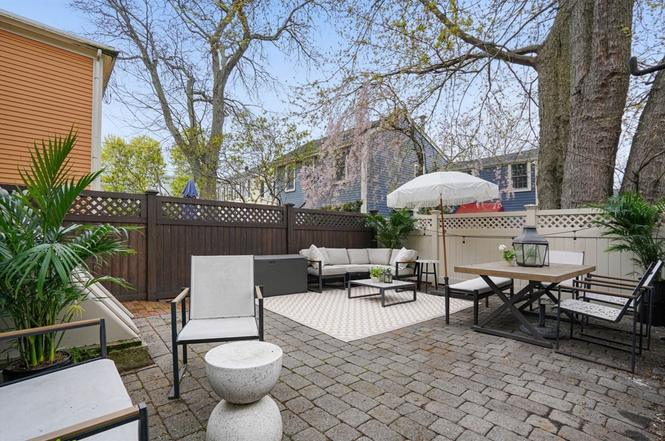
Built in 1807, this 1,400sf home sits on a 1,300sf lot, accommodating 3 bedrooms, 3 bathrooms & a small patio.
...you’d need a 15,000sf lot to build this here today.
This home, and countless starter homes like it, is now illegal to build in most of Massachusetts.
📍Salem, MA
"The housing situation in Massachusetts is now at a crisis level.
We're hearing from young people, that are our future, that they don't think they can afford to live here anymore." - Jim Rooney, CEO @bostonchamber
"Zoning reform alone is insufficient to meet the scale of need for housing production. A comprehensive agenda is needed to address regulatory barriers to housing production, spanning building, fire, energy, septic system, wetlands, and stormwater rules." @BosIndicators
20-years after the Keystone Building collapsed into Union Street, New Bedford is finally repairing the gap left in its urban fabric.
A new mixed-use development with 45 homes & retail is rising in its place, part of a broader housing renaissance driven by pro-housing leadership.
What began as a pilot 10 years ago has become one of Boston’s most beloved traditions. Open Newbury Street brings together residents, families, and visitors, supports local commerce, and has helped reshape conversations around how we allocate space on our urban streets.