Three reading-related things in the DfE white paper 'Every child achieving and thriving' that MAT leaders may have noticed:
1. National Year of Reading = signal that reading is a national priority at the highest level.
2. New Year 8 statutory reading test (starting for today's year 6s in 2028): new comparability is coming, ready or not.
3. Unlocking Reading CPD: government investing in reading CPD at scale for secondaries. Are they seeking coherence?
#MATs #Literacy #DfE #TrustLeadership
RCT result: pupils using ReadingWise improved reading age almost twice as fast as the control group.
Avg time on programme: 6hrs 19mins. Avg gain: 9.5 months. 49% on FSM. DfE-funded. Independently evaluated across 17 schools.
#Literacy#ReadingIntervention#EvidenceBased
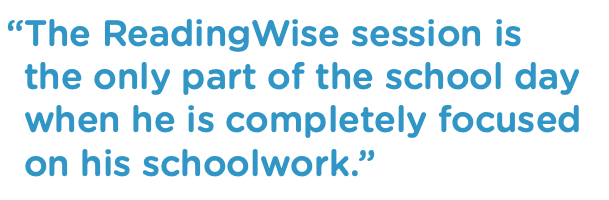
"The ReadingWise session is the only part of the school day when he is completely focused on his schoolwork."
'George' has dyslexia. He daydreams. He doesn't always work well in groups. But he turns up to every session.
#ReadingWise#Dyslexia#PrimaryLiteracy
1:1 reading support is great. But it is hard to reach the bottom 20% of readers across a whole year group.
Sharples School found an effective model: groups of 10, one HLTA, centrally organised.
94% of staff have seen a positive impact back in mainstream lessons.
#Literacy
New on the blog 😁
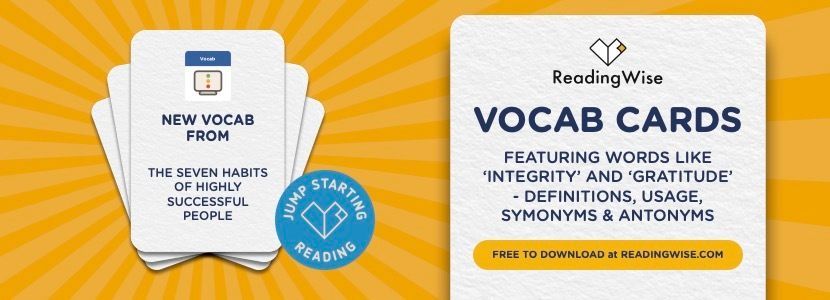
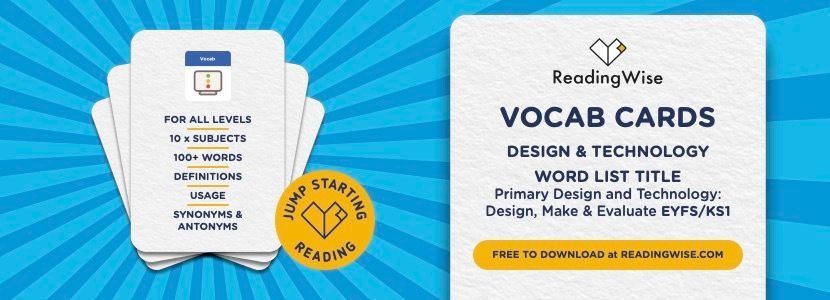
Discover our vocabulary list for The Seven Habits of Highly Effective People by Stephen R. Covey. Ideal for developing leadership language and goal-setting vocabulary.
Downloadable vocab cards included!
https://t.co/3tsqCjiRCd
#NewWordsWednesday
Missed it? 📚
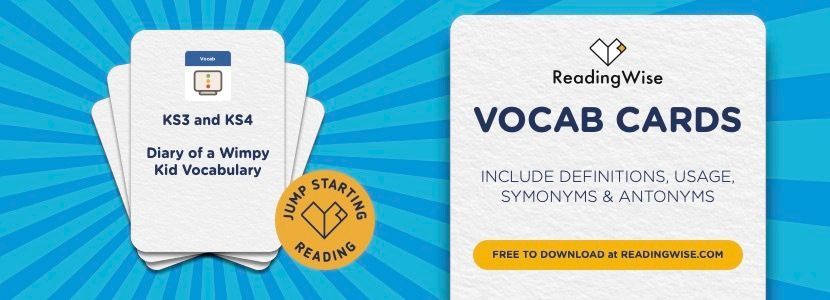
Our recent blogpost explores Diary of a Wimpy Kid by Jeff Kinney, complete with a ready-to-use vocabulary list and free vocab cards.
Perfect for engaging KS2–KS3 readers and boosting everyday language.
And saving a little time...
https://t.co/u2hSNwSVKH
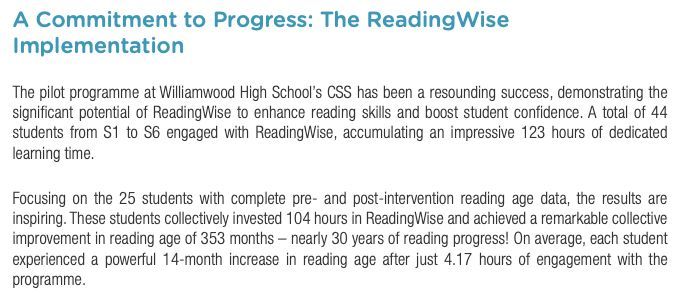
353 months of reading progress. 44 pupils. One term.
Average gain: 14 months per pupil, in 4 hours of programme time.
These are pupils with complex communication needs at Williamwood High School's CSS unit.
#ReadingWise#SEND#Literacy
For young readers in Brighton and nearby, this year is the 60th @brightfest !
Check out the amazing line up in May, including @MichaelRosenYes and so many great authors.
Explore our Diary of a Wimpy Kid vocabulary list this #NewWordsWednesday!
Perfect for engaging readers, building everyday language, and supporting your KS2–KS3 classes.
Includes free vocab cards to save you some time...
https://t.co/u2hSNwSVKH
Over the years we've created many word lists. They target vocabulary from some of the best books, and save teachers valuable time.
Our online Vocab module offers schools the tools to reinforce target vocabulary but any teacher benefits from the PDFs.
https://t.co/LOfcHS2UNJ
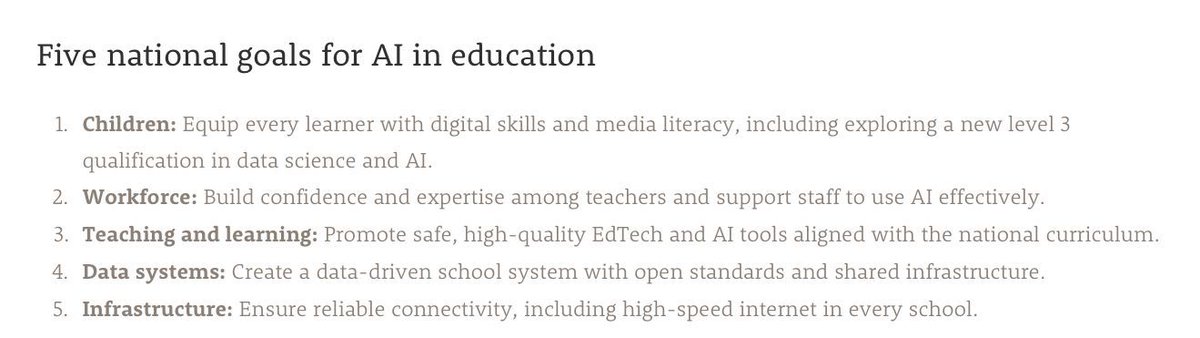
Education Secretary @bphillipsonMP speech at #BettUK2026 this week outlined a vision for AI and edtech in schools. We've summarised the key themes in a blogpost if you missed it.
https://t.co/6AZY85Sfm7
Nice piece - Emerson's advice on reading.
"It is remarkable, the character of the pleasure we derive from the best books. They impress us with the conviction that one nature wrote and the same reads."
https://t.co/6EzmxBixRp
"The reading wars have distracted us from the true, broader purpose of literacy," said Owens. "Enlightened Literacy envisions literacy development beyond the early childhood years, and is about reclaiming education as a sacred, transformative process—one that cultivates citizens capable of sustaining democracy and engaging with a complex world."
A new book out, of interest to the literacy community: https://t.co/V5rFziTJps
An interesting impact assessment from Hurstmere School, an all boys secondary academy in Sidcup:
•Higher impact seen in year 9 pupils in terms of largest gains.
•Year 8 average progress was 10.9 months.
Read the full assessment here: https://t.co/2KVWdxIOUL
Secondary literacy is vital to get right.
With Y8 reading tests being lined up in England, we're sharing our work with secondaries.
Hear from the head, SENDCo, TA and pupils in this case study:
https://t.co/EZw74rP4OU
New report from the World Bank & Global Education Evidence Advisory Panel finds that children in many low- and middle-income countries are behind in reading skills — over 90% still struggle with basics like identifying letter sounds.
#Literacy
https://t.co/map4u2Hpt9