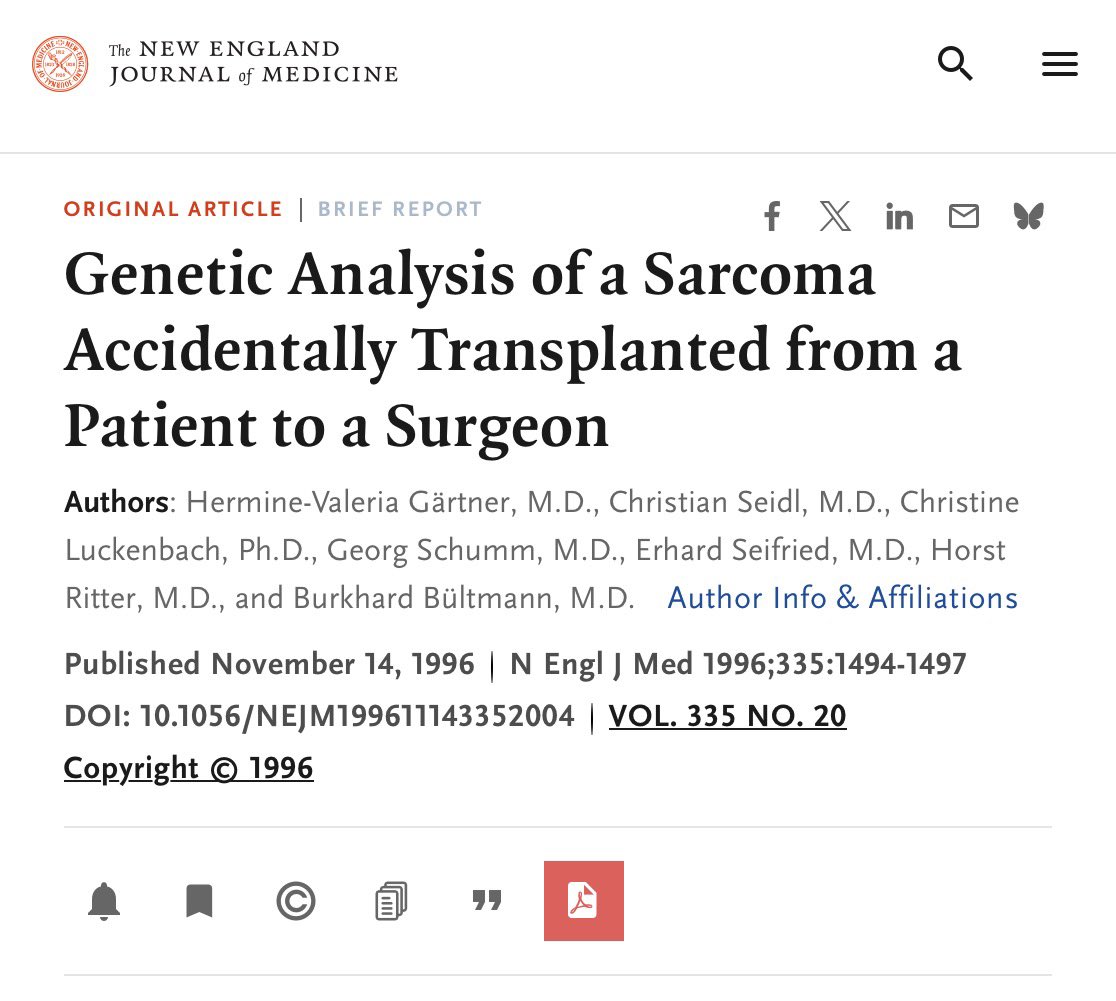
A rare case where a surgeon accidentally developed his patient’s cancer
Cancer is not considered contagious. If cancer cells from another person enter your body, your immune system is supposed to destroy them.
But in very rare situations, biology doesn’t follow the rules.
A 32-year-old man underwent emergency surgery for an aggressive soft-tissue cancer called malignant fibrous histiocytoma. Sadly, he died shortly after the operation due to complications.
During the surgery, the 53-year-old surgeon accidentally injured the palm of his left hand while placing a drain. The wound was small, immediately cleaned, and properly dressed. No one thought much of it.
Five months later, the surgeon noticed a hard lump growing at the exact spot where his hand had been injured. It slowly enlarged to about 3 cm, roughly the size of a large coin.
The lump was surgically removed.
The diagnosis was shocking.
It was malignant fibrous histiocytoma, the same rare cancer the patient had.
The surgeon was otherwise healthy. Tests showed no immune deficiency. So how could this happen?
The DNA answered the question
Pathologists compared both tumors under the microscope and found them to be identical in appearance. But the real proof came from DNA testing.
Using genetic markers and HLA typing (a way of identifying tissue origin), doctors showed that the tumor in the surgeon’s hand carried genetic material from the patient.
This meant only one thing:
👉 The cancer had been accidentally transplanted from patient to surgeon during surgery.
Cancer cells likely entered through the small hand injury and managed to survive long enough to form a tumor.
Fortunately, the tumor was completely removed.
At two-year follow-up, the surgeon was healthy, with no recurrence and no spread.
Why this case is so remarkable:
This case does not mean cancer spreads through touch or casual contact. It shows that direct implantation of living cancer cells, under very specific conditions, can rarely lead to tumor growth, even in a healthy person.
It’s a rare exception that reminds us:
- Cancer isn’t contagious, but biology has loopholes
- The immune system is powerful, not perfect
- Medicine still encounters situations that challenge long-held beliefs
لفترة طويلة كنت أسمع واتابع مثل أغلب المهتمين بالتغذية والتمارين أن كلما زدت من تناول البروتين، زادت نسبة العضل . كان هذا الاعتقاد سائداً عند الكثيرين، حتى صار البعض يستهلك كميات ضخمة قد تصل إلى 300 غرام يومياً، من كل ما يمكن أن يحتوي على بروتين: لحوم، دجاج، أسماك، مكسرات وحتى مكملات مثل بروتين شيك وبروتين بار، ظنًا أن ذلك هو الطريق الأسرع لبناء العضلات.
غير أن دراسة (Meta-analysis) والتي تعدّ من أقوى أنواع الدراسات البحثية لكونه يجمع نتائج عدد كبير من التجارب السريرية، شمل 74 بحث منشورعلى مجموعات مختلفة (مع وبدون تمارين مقاومة)، أظهر نتائج مخالفة للتصور السائد.
فقد تبين أن مضاعفة كمية البروتين لا تؤدي بالضرورة إلى زيادة مضاعفة في نمو العضلات. بل في عددٍ من التجارب، كانت الزيادة في الكتلة العضلية لدى الأفراد الذين تناولوا كميات "اعتيادية" من البروتين مماثلة أو حتى أعلى من أولئك الذين استهلكوا كميات مضاعفة أو ثلاثية.
تحليل النتائج يشير إلى أن المحددات الأساسية لنمو العضلات لا تقتصر على كمية البروتين، بل تشمل عوامل أخرى أكثر تأثيرًا، من أبرزها:
١- جودة التدريب: النمو العضلي يعتمد على التحفيز الميكانيكي الناتج عن التمرين، وخاصة الرفع التدريجي للأوزان، وهو ما لا يمكن تعويضه بزيادة البروتين فقط.
٢- إجمالي السعرات الحرارية: الفائض الحراري – حتى وإن كان مصدره من الكربوهيدرات أو الدهون – يمثل العامل الأساسي الذي يتيح عملية البناء العضلي.
٣- الاستمرارية والتعافي: الالتزام بالتدريب المنتظم، والنوم الكافي، اعطاء وقت للتشافي العضلي، تمثل عناصر لا تقل أهمية عن التغذية نفسها.
كما تشير الأدلة الحديثة إلى أن المدى المثالي لاستهلاك البروتين لتحقيق أقصى نمو عضلي يتراوح بين 0.55 و 0.63 غرام لكل كيلوغرام من وزن الجسم، بينما لا توجد فائدة مثبتة علميًا لتجاوز 1 غرام لكل كيلوغرام حتى في حالات التدريب المكثف.
لذلك اود ان اختم بـ البروتين أشبه بالطوب المستخدم لبناء البيت، ما تحتاجه هو الكمية الكافية لبنائه، لا لتكديسه!!
مصدر الدراسة
https://t.co/TJj8PaQ9lc