We'll remember not the atrocities of our enemies but the silence of our friends. Whether history 'll be kind to us isn't a question of when but a question of how silent we were when others were on the streets fighting & ranting for the freedom of our posterities to come. #EndSARS
The average person does not try to solve their problems or struggles. They get stuck in a routine and live the same day over and over. It does not cross their minds to snap out of it, engage in strategic thinking, and change direction so they can eventually reach a more advantageous position in life.
If you want to get ahead of 90% of people, all you have to do is pause, think, and actually attempt to overcome the struggle you're faced with.
From the era of Military rule and throughout the period of civilian Governments,the Catholic Bishops have a consistent history of telling truth to power.They have never been partisan.Every President they visited,they bring him a gift of Bitter Kola instead of Olive Oil.
Hakeem Belo-Osagie, founder of FSDH Merchant Bank, on why he sold UBA for $250m in 2005.
He says he was merely an investor, not a banker. And he also got tired of the constant investigations from SEC, Military intelligence, and other government agencies.
He had bought the bank for $15m in 1994
𝐌𝐞𝐞𝐭 𝐎𝐮𝐫 𝐋𝐞𝐚𝐝𝐞𝐫𝐬𝐡𝐢𝐩:
𝐌𝐫 𝐀𝐛𝐢𝐨𝐥𝐚 𝐇𝐚𝐦𝐦𝐞𝐝, 𝐂𝐅𝐀, is the Managing Director of Investment Banking. He is a seasoned investment banking professional with deep expertise in capital raising, structured finance…
For learning and education purposes (to those who might be curious about my tweet here), I’d explain what I am considering that a lot of people may not be seeing:
This company has:
✑ Market Cap: ₦24bn (inclusive of public offer)
✑ Net assets: ₦35bn
✑ Cash: ₦31bn
What this effectively tells me is that the market is saying “we’ll pay roughly the value of the cash and assign almost no value to anything else”.
Yet, the company also owns:
- Investment properties: ₦5.9bn
- PPE: ₦1.0bn
- Other financial assets: about ₦1.0bn
- Receivables and other assets
- Insurance licence
- Customer relationships
- Distribution network
- And any franchise value
The market is effectively assigning a negative implied value to the pre-existing insurance franchise, once you adjust for fresh capital, and this is the line for me.
Regardless of how poor a company is (except maybe a Kodak or Blackberry kind of poor when technology moved past them), the value of its operating assets can not be negative. It can be zero (which is a stretch tbh), but not negative. Okay, I was hyperbolic there.
For the market to be right, it must believe that the existing franchise will destroy more value than it creates over time. That may ultimately prove to be correct, but it is a very strong assumption.
I am not even talking about the income statement or financial performance yet. I am simply looking at the balance sheet right now and comparing it with the company’s market valuation.
I have seen this before - many times. I may be wrong this time (I hope I am not), but we will see.
Life is good for some lads apparently...
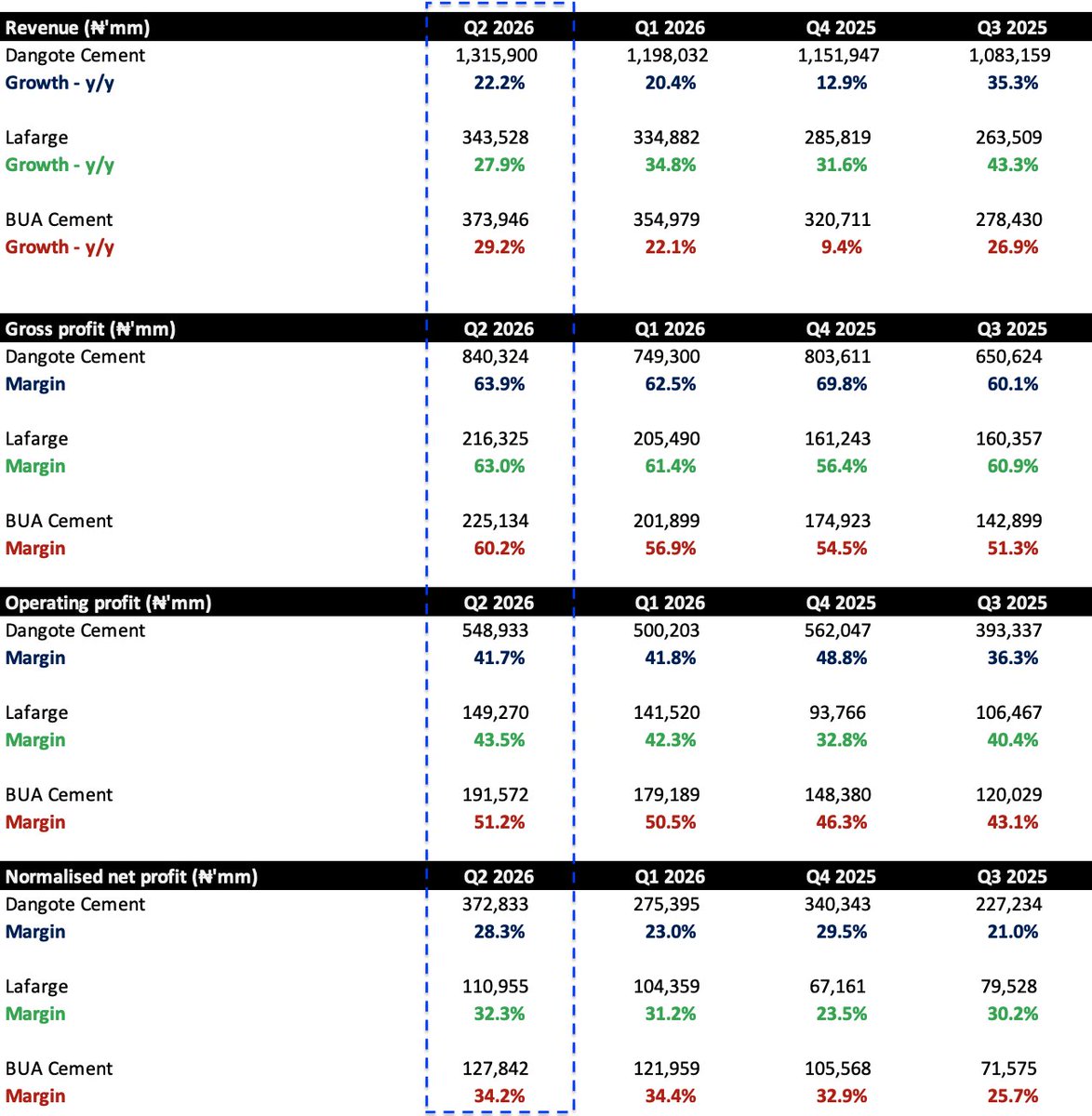
✑ The difference between your revenue and gross margin is the "profitability of your product"
✑ The difference between your gross margin and operating profit margin is your "business model"
✑ The difference between your operating profit margin and normalised net margin is your "capital structure".
Major cheat code for life: Assume good things are still ahead. You are not behind. You are not too late. You are not disqualified by your past. One new season can change the entire story. Keep showing up with belief. The best chapters are often written after the hardest ones.
When you’re sending a revised document to an executive, especially a 2nd or 3rd iteration, don’t just attach it and hope for the best.
By this point, they’ve already seen earlier versions. What they need now isn’t more reading; it’s clarity.
Guide them.
In your email, briefly highlight what’s changed since the last version. Not everything; just the key updates that matter.
Anchor those changes where possible: point them to a specific page, section, or decision point.
Give them a quick mental map before they even open the document.
This does two things.
First, it saves them time and makes it easier to engage with your work.
Second, it positions you as someone who understands both the detail and the bigger picture; someone who can move work forward, not just pass it along.
This line from Atomic Habits isn't ready to leave my head:
"It doesn't make sense to continue wanting something if you're not willing to do what it takes to get it. If you don't want to live the lifestyle, then release yourself from the desire. To crave the result but not the process is to guarantee disappointment."
the paradox of nyc is that you can only live there if you have a good job that lets you make money, but you can only truly enjoy the city to its fullest if you are a little unemployed
I have been part of major bank acquisitions before and have seen other business consolidations happen, thanks to my family. I have been fascinated with M&As for a long time. My MBA thesis was on Nigerian M&A activity in the 90s.
As a small business owner, I have had merger and acquisition offers for the business we started in the 90s, but neither panned out. One was a genuine offer to merge from someone with an INSEAD MBA who would later raise $200m to buy others like us. The other was from a large corporation that later decided it was cheaper to hire our engineering team from under us.
Both experiences taught me different business lessons about exits. They are not common in Africa because founders are never mentally prepared for them, so they often make mistakes. Many don't survive the mistakes.
An exit has two parts: preparation and execution. The preparation part is largely a mental exercise before processes kick in. I started a business with my friend, and my entire existence was defined by it; an offer out of the blue to merge took me by surprise.
The offer came because we had done some things right. The paralysis happened because I was not prepared at all for this option. This is why I always ask new founders today what they see as the endgame. Every business should have an exit strategy because founders don't live forever. My co-founder Salil died in February. I almost died in June.
While mortality is a good reason to consider exits, most small business owners often dream of continuity within the family, but the chances of that happening are slim to none. I still remember the bales of clothes and drinks my late paternal grandmother left behind after her death and how none of the children became traders. The world changed, and priorities became different.
Africans notoriously do poor estate planning and are even worse at ensuring business continuity. The result of these is viable but stranded assets everywhere. I have a more recent family experience with my late mother-in-law's hospital. It is an asset performing well below its potential that could have benefited from an exit. You can sell a business and not the property it sits on. You can still rent your property to the business.
There are many angles to handle execution from, as exits take so many forms. The most important thing is the willingness to sell and the willingness to buy. We are taking the step to normalize both sides of this with https://t.co/deudTQSxeQ.
By the way, this will not only be about small businesses, but it will also be about ALL types of exits, partial or full. Nothing too small and nothing too big. I never knew how deep and extensive this could be until I started the process, and it almost consumed me with sleepless nights of research, resulting in poor health.
Something I found out in 2017, thanks to Google Launchpad, sowed this seed. Matt Mossman of College Heights, now of Pelion, mentioned that 98% of all exits in Silicon Valley are acquisitions. IPOs are the exception and not the rule. More American millionaires are created from acquisitions than IPOs. This can also happen in Africa.
This will be a marathon and not a sprint. Let's get it on!
OK, I am launching what I have been working on that almost killed me. It is called https://t.co/VZUfbkIVnY. People can sell businesses there, and others can also find bargains. This is a perfect exit scenario. You don't have to close up a business when you can sell it.
I am a sucker for educational podcasts.
But there are only a handful of podcasts that have truly changed me in unimaginable ways.
Read the thread for those and the links to them.
🧵