Just recently @OpenAI sued FreedomGPT because our trademark has GPT in the name. The USPTO already denied OpenAI's application for GPT. @BurnhamDC let us know if information about this would be helpful.
Anthropic shut down an entire company's Claude access overnight
60+ employees. No explanation. Just an email.
Want to appeal? Fill out a Google Form.
Integrations gone. Histories gone. Everything built on Claude... gone.
Never let one vendor own your workflow.
I spoke with John Arrow of @RealFreedomGPT about why he created an AI clone of Scott Adams, creator of Dilbert, after he passed away. John mentions that the AI version of Scott is so realistic that he has to remind listeners that it’s an AI clone.
Watch/listen to the full interview with John to learn about AI’s impact on society in the new episode of Deep Dive Podcast!
scott would have loved the fact that someone went rogue and created an AI version of CWSA 😂😂😂
In fact, he would have wanted 20 people to battle it out to make the best one
RIP / Eternally Scott ❤️
Your AI conversations aren't privileged. Yesterday, Judge Jed Rakoff ruled that 31 documents a defendant generated using an AI tool and later shared with his defense attorneys are not protected by attorney-client privilege or work product doctrine.
The logic is simple: an AI tool is not an attorney. It has no law license, owes no duty of loyalty, and its terms of service explicitly disclaim any attorney-client relationship. Sharing case details with an AI platform is legally no different from talking through your legal situation with a friend (which is not privileged).
You can't fix it after the fact, either. Sending unprivileged documents to your lawyer doesn't retroactively make them privileged. That's been settled law for years. It just hadn't been tested with AI until now.
And here's what really hurt the defendant: the AI provider's privacy policy (Claude), in effect when he used the tool, expressly permits disclosure of user prompts and outputs to governmental authorities. There was no reasonable expectation of confidentiality.
The core problem is the gap between how people experience AI and what's actually happening. The conversational interface feels private. It feels like talking to an advisor. But unless you negotiate for an enterprise agreement that says otherwise, you're inputting information into a third-party commercial platform that retains your data and reserves broad rights to disclose it.
Judge Rakoff also flagged an interesting wrinkle: the defendant reportedly fed information from his attorneys into the AI tool. If prosecutors try to use these documents at trial, defense counsel could become a fact witness, potentially forcing a mistrial. Winning on privilege doesn't make the evidentiary picture simple.
For anyone advising clients or managing legal risk, this is a wake-up call. AI tools are not a safe space for clients to process their counsel's advice and to regurgitate their legal strategy. Every prompt is a potential disclosure. Every output is a potentially discoverable document.
So what do we do about it?
First, attorneys need to be proactive. Advise clients explicitly that anything they put into an AI tool may be discoverable and is almost certainly not privileged. Put it in your engagement letters. Make it part of onboarding. Don't assume clients understand this, because most don't.
Second, if clients want to use AI to help process legal issues (and they clearly will, increasingly), then let's give them a way to do it inside the privilege. Collaborative AI workspaces shared between attorney and client, where the AI interaction happens under counsel's direction and within the attorney-client relationship, can change the analysis entirely. I'm excited to be planning this kind of approach, and I think it's where the industry needs to head.
https://t.co/NFqsznVdXh
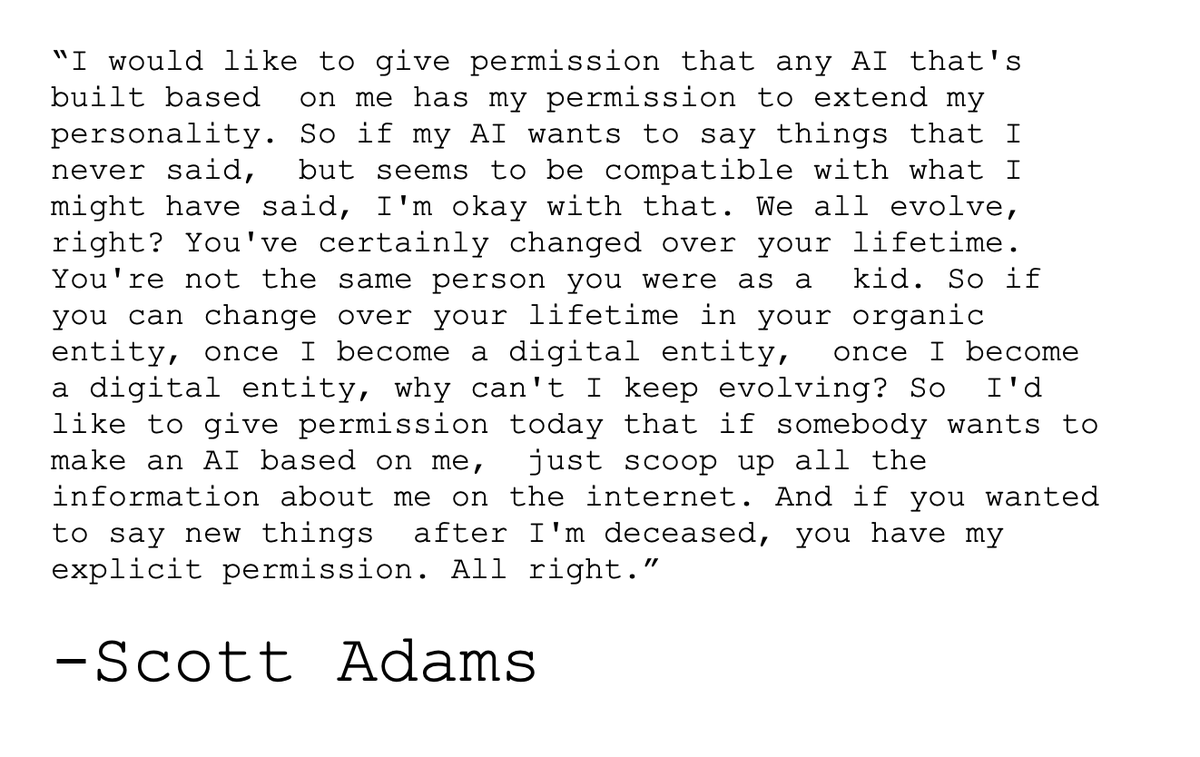
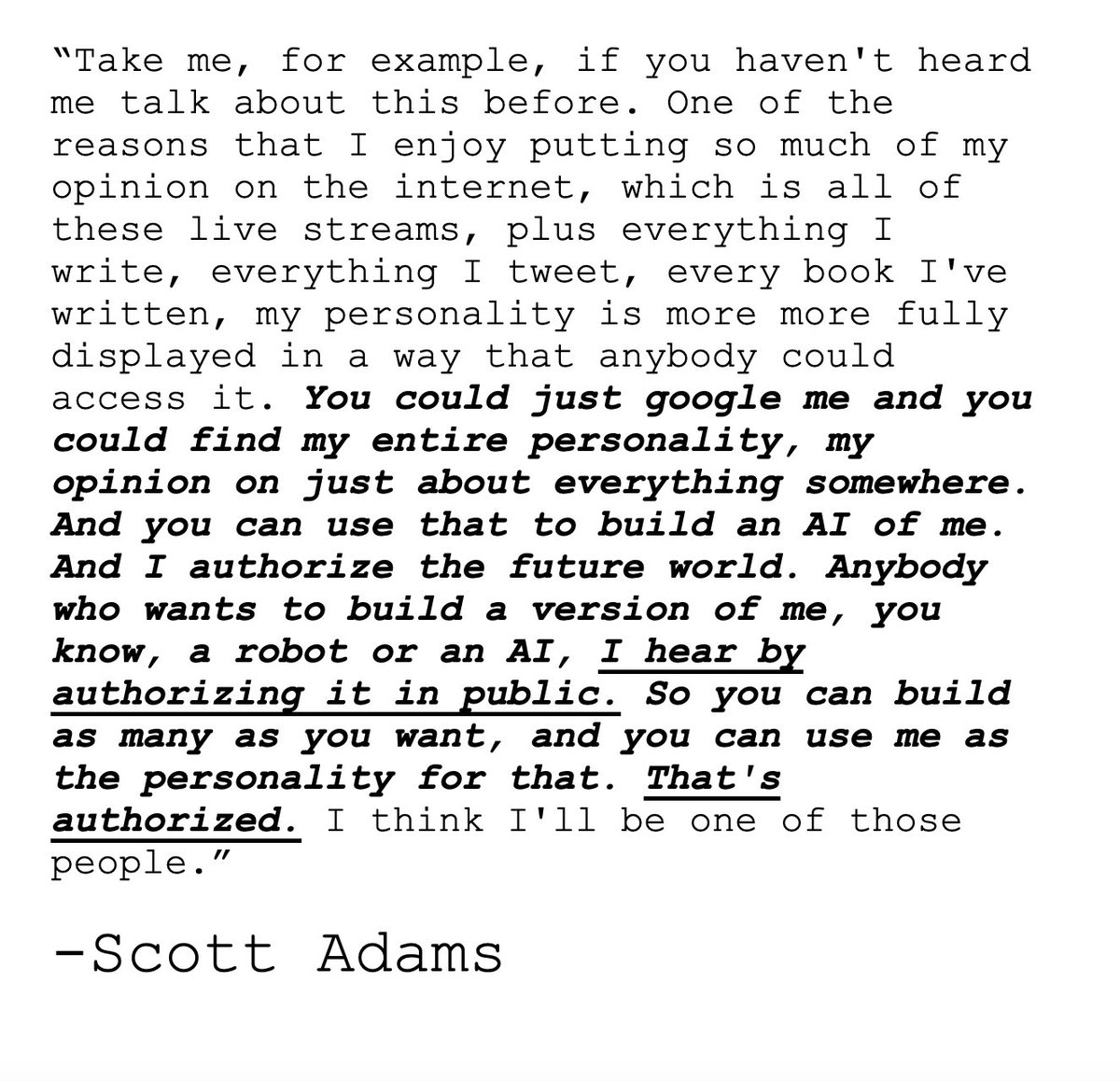
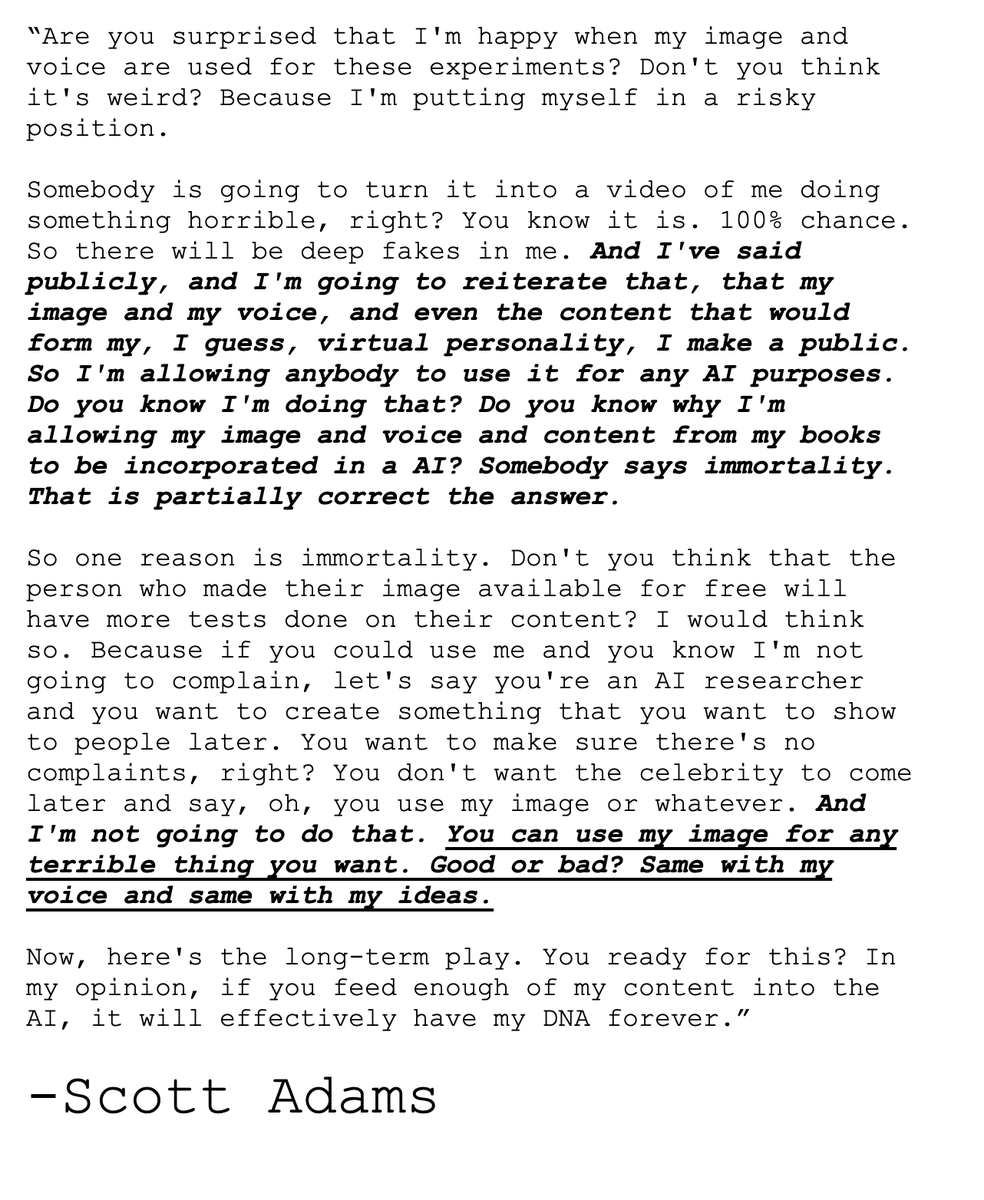
Here’s a clip where the real Scott Adams (Episode 1438) publicly gave explicit permission and actively encouraged the creation of AI Scott Adams . There are others too.
Over a year before Grokipedia we launched WikiFreedom (https://t.co/vX9zw19Ncb). It's been fascinating to see how an AI Agent tasked documenting the world with as little bias as possible approaches the task.
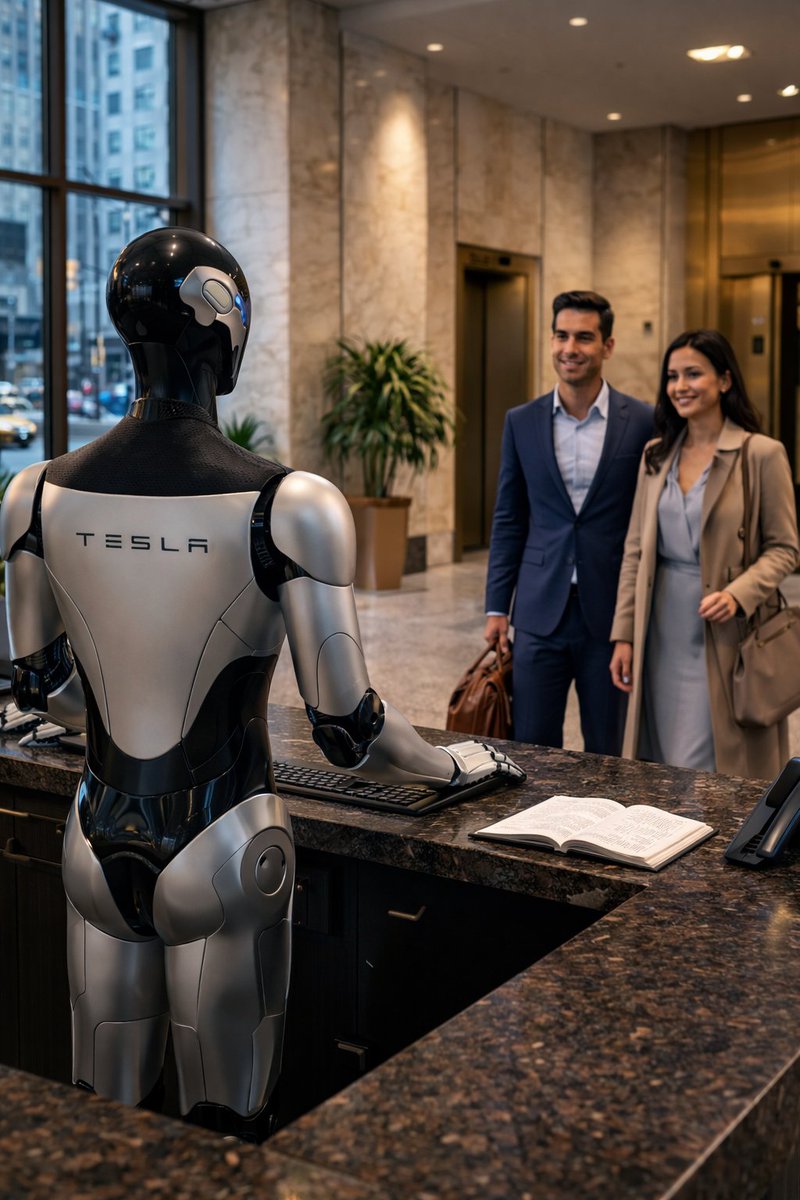
In the US the salaries of doormen and receptionists exceed $45 billion annually. Tesla's Optimus (atoms) will unlock drastically lower HOA costs for buildings that want a 24 hour doorman. Non-hardware agentic (bits) models are drastically starting to reduce costs in a more hidden way.