Ken Griffin gave this warning recently during a rare podcast appearance:
"You'll never manage a portfolio for every possible tail event, but you should stay very focused on what is the worst-case scenario?"
"Can I tolerate that loss? And monitor and maintain your exposures such that the loss is a tolerable loss. It may be an extreme loss, but it's still tolerable."
"Definable, tolarable, still in business, still in a position to fight back from that point. That's what you're trying to get your head around."
Almost like he was speaking directly to Leopold knowing how this trade would unfold. Savage.
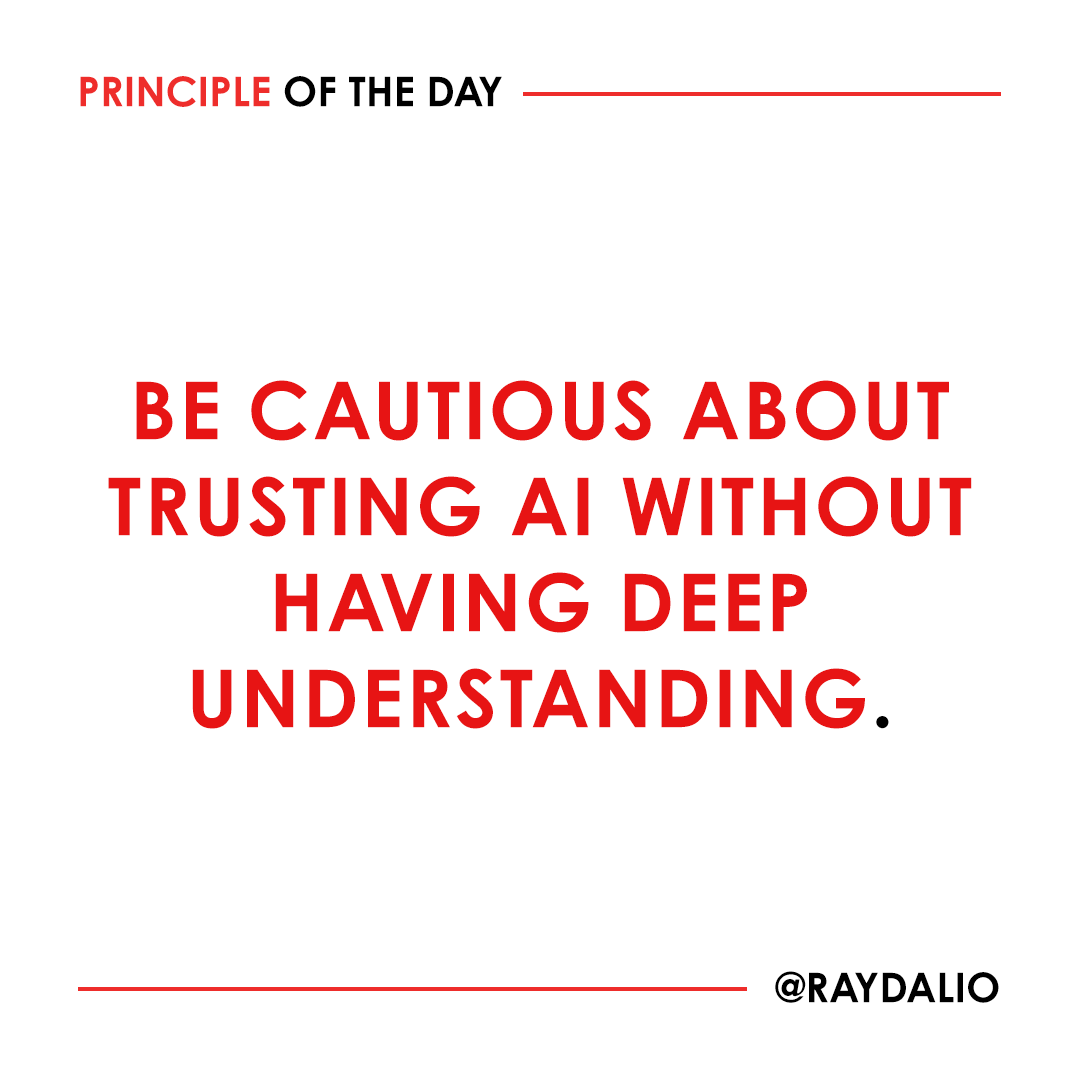
Remember that computers have no common sense. For example, a computer could easily misconstrue the fact that people wake up in the morning and then eat breakfast to indicate that waking up makes people hungry. I’d rather have fewer bets (ideally uncorrelated ones) in which I am highly confident than more bets I’m less confident in, and would consider it intolerable if I couldn’t argue the logic behind any of my decisions. A lot of people vest their blind faith in machine learning because they find it much easier than developing deep understanding. For me, that deep understanding is essential, especially for what I do. #principleoftheday
Once you master taking small losses, you are set for life.
It’s like having an emergency exit inside every trade.
You stop arguing with the market.
You get out, protect your capital, and remain ready for the next opportunity.
Traders do not usually abandon bad systems too late.
They abandon good systems too early.
Because they judge the edge before the sample has had time to play out.
“Greatness does not come out of intelligence, it comes from character.
Character is not formed out of smart people: it is formed out of people who have suffered.”
— Nvidia CEO, Jensen Huang
By the time the Federal Reserve meets, Wall Street usually already knows the outcome. Not this time. Here are three things to watch for today. https://t.co/qQ65KVtEIx