Meet some of the real women of the Roman Catholic Church: saints, sinners, remembered, forgotten, and from all centuries. Curated by historian @bronwenmcshea.
This Unitarian-turned-Roman Catholic Englishwoman suffered the deaths of her brother, baby daughter, husband, & parents in quick succession in her late 20s & early 30s as well as that of her son Axel (due to typhoid) later on when he was in his 20s. After returning to London as a young, already-Catholic widow in the 1870s, she set up a chapel in her home & the community that attended Mass there grew so quickly that she devoted some of her wealth to building Sacred Heart Church in Wimbledon in London. She gave more of her wealth away to women's religious orders, joining the Daughters of the Heart of Mary in France & later spending her last years in her former country home in Bocking, Essex, which by then was a convent of the Franciscan Daughters of Mary.
Meet EDITH ARENDRUP (1846-1934), an artist from a wealthy Unitarian English family who started a family with a Danish soldier in Egypt, became Catholic after losing many family members too young, built London's Sacred Heart Church, gave up her wealth, & became a religious sister.
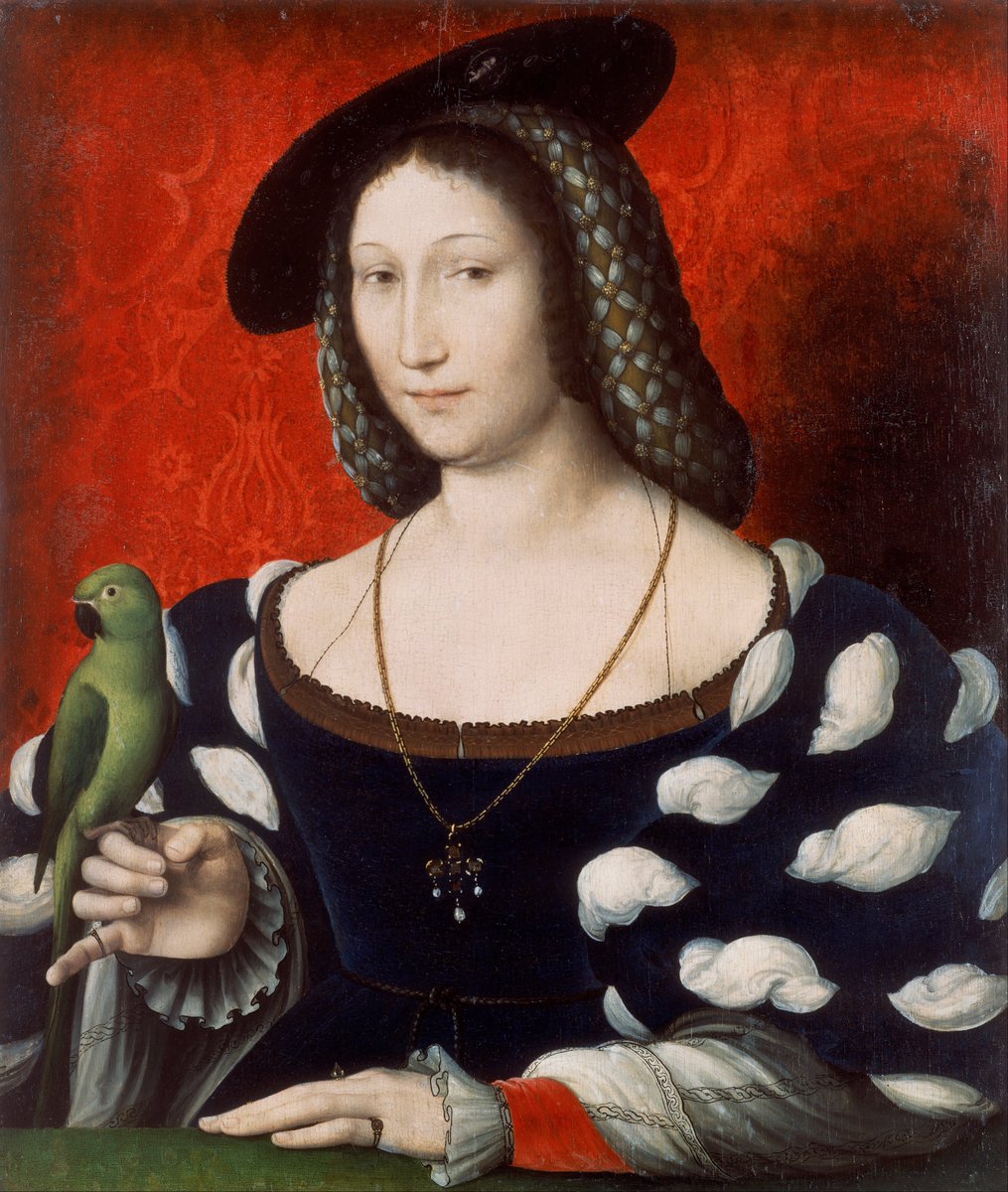
Among the ways Queen Marguerite of Navarre attempted to heal the widening breach between her fellow Catholics & the leaders of the emerging Reformed movement was to appoint the reconciliation-minded clergyman Gérard Roussel as Bishop of Oloron. She also tried to convince her brother, King François I of France, not to punish Protestant preachers & activists too harsly at a time of increased agitation, several decades before the French Wars of Religion.
Meet MARGUERITE OF NAVARRE (1492-1549), sovereign Queen of Navarre & sister of France's King François I; 2x-married mother of 2, including of Queen Jeanne III of Navarre; patroness of the arts; author of the "Heptaméron", poems, & plays; sought Catholic-Protestant reconciliation.
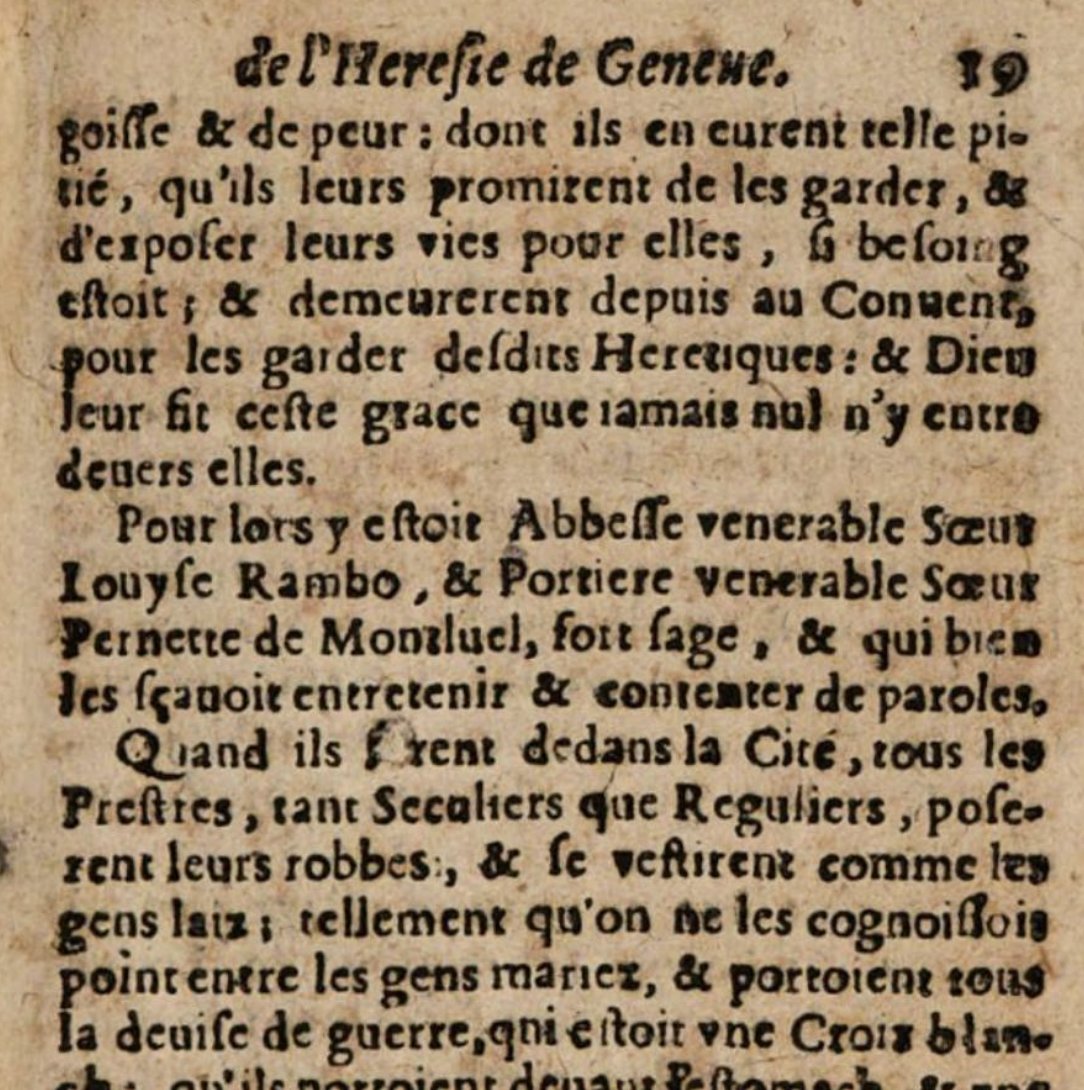
Also, after MOTHER ABBESS RAMBO's convent was ransacked by a Protestant mob in 1535, the Poor Clares were exiled by Geneva's city fathers & walked 25 miles to Annecy to start over. 258 years later, French revolutionaries forced the Annecy nuns to disperse, taking their property.
Meet LOUISE RAMBO (d. 1538), a 16th-c. Poor Clare abbess with no known link to the 1980s franchise. Rambo's convent was the last Catholic holdout in Geneva during the Calvinist takeover, hiding women beaten at home for remaining Catholic & offering Masses said by armed priests.
There were many women like Katharina von Bora in the 16th century -- who started life as Catholics and even became nuns but then joined Protestant movements. Their stories illuminate problems that the Church was facing internally in the period, before and amid the new external challenges posed by reformers like Luther. In short, not all of Catholic history is, or should be, hagiography.
@bonesforsales She was Roman Catholic until she was not. She is part of the full history of @RealRCWomen whether some Catholics & some Lutherans like that or not.
Meet KATHARINA VON BORA (c. 1499-1552), daughter of German nobles who gave her to a Benedictine convent at age 5. Transferred to a Cistercian abbey at 9, she escaped her life as a nun at 24 & married the excommunicated ex-priest Martin Luther, bearing him 6 children & adopting 4.
This daughter of the most infamous Renaissance pope was pushed into three different marriages for political reasons. First, at 13, she was wed to Giovanni Sforza to ally the Borgias with his powerful Milanese family; the marriage was annulled when no longer politically convenient. At 18, she wed Alfonso de Aragon, to ally the Papal States with Naples, & although the marriage started off happily, Alfonso conveniently was killed (attacker's identity never proven) when the alliance became inconvenient to the Borgias. Finally, at 24, she wed Alfonso I d'Este to strengthen the Papal States' ties with Ferrara. Successful as a political match, it was less successful as a personal one, as Alfonso was unfaithful & Lucrezia likely was, too.
Meet LUCREZIA BORGIA (1480-1519), daughter of Pope Alexander VI & his leading mistress, highly educated including in Latin & Greek, Governor of Spoleto, 2x Regent of Ferrara, 3x married, mother of 7+ children (4 living), & patroness of the arts & of ecclesiastical institutions.
Poetically, the Carmel that Dupont initially entered at age 21 in Paris was Carmel de l'Incarnation on the Rue St. Jacques -- itself the first-ever Discalced Carmelite community in France, founded in 1604. That community had Spanish-born members who had known St. Teresa of Avilà -- the great reformer of the Carmelites & foundress of numerous Discalced Carmelite communities for both women AND men throughout Spain. Dupont was instructed to leave that historic community to help make her contemplative order's spiritual gifts present to the peoples of the British Isles.
Both Empress Cunigunde & her husband Emperor Henry II were canonized quickly as saints; the childless couple was reputed to have lived very chastely their entire marriage. Cunigunde was politically active during her husband's reign as King of Germany prior to his election as Emperor, as was the norm for the women of the Ottonian dynasty. She also had founded the Abbey in Kaufungen where she embraced the life of prayer & charity she felt called to not long after becoming widowed & serving briefly as Regent of the Holy Roman Empire.
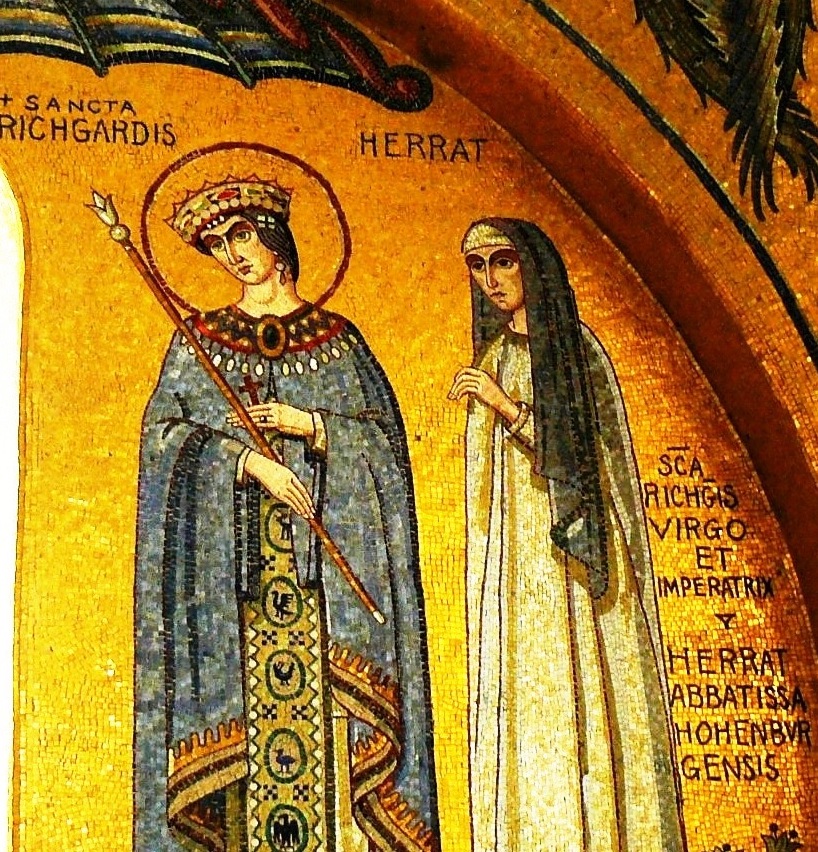
Meet ST. RICHARDIS (c. 840-c. 896), papally-crowned Empress of the Carolingian Empire as Charles the Fat's wife & founding lay abbess of convents in Zürich, Säckingen, & Andlau. Repudiated by Charles for having no children, she joined the secular canonesses at her Andlau abbey.
Meet MADELEINE DUPONT / MARY OF JESUS (1851-1942), French-born Discalced Carmelite nun who helped form in 1878 the 1st-ever Discalced Carmelite community in the British Isles, in London's Notting Hill. As Prioress for 59 years, she founded 33 other Carmels in the British Isles.
The actual medieval, traditional Church -- not the caricature version -- sometimes canonized childless wives who couldn't sufficiently please their husbands.
Meet ST. RICHARDIS (c. 840-c. 896), papally-crowned Empress of the Carolingian Empire as Charles the Fat's wife & founding lay abbess of convents in Zürich, Säckingen, & Andlau. Repudiated by Charles for having no children, she joined the secular canonesses at her Andlau abbey.
Ermentrude, praised in her day as a "strong woman," is one of many prominent Christian queens of the early medieval period we might call the "Mothers of Christendom." Her children included Judith the Queen of Wessex; Louis the Stammerer, King of West Francia; Charles the Child, King of Aquitaine; the infamous Carloman who rebelled against his family & the ecclesiastical career he was intended for to try to take over part of his father's kingdom; as well as 3 nuns (Rotrude, Ermentrud, & Godehilde) & a monk (Lothar). Ermentrude herself was drawn to a monastic life in the latter years of her marriage, separating from Charles the Bald to retire at the Benedictine Abbey of Hasnon in what is today France's Départément de Nord.
Meet ERMENTRUDE OF ORLÉANS (823-869), Queen of the Franks as Charles the Bald's wife; anointed a Christian queen by St. Hincmar of Rheims; mother of 10; gifted embroiderer; patroness of monastics; praised by Irish theologian John Scotus Eriugena as a Femina Fortis (Strong Woman).