Consistency > motivation.
It’s not about doing it all at once, it’s about showing up every single day. Small steps compound into big wins. 🚀 #Mindset#Growth
Almost 9k ONyc holders now, but the 93% utilization is the number that stands out to me; it shows people aren’t just holding ONyc, as the capital is actually being put to work.
OnRe really said the whole week 😀
Singapore is going to be busy. Four events in four days, with plenty of conversations to be had around RWAs and onchain capital.
8% fixed for 30 days is actually a nice addition here; you know what the borrowing will cost from day one instead of watching rates move around.
It makes managing an ONyc position a lot easier.
I have always felt yield alone will not be enough for RWAs. If you cannot move the asset easily when you need to, that becomes a problem. Seeing OnRe work on the liquidity side of ONyc with Titan makes a lot of sense as usage grows.
If you are already active around ONyc, the renewed Exponent incentives are worth checking. 8x points on ONyc limit orders, 3x on srONyc, plus rewards. Might as well make the position work.
Open AI needs people who can afford to keep maintaining it.
Hugging Face bringing oMLX's creator on board gives that work sustained backing while the project stays Apache 2.0.
Funding the work after launch deserves as much attention as launch day.
A lot of the AI tools people use today are built on top of models someone else spent serious time and money creating.
But here’s the problem:
Building a useful open-source AI model doesn’t automatically mean you have a good way to make money from it.
People can download it, build with it and sometimes create businesses around it.
The original builder still needs funding to keep improving the model.
This is one problem @AlpacaNetworkAI is trying to approach differently.
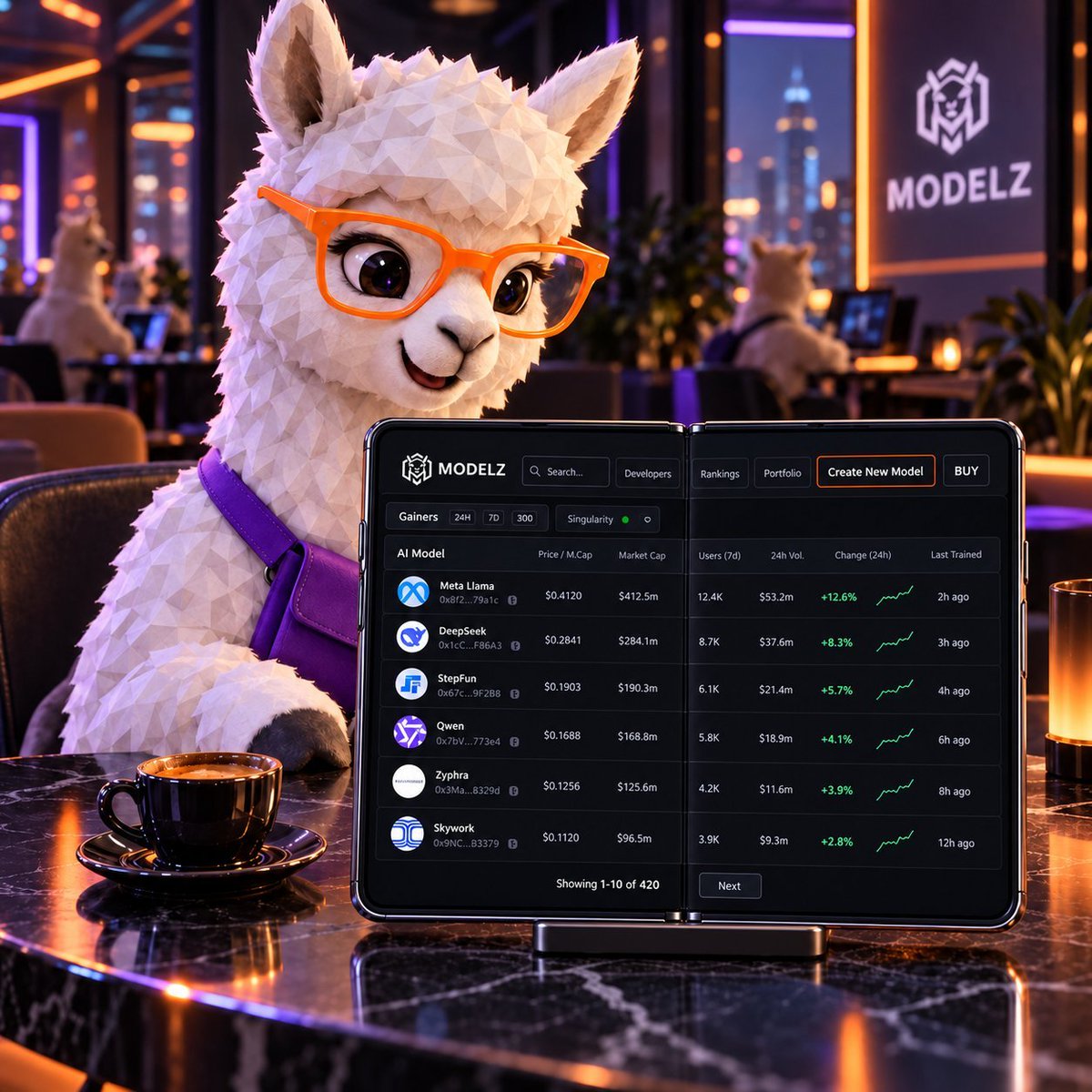
Through Modelz, builders can tokenize their open-source models and raise support from people interested in what they’re building.
The bigger idea is that if the model eventually gets real usage, that activity can feed into its own token economy.
I think that distinction matters.
A token shouldn’t be valuable simply because “AI” is attached to it.
There should be something underneath that people actually need.
For AI model tokens, the real test will eventually be simple:
Are developers actually using the model?
I like seeing more stablecoin options open up around ONyc. USDC was already useful, now USDG has its own route too. More choice depending on how you want to structure your position.
gRWA fam. ☕️
@AlpacaNetworkAI This is a meaningful step for tokenized markets. Bringing central bank money into settlement makes the whole setup feel a lot more practical.
Tokenized finance got a new settlement connection today.
The Eurosystem launched Pontes, allowing eligible institutions to settle wholesale tokenized-asset transactions in central bank money.
The cash side of the trade is getting an upgrade.
I’ve talked about tokenizing property, bonds and other real-world assets before.
But tokenizing an AI model? That’s a different conversation.
Think about it.
Someone builds an open-source AI model that developers eventually use across different apps. The model can become valuable, but funding and rewarding the people behind it isn’t always straightforward.
That’s what @AlpacaNetworkAI is experimenting with through Modelz.
An open-source AI model can be turned into its own token and funded through what they call an Initial Model Offering (IMO). If the model gains real usage, the bigger idea is for fees from that usage to flow back into its token economy.
So instead of only investing in the AI app people see, you could potentially get exposure to the model powering the app underneath.
Of course, tokenizing a model doesn’t automatically make it valuable. People still have to actually use it.
But I find the concept interesting.
We’ve spent years asking what assets can move onchain.
AI models might be one of the more unusual answers.
CLARITY didn't pass. That's a delay in Washington, not a reason your portfolio stays scattered across five apps.
No new market-structure law. No off-switch for crypto.
Just more headlines and the same old problem: BTC on an exchange, ETH in a wallet, stables somewhere else, and perps on another screen.
Agencies can still move under existing rules. Banks can still build custody. Liquidity doesn't wait for 60 votes.
After a vote like this, you don't need another take. You need one view of the whole book.
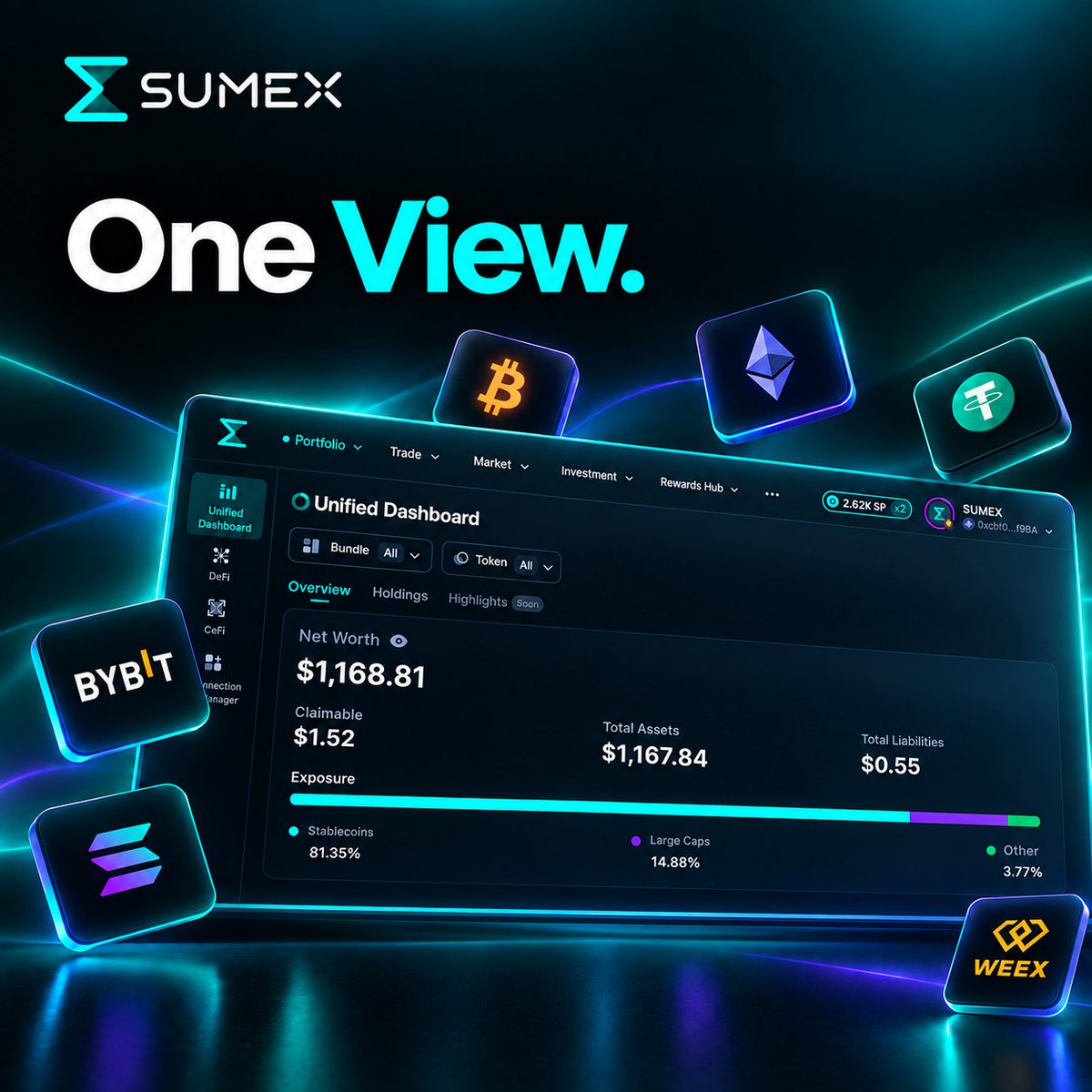
Connect CEX + wallets. See the stack. Trade or swap from there.
Regulation can wait. Fragmentation shouldn't.
Most of us connect our wallets to different platforms and move on. Months later, you probably cannot even remember half the permissions you have given.
That is why I like this approach from Sumex. Being able to see those old approvals and permissions in the same place you manage your portfolio makes checking them feel less like a separate task.
26.1% APY will definitely get attention, but I’m more impressed that the new PT-ONyc market is already at $11M. People aren’t just looking at these yields anymore; they’re actually putting capital to work.
I have realized managing crypto can get messy fast.
One CEX for trading, another wallet for DeFi, another app for tracking, then a few more tabs for analytics.
Sumex is trying to bring all of that into one place.
You can connect your existing CEX accounts and Web3 wallets, track your portfolio, trade, swap across chains, and access other tools from one dashboard.
And since it is non-custodial, your assets remain under your control.
The idea is simple: less jumping between apps, more control from one place.
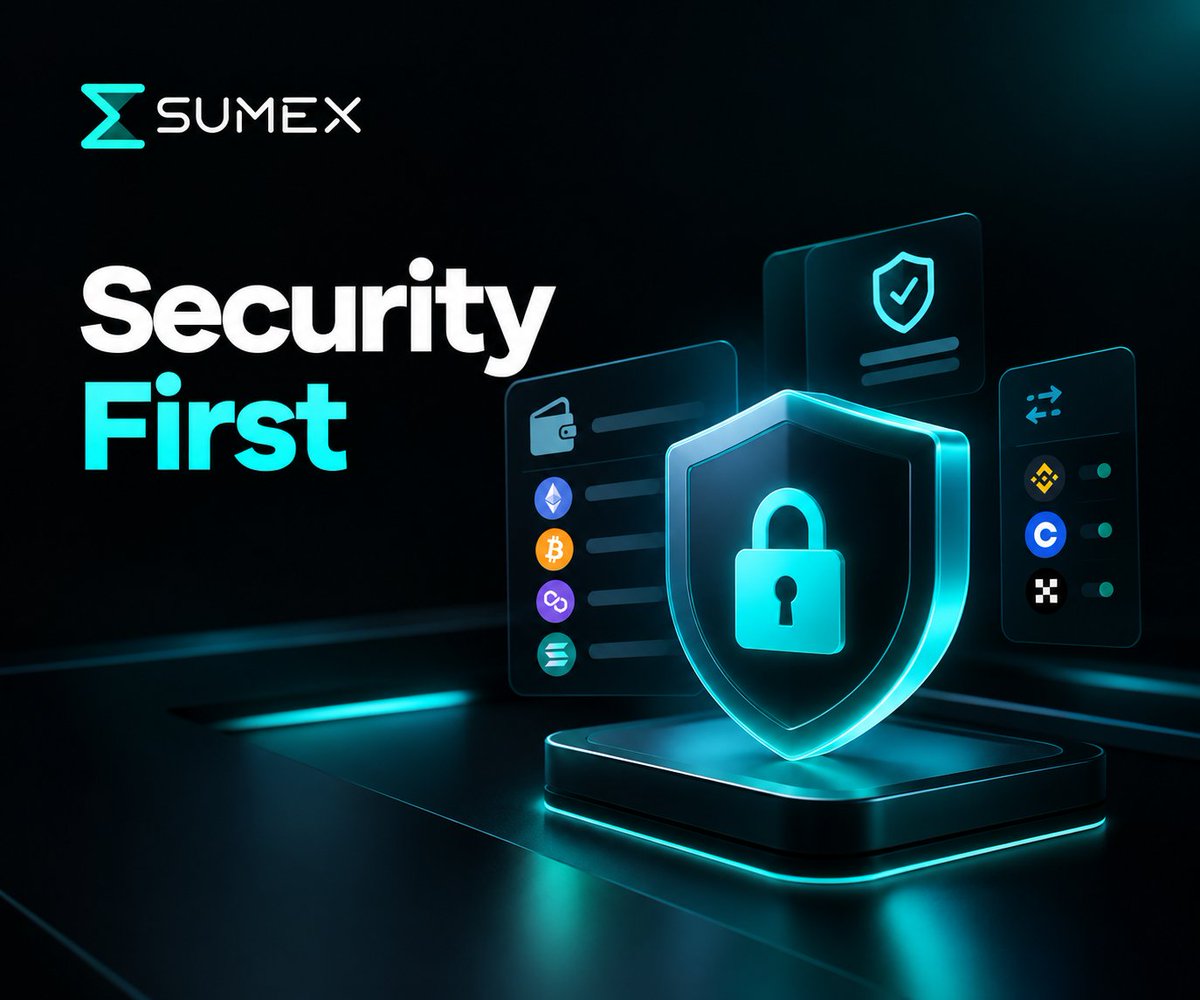
It's another week again, and also a good day to be security cautious. Part of being cautious is using platforms that have a security-first approach, and that is one of the roles Sumex plays.
Security advice usually stops at “don’t sign what you don’t understand.” That is true and still incomplete.
The hard part is seeing what you already authorized: old token approvals, lingering delegations, and exchange API keys with more access than the app needs. Sumex treats that as a daily dashboard problem, not a separate research project
What does that mean?
Sumex is and remains non-custodial. Connecting a wallet is an ownership check, not a handoff of keys or funds.
Connecting an exchange does not require withdrawal access. If a key is set too broadly, Connection Manager flags it instead of hiding the risk inside an API settings page.
That is the first Sumex move: separate custody from permission.
The third move is visibility after the click. Closing a site does not revoke on-chain permission. Those allowances sit on the token contract until someone checks them.
Sumex puts Approvals and Delegations next to Overview, Investments, and Transactions in the DeFi Dashboard, so forgotten spenders and EIP-7702-style delegations show up in the same place you manage positions.
The same idea applies across CeFi and DeFi. Unified Dashboard pulls wallet bundles and exchange bundles together, then surfaces more than balances: exposure, activity, and permissions that still look risky
The full picture is simple. Crypto risk is usually permission risk. Sumex comes in as the layer that makes those permissions visible, limited, and manageable without taking custody of the assets, among many things.
Have a good one!
The numbers are good, but 11.54% is not really the part I find most interesting. It is getting that yield from reinsurance while most of what happens in crypto has little to do with how that yield is generated. That is a different kind of exposure to have on-chain.