I'm a cardiologist. NPR reported this morning on something that could save more lives than any drug I've ever prescribed.
One blood test. One vial. Screening for 50 different cancers simultaneously.
It's called Galleri. And the FDA could approve it later this year.
Right now, we routinely screen for exactly five cancers in the United States — breast, colon, cervical, prostate, and lung. Each requires its own separate scan or exam. For the rest — pancreatic cancer, ovarian cancer, liver cancer, esophageal cancer, gastric cancer, and dozens more — we have no routine screening at all. We find them when symptoms appear. By then, most are Stage 3 or 4. By then, for many patients, it's too late.
Pancreatic cancer has a 12% five-year survival rate — because we almost always catch it late. Ovarian cancer: 50%. Liver cancer: 21%. These numbers aren't medical failures. They're detection failures. The treatments exist. We just find the disease after the window for those treatments has closed.
Galleri changes the math entirely.
Here's how it works. Every tumor — no matter where it is in your body — sheds tiny fragments of DNA into your bloodstream as cancer cells die and divide. These fragments carry specific methylation patterns — chemical signatures that are unique to cancer cells and different from the DNA your healthy cells release.
Galleri captures these fragments from a standard blood draw and reads their methylation patterns using next-generation sequencing and AI-driven analysis. The AI doesn't just detect whether cancer is present. It predicts where it's coming from — which organ, which tissue type — with over 90% accuracy in studies. One vial of blood tells your doctor: there's a cancer signal, and it's likely originating in your pancreas, or your lung, or your liver.
Your physician then orders targeted follow-up imaging to confirm or rule out the finding. Galleri isn't a diagnosis. It's a precision compass that tells your doctor exactly where to look.
The data is building fast.
GRAIL has now sold over 475,000 Galleri tests commercially under a special FDA designation. The NHS-Galleri trial — the largest randomized controlled trial of any multi-cancer detection test in history — enrolled over 142,000 people aged 50-77 in England. The primary endpoint — an overall reduction in late-stage cancers — was not met. But by the third year of annual screening, they found a 26% reduction in Stage IV cancers in key deadly types including pancreatic, liver, lung, and gastric. The test detected four times more cancers overall when added to standard screening — catching cancers that would otherwise have been found late or not at all.
The U.S. Pathfinder 2 study — 25,490 participants — showed similar positive signals and forms the basis of the FDA submission filed in January 2026.
Congress has already acted. The Nancy Gardner Sewell Medicare Multi-Cancer Early Detection Screening Coverage Act passed in February. If the FDA approves Galleri, Medicare will begin covering one test per year starting in 2028.
The current retail price is $950. Exact Sciences' competing test Cancerguard is $659. These prices will fall dramatically once FDA approval triggers insurance coverage and competition scales.
As a cardiologist, let me tell you why this matters far beyond oncology.
Cancer is now the number one killer of Americans over 50. Not heart disease. Cancer. And the patients I lose to cancer are often the same patients whose hearts I saved — patients who survived their cardiac event, optimized their metabolic health, and then received a late-stage cancer diagnosis that nobody screened for because no screening tool existed.
I've written on this platform about GLP-1 drugs reducing cancer metastasis by up to 50%. About personalized mRNA cancer vaccines cutting recurrence by 49%. About inflammation as the common root of heart disease and cancer. About AI detecting disease years before symptoms.
Galleri is the missing piece that connects all of it.
Detect the cancer early — with a blood test. Confirm it with AI-enhanced imaging. Treat it with personalized mRNA vaccines, targeted therapy, and GLP-1 drugs that may slow progression. Monitor response with liquid biopsy in real time.
That's not five separate breakthroughs. That's one integrated system of cancer prevention and treatment that didn't exist five years ago — and could be standard of care within five more.
The shift from reactive to proactive medicine — from "we found it too late" to "we caught it in time" — has been the central theme of everything I've written on this platform. Preventive cardiology. Advanced lipid testing. Inflammation detection. AI imaging. Gene editing.
Galleri applies the same principle to cancer. And it could save more lives than all of them combined.
One blood test. Fifty cancers. FDA decision expected this year.
Prevention is the new cure. And the science just took its biggest step yet.
https://t.co/2crrETWhRa
That mud nest on your porch wall is not a threat. It's not even occupied.
Mud daubers are solitary wasps, meaning they have no colony, no workers, nothing to defend. A female builds the nest alone, hunts spiders, paralyzes them with a single sting, stacks them into each mud cell as food for one larva, lays an egg on top, seals the cell, and leaves. She does not come back.
The nest is finished. Whatever is inside is a developing larva and a pile of paralyzed spiders, sealed in clay, doing nothing.
The spiders she's hunting are often black widows. Mud daubers are documented as one of the primary predators of black widows across the South and Southwest.
Mud daubers can technically sting if grabbed, but without a colony to defend there's essentially no trigger for aggression. Thousands of people walk past active mud dauber nests every day without incident because the wasp has no reason to engage.
The nest looks alarming. It isn't. Leave it through the season. By fall the adult is long gone, the larvae have pupated, and the structure is inert. Knock it down then if you want the wall back.
Or leave it. She might use the mud again next year, which means more black widows getting paralyzed and stored in your eaves, which is not the worst outcome.
Recently chatted with Matthew Gonzalez, the first American to hang his banner on Savile Row, about his career as a bespoke tailor, what American style means to him, and why people buy bespoke.
https://t.co/PveYZah5XO
Gillibrand's son graduated from undergrad on Sunday. Today it's reported that he's received $30 million in venture capital funding to launch a derivatives exchange. His mom sat on the Senate Agriculture committee—which has jurisdiction over derivates—until this past year
A growing body of research suggests popular weight-loss drugs like Ozempic and Wegovy may also help treat or prevent certain cancers. It’s the latest unexpected benefit to be associated with GLP-1s, which are now taken by one-in-eight American adults.
@WmBrangham has more.
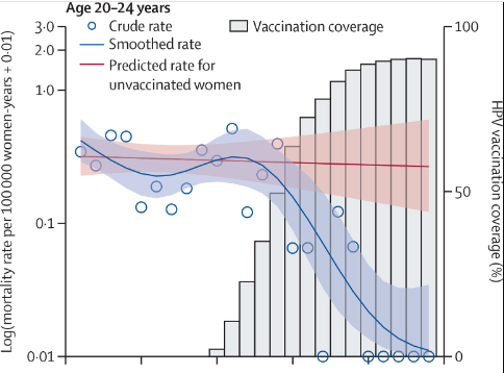
A new study shows HPV vaccination in England has led to the number of deaths from cervical cancer falling to zero in vaccinated women under 25.
Please encourage all eligible children to get vaccinated.
https://t.co/YuX2BCR6gz
I cannot believe this has all happened from one tweet but, by some miracle and some hard work over the past 24 hours, Hedgehog Ties will be available for purchase once again!
After quite a few emails and telephone calls to the wonderful staff of the British Hedgehog Preservation Society and of Ryder and Amies in Cambridge, I've organised a new production of a Navy Silk Hedgehog Tie, the first in over thirty years!
Ties will cost £45 each with £10 of that £45 going directly towards the British Hedgehog Preservation Society (I do not receive a single penny from the sale of these ties, £35 is purely the cost of production + materials per tie)
Pre-orders will be open for two weeks and, afterwards, the ties will go to production! They should take approx. 10 weeks to be completed.
To pre-order your tie, follow this link: https://t.co/TG1wqL2xNI
Super weird, and potentially wonderful.
We now have several natural experiments suggesting that the shingles vaccine significantly reduces dementia risk, or delays dementia risk, potentially by suppressing reactivation of the underlying virus, which can linger in nerve tissue and cause brain damage
In America, a warehouse store. A fully roasted chicken costs five dollars, the raw chicken beside it costs seven, and I stood between them like a man between two truths.
Golden. Hot. Seasoned. Spinning in glory under the lights, in a line of its brothers. Four dollars and ninety-nine cents.
I checked the raw birds. Seven dollars. Pale. Cold. You must do everything yourself.
This is not commerce. Commerce does not move backward. Somewhere in this building, mathematics lies defeated.
I asked the man at the counter. "How is the cooked bird cheaper than the raw bird?"
"Been five bucks forever. They keep it that way."
"But the store loses."
"Yep. On purpose."
On purpose. I held my receipt with both hands.
In my land, a lord who lowered the price of rice in a hard winter was remembered for generations. They built him a small shrine. This store does it every day, with chicken, and tells no one.
A woman behind me grew tired of my reverence. "It's just a chicken, sir."
It is not just a chicken. It is a wound the merchant takes on purpose, so that anyone, on any day, with five dollars, eats like a lord. The bird is the message. The price is the vow.
I will confess: I bought two. I did not need two. The second was not hunger. It was gratitude, and it was delicious.
Some prices are not prices. They are promises.
I return every week now. I take one bird. I bow toward the deli, briefly, so as not to alarm the staff. They have begun nodding back.
The vow holds. The bird turns. Five dollars.
Long may it spin.
Stateside, a gas station. I drank a frozen blue beverage too quickly, and was struck down by a punishment this entire nation knows, and accepts, and has named.
The drink is called a slush. Ice, sweetness, and a blue that does not occur in nature. The day was hot. I was thirsty. I drank like a soldier at a river.
The pain arrived in my skull like a war horn.
Behind the eyes. Above everything. Total. I gripped the roof of my car. I may have made a sound.
"Brain freeze," said the cashier through the door, with no urgency whatsoever.
It has a NAME. The affliction is so common it has a household name, like a cousin.
"Tongue on the roof of your mouth," called a man at the pumps. He did not look over. He prescribed the remedy mid-pump, casually, the way one mentions weather.
I pressed my tongue to the roof of my mouth. The war horn faded. The healer nodded at his pump, finished, and was gone in a Chevrolet.
In my land, punishment follows crime by way of courts and seasons. Here, the sentence is instant. Drink with greed, and the ice strikes the mind directly. No trial. No appeal. Perfectly fair.
And here is what moves me. EVERYONE has felt it. The cashier. The healer. Children. Elders. An entire nation united by the same small lightning, all taught the same cure, all passing it on to strangers at gas stations, free of charge.
You cannot fully distrust a country once you know it shares one pain.
The freeze does not punish thirst. It punishes haste.
I finished the slush slowly, like a scholar. Blue tongue. Clear mind.
Then at the door I forgot everything, drank deeply, and was struck down again.
"Tongue, hon," said the cashier, without looking up.
Discipline is a journey.
The Tartan Army are a credit to Scotland. Here they are in full voice singing ‘Loch Lomond’ in Boston Stadium last night for the World Cup match between Scotland and Haiti. Absolutely glorious.
The online trend of young men reading classic works of literature and posting about it continues.
@ChrisKindaReads was the first I saw do it, but it is spreading.
Don’t blackpill on the next generation.