Aqui estão todos os ataques do Hezbollah contra Israel entre os dias 17 e 18 de junho:
25 ataques distintos
63 foguetes
1 míssil
7 ataques com drones explosivos (UAVs)
2 ataques com dispositivos explosivos improvisados (IEDs)
1 tentativa de infiltração terrorista envolvendo 5 integrantes
Ao todo, foram registrados 72 disparos e incidentes de ataque ao longo de 48 horas.
Apesar do cessar-fogo e dos esforços diplomáticos em andamento, o Hezbollah continuou lançando foguetes, drones e realizando outros ataques contra Israel durante os últimos dois dias.
Via @Osint613
Enquanto o mundo inteiro passa pano para ditaduras, terrorismo, escravidão, massacres e perseguições reais, existe uma obsessão doentia por transformar Israel no grande vilão da humanidade.
Bill Maher expõe exatamente o que muitos têm medo de dizer: quando o único Estado judeu do planeta recebe um nível de ódio, demonização e obsessão que não é aplicado a nenhum outro país — isso não é “direitos humanos”. Isso é antissemitismo disfarçado de ativismo.
A verdade é simples:
Criticar governos é legítimo.
Defender o extermínio de Israel, normalizar ódio contra judeus e tratar sionistas como nazistas não é “progressismo”. É barbárie moral.
O silêncio seletivo diante de crimes infinitamente piores em países como Irã, China, Sudão, Coreia do Norte ou Congo revela tudo.
Sem judeus, sem notícia.
Sem Israel, sem obsessão.
Assista até o fim. Porque alguém precisava dizer isso em voz alta.
A Globo bate, grita, aponta o dedo… até a internet lembrar que Frederic Kachar, diretor da própria emissora, já apareceu agradecendo patrocínio do Banco Master e falando em amizade com lideranças do banco.
E a informação de que o banco teria colocado R$ 160 milhões em ações de patrocínio envolvendo programa do Luciano Huck?
Aí o assunto fica tímido, né? 😂
Where are the good people of the world? Are they selectively ignoring the facts or just too naive to recognize the truth due to a lack of critical thinking skills?
@BFMTV Macron tente désespérément de retrouver sa place dans un monde où la France a perdu de son influence à cause de lui.
-
Macron is desperately trying to find relevance in a world where France has lost prominence thanks to him.
⚠️❌👎🏻 É uma VERGONHA que organizações judaicas não tenham se mexido até agora, deixando a comunidade agir sozinha. E pior: políticos que ignoraram o problema por quase dois anos agora querem sentar na janelinha. AONDE VOCÊS ESTAVAM? Vergonha! —
💙🤍 Siga e compartilhe nosso IG!
@UNWatch@FranceskAlbs By defending terrorists and downplaying acts of violence against women, @FranceskAlbs shows she has little concern for global peace or the safety of innocent lives.
.@FranceskAlbs:
• “Divulging information on Hamas rape escalates tensions, endangers lives”
• “There are different views on what happened on Oct. 7...”
• “There were fabrications, like mass rape”
• “So let's assume rape occurred—so?”
▶️ The evidence: https://t.co/iMQ4tH4jDD
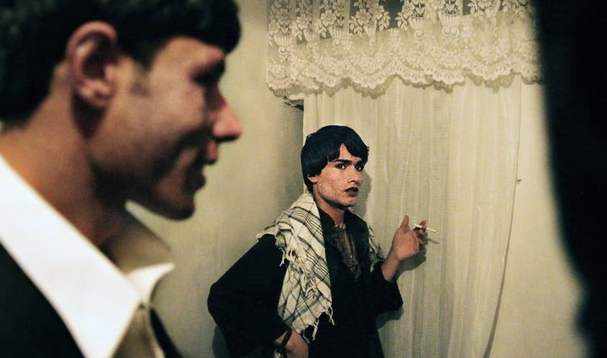
Bacha bazi thrived because no one could stop the men who practiced it.
In Afghanistan, some of the most harmful systems survived not because they were cultural traditions but because the men behind them operated without limits.
That includes bacha bazi, where powerful commanders, police chiefs and local strongmen took boys to serve as dancers and sexual captives.
During the Soviet invasion and later the civil wars, armed leaders gained unprecedented autonomy.
Many controlled militias, checkpoints, villages and entire shadow economies. In those environments, boys became a tool of loyalty, intimidation and status.
Some commanders even displayed them publicly to signal dominance.
The Taliban officially banned the practice in 1996, but paper laws meant little in districts ruled by independent warlords. In many areas, the men with the most guns dictated the moral order.
What kept bacha bazi alive was not culture. It was impunity, private power networks and the silence of communities too afraid to confront the men who controlled their lives.
The boys at the center of Afghanistan’s darkest stories often shared one thing - no protection at all.
Many victims of bacha bazi came from families shattered by poverty, displacement, or war. Some were orphans. Others came from refugee camps or remote villages where survival itself was uncertain. Their vulnerability made them targets.
Warlords, militia leaders, and influential officials selected boys precisely because they had no one to defend them. Reports from UN investigators after 2001 describe boys kept on military bases run by Afghan police chiefs and local commanders, hidden in plain sight.
Those who tried to escape often had nowhere else to go. Returning home meant facing the same poverty or the same men who controlled their districts. Local authorities were rarely allies - many were tied to the perpetrators through money, loyalty, or fear.
This part of the story matters: bacha bazi didn’t persist because communities supported it. It persisted because the boys most at risk were already invisible.
Understanding their vulnerability reveals a deeper truth about how systems of exploitation survive - not through culture, but through inequality and silence.
Behind Afghanistan’s history lies a hidden system built on exploiting young boys.
For generations, this system operated quietly within powerful circles, protected by hierarchy and silence. Its name is bacha bazi - a practice in which boys, often between 10 and 16, were taken or bought by influential men and forced to dance, entertain, and submit to abuse.
Its origins stretch back centuries. Mughal sources and later Afghan royal courts described elites keeping adolescent boys as symbols of wealth and status. It was never a “tradition” of the general population - it was a habit of those who held power.
As Afghanistan fractured into local fiefdoms in the 19th and early 20th centuries, this practice survived because the men who used it operated without consequences. Power decided everything. Morality had little space.
Understanding how deeply it became embedded in elite networks is key to understanding why it persisted into modern times - long after the world thought such systems belonged to the past.
Photo: BBC