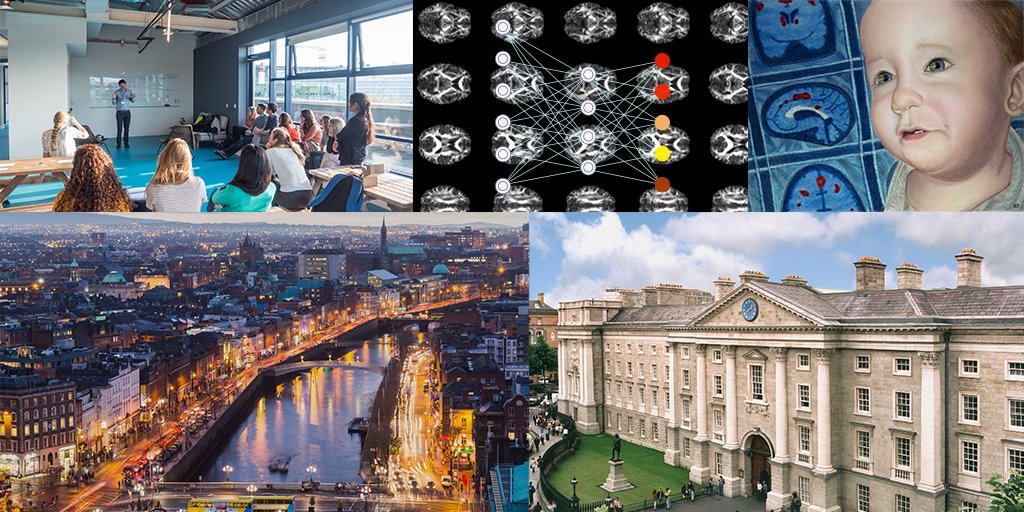
I aspire to use cognitive neuroscience to understand human thought and motivation, and to be humble, uncompromising, and constructive. Serious inquiry into human nature is not a luxury. No one should be excluded from it by their race, gender, or other accidents of birth.
Why do people take turns exerting effort to benefit one another? In new work with @rebecca_saxe at #CogSci2024@cogsci_soc, we show that, in a cognitive model, the value of communicating equality can specifically give rise to reciprocal generosity
📄https://t.co/z00ONI3HwX
1/ Excited to share a new preprint with @anjie_cao (co-first), @rebecca_saxe and @mcxfrank: "A stimulus-computable rational model of habituation in infants and adults" https://t.co/03IK1OGt08
We are happy to share our new commentary on why using language inclusively for transgender people is perfectly appropriate biologically, socially, and scientifically.
Here is a 🧵 on this new commentary by @AndyPerfors, @celestekidd, and myself.
https://t.co/8ZpB4vUSVo
Why do we remember some songs and forget others? Come to the @MITMuseum on Tues Sept 26 from 3:30-4:45 to find out with MIT grad student @bj_mdn. Bryan studies how and why we remember certain sounds in @JoshHMcDermott's lab @mcgovernmit. @CambSciFest
https://t.co/RQtvQVEI9P
Excited to announce a new tenure-track faculty search, joint with Psychology and the Kempner Institute for Natural and Artificial Intelligence, at Harvard University. Come join and shape our growing interdisciplinary community! #NeuroAI#CognitiveAI https://t.co/h2UG2lquSp
We are delighted to announce the newest season of "Mi Ultima Neurona," a Spanish-language neuroscience podcast in which @KanwisherLab postbac, Jessica Chomik-Morales, brings conversations with neuroscientists to Spanish speakers around the world. https://t.co/uGpWbDpixb
I’m very excited for this fabulous meeting at @MIT focused on open science in neuroscience Oct 10-12:
https://t.co/uriDdq4nlT
Very honored to give the keynote on how we used *only* open data to build new algorithms and insights (@cebraAI), and give a glimpse into the future 🫶
Join us!! PhD and postdoc positions in infant neuroimaging.
How does the human mind develop? The Foundations of Cognition (FOUNDCOG) project has acquired the largest cohort of awake infant fMRI to date, with 134 infants at 2 months old.
Very happy to see our manuscript on neural correlates of theory of mind reasoning in blind children out in Dev Cog Neurosci (with @mbedny1 and @rebecca_saxe).
https://t.co/KX3ldMf893
(1/n)
Excited to share an open dataset of 321 3-12yo children who completed our ToM booklet task, as well as all task materials + guides for administration & coding.
Preprint: https://t.co/WjXztO5GIp
OSF: https://t.co/zDhs20p1kx
W/ @korysot, @hyogweon, @rebecca_saxe
We are sharing an open dataset of >300 children, 3–12-years-old, including 64 (neurotypical) children assessed longitudinally and 68 autistic children, each answering >40 ToM questions ranging in difficulty.
10 years of @hil_richardson's and Saxelab's data! Please re-use.
Thrilled to share our new pre-print featuring an open dataset of children responses to a #TheoryofMind task!🧐 Ever thought about how kids figure out what you're thinking? Check out our open dataset here https://t.co/Ojb8zgtn1L and our preprint https://t.co/mh3UoxS1uh