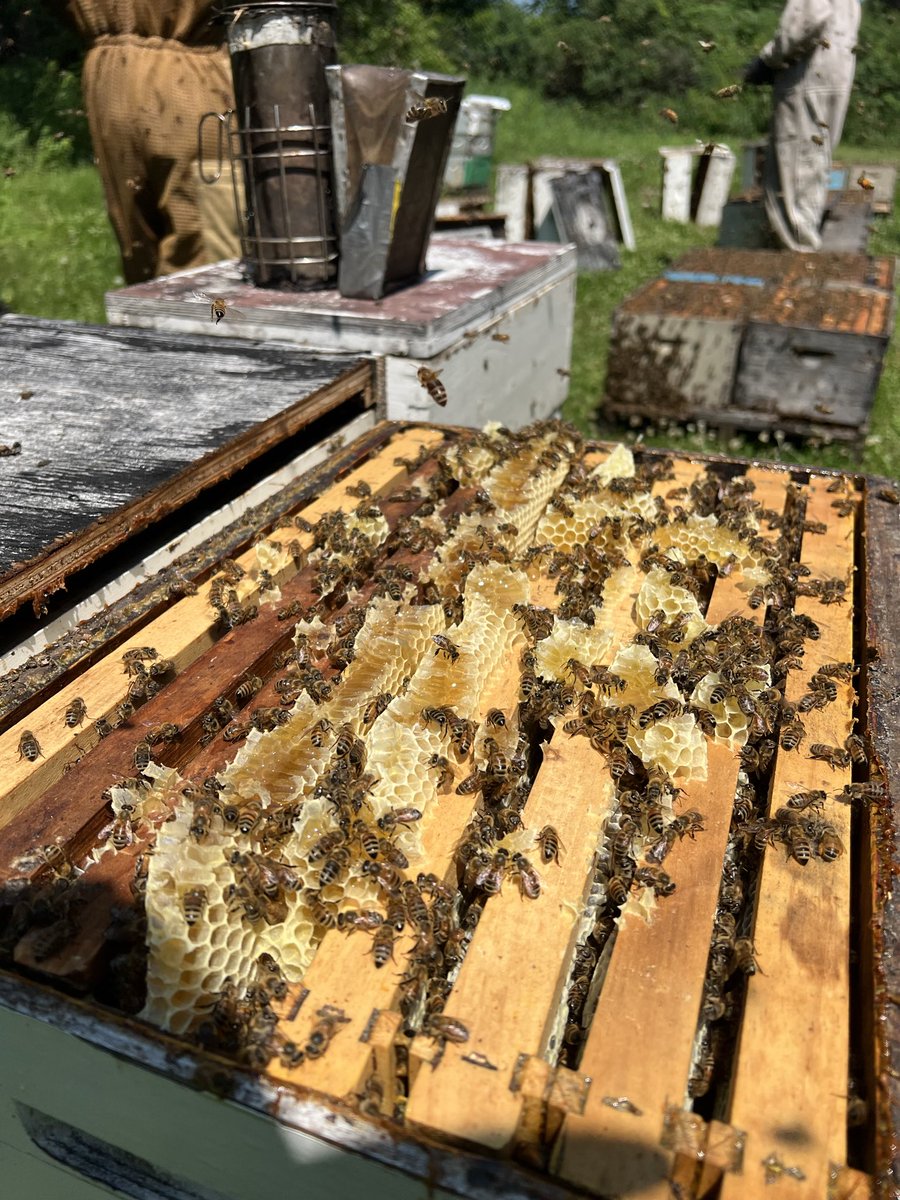
Bees lives less than 40 days, visit at least 1000 flowers and produces less than a teaspoon of honey. For us it is only a teaspoon of honey, but for the bee it is a lifetime of work.
Thank You Bees!
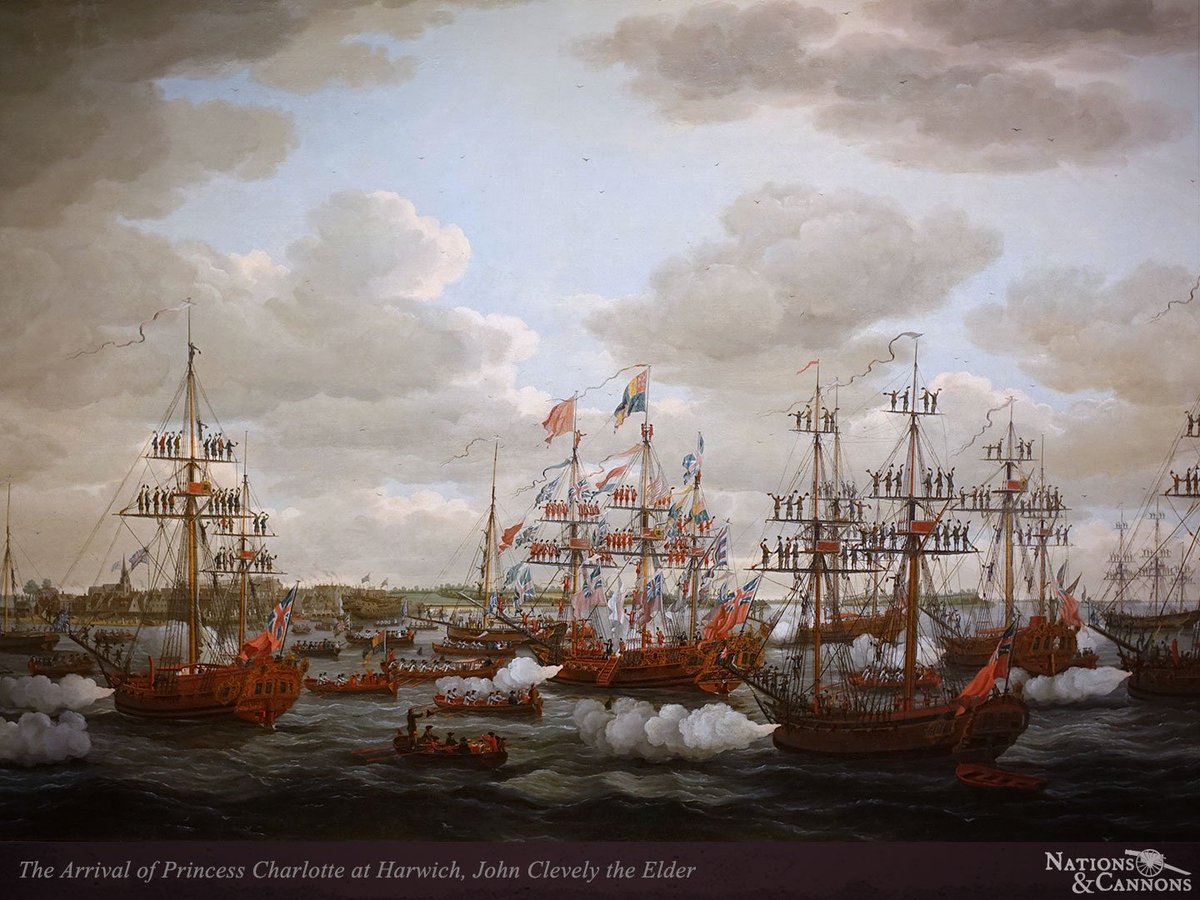
250 years ago today, on June 29, 1776, New Yorkers looked out at the water and saw a nightmare on the horizon. The British fleet had arrived, and so many ships filled the bay that witnesses said the masts looked like "a forest of pine trees" growing out of the sea. The timing could not have been more brutal.
This was the empire's answer to the rebellion, and it was overwhelming. The first wave of around 45 warships and transports dropped anchor off Sandy Hook and Staten Island carrying General William Howe and roughly 10,000 troops. Within days it kept growing. Then his brother Admiral Richard Howe arrived with more. It would eventually swell into one of the largest seaborne invasion forces of the entire 18th century, hundreds of ships and tens of thousands of professional soldiers and German mercenaries, aimed at one city.
Now sit with the timing. While that forest of masts was filling the harbor, delegates down in Philadelphia were in the final days of debating whether to declare independence. They voted for it on July 2 and signed off on the wording on July 4. So at the exact moment America was being born on paper, the most powerful military on earth was already anchored off its coast, getting ready to strangle it in the cradle.
The people of New York understood exactly what they were seeing. Alarm bells rang, panic spread through the streets, and soldiers sprinted to their posts to stare at a force they had almost no hope of matching. Washington's army was outnumbered, outgunned, and about to get badly beaten in the battles for New York that followed.
That's the part that gets lost in the fireworks every Fourth of July. Independence wasn't declared from a position of strength. It was declared with an enemy armada already sitting on the doorstep, knowing full well what was coming. They signed their names anyway.
This guy wore a black silk glove on one hand for almost thirty years, and the reason why is wild. Meet Richard Henry Lee, the man who actually proposed American independence.
Quick correction to what most people think. Thomas Jefferson wrote the Declaration. But he didn't propose breaking from Britain. Richard Henry Lee did.
On June 7, 1776, Lee stood up in the Continental Congress and laid down the words that started everything: "Resolved, that these united colonies are, and of right ought to be, free and independent states." That motion, the Lee Resolution, is the thing that forced the vote. Jefferson was then assigned to write up the document explaining why. So the order people skip is this. Lee proposes the divorce. Jefferson writes the letter. Without Lee's resolution, there's no Declaration to sign.
Now the glove. Back in 1768, years before any of this, Lee was out hunting on his own land and his rifle exploded in his hands. The blast tore four fingers off his left hand. For the rest of his life he covered the damage with a black silk glove. And here's the part I love. He turned it into a weapon. When he gave speeches, he'd gesture with that gloved, ruined hand, and people couldn't look away from it.
Because make no mistake, this man could talk. People who heard him speak compared him to Cicero, the legendary Roman orator. He was the voice in the room. His own brother Francis Lightfoot Lee, who also signed the Declaration, was the quiet one. Richard was thunder.
He grew up at Stratford Hall in Virginia, the same house where Robert E. Lee would later be born into the same famous family. He helped lead the colony toward revolution, served in Congress, later became president of Congress under the Articles of Confederation, and finished his career as one of Virginia's first United States senators.
A man with half a hand, who stood up and said out loud the dangerous thing nobody else would put in a motion, and changed the course of history with one sentence.
Richard Henry Lee. The man who moved that America should be free.
Founding Father John Jay believed God blessed America because everyone here Christian
John Adams noted that our Constitution is fit only for a moral and religious people, and had been designed that way
America was built as and Intended to be a Christian nation
Molly Pitcher is one of the most celebrated heroines of the American Revolutionary War. Although her actual name was Mary Ludwig Hays McCauley, she became known by the nickname "Molly Pitcher" for her remarkable bravery on the battlefield.
Born around 1754 to a German immigrant family in New Jersey, she grew up in modest circumstances and later lived in Carlisle, Pennsylvania. Her story has endured for generations as a powerful example of how ordinary women contributed to the fight for American independence.
Molly's path to fame began when she married John Hays, a young barber who enlisted in the Continental Army's artillery unit in 1777. Instead of remaining at home, Molly chose to follow her husband as a camp follower. In this role, she performed essential support work such as cooking, washing clothes, and caring for the soldiers.
By staying close to the army, she experienced the hardships of war firsthand and was prepared to take on greater responsibilities when the moment demanded it.
The most famous episode of Molly Pitcher's life occurred during the Battle of Monmouth on June 28, 1778. Fighting took place under intense summer heat, and thirsty soldiers desperately needed water. Molly repeatedly carried pitchers of water from a nearby spring to the front lines, earning her well-known nickname in the process. When her husband was wounded or overcome by the heat while operating a cannon, Molly stepped forward without hesitation. She took his place at the gun, loading and firing it throughout the long battle. Her courage under fire impressed General George Washington, who reportedly commended her actions after the fighting ended.
After the war, Molly returned to Carlisle, Pennsylvania, where she lived the rest of her life. Her first husband died in 1789, and she later married John McCauley. In recognition of her wartime service, the Pennsylvania legislature granted her a small annual pension in 1822. Molly Pitcher died in 1832 and is buried in Carlisle. Today, monuments, historical markers, and school lessons keep her memory alive. She stands as a lasting symbol of the strength, determination, and patriotism shown by women who supported the American Revolution.
250 years ago today, on June 28, 1776, a half-finished fort made of palm tree logs and sand did something it had no business doing: it beat the most powerful navy on earth and saved the American South. We just hit the 250th anniversary of one of the most improbable victories of the entire Revolution.
The setup looked hopeless. A massive British fleet under Admiral Sir Peter Parker sailed into Charleston harbor to crush the rebellion in the south before it could grow. Guarding the city was an unfinished little fort on Sullivan's Island, defended by Colonel William Moultrie and a few hundred men. The walls weren't even done. One British officer reportedly figured they'd flatten it in an hour.
Then the palmetto logs did the impossible. The fort was built from soft, spongy palmetto wood packed with sand, and instead of shattering when the British cannonballs hit, the logs just absorbed them. Iron sank into the mush and stuck. The fleet hammered that fort for hours and could not break it, while the American gunners coolly fired back and tore the British warships apart. Several ships ran aground. Admiral Parker himself got hit so hard that the blast literally ripped the seat out of his pants.
And then the moment that became legend. When a cannon blast knocked the fort's flag down, Sergeant William Jasper climbed out over the wall, in the middle of the bombardment, grabbed the fallen colors, and raised them back up so everyone could see the fort still stood.
By nightfall the British fleet limped away. They wouldn't seriously come back to the south for nearly three more years. South Carolina loved that fort so much it put the palmetto tree on its state flag, where it still flies today.
A quarter of a millennium later, the lesson still lands. Sometimes the thing everyone writes off as too soft and too unfinished to matter is the exact thing that refuses to break.
Here I present the extensive evidence behind DMSO's ability to treat numerous "incurable" neurological diseases.
This article draws upon over 2000 studies and 200 reports from readers who were healed by DMSO along with practical guidance on how to use it
https://t.co/6vXbJIWpaY
In the state of Wyoming, USA, lies a real hydrological oddity. It's a small stream (creek) that is thought to be one of a just a few examples in the world. It is placed so precariously and perfectly that it's hard to believe it is able to exist.
1/n
“So do not fear, for I am with you; do not be dismayed, for I am your God. I will strengthen you and help you; I will uphold you with my righteous right hand.”
Isaiah 41:10 NIV