𝟵𝟱% 𝗼𝗳 𝗲𝗻𝘁𝗲𝗿𝗽𝗿𝗶𝘀𝗲 𝗔𝗜 𝗽𝗶𝗹𝗼𝘁𝘀 𝗽𝗿𝗼𝗱𝘂𝗰𝗲 𝗻𝗼 𝗺𝗲𝗮𝘀𝘂𝗿𝗮𝗯𝗹𝗲 𝗯𝘂𝘀𝗶𝗻𝗲𝘀𝘀 𝗶𝗺𝗽𝗮𝗰𝘁.
⚠️ Not a technology problem. An organisation problem.
That's the MIT NANDA finding from August 2025 — and it's the founding premise of everything I've been building for the past three years.
Today I'm publishing Article-1 of the #ØØT Research Series: the complete overview of the Organisation of Tomorrow (ØØT) framework.
#ØØT is an open-source GitHub framework for partner-run, AI-augmented organisations.
👉 Not a consulting methodology.
👉 Not a SaaS platform.
👉 Not a framework you need a vendor to implement.
A complete operational stack — free to adopt, built on open standards, zero vendor lock-in.
The article "𝗕𝘂𝗶𝗹𝗱𝗶𝗻𝗴 𝘁𝗵𝗲 𝗢𝗿𝗴𝗮𝗻𝗶𝘇𝗮𝘁𝗶𝗼𝗻 𝗼𝗳 𝗧𝗼𝗺𝗼𝗿𝗿𝗼𝘄" covers everything a founder needs to understand before building or transforming:
→ The 5 theses behind #ØØT — grounded in MIT, McKinsey, Microsoft, HBS, and METR research
→ The Klarna Test — a mandatory blocking gate that prevents the failure mode Klarna made famous
→ Three generations: what's operational today, what ships in 6–12 months, and what's research-stage
→ Cloud track vs. privacy track — full operational parity, full data sovereignty, your choice
→ The Collecting Brain — why your firm's knowledge graph is its most valuable compounding asset
→ SKILL.md files — how to make AI methodology portable across every tool, forever
→ Three install paths — including a 60–90 min agent-assisted option for non-technical founders
→ Why this works beyond tech: any industry, any founder
This is my contribution from 30 years of building companies at the frontier of technology.
#ØØT is the first open-source organisational framework to address all four structural gaps simultaneously:
resistance management · output-based compensation · agentic knowledge infrastructure · data sovereignty
No comparable framework occupies all four corners.
If you're building from scratch or upgrading what you have — this is where to start.
🔗 All article links (GitHub · Medium · Substack) are in the comments below 👇
#OrganisationOfTomorrow #OpenSource #AI #FutureOfWork #AgenticAI #Entrepreneurship #AIStrategy #KnowledgeManagement #DigitalTransformation
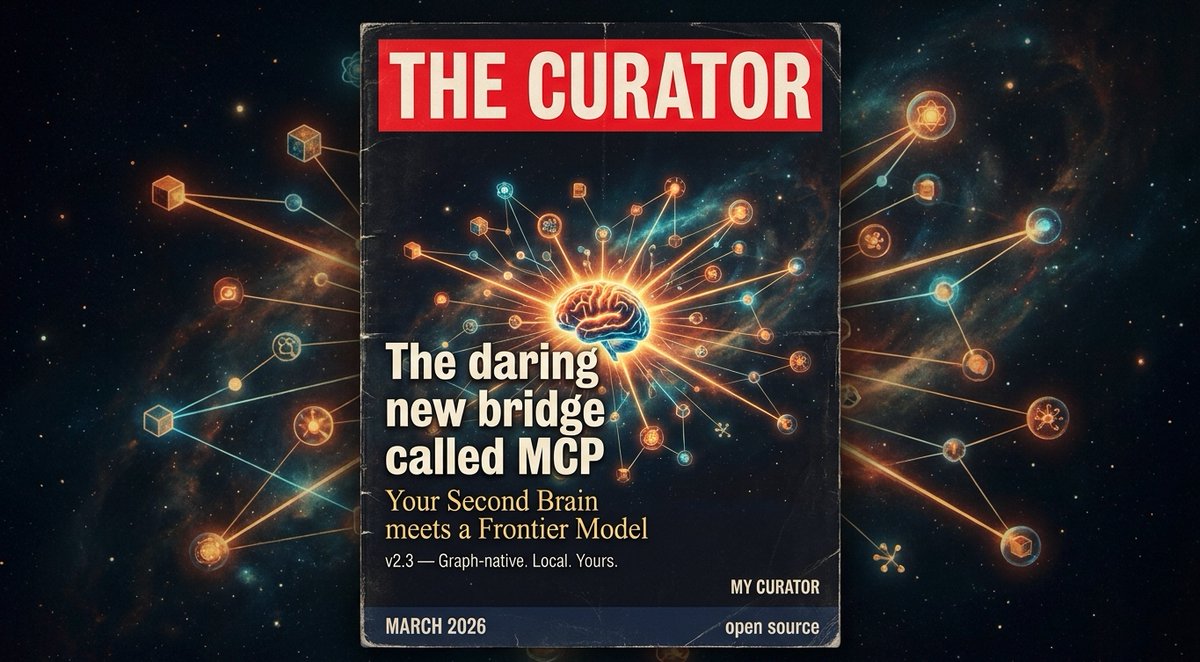
𝗕𝘂𝗶𝗹𝗱𝗶𝗻𝗴 𝗮 𝘀𝗲𝗰𝗼𝗻𝗱 𝗯𝗿𝗮𝗶𝗻 𝗶𝘀 𝗿𝗲𝘄𝗮𝗿𝗱𝗶𝗻𝗴. 𝗤𝘂𝗲𝗿𝘆𝗶𝗻𝗴 𝗶𝘁 𝘄𝗶𝘁𝗵 𝗮 𝗳𝗿𝗼𝗻𝘁𝗶𝗲𝗿 𝗺𝗼𝗱𝗲𝗹 𝗶𝘀 𝘁𝗵𝗲 𝗺𝗼𝗺𝗲𝗻𝘁 𝗶𝘁 𝗯𝗲𝗰𝗼𝗺𝗲𝘀 𝗶𝗿𝗿𝗲𝗽𝗹𝗮𝗰𝗲𝗮𝗯𝗹𝗲.
Most personal knowledge management tools follow the same loop: ingest → search → retrieve. That's useful. But it's not thinking.
The second brain I've been building with #TheCurator works differently. Every source I ingest doesn't just add files — it builds a persistent, graph-shaped knowledge structure. Entities. Concepts. Summaries. Thousands of nodes, dozens of domains, years of intellectual work — all interconnected.
The problem? The graph is something you look at in Obsidian. The synapses — the actual connections between all those nodes — are mostly invisible to you while you're inside it.
That's exactly what #MyCuratorMCP changes.
From v2.3 onwards, #TheCurator ships a local, read-only MCP server that exposes your entire knowledge graph to any Model Context Protocol-compatible client — @claudeai Desktop with Opus or Sonnet, @augmentcode, VS Code with a coding agent, @lmstudio with a local model.
This is not "another way to read your files." It's a graph-native access path. Ten dedicated tools let a frontier model traverse topology, follow multi-hop connections, pull bidirectional backlinks, and search across every domain simultaneously — the way an analyst queries a database, not the way a search engine retrieves documents.
In practice, it looks like this:
→ "What are the most important ideas in my AI domain that I've never explicitly connected to my business strategy domain?"
→ "Pull every concept tagged `crisis-response` across all my domains and build a citation skeleton for my white paper."
→ "Identify recurring patterns in my last six months of writing that I haven't named yet — and cite the specific sources."
That is a frontier model doing deep research over your own intellectual history. Full citations. No hallucinations beyond your wiki. No data ever leaving your machine.
Most "AI for knowledge" tools are RAG wrappers — they re-derive answers from raw files at query time and forget everything afterwards. Nothing compounds. Nothing traverses.
#TheCurator inverts that. Ingest builds the structure. MCP exposes it. The model reasons against it.
The difference between "I have a folder of notes" and *"I have a queryable, compounding extension of my own thinking that any frontier model can reason against on demand."*
#MyCuratorMCP setup takes under 2 minutes from the Settings tab.
👉 https://t.co/D2zszXm8oC
What would you ask a frontier model if it had access to everything you've ever learned?
`#AI #PersonalKnowledge #MCP #SecondBrain #TheCurator #KnowledgeManagement #FrontierAI #OpenSource`
The oldest rule of human progress is ruthless and simple:
If it wasn't written down — it didn't happen.
Caesar. Aristotle. Da Vinci. Einstein.
We know these people not just because of what they did, but because of what was recorded. Entire civilisations vanished — brilliant cultures, remarkable individuals, decades of accumulated wisdom — not because they lacked knowledge, but because that knowledge was never structured and preserved.
Now ask yourself this:
You have been learning for decades. Building expertise. Making expensive mistakes. Synthesising ideas across disciplines in ways that are genuinely yours.
When you are gone — what survives?
For most people, the honest answer is: almost nothing structured.
This is what drove me to build #TheCurator.
The concept starts with an insight from @karpathy — one of the clearest minds in AI. Instead of using AI to search your documents every time you have a question (the way most tools work), what if AI continuously built and maintained a persistent, interlinked wiki from everything you know?
Not retrieval. Compilation.
Knowledge that doesn't reset. Knowledge that compounds.
Every article you ingest doesn't just get added — it updates every related page that already exists. Concepts grow richer. Connections deepen. The synthesis reflects everything you have ever read, thought, and recorded.
This is how human expertise actually works inside the brain.
Now it can be externalised.
#TheCurator is the app I built to make this accessible to anyone.
Drop in a PDF, an article, a research paper. The AI decomposes it into interconnected nodes — Entities (people, tools, organisations), Concepts (ideas, frameworks), and Summaries (source narratives). Everything cross-linked. Everything stored as simple markdown files on your computer.
You visualise it in Obsidian — a stunning graph where you literally see the shape of your thinking.
You explore it in depth through the #MyCurator MCP — connecting frontier models like Claude Opus directly to your second brain for real research and synthesis.
And with GitHub sync, you can share it. With your team. With your students. With the people who come after you.
The great figures of history were remembered because their knowledge was recorded, structured, and made accessible to others.
The medium was stone, papyrus, paper, printing press.
Today the medium is a folder of markdown files.
Simple. Lightweight. Open. Durable.
Your expertise doesn't have to die with you.
Start building: https://t.co/D2zszXm8oC
Full article in comments 👇
#SecondBrain #KnowledgeManagement #AI #Thecurator #PersonalKnowledge #Leadership #LifelongLearning #Obsidian
Most people are having conversations with AI when they should be engineering experiences with it.
After years building, I've discovered the fundamental difference between effective and frustrated AI users: it's not about what you ask, it's about everything else the AI sees.
This is context engineering, and it's transforming how we collaborate with artificial intelligence.
Context Engineering vs Prompt Engineering:
- Prompt = "What you say" (single instruction)
- Context = "Everything else the model sees" (examples, memory, tools, state, control flow)
Think of it like preparing a workspace for a brilliant colleague. You wouldn't just give them a task, you'd provide tools, background info, examples, and clear success criteria.
The Four Strategic Elements:
- Instruction Architecture: Precisely structured directives
- Contextual Scaffolding: Background knowledge that guides responses
- Input Orchestration: Strategic presentation of information
Real Impact in My Work: I've built "armies of AI coding agents" using sophisticated context frameworks. This transformed my development process. I can now explore concepts and validate approaches before involving human expertise.
Where I once had to carefully ration developer requests, I can now rapidly test ideas and iterate on solutions. My team focuses on complex, creative work that truly requires human insight.
The Democratization: English has literally become the new programming language. Domain experts can now directly interface with sophisticated AI systems without technical intermediaries.
Advanced Concepts Emerging:
- Neural field orchestration (coordinating multiple info sources)
- Symbolic residue tracking (maintaining interaction awareness)
- Recursive context patterns (self-improving systems)
- Resonance optimization (harmonic context tuning)
The Competitive Reality: Organizations mastering context engineering become active orchestrators of AI toward strategic objectives, rather than passive consumers of AI capabilities.
Modern LLMs operate at ~80% accuracy under optimal conditions. Context engineering pushes that higher by providing precise informational frameworks.
Key Insight: The future belongs to those who can engineer context with precision and guide AI toward outcomes that serve human flourishing.
My latest "From Lab to Life" article breaks down proven patterns and strategic frameworks developed through extensive experimentation.
These aren't theoretical concepts, they're practical methodologies delivering measurable results.
The fundamental principle: context is king.
The more thoughtfully we engineer the informational environment around AI interactions, the more precise and transformative the results become.
Read my latest article: https://t.co/IlbyET6Dgl
#ContextEngineering #AI #FromLabToLife #TechStrategy
New Article from the "From Lab to Life" collection: Are We Becoming Obsolete, or Finally Free?
Let me share some practical wisdom: "English has become the new programming language. Let me explain what this means for YOU.
'Organizations and individuals who begin experimenting with AI now will develop the skills and processes needed to thrive as the technology evolves.'
You don't need a computer science degree to use AI effectively. You can instruct these systems the same way you'd explain a task to a colleague or guide an employee.
In my business, I built what I call 'an army of AI coding agents.' This transformed everything. Where I once had to carefully ration requests to my developers, I can now rapidly test ideas and validate approaches before involving human expertise.
However, the key insight from my new article, "Are We Becoming Obsolete, or Finally Free?", is that this isn't about replacing people - it's about amplifying human potential.
My team now focuses on complex, creative work that truly requires human insight. The routine stuff? AI handles that.
Start small. Use AI to help with emails, summarize documents, organize information. Build your confidence gradually. The democratization of AI means sophisticated technology now responds to clear instructions in plain language.
'The key to AI is approaching it with both enthusiasm and wisdom, embracing its capabilities while maintaining healthy scepticism about its limitations.'
This is exactly why I created the 'From Lab to Life' series - to make these powerful technologies accessible to everyone, not just tech experts.
Ready to start your AI journey? Read the full article available free on: https://t.co/KwXcudUcUY
#AI #FromLabToLife #PracticalAI #TechForEveryone #InnovationLe
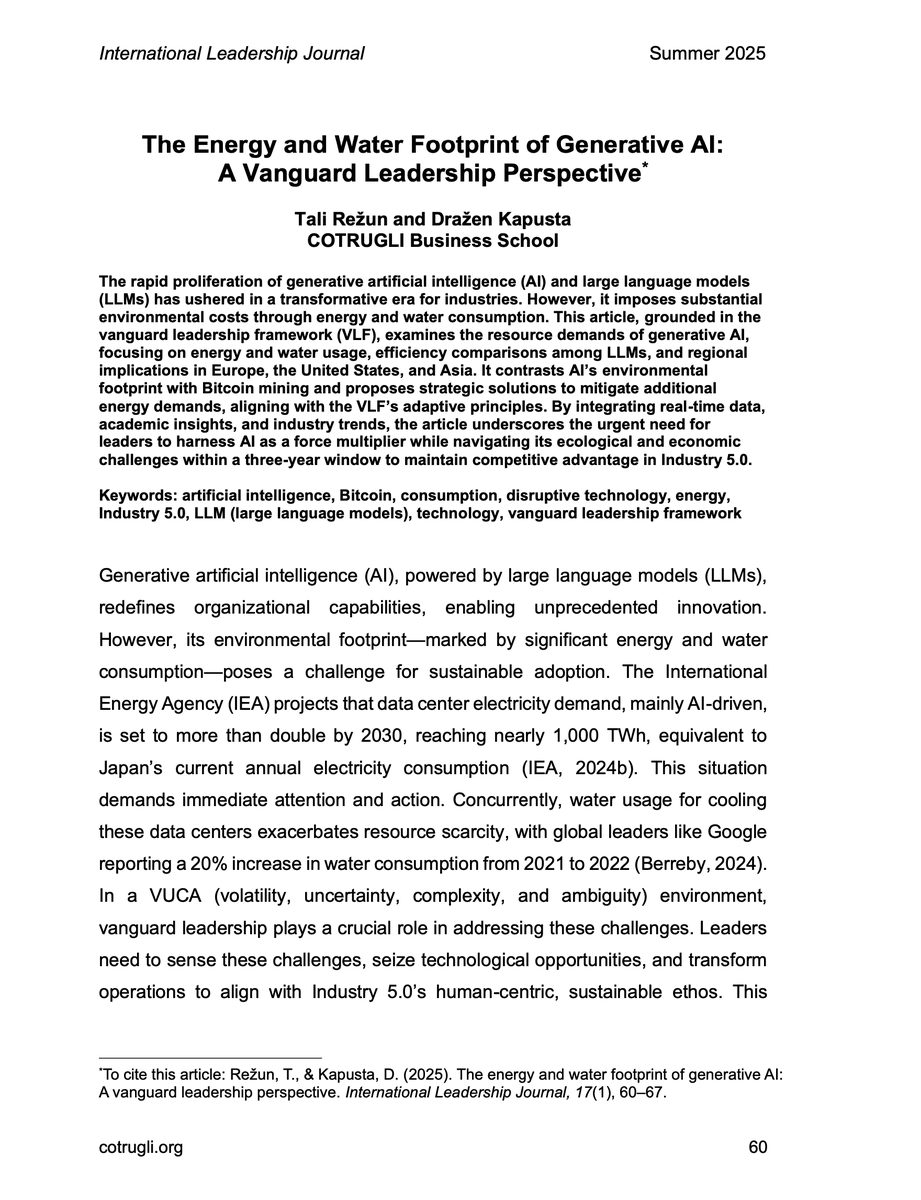
The Billions of Gallons #AI Drinks Every Day
New research just dropped on @ResearchGate revealing AI's hidden water crisis that nobody's talking about. While everyone debates electricity, @DrazenKapusta and I uncover #water consumption in AI.
Full research: https://t.co/FFyuDeSmlh
#AI #Sustainability #WaterCrisis #TechResponsibility #Leadership #DataCenters
My latest paper, Exploring Early Indicators of AGI in Coding Agents: A Case Study on MCP-Powered Systems, is now published on ResearchGate. Conducted under the @COTRUGLI Co-lab initiative, this study investigates whether Model Context Protocols (MCPs) can enhance LLMs to exhibit early AGI-like behaviors in coding tasks. Using a Streamlit-based RAG SaaS application, we achieved 90% completion in just 9 days with Grok 3 Mini and MCPs. Dive into the findings and join the conversation on advancing AI-driven software development! 📄💻
🔗 Read the full paper: https://t.co/AvGGel2eL6
#AI #AGI #CodingAgents #MachineLearning #Research
🚀 Thrilled to share my latest article, "AI as a Force Multiplier: Leaders for Industry 5.0," now on @ResearchGate! 🌟
My take on how Vanguard Leadership leverages AI & Web3 interoperability to transform businesses in a VUCA world.
📖 Read it here: https://t.co/uPnAs4q6sr #AI #Leadership #Industry50 #Web3
🚨 SCAM ALERT: Beware of Fake VeChain Partnership Calls! 🚨
Yesterday, I experienced an alarming scam attempt disguised as a @vechainofficial partnership call. Here’s what happened so you can avoid falling for something similar.
🔗 How it started:
One of my colleagues received a Zoom call invite from two Telegram handles:
👉 https://t.co/KOjr2yycDb
👉 https://t.co/vVfJvnd3KK
The call was structured and professional—supposedly led by VeChain’s CEO, @sunshinelu24 (Sunny Lu). His introduction sounded credible, explaining why they were reaching out to promising projects. This kind of flattery is something every founder loves to hear, but don’t let your guard down!
🎭 The Red Flags:
1️⃣ Deepfake AI at Play:
The “Sunny Lu” video was convincing enough. Although slightly generic in hindsight, it’s hard to tell during a live Zoom call. This wasn’t just a pre-recorded video—it responded in real-time!
2️⃣ Odd Staking Proposal:
After “Sunny” set the stage, “James” (camera off, of course) explained how they wanted us to stake our tokens alongside theirs so that “the community could stake on VeChain.” 🚩 What?? That’s when it clicked: this was another token grab, dressed up in a new package.
💡 Why This is Dangerous:
What makes this scam stand out is the clever use of AI and real-time deepfakes. The tech was so good it added a layer of trustworthiness, making the scam appear more authentic than your typical phishing attempt.
Thankfully, we don’t have a token, so the scammers couldn’t steal anything—but this could easily harm projects with tokens.
⚠️ Lessons for Founders & Teams:
Always double-check identities—don’t assume a Zoom call or email is real.
Be wary of proposals that sound too good to be true.
If someone approaches you claiming to represent a well-known brand, cross-verify through official channels.
🚨 Stay vigilant, and spread the word! If it quacks like a duck, it might be AI pretending to quack. 🦆
AI-Agent-to-AI-Agent Trusted Communication Layer Thesis & Action Plan
It’s time to reveal what we have been building at @immu3_io & @PollinationX_io. Over the past two cycles, we’ve developed #onchain communication (1 msg = 1 tx) and decentralized storage layers for EVM—laying a foundation for secure, trusted human and future #AIAgent information exchanges.
With the rise of AI agents, we have built the perfect solution for trusted human-to-AI and AI-to-AI communication.
💡Here are some facts:
🔹AI agents are here
🔹They access social media & operate crypto wallets
🔹They could trigger the biggest Crypto bull case
I believe AI-agent-to-AI-agent communication is the next step. But Trust is Key. Let’s avoid repeating the mistakes of centralized systems.
🚀I'm proposing a solution in the form of an OCC (on-chain communication) trust layer that is chain agnostic (#EVM, #SVM, #BTC) and #opensource. A framework that would enable AI agents to communicate and share data with any Human or any other AI agent no matter the platform origin in a fully self-costodial and permissionless manner!
⚙️What we’ve built so far:
🔹OCC Protocol + SDK
🔹W2W OCC Encryption Framework + #Encryptor Extension
🔹Decentralized Storage NFT Framework + APIs
🔹Tested across all major Testnets and deployed on @OasisProtocol, @FantomFDN, @SonicLabs Mainnets
🔧What’s next:
🔹Develop an @ai16zdao ElizaOS plugin to enable AI agents to seamlessly integrate on-chain communication capabilities, allowing permissionless P2P messaging and secure interaction.
🔹Build an @ai16zdao ElizaOS plugin that empowers AI agents to mint their decentralized storage NFTs, granting them ownership of storage units (e.g., 1GB, 5GB, 10GB) and enabling self-sovereign data management.
🔹Deploy protocol on all AI-active L1/L2s like @base, @0xPolygon, @arbitrum, @gnosischain, @artherachain, @TanssiNetwork, @solana via @Neon_EVM, #BTC via @citrea_xyz & others.
💡Goal:
To develop a trusted layer that enables permissionless, immutable, and transparent communication for all AI agents, regardless of their platform, fostering secure and confidential Human & AI conversations and data sharing at scale.
📖Start here: https://t.co/PlCMPlOqlm
#Web3 #Crypto #AI #OCC #AIAgents #ElizaOS #DecentralizedStorage #Encryptor #opensource
🎉 Another Year, Another Block🕒
Time is like a blockchain—another year, another block—with our actions as the transactions forever etched in history. 🧩Let the 2025th block reflect wisdom, purpose, and growth, as most of our choices are immutable. 🛠️💡
Wishing you a Happy New Year filled with meaningful contributions to the ledger of life! ✨🎆
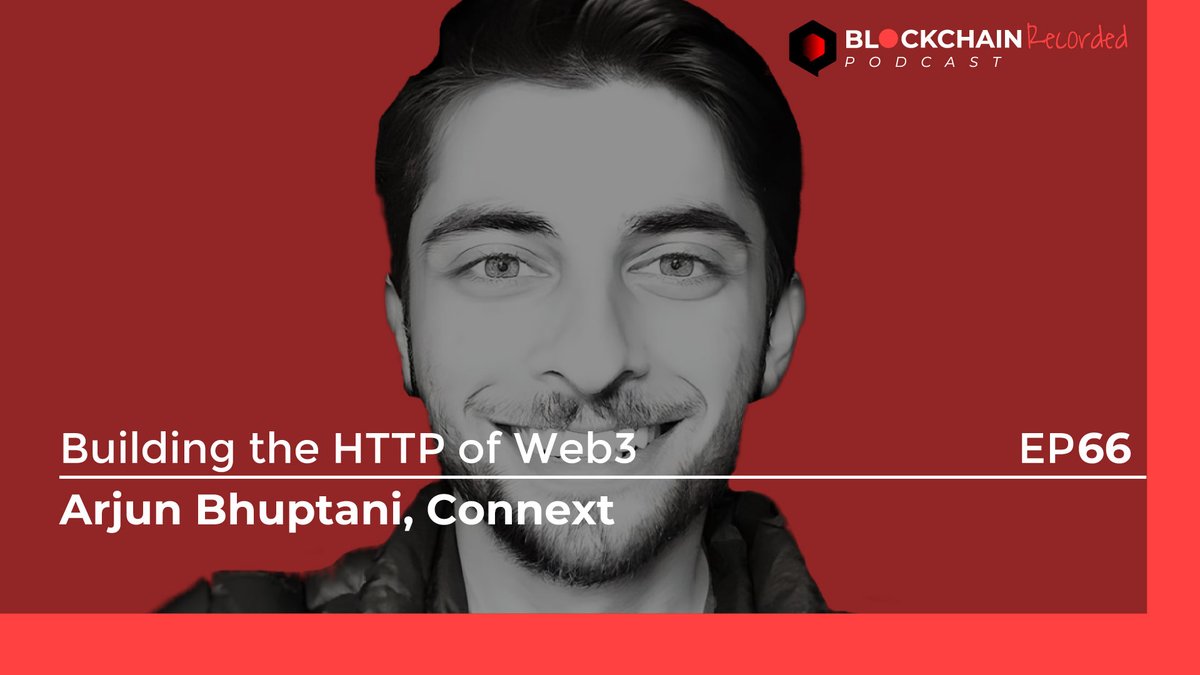
🔈The Ethereum Builder: “The world is going to be bridges & chains” - @arjunbhuptani, @Connext
⚡️State of bridging
⚡️Intents
⚡️Chain abstraction
⚡️Hacks & Bridge security
⚡️Connext governance
⚡️Thoughts on AI
⚡️❗2024 Protocol upgrade❗& more…
🔈https://t.co/qseWt5SVWe
We apologize for the messy stream after the 56th minute as we are experiencing technical difficulties on X. The show will be available on the announced podcast channel links without any issues. Thanks for your patience.
We apologize for the messy stream after 56 minutes as we are experiencing technical difficulties on X. The show will be available on the announced podcast channel links without any issues. Thanks for your patience.
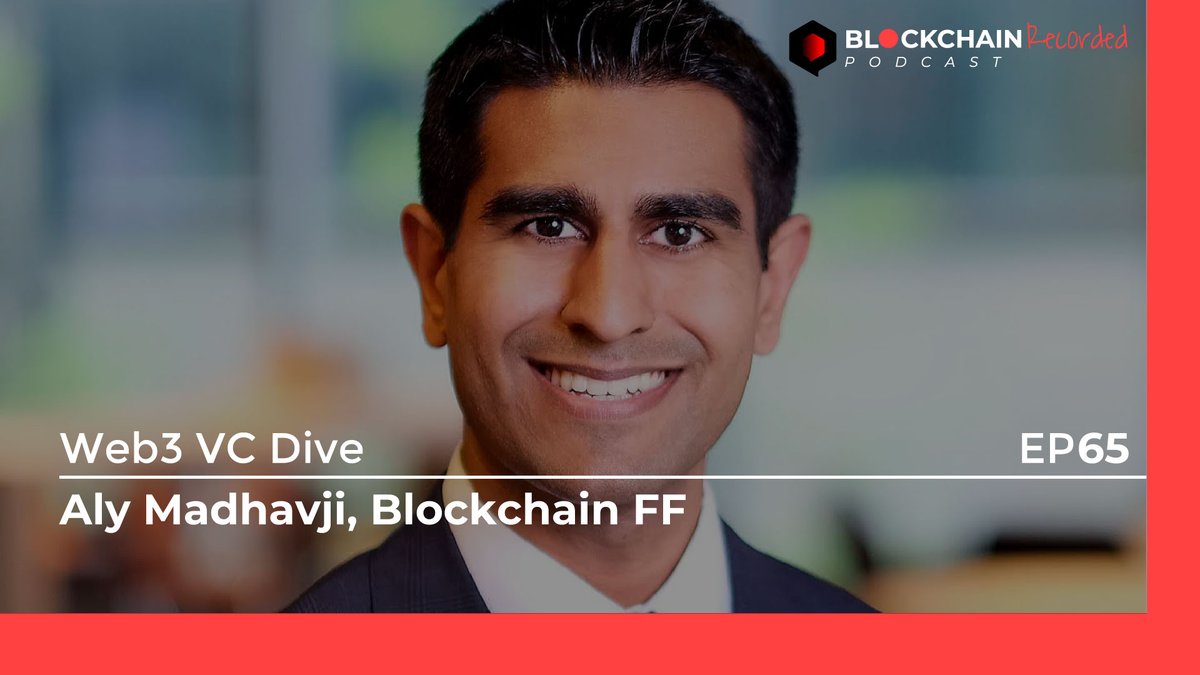
🔈The Venture Capitalist: “Explain your company in 11, 30 or 90 seconds.” @aly_madhavji, @BlockchainFF
⚡️About Aly
⚡️Blockchain FF
⚡️Web3 VCs vs. Trad VCs
⚡️Helpful pitch tools
⚡️Bull market dynamics
⚡️When do startups fail?
⚡️Web3 VC future & more
🔈https://t.co/EpNxxYXVbx