@Gutsick_Gibbon One thing, pinche gringo puñetero:
Ya te dije, I don't let myself be intimidated unlike those silly pseudodenominationalss you debate.
I don't care many degrees tengas, I don't care how many places you've worked on/been at, if you're going to try to mop me at least do it right.
@Gutsick_Gibbon "Not understanding how this type of regression works", how so? I WON'T buy claims that easily. Like I said, I am not one of your pendejos. And I don't let myself get intimidated.
Also I don't use AI for my arguments, just to quote stuff, so I gotta be very specific with it.
@Gutsick_Gibbon@scholarhacker I also showed a part of Masao's paper from 2016 because it doesn't mention anything about S1's toe depth and medial midfoot depth being similar to G's, as both variants were present on Hatala's study to prove how different G1 samples were from human footprints.
@Gutsick_Gibbon@scholarhacker Specific context would be whether or not time can preserve certain features well. For example, if any enviromental conditions could interfere with how a sediment preserves the shape, toes n stuff.
So I'll compare them with late fossil footprints, and see if this is plausible.
@Gutsick_Gibbon@scholarhacker I quote: "No evidence to suggest that the slight difference in their grain sizes would influence gross footprints morphology". But did his experiments take into account the way a footprint could change depending on how much time it was left to rest, or during a specific context?
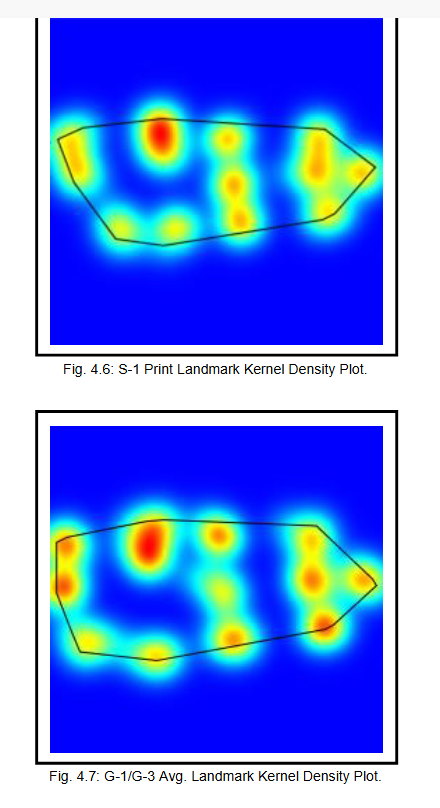
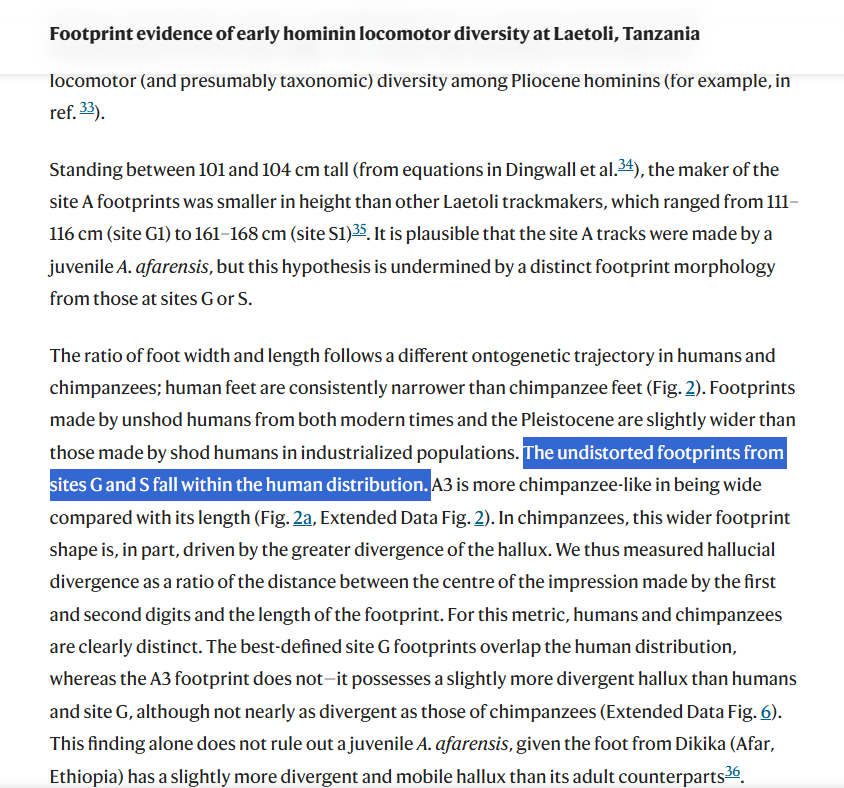
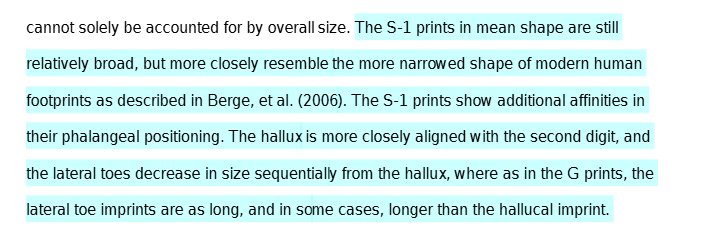
@Gutsick_Gibbon@scholarhacker The fact that in Berge (2006) it is noticed that the G one present a way longer hallucal imprint could be because of the sediment. And this might be given that some of Site S footprints have a very wide heel compared with the rest of them.
For example:
It's so inconsistent.
@Gutsick_Gibbon@scholarhacker Yeah doesn't imply overall, jeez. I am not as stupid as your oponentes de papel, gringo. Size differences, sure, but it points out that there are noticeable ones, and affinities could mean general impression. Othewise why would it be saying this?
Check the conclusion section
@Gutsick_Gibbon@scholarhacker Also let's put aside the homo sapiens assumption, what if it's either an early "homo", some sort of primitive homo, or like I said, a different hominin from a. afarensis?
After all, we have LD-350 1, which is 800.000-900.000 years away from the Laetoli Footprints. Or not?
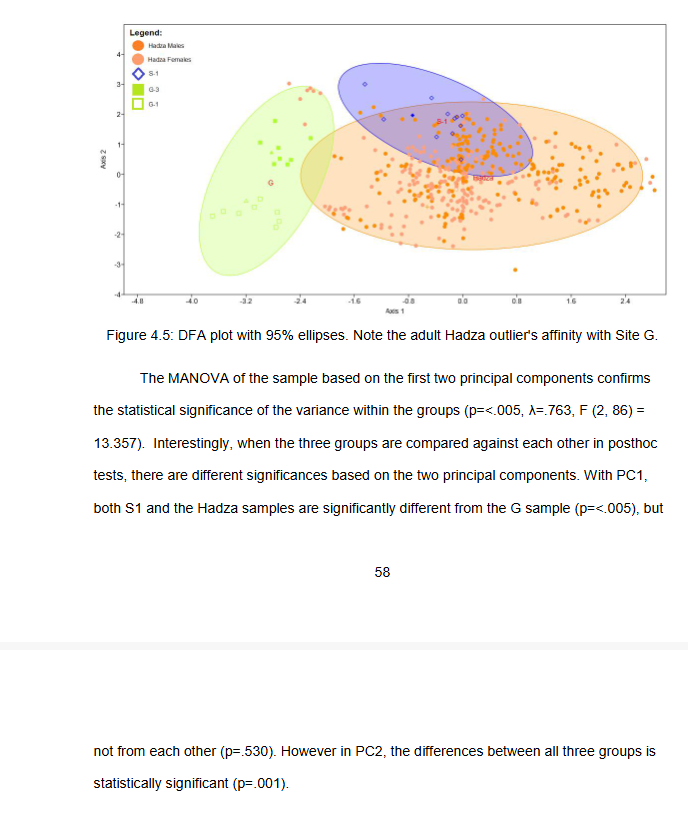
@Gutsick_Gibbon@scholarhacker Check how the samples plot closer towards Hadza samples.
And it clearly says: "Both S1 and the Hadza samples are significantly different from the G sample, but not from eachother".
Then in Mcnutt forefoot width plots it in unshod sapiens.
Like you said, it's all math, carajo.
@Gutsick_Gibbon@scholarhacker I can assess you though the other hominin hypothesis, because the fossil record isn't a full picture of what was going on back then.
@Gutsick_Gibbon@scholarhacker No, because the overlap is based on data that varies among individuals. To fall within them is obsolete, because they also didn't show significant differences man. Also, consider the volcanic tuff and how it might have affected the shape, not all fossil footprints leave digits.