THANGALAAN-HORSEMEN
DRAVIDIANS-INDUS CIVILISATION-ARYANS
In the climax sequence of Thangalaan, there was a specific dialogue mentioned about a group of horse-men who are en-route to attack the Naga tribe. The sequence reveals that these Aryan horsemen defeated the Naga tribe, leading to the tribe's fragmentation and enslavement. These horsemen are none other than the 'Aryans'. Director Ranjith subtly conveyed the conflict between Dravidian Nagas and Aryan Horsemen.
Who are these Aryans? Why are they symbolized with horses?
Great Fall of Thackeray:
When the politics of linguistic nationality Hindufied, defeat for it becomes inevitable.
Shiva Sena's defeat in Maharashtra has lessons for its copycats.
Maharashtra politics, which was once a place of Marathi sentiment ignited by Bal Thackeray to root out migrant South Indian laborers and annihilate trade unionists, giving Mumbai Capital a free hand in trade, turned to embrace BJP's Hindutva politics after the Mumbai riots of 1992.
Although Shiv Sena initially appeared to have linguistic nationalism aspirations, they were too shallow to be converted into a concrete ideology, and the party was too opportunistic, supporting Indian national parties like Congress even during its blundering times, such as the Emergency. Since Shiv Sena's politics of linguistic national liberation did not run deep enough to become a concrete ideology or even put up a fight against the expansionism of the Indian state's cultural hegemony, the party neither had ideological reluctance nor a political stance to resist Hindutva.
When the BJP intensified its Hindutva agenda in Modi's second term, Shiv Sena had the opportunity to reclaim its politics but sadly ended up embracing Hindutva instead of linguistic self-determination. With the recent results, the 'Thackeray' factor in Marathi politics has been successfully marginalized.
Marxist Scrutiny of Brahmanism:
According to the Labour Theory of Value (LTV), Value is created through labor, and the Value increases with the amount of labor invested. This value is categorized into two types: Use Value and Exchange Value. Some commodities have high use value but low exchange value. Water is an example. Conversely, some have high exchange value surpassing their use value. Pearls, Diamonds, Gold are some examples for such value.
In any given society, everything that is created through labor has a Value. Similarly, every commodity produced compels some labor invested in some form to acquire it. Capitalism deceives the working class by rigging this. It creates a situation where, no matter how hard people work, they cannot fulfill their basic needs. This is the conceptual framework of Marxism.
Dalit-Bahujan people have been the working class in the Indian subcontinent for thousands of years. Their intelligence has achieved all the wonders of this nation. Yet, something has suppressed them from progress. It's nothing but Brahmanism. This is exactly why Brahmanism puts up a notion of meritocracy. While Karl Marx's theory about Historical Materialism derives that the physical labor of the working class bring changes to the world, Brahmanism illogically denies it and emphasizing mental work as superior.
In reality, the intelligence of a carpenter, blacksmith, or cattle breeder is unparalleled. But Brahmanism has established that its Vedas as the sole source of knowledge, belittling others' intelligence. Even today, Brahmin scholars' articles and essays perpetuate this notion, undermining the labor and contributions of the working class bahujans. But brahmins with their bogus meritocracy argument and Vedas made these bahujans a lower class. With the support of power structures that Brahmins built, they succeeded in identifying themselves as the intelligentsia of this land.
How did Brahmins, lacking physical labor and any significant value, acquire valuable commodities? What did the Vedas, Shlokas and Yagnas created in this society? On the contrary, whatever labor the Dalit Bahujan invested has actually produced incredible values to the Indian society.
The annihilation of caste is the only salvation that will help in uplifting the Dalit Bahujans!
Higher Powers Smile Upon Vijay's Political Fortune:
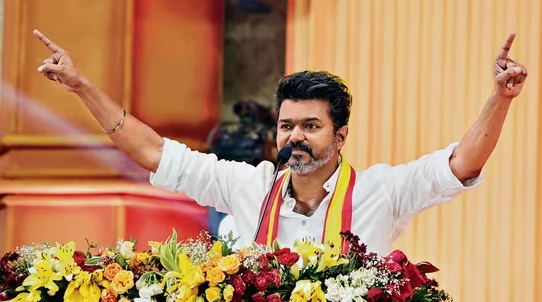
After much ado, actor Vijay has announced his political entry on October 27th.
Tamil Nadu politics is rooted in Dravidianism, sowed by Thanthai Periyar. No one can do politics in Tamil Nadu without embracing Periyar.
And so Vijay aptly took Periyar sans his atheism. To cover the religious beliefs he picked Anna. The rest of the secular, constitution, the three religious books etc are currently popular hot selling mixture. But that huge dash of Thamizh Desiyam is the catch. He has Periyar, All-Are-Equal statements, but holds on to Bhagavat Geetha the very executioner of Varnashramam. He says Thamizh Desiyam (Tamil Ethno Nationalism) and holds on to Kamarajar and salutes an army man. So what is his idea of Tamil Nationalism? Is it based on the Tamil National politics of Periyar or Perunchithranar or Tamizharasan or Prabhakaran? Or is it used to keep the popular trend created by Seeman politics to underplay Tamil Nationalism? Or is it a token gesture to show that he has distanced himself from his national backing?
Vijay fixes DMK as his "Political Enemy." And throws a "Political Bomb" by giving out a call for alliances with "Power Share."
The very fabric of this "Nation" India and the soul of the Indian State is entangled with its affinity for Brahmanism and its hatred for Federal rights. Its very existence itself is based on the essence of that hatred. Tamil Nadu and Dravidian politics is all but everything against that essence.
Historically, since the formation of India, with the independence that was declared with the blessings of the minority Brahmanism, the state and its powers, which was Congress, was always about guarding the Nation that is built by pillaging the rights and blood of the federal states. The whole structure and its defenses are created in order to maintain this Nation while its federal rights and resources are exploited by the Capitalists.
The Dravidian politics of Tamil Nadu came from its fight against this Brahminical hegemony. From Ayothi Dasar to Periyar to Anna it grew from its fight against the Manu Dharma, caste oppression, linguistic right. Dravidian politics of Tamil Nadu, emerged from Tamil soil. The electoral face of it, the DMK, grew and became stronger from the 60s Anti Hindi agitations the Mochi Por (Protest Movement Against Hindi Imposition).
After DMK came to power, throwing out decades of Congress rule, Actor MGR, embracing Anna, came up with the creation of AIADMK with the backing up of Brahmanical forces and Indira Gandhi. Again after MGR came actor Jayalalitha who ruled the state for a considerable period of time with the backing up of the brahmanical lobby and Rajiv Gandhi.
Then along with other political parties that emerged in that period, came up prominent players from the Tamil Cinema industry too, who trusted their strong fan base and believed that they held the chance to come to power or were in their power to be a king maker. From Sivaji Ganesan Vijayakanth, Rajinikanth and Kamal Hassan they all believed or were encouraged by the "Higher Forces" to stand against the DMK. To break this Dravidian politics that was born out of the Tamil soil.
Question is, could there be any Higher Force that favored Vijay's polical entry too!
An important political uprising happened in Tamil Nadu 2007, during the Sri Lankan War in which lakhs of Tamil people were killed. And it's a well known fact (atleast in Tamil Nadu political space) that it was the Congress Government which as a provincial power helped Sri Lankan Government to wage the war. The Sri Lankan diplomats and politicians were thankful enough to call Indian state a 'spade'. During the 2009 parliamentary elections of 2009, various Students movements all over Tamil Nadu got together and campaigned against Congress condemning its involvement in a war that killed fellow Tamils. Since then, Tamil Nationalism resurged powerfully into the Tamil political space demanding Self Determination of Tamils, Dissolution of Centre's powers etc.
After Dravidianism, it was Tamil Nationalism that clearly demarcated the Brahmanism that built the country of India and its oppression over the people of various states economically, socially and culturally. Thus Tamil Nationalism stood steadfast against National parties politics in Tamil Nadu. BJP used Seeman or Seeman helped BJP to undermine Tamil Nationalism with rhetoric-cinematic-stories. And Congress, which was originally hunted down by the upsurge of Tamil Nationalism for its part in Sri Lankan war, was yet to make a move to curtail the surge.
Sri Lankan war ended in 2009. Vijay was called by Rahul Gandhi in the same year for a meeting. And the same year saw parliamentary election. The same year when Tamil students were campaignig against Congress. Vijay, with his political ambitions, proposed to join Congress, Rahul Gandhi supposedly said Vijay to start his own party during the meeting.
Vijay's graph of showing up in national politics didn't end. He later met Anna Hazare. In 2014, Modi too. For more than a decade he kept weighing in all his options.
The two national parties of India Congress and BJP are of two right ideological-capitalists controlled power structures. One of a light Hindutva another of Extreme Hindutva. While congress may be all 'WOW' for 'Federalism' now, the underlying fact is it is always about 'National' Politics. 'CENTRAL' Power. And congress with all its shimmer faded, now with the whitewashed Rahul Gandhi, has been trying to make a comeback holding on to regional parties in states. And they have been doing a better job at it too.
While all 'Secular' political parties and movements in the country have declared extremist BJP as their enemy, like TVK's Vijay declaration of them as Ideological Enemy, the juggling and move of powers is now within the secular parties. While congress may showcase and ally with the regional political parties it is always starving to get back to its old sheer of "mass political power." And the only way to do it is by diminishing the regional parties.
So who's puppet Vijay possibly be?
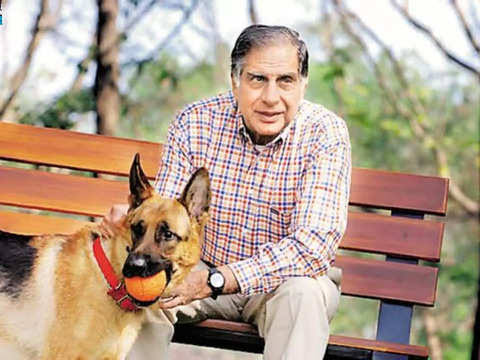
Ratan Tata: The Wolf in Nationalist Clothing!
Ratan Tata, the former chairman of Tata Group, has been revered as a visionary business man and a nationalist during his demise. This admiration is certainly misplaced. Two primary reasons contribute to his revered status: philanthropic efforts and nationalist sentiments. However, corporate philanthropy masks the failures of corporations and states, while nationalist narratives conceal the group's colonial past and capitalist interests.
Tata Group's history began with opium trade in British India, which fueled their growth and iconic status. Stories about Jamsetji Tata, like being denied hotel entry due to racism and building Taj Hotel as a nationalist symbol, are fabricated to project a nationalist image to it.
In postcolonial India, Tata Group proclaimed, "We are building this nation!" But this actually can be interpreted as a monopoly tactic to exploit resources and disregard marginalized communities. Sociologist Michael Billig's "Banal Nationalism" concept explains how everyday nationalism, like cricket matches and beauty pageants, fuels corporate growth.
Despite nationalist claims, Tata Group has foreign investments in Jaguar, Land Rover, and Tetley Tea, which contradict their "nation's pride" image. Their expansion and wealth accumulation are rooted in pretentious nationalism, while relying on government debts to facilitate foreign investments.
Tata Group can be actually perceived as part of the deceptive capitalist class, with a history of financial hypocrisies and nationalist deceits.
For the ruling class, Ratan Tata was not an exception. Neither for Capitalism!
1.https://t.co/8xpsqP6LAD
2.https://t.co/07TNSEIRQ6
When DMK Ministers become Corporate MDs:
Tamil Nadu Ministers, led by Industries Minister TRB Raja, are politicizing the Samsung workers' protest. Raja claims Samsung India has agreed to all demands except recognizing a trade union, a stance maintained for nearly a decade.
The company rejected negotiations with the Centre of Indian Trade Unions (CITU), citing unregistration. When CITU attempted registration with the TN Labour department, Samsung objected, invoking the Trade Marks Act, 1999.
"We understand an application has been submitted for trade union registration using our company name illegally. Since 'Samsung' is a registered trademark certified by the Trade Mark Registry, Govt of India, any official registration is an absolute violation of the Trade Marks Act 1999."
However, the Karnataka High Court ruled in State Bank of India Vs Sbi Temporary Sub staff Union (2022) that using a registered trademark for union purposes does not constitute infringement under Section 29(5) of the Trade Marks Act, 1999.
The Company's illogical stance and Ministers' advocacy for Samsung's interests, framing unionization as politics, are not astonishing at all, as the both sides are capable of stooping down to any level to deny labour rights.
In Tamil Nadu, only companies are allowed to have self respect, not the labourers!
This festive month, typically marked by increased consumer spending from Vijayadashami to Diwali, has turned into a protest month for Samsung India. Approximately 5,000 employees at Samsung India's facility in Sunguvarchathiram, Sriperumbudur, Tamil Nadu, are boycotting work, demanding better working conditions and benefits.
Their key demands include:
* Reducing working hours from 11 to 8 hours
* Increasing shift allowance from ₹150 to ₹250
* Extending paternal leave from 3 to 7 days
* Ensuring equal pay for equal qualifications and duties
* Abolishing grade-based salary hikes
* Recognizing the CITU-backed union
However, employees' grievances extend beyond these demands. The treatment of the employees or their Self Respect as DMK names it, is also in stake. Some employees shared their experiences in the magazines:
"We're often addressed dismissively as 'Ei' (hey) by supervisors, rather than being called by our names, despite wearing ID cards."
"We're forced to stand outside the assembly line for an hour if we're late, which is demeaning."
"Even after a family member's passing, we receive calls asking when we'll return to work, sometimes days later."
DMK government seems to prioritize self respect for companies over employees.
The TN Govt has tried its best to resolve the #SamsungStrike . The terms in the Agreement that was reached but disputed by one section of the workers appear to be generous. Communists must realise that TN has changed. People want to get ahead. @TRBRajaa has been doing a good job in trying to attract industries here. At such a time to indulge in a disruptive strike even when most of the demands have been accepted by the management is not going to get public support.
Tamil Nadu police tried arresting Samsung Electronics employees in Sriperumbudur last night for protesting against poor wages and working conditions. DMK government is known for prioritizing corporate interests over workers' rights.
Why Indian Right Wing celebrate Israel:
our aim is to connect daily news with historical events and how it affects us everyday. for example in today's the Hindu there was a news in the page 14 titled "Will protect convicts too from punitive demolitions , says SC" . The bulldozer punishment was the new anti constitutional punishment used by the BJP government in north against Muslims.
on august 2022 NRI's celebrated Independence day in new jersey with Bulldozers and bulldozer became a symbol of Yogi adiyanath govt in UP. Even there was an article in OPindia justifying the act of Bull dozer demolition.
Now from where this Rightwing Hindutva forces took this bulldozer model of governance ? the answer is Israel.
House demolitions have stood at the centre of Israel’s approach to ‘the Arab problem’ since the state’s conception. Between 1948 and 1954, Israel systematically demolished 418 Palestinian villages – 85% of all Palestine’s villages. Demolitions have been at the heart of the broad process of displacement (euphemistically dubbed ‘transfer’ by Israelis).
The policy of house demolitions serves to confine Palestinians to small islands or is used to enhance Israeli ‘security’. It is also used as a form of collective punishment, either for ‘deterrence’ (demolishing homes of people accused of security offences) or for purposes of intimidation.
Throughout Israel proper, in the ‘unrecognised’ Palestinian and Bedouin villages, and in the Palestinian neighbourhoods of Ramle, Lod and other Arab Israeli towns and cities, houses continue to be demolished.
In 2002 massive D-9 Caterpillar bulldozers laboured for three days to demolish over 300 homes at the heart of the densely-packed Jenin refugee camp.
This is the reason why indian Right wing is celebrating all types of Israeli criminal actions.
As a continuation of yesterdays post on Capitalism and Climate change we want to share an important article by Ted Benton titled "What Karl Marx has to say about today’s environmental problems"
https://t.co/LwDCrYrZrU
The capitalist hypocrisy :
In today's Hindu three news columns called for our analysis.
In the editorial column there was an article on how India can use its Agro-forest industry to gain the carbon credits and the need for change in the way carbon credits are given.
In the next page there was an opinion about Sustainable development goals and how only 17% of sdg are on track , sdg is closely tied with carbon credits because SDG 13 related with climate change.
In the next page there was a news about Nicobar project of Modi government which is going to clear 60sqkm of pristine rainforest which was habitat for lot of endemic flora and fauna.
So one side the global south's development is controlled with several SDG checks and balances and on the other side the global corporates want the natural resources of the global south for capital accumulation.
This climate change and attaining SDG is a new contradiction of the capitalism which will oppress more poor and developing countries, only the G7 and OECD gets benefit out of this contradiction.
Indian Left Grapples with JVP's Nationalist - Left Fusion:
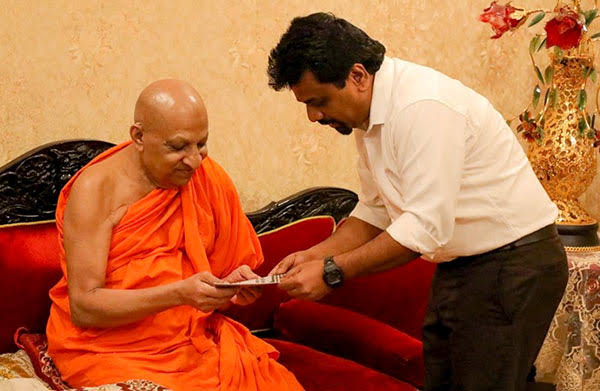
The Janatha Vimukthi Peramuna (JVP) party, a self-proclaimed left-wing organization, has taken power in Sri Lanka under the leadership of Anura Kumara Dissanayake as a part of the NPP coalition. Notably, JVP has historically opposed Indian expansionism and resisted India's proposed solution for Tamil self-governance within a unified Sri Lanka.
The party identifies as Sinhalese nationalist and prioritizes Buddhism, a stance openly declared by Sri Lanka's current president. This development highlights the intricacies of Indian foreign policy.
Interestingly, Indian left-wing parties previously supported the 13th Amendment, which JVP opposed, advocating instead for a unified Sri Lanka. During peace talks between the Liberation Tigers of Tamil Eelam (LTTE) and the Sri Lankan government, mediated by Norway, Indian left-wing parties supported the initiative, whereas JVP pushed for military action.
JVP leaders have claimed responsibility for backing the Sri Lankan government's military actions, resulting in over 150,000 Tamil deaths. This raises questions about Indian left-wing parties' stance on JVP's Sinhalese nationalism and its implications.
Will Indian left-wing parties accept JVP's ideology despite their historical opposition to Indian expansionism? Can JVP reconcile its nationalist stance with its claimed left-wing values? How will Indian left-wing parties respond to JVP's treatment of Tamil fishermen, considering their past protests?
Can a party denying self-determination to its people be considered communist? As Sri Lankan and Chinese left-wing parties collaborate, how will Indian left-wing parties react?
The unfolding events will reveal the complexities of left-wing politics in the region.
The Hindu's Aryanization of Indus Valley:
Today's article by T.S. Subramanian in The Hindu cleverly avoids mentioning the word 'Dravidian' while discussing the Indus Valley Civilization. Instead, he subtly inserts 'Saraswati' into the narrative, claiming the civilization was found along the Indus-Saraswati riverbanks. This hyphenated addition is a deliberate attempt to distort history.
The discovery of the Indus Valley Civilization challenged the dominant Vedic narrative, revealing a sophisticated urban culture predating Vedic era by 2000 years. However, efforts to link it to Aryan Brahminical culture continue.
Romila Thapar and other scholars have debunked claims of Saraswati river's existence, pointing out discrepancies in direction, geography, and origins. Thapar even suggested that if they insist on Saraswati, they should claim the river in Afghanistan as it fits all the descriptions.
Hindu article mentions Iravatham Mahadevan's description of the civilization as 'pre-Aryan' and 'non-Aryan,' but conveniently omits his assertion that it's Dravidian.
This manipulation needs to be seen in purview of BJP's recent event, where they referred the civilization as Sindhu-Saraswati Civilization, and outrageously depicted the illustrious Indus dancing girl symbol as a servant.
The same group that claimed Vedic culture brought civilization to India now tries to usurp the Indus Valley legacy, which predates their arrival by thousands of years.
How long will they continue to hijack our history?
THANGALAAN-HORSEMEN
DRAVIDIANS-INDUS CIVILISATION-ARYANS
In the climax sequence of Thangalaan, there was a specific dialogue mentioned about a group of horse-men who are en-route to attack the Naga tribe. The sequence reveals that these Aryan horsemen defeated the Naga tribe, leading to the tribe's fragmentation and enslavement. These horsemen are none other than the 'Aryans'. Director Ranjith subtly conveyed the conflict between Dravidian Nagas and Aryan Horsemen.
Who are these Aryans? Why are they symbolized with horses?
The only region where the Aryans faced a failure was
Tamil Nadu. Now, the torchbearers of the Aryan dominance are in the form of RSS-BJP.
The ongoing struggle of Tamils against Hindutva fascism is the highest form of Dravidian - Aryan conflict.
The RSS-BJP are well aware of this historical backdrop, which is why they are so determined to penetrate their politics into Tamil Nadu. If we don’t fight back, that will be a complete cycle and the decisive victory of the Aryan ideology.
We, the Tamils - Dravidians, must assertively commemorate the centenary of the Harappan Indus Civilization on September 20, 2024.
The Indus Centenary highlights our responsibility to disseminate the truths of Indian history, to fight against historical revisionism and to combat hate propaganda by firmly resisting fascism through our cultural roots. FIGHT BACK!
Why do the RSS-BJP desperately tries to distort and assimilate history?
The historical existence of the Dravidian Indus-Valley Civilization poses a significant threat to the geopolitical Hindutva project. It conveys that the Vedas are NOT indigenous to the Indian subcontinent. The Brahmins who composed Vedas are NOT the original inhabitants of the Indian subcontinent.
The RSS-BJP Sangh Parivar seeks to reshape and undermine real history by rebranding the ‘Dravidian Indus Valley-Harappan Civilization’ into the
‘Aryan Vedic Sindhu-Saraswati Civilization’.
By linking it to Aryan culture, the RSS-BJP aims to assert that the cultural and historical roots of India are tied to Aryan and Vedic traditions. This move is intended to bolster the narrative that the Vedic culture is the foundational heritage of the Indian subcontinent. The appropriation serves to reinforce the BJP's vision of a unified Indian culture that aligns with their fascist ideology.
This September 20, 2024, marks the 100th anniversary of the discovery of the Indus Valley Civilization. When John Marshall, the Director of the Archaeological Survey of India, uncovered this civilization in 1924, it resolved the greatest missing puzzle of the Indian History: That’s the history of Dravidians.
Currently, the BJP government is revising school history textbooks. The history of Dravidian Indus has been appropriated as Vedic Aryan Civiliation.
India’s History is being reshaped along uni-cultural
Upper caste Hindu-dominant lines, obscuring the diverse and multifaceted nature of past civilizations. This process of Hinduisation of History is larger part of Hindutva’s geopolitical agenda.
In this long history, the Aryan cultural dominance succeeded all over the world. Wherever they went, they conquered, their languages were imposed, their culture was imposed.
Hrithik Roshan's film ‘Mohenjo Daro’, released in 2016, set its narrative in the context of the Indus Valley Civilization. In the movie, the horses were shown in many scenes. These all are desperate efforts from the Hindutva-right wing to assimilate the Dravidian-Indus-Civilization into the Vedic-Brahmnical fold.
The entire right-wing academic community made efforts to introduce the concept of the ‘horse’ into the Indus-Valley Civilization.
One prominent attempt came from N.S. Rajaram, a right-wing scholar who forged an Indus seal and claimed it depicted a horse. His forgery was quickly exposed.
The absence of horses among discovered fossils, seals, and artifacts suggests that the Aryans were not indigenous to the Indian subcontinent.
The Indus Bull vs the Aryan Horse
In 1924, John Marshall, the Director-General of the Archaeological Survey of India, unveiled to the world the discovery of a previously unknown civilization in the Indus Valley. This civilization was distinctly different from and older than the Vedic Civilization. The revelation of the Indus Valley Civilization posed a significant challenge to Brahmin hegemony, as it did not align with the Vedic tradition but rather resonated with the Dravidian culture.
The material culture, practices, and iconography strikingly connects with the Dravidian Culture rather than Aryan. Among the most significant artifacts uncovered in the excavations was the ‘bull’. The bull is the exclusive symbol of Dravidians. Importantly, the horse was not found in the Indus excavations.
Who inhabited the Indian subcontinent before the arrival of the Aryans?
According to the Out of Africa theory, Homo-Sapiens migrated across the world from Africa starting around 70,000 years ago. During that timeperiod, the Sapiens who reached the Indian subcontinent are known as the Dravidians or Ancestral South Indians.
The Dravidians were widely spread throughout India and established the Indus Valley Civilization, one of the world's earliest urban cultures, long before the Aryans arrived. This advanced civilization is known for its sophisticated urban planning, architecture, and social organization. The Indus civilization has its deep connections with the Keezhadi urban centres excavated in present-day Madurai.
Timeline of Indus-Valley Civilization: 3300 BCE–1900 BCE
Timeline of Aryan migration to India: 1500 BCE