A trade explanation can fit every candle afterward and still be too vague to test. A useful setup rule has to exclude some trades, not just explain the ones already on the chart.
A setup qualifies just before two traders need to leave their screens, and both still have to decide whether to enter.
Illustrative scenario: the chart is the same, but their management plans are not. One uses predefined exit orders and has already allowed unattended positions under that plan. The other watches how price behaves after entry and makes discretionary exit decisions. Both can place a protective stop.
For the first trader, stepping away may fit the intended process. There are still execution and platform risks; an exit order does not guarantee a fill at the requested price. But the plan does not require the trader to interpret each new candle while away.
The second trader faces a different trade-off. Placing a stop would leave some protection in place, yet it would not perform the discretionary checks the method normally requires. Taking the entry and leaving would quietly replace that management process with whatever orders remain working.
That replacement might be worth testing as a separate approach. It has not become equivalent to the original approach merely because the entry is identical.
There is a plausible reason to enter anyway: the setup meets the rules, and passing means giving up participation in this occurrence. Waiting until returning may mean it is gone. None of that answers how the position would be managed during the absence.
The useful distinction is between having an exit order and having the whole intended management process available. Sometimes those coincide. In a discretionary method, they may not.
The traders can reach different decisions without either misreading the setup. The first can assess whether the planned unattended conditions are met. The second has to account for a required part of the method being unavailable. The unresolved issue is already visible before entry, without knowing what the next candle does.
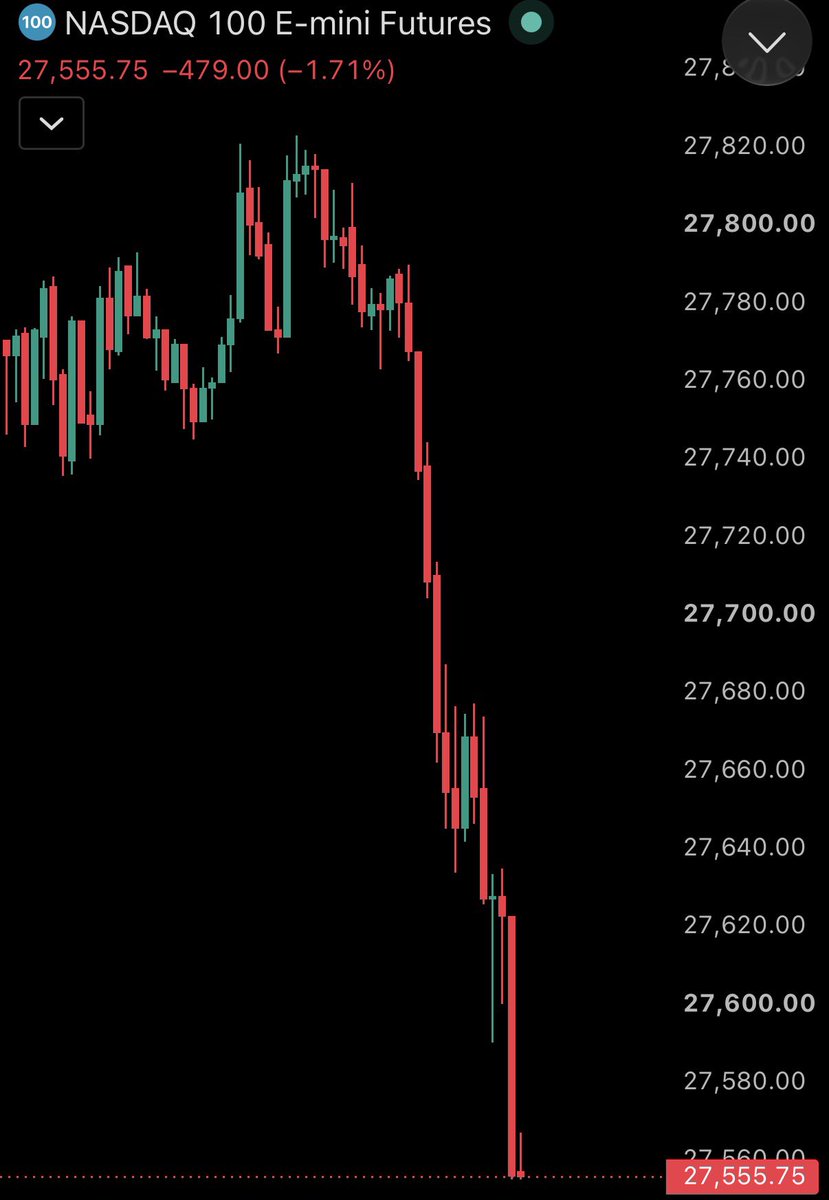
BREAKING: Nasdaq 100 futures extend losses to -1.7% in premarket trading as Nvidia, $NVDA, falls more than -5%.
Nvidia has now erased nearly -$2 trillion in market cap since its peak on October 6th.
A trader has a breakout on the chart and two indicators pointing the same way, but is still deciding how much confirmation that adds.
Illustrative scenario: both indicators use the same recent closing prices. One smooths those prices into a trend line; the other measures their momentum. After an upward move, both look supportive. The trader is considering whether their agreement makes the entry more convincing than the price pattern alone.
It is an understandable reading. Different displays can make the same move easier to interpret. A trend line may help describe direction, while momentum describes another feature of the price sequence. Neither display has to be useless for the agreement to deserve a closer look.
The trader can count the chart and both indicators as separate votes. Or trace what produced those votes before giving the agreement extra weight.
Tracing the inputs changes the question. The breakout and the indicator readings all reflect the recent rise in price. The indicators apply different calculations, but their agreement does not automatically amount to independent evidence. A single move can make several displays look persuasive at once.
That still leaves room for a combined rule to be useful. Perhaps testing would show that these particular conditions help distinguish qualifying setups. This scenario provides no such test, so it cannot establish either an improvement or a reason to discard the indicators. Counting the displays cannot fill that gap.
For this decision, the trader can describe the evidence more narrowly: price has risen through the marked level, and the chosen calculations describe that rise as upward trend and momentum. Whether the combination adds useful information remains a separate question.
The distinction is between different views of an observation and evidence that adds something beyond it. Before the order, those can feel much the same. In a review, naming what each indicator contributed makes the entry reason clearer than recording only that everything agreed.
Cooler factory prices offer Nasdaq some relief, but uncertain restrictions on remote computing access keep the fundamental bias bearish. Implementation and actual demand effects matter more than assuming an immediate earnings hit. https://t.co/evWPvYfOt0
A losing trade gets a full paragraph in the journal. A winning trade gets two words: good setup. The result can quietly decide how much explaining gets done