🚨Redis Iris now covers memory, routing, context access, and agent traceability for production agents in one runtime. Six capabilities launched today, and two of them are in beta. Read more: https://t.co/SfS4wSlPRj
Redis OSS 8.2 is now available as a Redis-published AMI on AWS Marketplace, so your security team can see exactly where the image came from and your procurement team can buy it the way they already buy everything else. Read more: https://t.co/GbKP2OFbyT
We've been cooking at Redis: Announcing GA and greatly expanded Redis Iris.
Why are we building this: Models are very good now, but very few agents are making it to prod...
The gap: CONTEXT. Agents forget what users said, repeat things they've already done, and can’t reach the data spread across your systems.
At Redis, we've been solving these problems for apps since before agents existed.
Iris has:
Agent Memory - state of the art, model-independent memory layer for AI agents.
Agent Mesh - for agent 2 agent messaging
Agent Playbooks, Intent Router, Context Gateway and Lens
Check it out and let us know what you think https://t.co/ortnOmEfU6
It’s time to build!
If you’re building agents, you know how hard it is to go from demo to prod.
Forgetful agents, repeat questions, cracking under actual workloads—it’s the same story over and over.
Memory, routing, context, and traceability are what agents need.
Now, Redis Iris has it all in one runtime. It’s time to build agents ready to deliver in the real world.
Read more about the new Redis Iris: https://t.co/og28AHGOqx?…
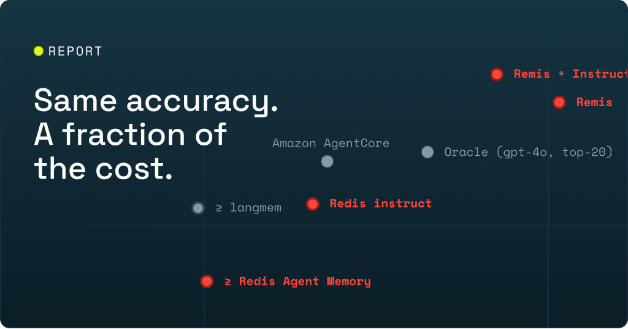
Your agent can only answer from what its memory has kept. Our Agent Memory benchmark report shows that keeping both raw conversation excerpts and extracted facts took Redis to 86.5% on LongMemEval, at about $0.07 per session. Read more: https://t.co/v0GqwhhxOI
Redis is proud to be a launch partner in the @FireworksAI_HQ Frontier Ecosystem. Check out our docs to use Redis as a retrieval layer with Fireworks.
👉 https://t.co/xCVXAatAdz
The future of AI is specialized intelligence with models tuned to your data, your domain and your customers.
Today, we're proud to launch live from Forge the Fireworks Frontier Ecosystem with 60+ partners across the AI stack, helping you build and ship faster.
Check it out: https://t.co/V0xD20BvC3
Redis has spent years as the fast state management layer next to the application, and in the agent era, that same layer holds agent state. @rowantrollope explains on Tech Talks with AIM: https://t.co/jqNUe9DKEA
There's still time to register for the Redis London AI Engineering Meetup! It's for the 5th of November.
We've got two interesting/practical sessions on building memory for AI agents and also on building real-time retrieval pipelines.
Register here - https://t.co/6t9lqRa4B2
Smooth Scaling in Redis Cloud Pro moves only the hash slots that need to move, sends them straight to their destinations, and hands each one over in a single step. Scaling requests work the same way as before. Read more: https://t.co/RyAu19eBNk
A standard redis-py client connects to a single endpoint, which leaves regional failover to each application. MultiDBClient moves health checks, failover, and failback into the client, on top of Active-Active Redis. Read more: https://t.co/POMZmmJzUn
ICYMI: We’ve expanded our strategic collaboration agreement with AWS to cover AI app architectures with Amazon Bedrock, modernization paths for mission-critical apps, and Redis Cloud purchasing through AWS Marketplace. Read more: https://t.co/PhQX5hsBtu
𝗖𝘂𝘁𝘁𝗶𝗻𝗴 𝗮𝗻 𝗔𝗜 𝗯𝗶𝗹𝗹 𝘂𝘀𝘂𝗮𝗹𝗹𝘆 𝘀𝘁𝗮𝗿𝘁𝘀 𝘄𝗶𝘁𝗵 𝘁𝗼𝗸𝗲𝗻 𝗰𝗮𝗽𝘀 𝗮𝗻𝗱 𝗰𝗵𝗲𝗮𝗽𝗲𝗿 𝗺𝗼𝗱𝗲𝗹𝘀, 𝘄𝗵𝗶𝗰𝗵 𝗹𝗼𝘄𝗲𝗿𝘀 𝘁𝗵𝗲 𝗽𝗿𝗼𝗱𝘂𝗰𝘁 𝗾𝘂𝗮𝗹𝗶𝘁𝘆 𝗮𝗹𝗼𝗻𝗴 𝘄𝗶𝘁𝗵 𝘁𝗵𝗲 𝘀𝗽𝗲𝗻𝗱.
There is a different place to look at first. In most AI applications a large share of the cost comes from the work the system has already done and is paying for again:
➡️ The same question arrives in different words, so an exact-match cache never sees it and the model answers it from scratch every time
➡️ The agent drops context between turns and sessions, so it re-retrieves what it had and asks the user for what it was already told
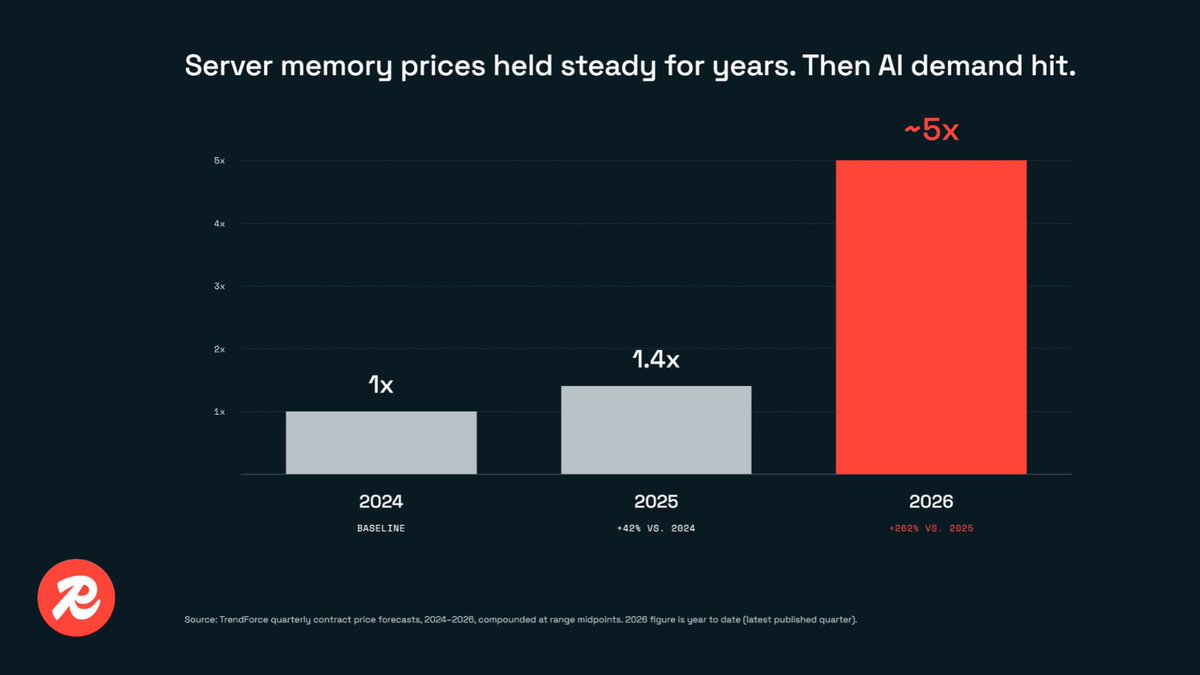
➡️ All of that state, cache entries, session history, memory vectors, features, has to stay fast, and memory is the most expensive thing in the rack
None of those are model problems. They are caching, memory and storage decisions, which is the part of an AI system that gets the least design attention and ramps up the spend significantly.
I have been reading through how Redis approaches this. They offer three mechanisms that tackle the above problems in a single platform:
✅ Semantic caching: embed the incoming prompt, search prior prompts by meaning, and serve the stored response when it is close enough. Redis reports cache hits up to 15x faster and token spend down by up to 70%
✅ Agent memory: live session state with a TTL, plus facts extracted out of conversations into long-term memory as vectors, with the extraction running in the background instead of in the request (hot) path
✅ Flex: one database moving both keys and values between RAM and NVMe SSD storage tiers. You can adjust RAM ratio 10% and 50% per workload. Redis states this costs up to 80% less per gigabyte than running all-RAM, with no code change
The part I find interesting is that memory architecture is usually treated as a quality feature, something that makes the agent feel coherent. It is also a cost lever - an agent that forgets incurs the price twice for the same context.
👉 Here is their cost optimisation guide: https://t.co/yqtDbmfgas
Huge shoutout to @Redisinc for partnering on this post!
What share of your production traffic is a repeat of a question you have already answered? I rarely run into a team that is actually measuring this! 👇
Redis Flex keeps hot data in RAM and moves less-used data to SSD, with the RAM ratio set anywhere from 10% to 50% per workload. It costs up to 80% less per gigabyte than RAM alone, and it needs no code changes: https://t.co/xphjIIdZmB
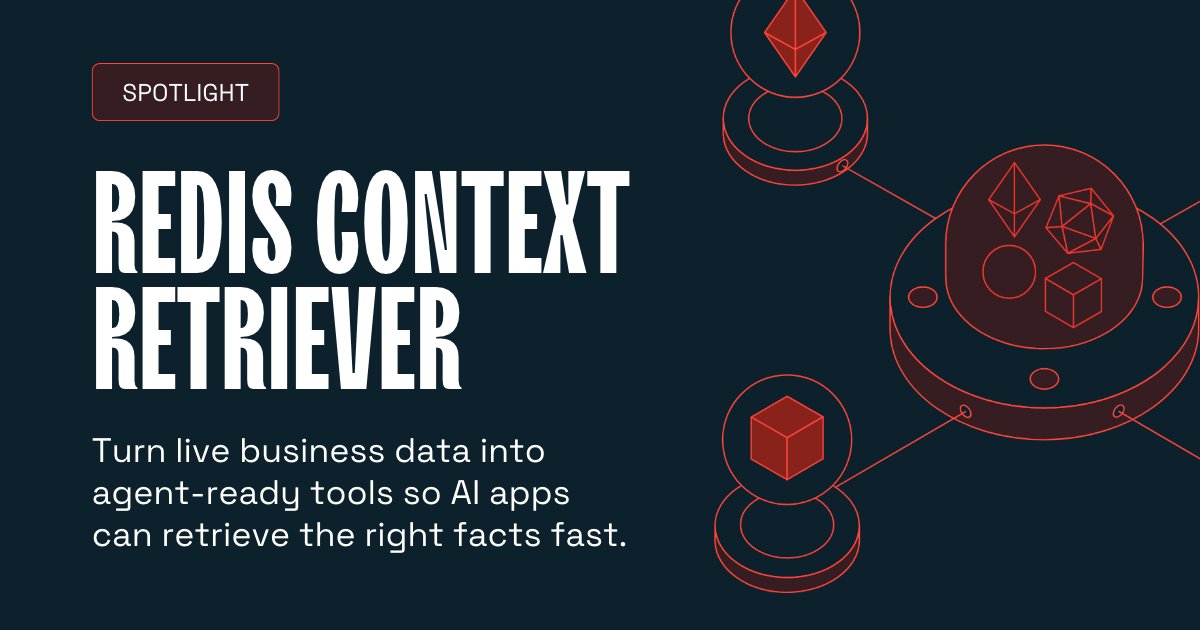
Real-time data is only an advantage if agents can use it. Redis Context Retriever makes that possible. Schedule time with a Redis expert to see it in action: https://t.co/juUsGPmGzZ
Redis Dev Hub brings tutorials, learning paths, and reference docs into one place, including hands-on guides for building real-time AI agents with Redis Iris and agent memory with LangGraph. Stay up to speed: https://t.co/Qh1weJuZ6R
Most RAG chatbots demo well, then fall apart in production. Redis University's "Build a RAG Chatbot" lab is built around the difference. It covers embedding data with RedisVL, generating grounded answers, and adding semantic caching and memory. Start here: https://t.co/4mL3ivHZtx
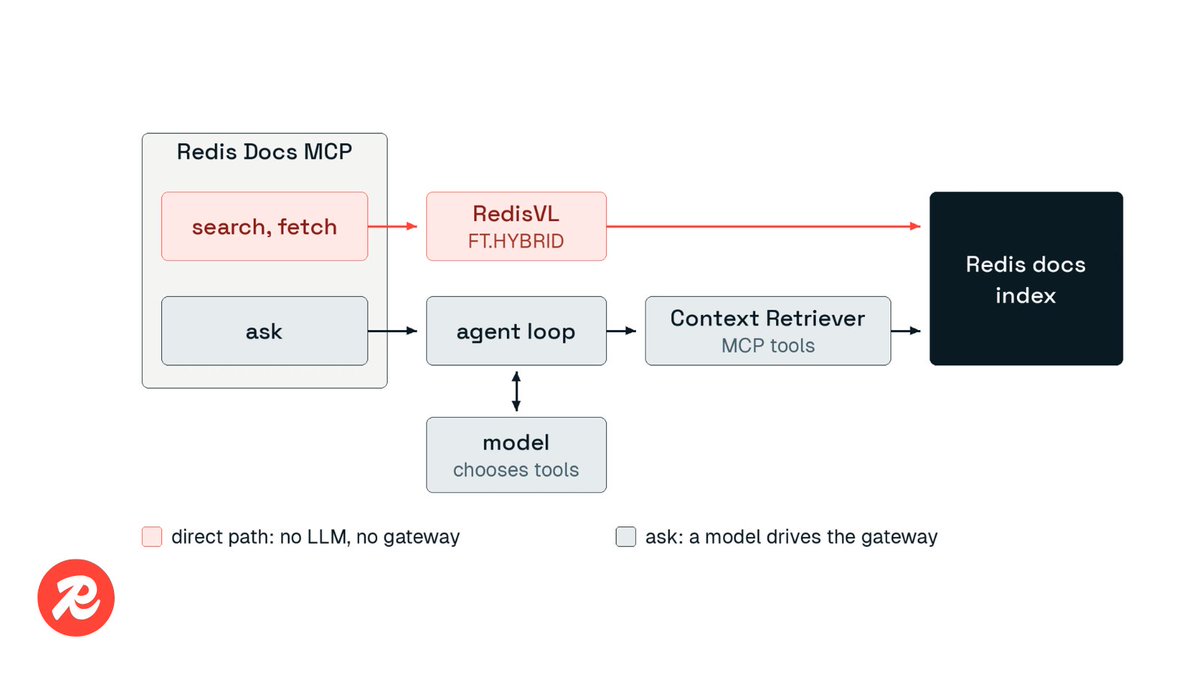
A model trained before Redis 8 will still give you the old defaults with total confidence. The Redis Docs MCP lets your agent read the current docs instead. You can connect it and read how we built it and what we measured here: https://t.co/S5wmYeLLXg
We’re welcoming a new chapter in the Lion City. 🇸🇬 Here’s to one more home for the team building the memory and context layer for agentic AI from Singapore.