€10 every 4 weeks is not €120/year.
4 weeks × 13 payments = 52 weeks
€10 × 13 = €130/year
“Every 4 weeks” quietly creates an extra payment compared with monthly billing.
Check the interval—not just the price.
Spend €100, get a €20 voucher” is not the same as 20% off.
If the voucher requires another €80 purchase:
You spend €180
You receive €200 of goods
Your effective discount is 10%, not 20%.
Future credit only saves money if you return.
#savings#money#MoneyTips
Driving 20 km out of your way to save €0.05/L on a 40 L fill saves €2.
At 6 L/100 km, the detour burns 1.2 L. At €1.70/L, that costs €2.04—before your time.
The cheaper petrol station can cost more.
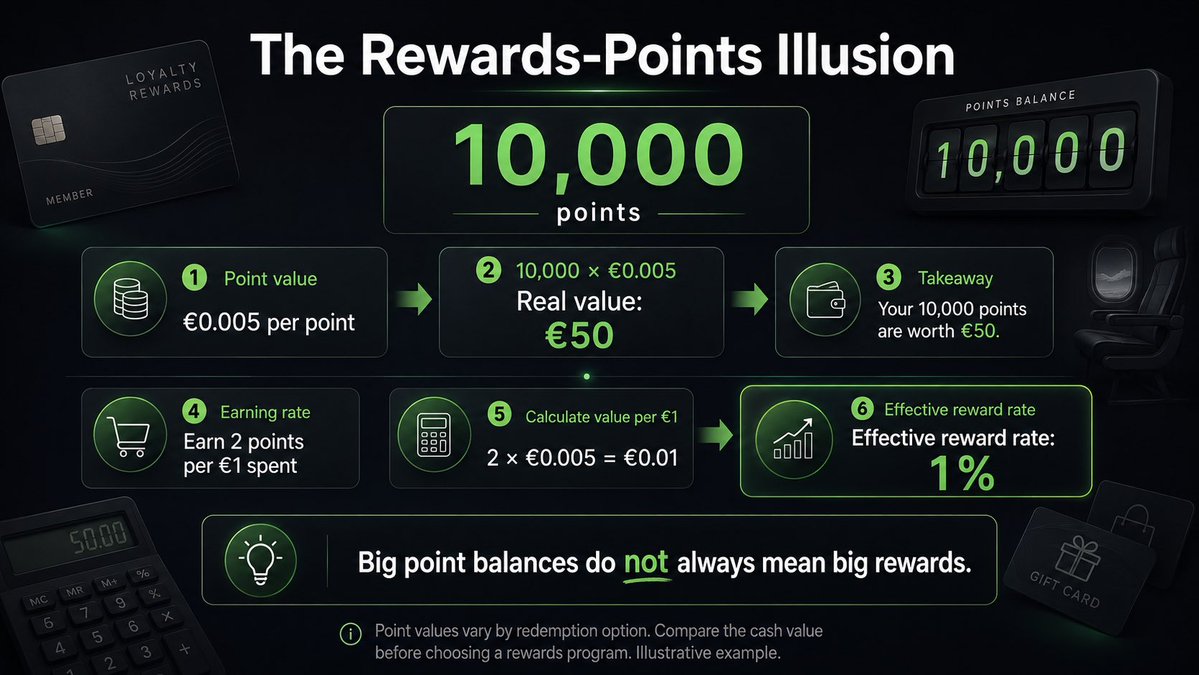
10,000 reward points sounds impressive.
But if each point is worth €0.005, that’s only €50.
And earning 2 points per €1 spent gives an effective return of just 1%.
Ignore the point total.
Calculate the cash value.
A more efficient appliance isn’t automatically the cheaper one.
If it costs €200 extra but saves €25/year in electricity:
€200 ÷ €25 = 8 years to break even
If you replace it sooner, the “efficient” option may cost more overall.
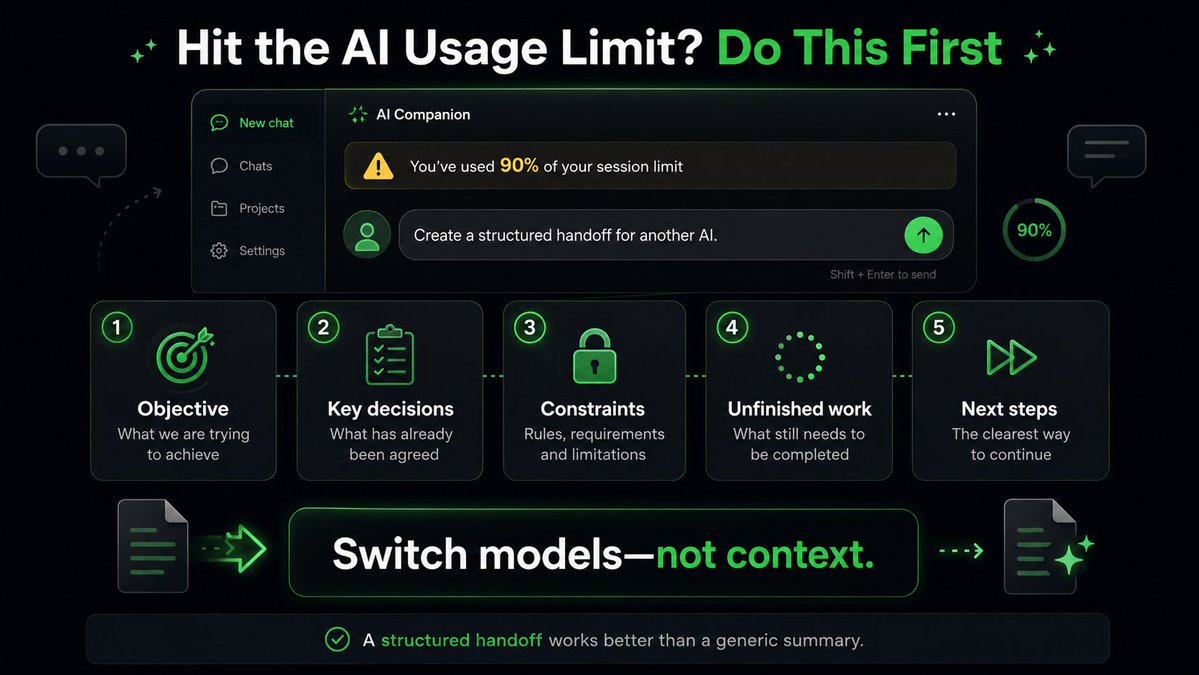
Hit an AI usage limit mid-project with Claude?
Before upgrading, ask it for a handoff containing:
• objective
• key decisions
• constraints
• unfinished work
• next steps
Paste that into the next model, for example ChatGPT.
Much better than explaining everything again.
@saidotdev Hit an AI usage limit mid-project with Claude?
Before upgradinf, ask it for a handoff to ChatGPT containing:
• objective
• key decisions
• constraints
• unfinished work
• next steps
Paste that into the next model.
Much better than explaining everything again.