🚨Some who shamelessly attempted to defend the Chief Justice’s comments talked about the misuse of RTI and PILs. Sure, but accountability flows both ways.
What does the “system” that Chief Justice Kant is so concerned about do when frivolous PILs are filed? How many cases of judges imposing costs on such PILs? What did the “system” do in the Yashwant Verma case? Was a FIR filed after tons of burnt cash disappeared by the dawn? So does not such a system merit thorough public scrutiny and critique?
With @ajitanjum. Do watch—https://t.co/QrtAOAfXne
VIDEO | Delhi: Advocate Sanjay Dubey, on whose case CJI Surya Kant made the “parasite and cockroach” remarks, says, "Basically, the matter is related to senior designation in the High Court. In 2014, a notification was issued for senior designation and I was also a candidate. There was some unfairness in the procedure. Sudhir Nandrajog was a committee member and he also resigned after seeing the unfairness. The matter was also reported in the media. We then filed a writ petition in the Supreme Court challenging the process. Justice Oka also issued directions in the matter. The unfairness was that some incompetent people were designated while deserving candidates were ignored. Proper procedure was not followed and records were ignored while making the decision."
(Full video available on PTI Videos - https://t.co/bIyFWTfmBd)
#ImportantNews: Within days of 7 AAP Rajya Sabha MPs from Punjab shifting allegiance to the BJP, at least 3 politically sensitive matters connected to some of them came up before the Punjab and Haryana High Court, specifically, Chief Justice Sheel Nagu.
I’ve found that in two of these three cases, the High Court’s own listing process did not follow the ordinary roster. For instance:
1. In Sandeep Pathak’s case:
The case concerned Pathak who approached the High Court apprehending coercive action by the Punjab government.
During the hearing, the State said no coercive action would be taken without intimating the Court, but the written order records it as no coercive action without “prior permission” of the Court. The issue of maintainability was also not decided.
Interestingly, the High Court’s own March 2026 notified roster shows that the MP/MLA criminal matters are before Justice Tribhuvan Dahiya’s bench. However, this matter was listed before Chief Justice Nagu through a special administrative order. And a sweeping relief was granted.
2. In Rajinder Gupta’s case:
Gupta’s petition seeking security cover was somehow specifically listed before Chief Justice Nagu, even though similar matters were pending before Justice Jagmohan Bansal’s bench who also holds the roster. The Main case is CWP 12075-2026.
The High Court's order itself notes that the Ministry of Home Affairs had already provided security cover to Gupta in Punjab and Delhi yet the case was listed before a different bench for reasons unknown.
3. In the Trident case:
The third case is CWP-13613-2026, Trident Limited vs State of Punjab and Anr. This matter concerned a raid conducted on 30 April 2026 by officers of the Punjab Pollution Control Board. Trident, whose Chairman Emeritus is Rajinder Gupta, sought protection from coercive steps and also sought a direction that the seized samples be sent to a Central Testing Laboratory outside Punjab.
Although the roster originally remains with the Chief Justice's bench, the bench went out of the way to grant a relief by observing in the order that Trident’s apprehension that the raid stemmed from political vendetta appeared “reasonably palpable”. The Court ultimately directed that the Pollution Control Board could take coercive steps only after giving Trident 30 days to rectify minor deficiencies, even though the Water Rules only allow a 15-day notice period!
And this, after the bench itself took note of the Pollution Control Board’s objection that Trident had an alternative remedy before the National Green Tribunal. The bench also referred to Rule 32(6) of the Punjab Water Rules, under which prior hearing can be dispensed with where grave environmental injury is likely!
The Larger Issue
Take these three cases together. Three matters connected to AAP-to-BJP defectors reached the Chief Justice within a short span. At least two belonged before other roster benches. The matters were specially listed before Chief Justice Nagu by a Special Administrative Order. And in all three cases, the Court granted some form of protective relief, even sweeping in Pathak’s case which a opposition leader can only dream of getting.
The concern is not simply about the outcome of these cases. It is about the route by which they reached the Chief Justice, and the absence of a TRANSPARENT explanation for why these cases were so special that ordinary roster allocation did not apply!
The Chief Justice is the master of the roster, sure. But precisely because that power determines which judge hears which case, it carries a duty of VISIBLE neutrality. In politically sensitive matters, especially those involving recent defections from one party to another, even the appearance of selective listing can raise serious institutional questions.
The Pathak-Kejriwal Comparison
This is the most important part. Just compare Sandeep Pathak’s case before a High Court of a non-BJP state with Arvind Kejriwal’s case before the High Court of a BJP state, and you will see how different yardsticks apply in each.
In Pathak’s case, the designated roster judge for MP/MLA criminal matters very much existed. Yet, Chief Justice Nagu issued a special administrative order to list the matter before himself and then granted Pathak sweeping protection by converting prior intimation into a mandatory judicial pre-clearance before any action could be taken.
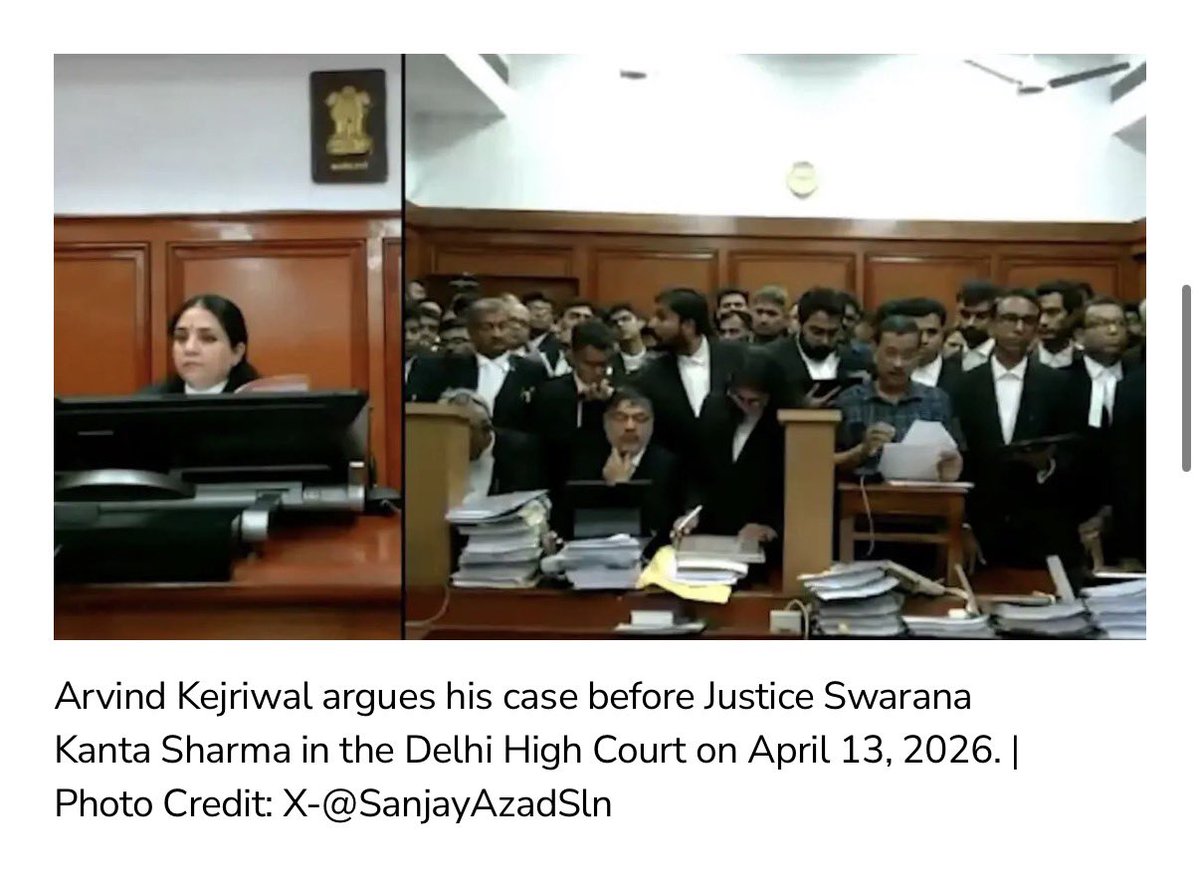
But in Kejriwal’s case before the Delhi High Court, the opposite happens. Despite serious and well-documented concerns of conflict of interest, bias, and unusual judicial attachment to the CBI appeal matter, the Chief Justice remains silent. The case is not withdrawn from that judge. It is not placed before a fresh bench.
The larger context too is hard to ignore. The Supreme Court’s INACTION and DELAY in the AAP vs LG constitutional crisis in Delhi and MVA government toppling in Maharashtra, and its ACTIVE intervention in Bengal’s SIR case, have produced political consequences that have greatly benefited the political fortunes of the same side.
Recently, CJI Surya Kant raised the sensitive issue of Punjab’s drug menace, observing that the “big fish” are not being caught by the State government. Punjab goes to polls in a matter of months. So can the timing be treated as accidental?
Each of these instances, viewed separately, may be explained away with a shrug. But look at them together, and a deeply disturbing pattern emerges.
It is this pattern---of SELECTIVE urgency, SELECTIVE silence, SELECTIVE roster control, and SELECTIVE intervention that corrodes public faith in the judiciary’s neutrality. Unfortunately, soon, citizens will begin to notice the growing weaponisation of the judiciary.
Hope @PatialaPolice recovers the money, which is estimated to be more than 16 kgs of gold, cash & Jewellery.
All this money was made out of corruption by the 2 Judicial offs.
Also the role of the police off's who tried to save the accused must be probed.
@PMOIndia@MLJ_GoI
This is again a reminder that Family & Divorce laws need relook & reforms.
A Judicial off so harrased so much by his wife & her family that he had to commit suicide.
Now the wife will inherit his assets too!!!
@PMOIndia@MLJ_GoI@arjunrammeghwal@MinistryWCD
#Breaking | Delhi judicial officer Jay Thareja, who has served as a CBI judge and is presently Central Project Coordinator at the Delhi High Court, flags serious concerns over State custody of digital evidence under e-forensics and e-Sakshya.
Drawing from his experience as a CBI judge, Thareja says the State is “fully capable of tampering” with MLCs, post-mortem reports, forensic material and BNSS Section 105 videos if such records are housed with agencies rather than the judiciary
5/5
such a serious issue involving corruption, money laundering and other offenses under BNS 2023 by the 2 Judicial officer's of the Patiala District Court and the senior officers of Patiala Police.
Hope there's Justice.
@barandbench@LiveLawIndia@pbhushan1@KapilSibal
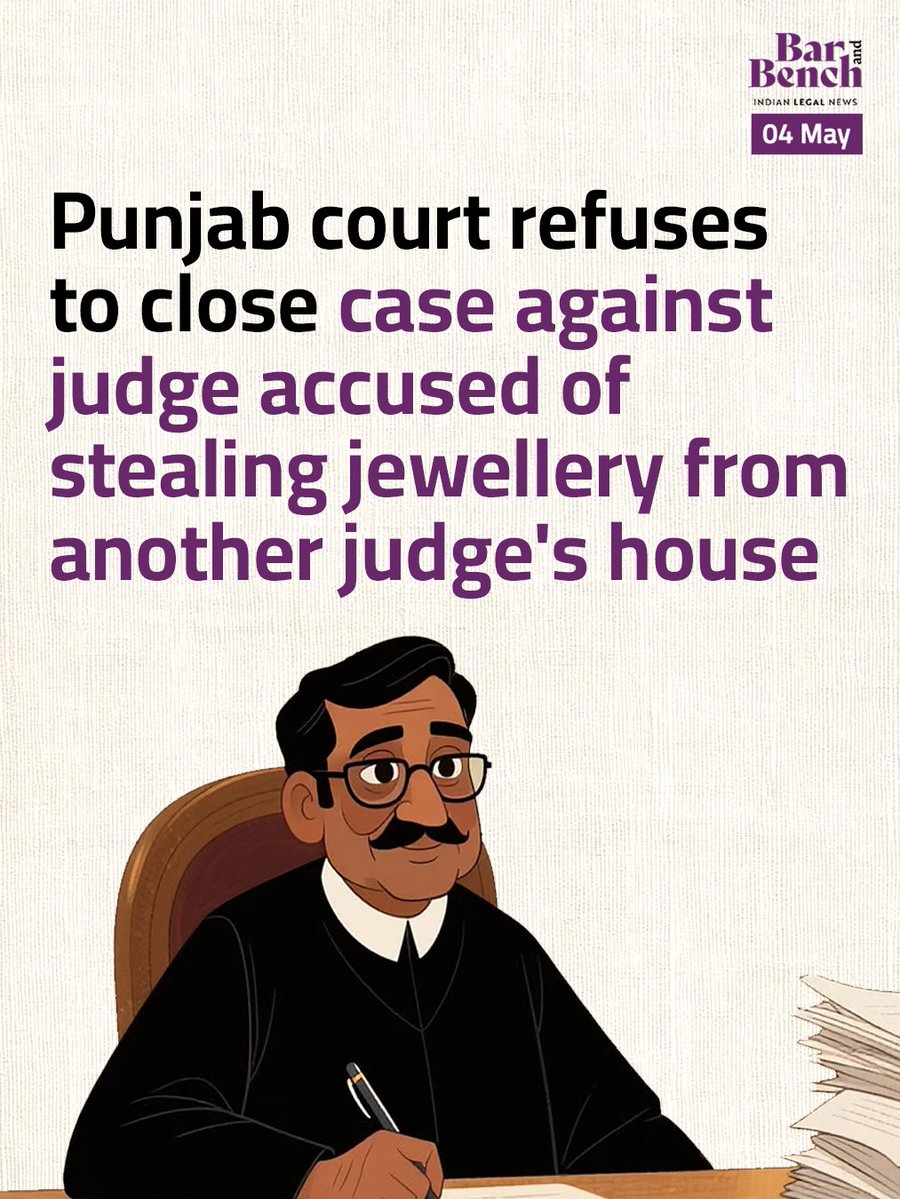
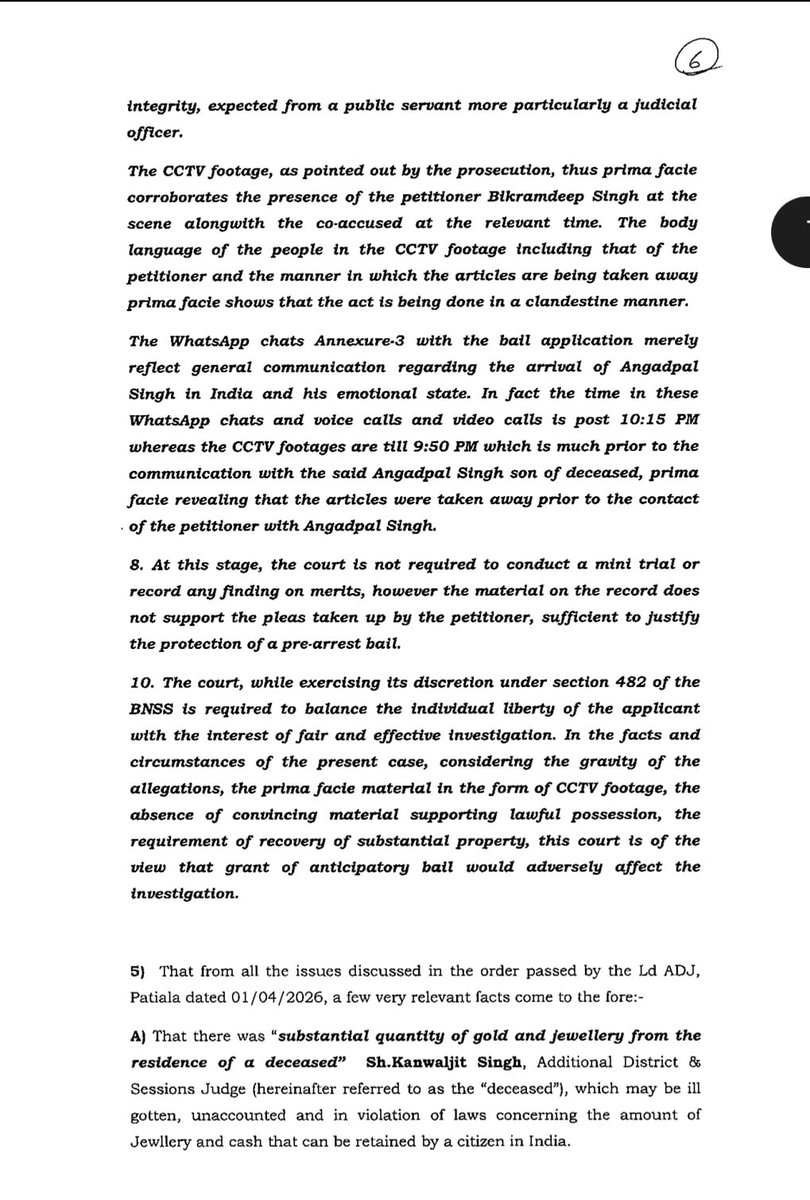
BAG AND BOXES FULL OF GOLD, JEWELLERY & CASH STOLEN BY A JUDICIAL OFFICER FROM THE HOUSE OF ANOTHER JUDICIAL OFFICER ?
The LD ADJ, Patiala Shri Harinder Sidhu on 01/04 2026 had passed a very courageous order, in which it was stated that Bags and Boxes full of Jewellery, 1/5
4/5
A Complaint has been filed by @NikhilSaraf14 with the Hon'ble Punjab &Haryana High Court on the administrative side to investigate the entire controvery &also to ensure that all the guilty are brought to Justice.
It's also concerning that the mainstream media is silent
Judge Mr Harinder Sidhu, ADJ Patiala, who had denied Anticipatory Bail to Mr Bikramdeep Singh, Civil Judge, Patiala has been transferred to Chandigarh.
@barandbench@LiveLawIndia
What is truly absurd is not the possibility of such recusals across the country. What is absurd is that such conflict of interest is so widespread that it has been NORMALISED.
What it frames as a threat to the judiciary may, in fact, be one of those accidental Freudian slips that lays bare the real scale of the problem and the urgent need for ethics and judicial reform.
A Representation has again been sent to the Hon'ble Punjab & Haryana High Court @CsPunjab@csharyana Shri @Gulab_kataria, Shri @arjunrammeghwal on the issue of Judicial collapse.
It can be addressed by Data Mgt & analytics.
In over 50 % cases, the pleadings have not been
1/2
#WATCH | Delhi: Senior Advocate Sanjay Hegde, who is appearing for Manish Sisodia, says, "Arvind Kejriwal had 10 points based on which he did not want Justice Swarana Kanta Sharma to hear this matter. The basic point was that detailed orders have been passed in past hearings, which have formed a strong view. Some other judge should hear this matter out... The Supreme Court has also said that if a judge has a particular view on an issue, the test is the likelihood of bias..."